Choosing US dry cleaners who will touch heavily beaded wedding wear
Brief US dry cleaners and bridal specialists before handing over heavily beaded Pakistani wedding wear: labels, solvents, bead tests, storage, and written risk. Not a ranked shop list.
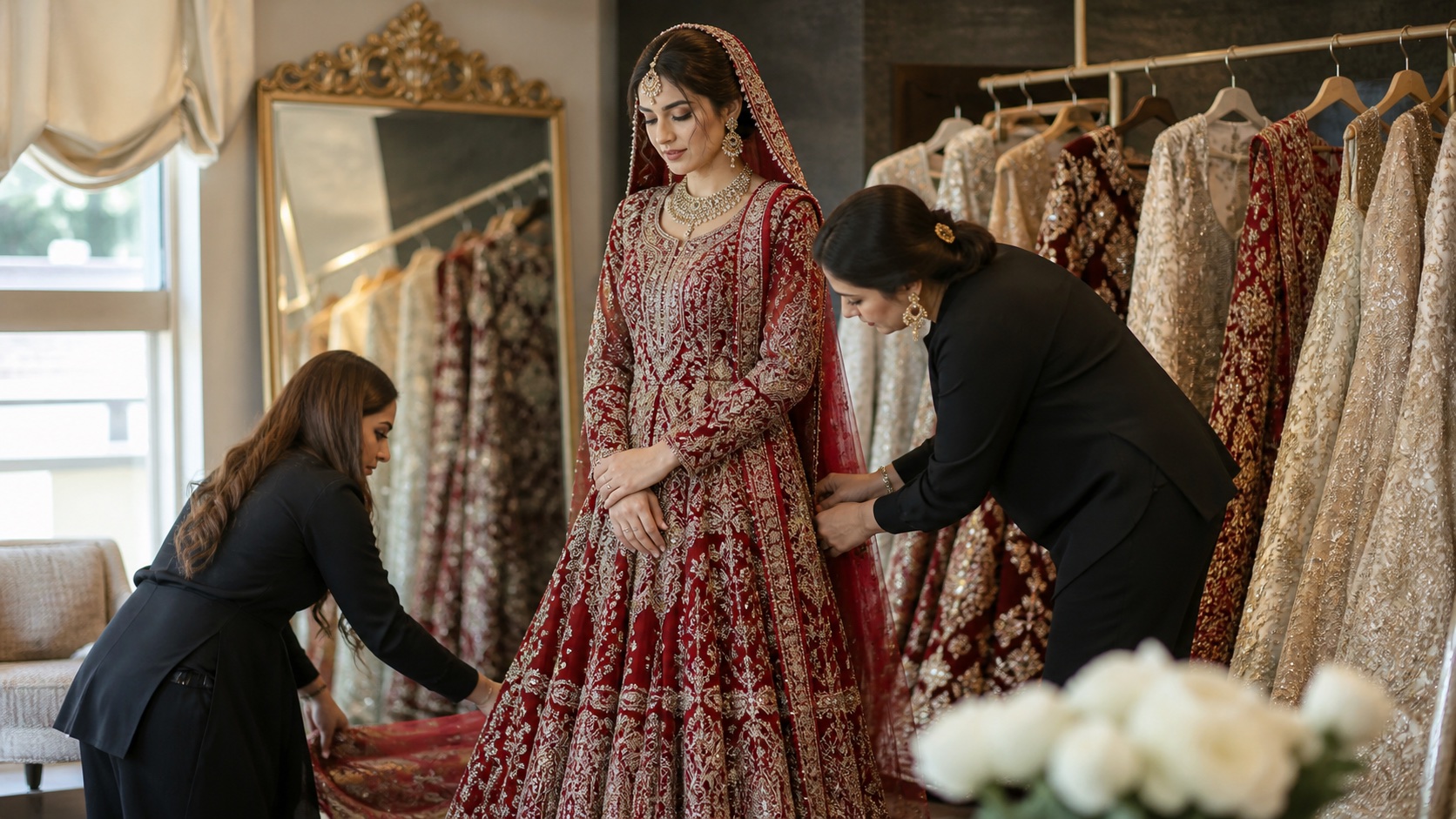
Heavily beaded lehnga panels, zardozi borders, and sequinned sleeves are not “just another dry-clean ticket.” In a US shop that mostly sees wool coats and polyester blouses, those trims can melt, dissolve, or leave a halo of dye when the wrong solvent or steam hits them. This is a vendor briefing checklist for Pakistani and broader South Asian wedding wear headed into American cleaners or bridal specialists. It is not a ranked shortlist of shops, and it does not invent prices or guarantees.
- Read the care label before you book, and photograph it.
- Name the problem materials: plastic beads, glued sequins, metallic thread, silk, chiffon lining.
- Ask which solvent and finishing method they would actually use.
- Require a written estimate that mentions trim risk, not only “wedding dress cleaning.”
- Refuse same-day heroics on a one-wear heirloom piece.
Start with the label the law expects to exist
In the United States, textile apparel sold with care instructions is governed by the Federal Trade Commission’s Care Labeling Rule. The FTC’s business guidance on complying with the Care Labeling Rule is written for manufacturers and importers, but it is useful for consumers too: a care label is supposed to state at least one safe cleaning method, and when drycleaning is named, any necessary warnings (such as avoiding steam) belong on that instruction. The FTC’s separate note on wedding gown labelling repeats that bridal attire needs fibre, origin, and care information, including at least one safe cleaning method.
The federal regulation itself, published at 16 CFR Part 423, describes drycleaning as a commercial organic-solvent process that may include moisture in the solvent, hot tumble drying, and restoration by steam press or steam-air finish. That last clause matters for beaded South Asian wedding wear: even when solvent is survivable, steam finishing can damage coatings, adhesives, and metallic work. If a label says “dryclean” without a steam warning, ask the cleaner whether their finishing method for your piece will use steam at all.
Imported Pakistani wedding wear sometimes arrives with a thin tag, a handwritten note, or nothing useful in English. That gap does not mean “any cleaner will invent a safe process.” It means you brief harder. Photograph every label, lining stamp, and bead cluster before drop-off so you can prove the garment’s starting condition.
Brief the cleaner on beads and glue, not on “make it white”
Many bead and sequin failures are material science, not attitude. Plastic beads and surface coatings can soften in solvent. Adhesives that hold glitter or pearls can dissolve. Metallic threads can dull. Ask the counter person, or the bridal specialist they escalate to, to look at the garment with you under good light and answer plainly:
- Have you cleaned heavily beaded South Asian or bridal pieces with similar trims in the last year?
- Which solvent would you use, and would finishing involve steam pressing or steam-air?
- Will you test a hidden bead or scrap of trim first, and what happens if the test fails?
- Do you remove detachable dupatta borders or hang pieces separately so weight does not tear net?
- What stains will you treat, and which ones will you leave rather than over-process?
A shop that shrugs and says “we dry-clean everything the same” is telling you something useful. Walk. A shop that says “we may refuse this trim” is often the safer partner. Written estimates should name the garment parts (lehnga skirt, blouse, dupatta), note known risks to beads or glue, and state turnaround without magical same-day language when the piece is structurally complex.
Your job is not to find the cheapest ticket. It is to find someone who will refuse unsafe work out loud.
Stains that travel with wedding wear
Point out makeup on the neckline, henna transfer, food at the hem, mehndi oil, and any loose threads before they bag it. Henna and turmeric-adjacent stains are not the same chemistry as red wine on a white polyester sheath. Ask whether the shop will attempt colour-safe treatment or leave a mark rather than bleach a silk ground. “Make it look new” is a dangerous brief for zardozi; “stabilise these stains without dissolving beads” is a better one.
If the outfit sat in a suitcase damp after a humid walima, say so. Delayed cleaning after sweat and perfume can set odours in lining. Delayed cleaning after a spill can also lock a stain. Neither fact means you should accept a same-day rush that skips a bead test.
Protect the garment before and after the counter
Ask how the piece will be stored. Hanging weight on a beaded waistband can distort shape; some bridal specialists prefer supported folds for heavy skirts. On pickup, inspect in daylight: missing beads, crushed embroidery, solvent odour trapped in lining, and whether the blouse still closes. Count obvious focal bead clusters against your drop-off photos.
If damage appears and the care label promised a cleaning method the shop followed, your remedies run through the cleaner’s claims process and, where relevant, the retailer who sold a labelled garment, not through a WhatsApp argument alone. Keep the ticket, the written estimate, and the photos together.
Dupatta, blouse, and skirt are three risk profiles
A heavily worked lehnga skirt may need supported cleaning and finishing. A net dupatta with glued sequins may need refusal or hand work. A blouse with plastic buttons and a beaded neckline may fail at the button, not the bead. Brief the shop piece by piece rather than as one “suit.” Ask whether they will clean components separately and how they will reunite them for pickup.
If a dupatta border is detachable, ask whether removing it before cleaning reduces snag risk. If it is not detachable, ask how they will prevent the border weight from tearing net in a machine drum or on a hanger. “We will be careful” is not a method. “We bag and support the border” is closer to one.
Timing between walima and the cleaner
Do not leave a sweat-damp, perfume-heavy outfit sealed in plastic for weeks “until we find a specialist.” Air it, stuff lightly with clean tissue if the shop advises shape support, and keep it away from direct sun that can fade silk. Photograph stains while they are fresh so you remember what to point at. If mould risk exists in a humid closet, prioritise a specialist appointment sooner rather than waiting for a perfect shop review thread.
Budget time for a bead test and a non-same-day turnaround. Bridal calendars that assume twenty-four-hour miracles are how rushed solvents happen.
When “do not clean yet” is the wiser call
If the outfit must be worn again within days, if beads are already shedding in your hand, or if no shop will put risk in writing, pause. Spot-clean only what a trusted specialist will touch, air the garment, and store it clean and dry until you find an operator who will brief you honestly. Heirloom preservation is slower than a mall turnaround, and that is sometimes the correct answer.
What “professionally dryclean” can hide
On some labels, “Professionally dryclean” is meant to signal that ordinary consumer drycleaning shortcuts are not enough, or that a particular solvent or process limitation applies. FTC care-label guidance treats drycleaning instructions as requiring warnings when any ordinary part of the commercial process would harm the product. For a heavily beaded lehnga, ask the cleaner to translate the label into their actual steps: solvent type, whether the piece will be net-bagged, whether it will be tumbled hot, and whether finishing will use steam. If they cannot describe those steps for your garment, they are not ready to take it.
Bring a small loose bead or a scrap of matching trim if you have one from alterations. A discrete solvent test on a scrap is more persuasive than an argument about Instagram reviews.
Questions that belong on the written ticket
- Garment parts listed separately (skirt, blouse, dupatta, veil, jacket).
- Known stains marked on a diagram or photo printout.
- Solvent and finishing notes, including any “no steam” agreement.
- Bead-test result if one was performed.
- Turnaround date that you can actually meet for shipping or another event.
- What happens if trim fails mid-process (stop and call, versus continue).
If you are shipping the outfit to another state after cleaning, say so at drop-off. Some shops pack for local pickup hangers, not for a suitcase. Ask for supported folds and tissue at stress points before you leave the counter.
PakStyles will not name a national chain as “safe for zardozi.” Verify the person who will touch your outfit, get the risk in writing, and keep the photos. Heavily beaded wedding wear survives US dry cleaning when the briefing is specific, and when you are willing to leave a shop that treats beads as decoration instead of chemistry.
Sources and official profiles
Was this helpful?
Keep reading
Related stories
More from this desk, this beat, and the tags on this piece.
Readers
The conversation
0 notes
Anyone can leave a note. Guests add a name and email — no account required, and the email is never published.
No notes yet. Yours would be the first.