First trip to Pakistan from the USA: flight, phone, money, and pacing
A US-first trip plan for Pakistan built around long-haul routing, phone connectivity, money systems, and a slower arrival pace than the family calendar usually allows.
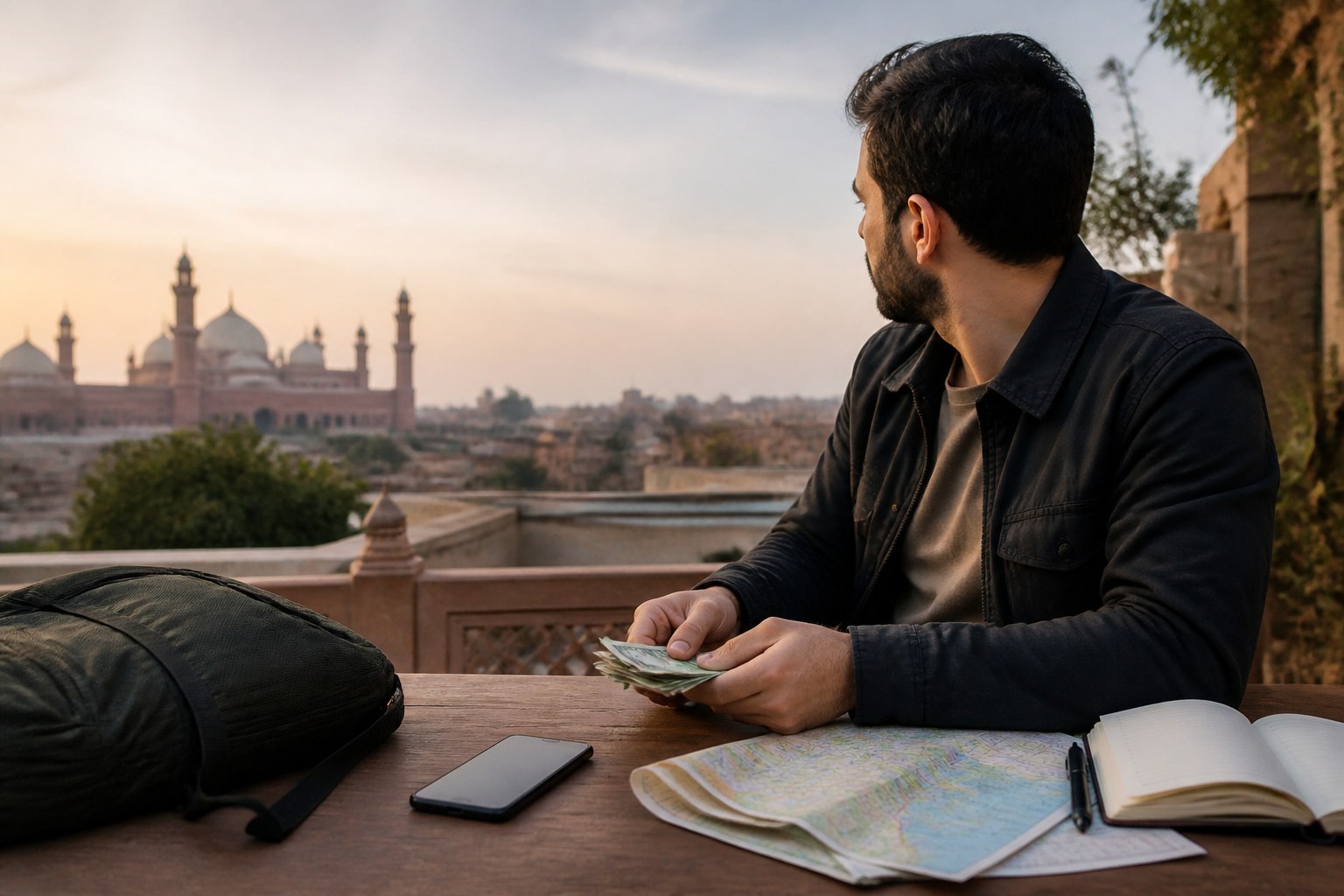
A first trip to Pakistan from the United States is shaped by distance before it is shaped by destinations. The flight is long, the time difference is unkind, and relatives often schedule the welcome as if the traveller slept on the plane. This guide organises the trip around four systems that decide whether the first week feels human: routing, phone connectivity, money, and pacing. Documents still matter; they are just not the only failure point.
Flight routing is a recovery plan, not a points puzzle
Most US-Pakistan itineraries involve one or two stops through the Gulf, Europe, or another Asian hub. The cheapest ticket is not automatically the best first-trip ticket. Prefer connections that leave daylight on arrival in Karachi, Lahore, or Islamabad, and avoid building a same-day domestic mountain flight after a fourteen-hour international sector. Weather and operational delays on domestic legs are common enough that a buffer night in the arrival city is insurance, not luxury.
If the family home is not in the arrival city, decide whether the first night is a hotel near the airport or a long road transfer. Landing at 3 a.m. and then driving three hours to just reach home is how illness and arguments begin. Tell the pickup contact the airline's live tracking link and a backup number. Agree a written meeting point inside arrivals, because outside can mean several conflicting kerbs.
Seat choice, hydration, and compression socks will not erase jet lag, but they reduce how broken the body feels on day two. Pack a change of clothes and medicines in the cabin bag. Checked luggage can lag a long-haul connection; the first family dinner should not depend on the suitcase that holds every modest outfit.
Visa and identity before the mileage run
US citizens generally need a Pakistani visa before travel. State Department country information notes passport validity of at least six months beyond arrival and blank pages for stamps. Dual US-Pakistani nationals with a valid NICOP, and eligible Pakistan-origin travellers with a POC, may have different entry rules; confirm the document you will actually use rather than assuming Pakistani family is a category immigration officers recognise on its own.
Applications go through the Pakistan Online Visa System. Embassy and consulate pages in the United States repeatedly warn that applications are online-only and that lookalike sites are not official. Washington's mission guidance describes visit or tourist files that may use a notarised host invitation with CNIC details or a confirmed hotel booking, alongside photograph and passport uploads. Processing is commonly described in working days rather than hours. Do not buy non-refundable domestic tours until the visa is issued.
Keep digital and paper copies of the passport bio page, visa grant, NICOP or POC if used, and the invitation. State Department guidance also emphasises carrying copies of entry evidence. Overstays and category violations can bring fines or worse; the US embassy cannot fix a Pakistani immigration problem created by ignoring visa terms.
Phone: assume your US plan will disappoint
US carrier roaming to Pakistan can work and can also fail in the first hour when you need it most. Decide the plan before boarding:
- short roaming burst for landing and pickup only;
- an unlocked phone ready for a local prepaid SIM after immigration;
- a dual-SIM setup if you must keep a US number reachable for work or children's schools.
Download offline maps for the first city, save hotel or home pin locations, and store embassy and family numbers outside a chat app that needs data. Enable a password manager that works offline. Tell US banks and any two-factor systems that rely on SMS that you will be abroad; app-based authentication is more reliable than waiting for a text that never arrives on roaming.
Photography and social posts are part of phone discipline too. Ask before posting faces of children or the exterior of a private home. A public location tag can be a security annoyance for relatives even when the traveller means only to share joy.
Money without turning the visit into an ATM tour
Carry a split system: a small amount of USD for exchange on arrival, a debit card for ATMs, and a credit card for hotels or emergencies. Notify card issuers of travel dates and keep a backup card separate from the wallet used every day. Not every restaurant or market stall takes cards; not every ATM is online at the moment you need it. Avoid counting large cash stacks in public.
Agree money roles with hosts before the first restaurant invitation. Overseas guests are sometimes expected to pay for group meals, fuel, or shopping trips for an extended circle. Sometimes hosts forbid payment and then absorb costs that strain them. Put the expectation in plain language: which days the visitor hosts, what gift budget exists, and whether large family shopping requests are welcome. Remittance conversations can wait until after sleep; they should not begin at baggage claim.
Tip and fare norms vary by city and service. Use ride-hail where available and familiar, or agree a fare before entering an unmarked car. Keep small notes for porters and tea stops. Photograph receipts when spending on behalf of relatives so later settlements do not rely on competing memories.
| System | First-trip failure mode | Stabilising move |
|---|---|---|
| Flight | Same-day mountain or intercity dash after long-haul | Buffer night in the arrival city |
| Phone | Roaming dead on arrival | Offline maps plus local SIM plan |
| Money | One card, no cash, unclear who pays | Split tools and a written hosting rule |
| Pace | Welcome circuit on arrival day | Seventy-two-hour recovery window |
Pacing: the calendar that protects the body
Build the first seventy-two hours as recovery. Jet lag from the US East Coast is significant; from the West Coast it is severe. Children and older adults need earlier nights than the household's excitement allows. Ask hosts to schedule the big multi-house greeting circuit for day three or four. A smaller welcome at the door is enough on arrival.
Limit day one to immigration, transfer, shower, medicines, and light food. Day two can hold one short neighbourhood walk or a single essential relative visit. Day three can expand. This feels slow to people who waited years for the trip. It feels correct to the person whose circadian clock is still in another hemisphere.
Heat, cold, spicy food, and unfamiliar water each deserve respect without panic. Prefer freshly cooked meals at first, keep oral rehydration supplies in the cabin bag, and do not treat every stomach change as a medical emergency or every medical warning sign as just travel. Seek clinical care when fever, dehydration, or breathing problems worsen. Travel clinics in the US should be consulted before departure for vaccines and personal risk advice; this article does not replace that consultation.
Security reading without catastrophising
The June 2026 embassy summary of the State Department advisory reiterated Level 3 risks including terrorism, crime, and kidnapping indicators, limited consular assistance in parts of KP, Balochistan, and Pakistan-administered Kashmir, and a clear do-not-travel line for the Line of Control. US government personnel face additional movement restrictions; private citizens are not those personnel, but the geography of limited help still matters when choosing routes.
Use that information as a planning filter, not as a reason to invent fear around ordinary city streets where millions live. Stay aware in crowds, keep valuables inconspicuous, vary routines if someone local advises it, and follow host guidance about neighbourhoods at night. For destinations outside Islamabad, Lahore, and Karachi, verify current official advice and local conditions rather than copying an influencer itinerary.
A US-specific packing and admin list
- Visa grant or NICOP/POC route confirmed; copies offline.
- Insurance covering medical care and evacuation for the planned districts.
- Unlocked phone plan, power bank, and offline maps.
- Prescriptions in original packs plus a simple medicine schedule shifted toward Pakistan time.
- Adapters, modest layers, and one complete outfit in the cabin bag.
- Written pickup plan and a US emergency contact holding document scans.
- Empty first seventy-two hours on the shared family calendar.
The successful first trip from the USA is not the one that sees the most cities. It is the one that lands with a working phone, enough money clarity to avoid resentment, and a pace that lets the traveller become a guest instead of an exhausted spectacle.
Money discipline on this route means small notes for toilets and tea, a card for hotels where accepted, and a clear rule about who pays for group meals so resentment does not accumulate beside the scenery.
Health discipline means regular water, shade breaks, and an agreement that headache, vomiting, or unusual sleepiness stops ambition while someone seeks local clinical advice rather than a group-chat diagnosis.
Family discipline means one primary ambition per day, a named abort option, and permission for children or elders to refuse a stop without a lecture about ticket cost.
Driver discipline means daylight arrivals, no pressure after rockfall or fog reports, and a pre-agreed turnaround time written in a note both sides can see.
Sources and official profiles
Was this helpful?
Keep reading
Related stories
More from this desk, this beat, and the tags on this piece.
Landing in Lahore after midnight: an arrival plan for tired families
Mehreen Ali · 25 Oct 2026
Pakistan SIM and eSIM for visitors: sort your phone before the airport taxi
Mehreen Ali · 24 Oct 2026
Renewing a Pakistani passport from the UK: what the online route can handle
Mehreen Ali · 21 Oct 2026


Pakistan visa for British passport holders: check the rule before you book
Mehreen Ali · 15 Oct 2026
Readers
The conversation
0 notes
Anyone can leave a note. Guests add a name and email — no account required, and the email is never published.
No notes yet. Yours would be the first.