Karachi in three days: coast, culture, and serious eating
A three-day Karachi route organised by geography, traffic and appetite.
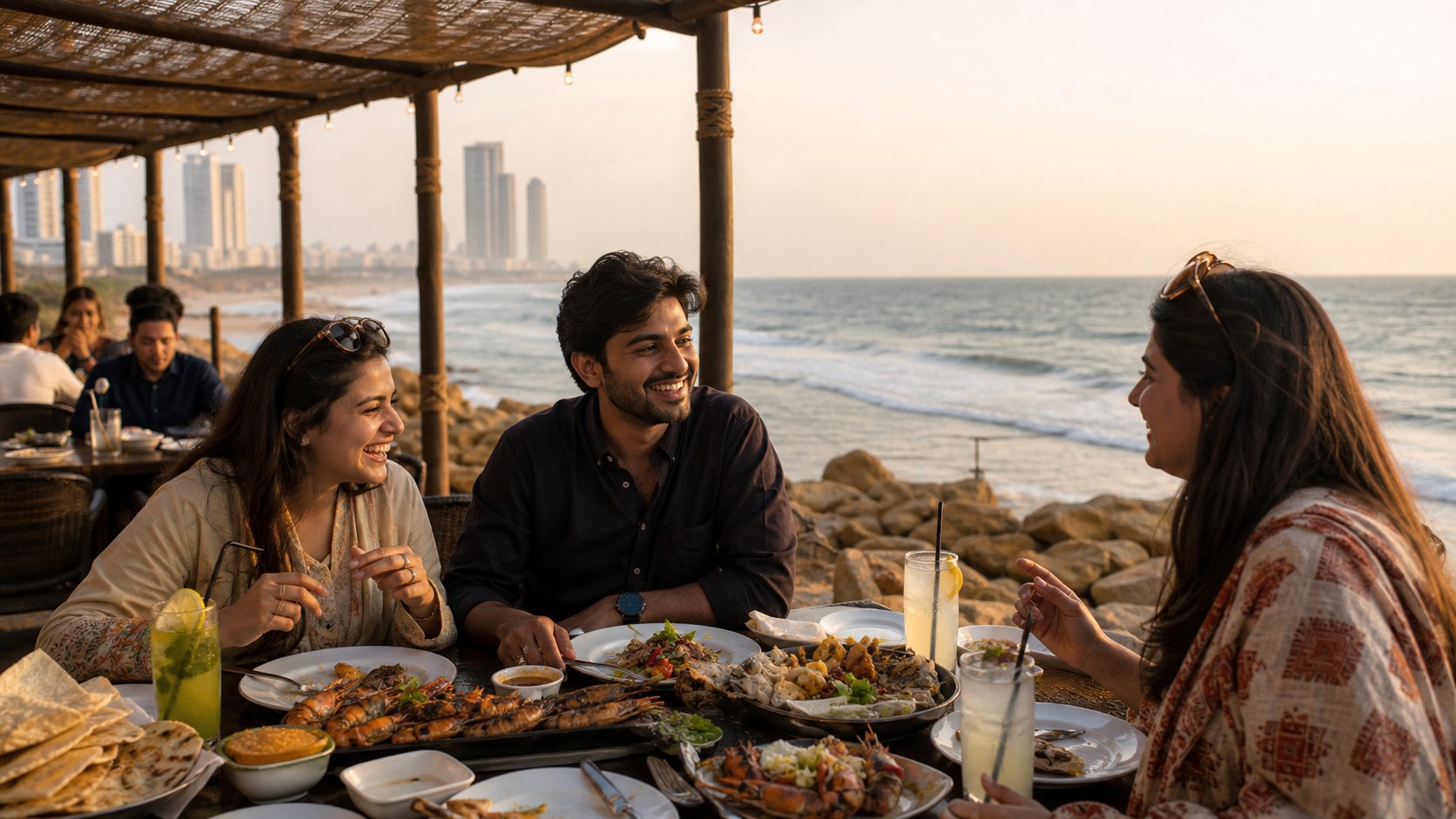
Karachi punishes the itinerary that treats distance as a straight line. Plan each day around one part of the city, then let traffic and heat decide how much more fits.
Day one: civic Karachi
Begin with a museum or major historic building whose current opening information you have verified. Walk only where local conditions and weather make it sensible. Pair the visit with lunch nearby rather than crossing the city for a famous plate.
Day two: neighbourhood and food
Choose one market or heritage district with a knowledgeable local guide. Ask before photographing workers, worshippers or residents. Eat across a sequence—a bakery, savoury stop and dessert—rather than ordering five full meals. Confirm hygiene and allergy information for your own needs.
Day three: coast with margin
Schedule the seafront when temperature and visibility are kinder, but treat the sea as a landscape rather than guaranteed swimming water. Keep valuables discreet and arrange the return before darkness or congestion changes the journey.
Check current official travel advice and local closures daily. Karachi’s scale is part of its character: port, finance, migration, art and food overlap without becoming one neat story. Three days should introduce that complexity, not claim to finish it.
Dress for heat and the places you plan to enter, carrying a light layer for air-conditioned interiors and religious sites. Keep midday flexible in hotter months. If air quality, rain or demonstrations affect a district, move the plan rather than treating a booked meal as an obligation.
Choose establishments by evidence, not virality
Ask residents what a place does consistently well, then order that rather than an indiscriminate table of signatures. Check official opening information and make reservations where a venue uses them. Street food can be a meaningful part of Karachi, but select busy stalls with active turnover and food cooked hot in front of you; individual health needs may require greater caution. Carry water, protect against heat and allow time to return before another booking. Buy from working artists and independent shops when provenance is clear, and ask before turning someone’s workplace into content.
Geography first: stop treating Karachi as a checklist
Karachi is coastal, vast and traffic-defined. Three days work when you pick corridors—historic core and museum hours one day, a neighbourhood food lane another, sea air and a slower cultural stop on the third—rather than drawing lines across the entire map. Transfers are the enemy of appetite and patience. Cluster or cancel.
Read current FCDO Pakistan travel advice for urban and regional notes that apply to your plans. Local knowledge from hosts about which areas to visit when matters more than a static “top ten.” Evenings and weekends change crowd and traffic patterns; ask rather than improvising after dark in unfamiliar districts.
Culture without rushing the room
Give museums and heritage stops the time to be rooms rather than corridors. Confirm opening hours on the day. Dress for respectful indoor behaviour. Ask before photographing people. Karachi’s cultural life includes contemporary art, music and neighbourhood institutions that may not look like postcard heritage; leave space for a host’s recommendation that is not on international listicles.
The coast is not only a photograph of water. It is wind, haze, food stalls, families and industrial edges. Choose one coastal outing and stay long enough to eat and breathe. Do not stack it after a cross-city museum morning unless the transfer is honest.
Serious eating as a planned activity
Karachi’s food reputation deserves a schedule: one breakfast institution or neighbourhood classic, one focused lunch, one evening meal, with water and rest between. Busy kitchens and clear turnover often help travellers; your personal health guidance still comes from clinicians, with orientation from pages such as the CDC Pakistan traveler view. Heat and humidity amplify fatigue—see also CDC extreme heat prevention.
Agree spending and spice expectations with companions. “Serious eating” is not a competitive sport. It is attention paid to a city’s craft. Leave one meal to a host’s house if you are lucky enough to be invited; some of Karachi’s best flavours never appear on a public menu board.
Specificity is the difference between a trip that teaches you the country and a trip that only proves you can endure movement. Use this guide as a decision framework, then let local conditions and current official advice edit your courage into something sustainable.
Three corridors, not thirty pins
Day one: choose a historic or museum corridor and stay inside it. Confirm opening hours on the morning itself. Give rooms time to be rooms. Eat within a short transfer of that corridor. Day two: pick a neighbourhood food lane with a host or guide who knows current quality, and treat the meal sequence as the day’s main work—breakfast or brunch, a rest, an evening plate—rather than adding a cross-city viewpoint “because we are here.” Day three: coastal air and a slower cultural stop, or a family day if that is why you came, without guilt that you did not touch every famous name.
Karachi’s scale makes stacked ambition expensive in patience. Write transfers into the plan with real minutes. If a ride estimate already looks ugly, cancel the second stop. The city’s serious eating culture deserves attention undivided by resentment at the windscreen.
Safety habits without turning the visit into fear theatre
Ask local hosts which areas and hours suit your group. Follow current FCDO Pakistan travel advice. Keep valuables discreet. Use trusted cars at night. Agree meeting points if networks fail. These are ordinary urban disciplines, not a verdict on the city. Karachi residents navigate complexity daily; visitors should borrow their realism rather than their exhaustion.
Heat and humidity amplify every scheduling mistake. Read CDC extreme heat prevention in hot seasons and use the CDC Pakistan traveler view as health orientation before you travel. Hydrate. Rest indoors when the air feels wrong. A cancelled coastal sunset is cheaper than heat illness.
Eating seriously, hosting graciously
Tell companions your spice and richness limits. Share dishes. Stop when flavour stops being the point. If you are invited to a home, protect that meal from a tourist checklist mentality—bring an appropriate gift, ask about shoes, and do not photograph the kitchen without permission. Some of the city’s best cooking never markets itself.
Leave with a map annotated by experience: which corridor felt walkable, which transfer you will never repeat, which meal you would book again on hour one of a return trip. That annotated map is the three-day product.
Neighbourhood food without turning drivers into martyrs
Pick a base area for lodging that matches your primary corridor even if another district is trendier online. The minutes you save become meals you can taste. When a host proposes a legendary place across the city at peak traffic, ask whether an equally loved nearer option exists. Often it does. Loyalty to a single famous restaurant is not the same thing as loyalty to Karachi’s cooking.
Breakfast culture, bun kebabs, seafood where freshness is trusted, nihari halls, and contemporary cafés each have their own hours and crowds. Sequence them with rests. Carry stomach remedies you already use if travel usually unsettles you, and seek clinical advice before the trip for anything beyond ordinary caution. Serious eating includes knowing when to stop.
Culture stops that respect time and people
If you include a museum, heritage walk or gallery, read a little beforehand so you are not dependent on labels alone. Keep photography policies in mind. Give yourself permission to leave when attention fades rather than marching to the exit through rooms you will not remember. Karachi’s contemporary scenes may be the most accurate portrait of the city’s energy; ask a younger relative or friend where they actually go.
On the coast, watch your footing, your belongings and the difference between a family evening outing and an isolated stretch at the wrong hour. Local advice beats general bravery. End the third day early enough to pack without anger. The city will still be loud tomorrow; you do not have to match it decibel for decibel to have been here properly.
If humidity or air quality is harsh on your travel dates, shrink outdoor ambition further and lean into indoor culture and home meals. The city’s appetite will still be there. Your lungs and temper deserve the same hospitality you came to receive. End by thanking hosts specifically—for a corridor tip, a driver name, a breakfast order—so gratitude is concrete rather than generic.
Carry the names of two trusted drivers or ride strategies, one near-base pharmacy, and one quiet indoor place you can retreat to if the city’s intensity spikes. Those three contacts turn a hard afternoon into a recoverable one. Karachi in three days is not a conquest. It is a first conversation with a city that talks fast; listening well matters more than answering every landmark.
Sources and official profiles
Filed under
Was this helpful?
Keep reading
Related stories
More from this desk, this beat, and the tags on this piece.

Landing in Lahore after midnight: an arrival plan for tired families
Mehreen Ali · 25 Oct 2026

Pakistan SIM and eSIM for visitors: sort your phone before the airport taxi
Mehreen Ali · 24 Oct 2026
Renewing a Pakistani passport from the UK: what the online route can handle
Mehreen Ali · 21 Oct 2026

Readers
The conversation
0 notes
Anyone can leave a note. Guests add a name and email — no account required, and the email is never published.
No notes yet. Yours would be the first.