Packing for a Pakistan trip from the UK with kids
Pack a UK-Pakistan family trip by protecting documents and labelled medicines first, then layers, gifts and adapters, while rechecking current FCDO advice in the week you fly.
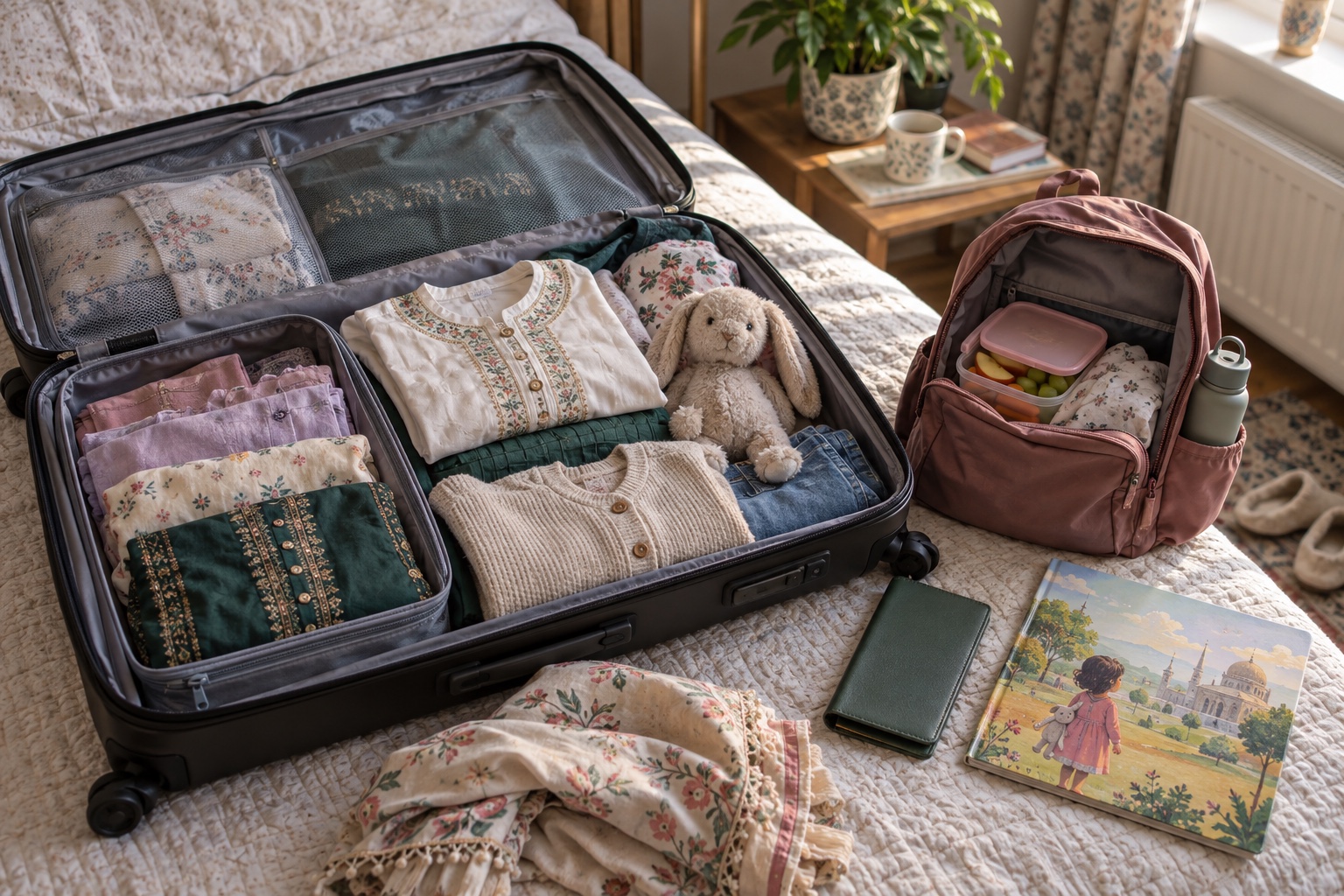
Family packing for Pakistan from the UK fails in the hallway the night before departure, when gifts, school shoes and “just in case” bottles compete for the same suitcase lid. A field guide works better than a fantasy capsule wardrobe. Protect documents and medicines first, then layers, then the social freight of arriving with something for relatives. Recheck official advice in the week you fly rather than trusting last year’s screenshot.
This article is logistics, not medical advice and not a visa determination. Entry rules, regional security notes and health guidance change. Start with the current FCDO foreign travel advice for Pakistan and the linked entry requirements page, then pack to the itinerary you still intend to keep after reading them.
Documents and the bag that never goes in the hold
- Passports, visas where required, and printed or offline copies of booking references.
- Emergency contacts in the UK and in Pakistan, including someone who is not travelling with you.
- Travel insurance details and any letters schools or clubs need for absence.
- A small pouch of snacks and a change of clothes for the youngest traveller after a long connection.
- One charged power bank that complies with your airline’s battery rules, kept in the cabin bag.
Give each adult a secondary copy of key numbers on paper, not only on a phone that may die at immigration. If children have different surnames from the accompanying adult, carry whatever supporting documents your airline or destination entry process may ask for. Do not invent a universal paperwork list here. Confirm against the FCDO entry page and your carrier’s own rules for the dates you fly.
Medicines: labels, not diagnoses
Pack routine medicines in original packaging with pharmacy labels visible. Bring a simple list of what each child usually takes and when. That list is for a relative helping at 2 a.m., not a medical chart for strangers. This article cannot tell you which remedies to buy or which symptoms mean what. For personal advice, speak to a pharmacist or GP before travel, and follow product instructions on anything you do carry.
UK travellers sometimes assume they can replace a child’s usual medicine easily abroad. That is not always true for the exact brand, strength or formulation you trust. TravelHealthPro’s page on medicines abroad is a useful orientation on planning medicines for overseas trips. It is not a substitute for clinical advice about your child.
Keep liquids and creams within airline cabin rules. Assume heat will soften chocolate and some gels in checked luggage. If a child uses a device or spare batteries, pack those in hand luggage according to the airline’s published battery guidance. The UK Civil Aviation Authority’s passenger pages on baggage and what to pack safely are practical baselines for batteries, aerosols and other restricted items.
Layers that survive mango juice and air-conditioning
Build outfits around breathable day clothes plus one warmer layer for air-conditioned rooms, evening drives and hill visits if they are on the itinerary. Children outgrow “special” outfits between packing and arrival. Favour clothes that survive mango juice and relative cuddles over outfits that only work for photographs.
Pack one complete change in the cabin bag for the youngest child. Long connections, delayed bags and unexpected overnight airport waits are ordinary travel friction, not rare disasters. Soft shoes that can clear security without drama beat brand-new formal shoes that blister on day one of relative visits.
If the itinerary includes both humid plains and cooler evenings, think in removable layers rather than separate “summer suitcase” and “hill suitcase.” Laundry access varies by household. Pack enough underwear and socks to cover a slow laundry day without assuming a hotel service exists.
Gifts without turning the suitcase into a courier van
Gifts travel well when they are flat, durable and not fragile glass: books, scarves, stationery, packaged sweets bought close to departure. Announce limits early (“one small gift per household”) so the suitcase does not become a courier service for every cousin’s request. Leave empty space for return gifts. Empty volume is part of the packing list.
Food gifts need extra honesty. Check airline and destination rules for animal products, large quantities of sweets, or liquids. Heat in the hold can ruin chocolate. Soft packaging that leaks oil onto clothes creates a different kind of family story than the one you intended.
A packing order that reduces hallway arguments
- Documents, medicines, glasses, chargers and one change of clothes into cabin bags.
- Children’s daily clothes and one warmer layer each into the main cases.
- Shared toiletries in leak-proof bags, liquids sized for cabin if needed mid-trip.
- Gifts and return-space buffer last, after you weigh the cases.
Weigh bags before you leave home. Photograph open suitcases for insurance. Keep medicines and documents on your person through security. If two adults are travelling, split critical items so one delayed bag does not strand the whole plan.
Age bands change the packing problem
Toddlers need containment: snacks, a change, a familiar sleep object if it still matters, and clothes that survive being carried between relatives. Primary-age children need something to do on long drives without relying on unbroken wifi, plus a clear rule about which toys travel and which stay home. Teenagers need privacy for medicines and documents they manage themselves, and an honest conversation about modest clothing expectations at family homes versus what they wear in the UK school run.
If the trip includes a wedding or large family gathering, pack one outfit that can pass photographs without being so delicate it cannot sit in a car for two hours. Wrinkle-prone fabrics punish humidity. Darker colours forgive dust and mango. Ask the hosting household whether outdoor events are likely; British children used to indoor halls sometimes meet evening dust and heat without the shoes or layers that make that tolerable.
What not to pack, even when relatives ask
Do not pack fragile glass, open liquids, or expensive electronics as “small gifts” unless you accept breakage risk. Do not pack prescription medicines belonging to someone who is not travelling. Do not pack so many clothes that there is no room for the return gifts that will appear whether you asked for them or not. Do not pack food that violates airline or destination rules just because it is sentimental.
Cash and jewellery need a separate plan from the children’s suitcase. Keep valuables on an adult body or in cabin luggage. If you are carrying gifts of significant value, photograph them and keep receipts where insurance might matter. PakStyles is not advising you to move large sums casually; it is noting that family trips often blur hospitality and logistics until something goes missing at a busy airport trolley point.
Airport day choreography with children
Assign roles before you leave the house. One adult owns documents and boarding passes until the gate. The other owns the cabin snack bag and the child who needs the toilet now. If you are travelling solo with children, use a backpack rather than a shoulder bag so both hands stay free for a pushchair or small hand.
Security lines punish loose liquids and surprise electronics. Keep the medicine pouch easy to pull out without emptying the entire cabin bag onto the belt. After security, refill water only when you know the gate and the next toilet. Hungry children escalate faster than delayed boarding groups.
On arrival in Pakistan, keep the same document stack until you clear the hall and have a trusted pickup. Relative excitement at the barrier is joyful and chaotic. Passports still belong in an adult pocket, not in a child’s backpack that may be handed around for photographs.
The return journey is part of the outbound pack
Leave space. Relatives will send clothes, sweets, books, or a pressure cooker someone insists you can “just manage.” Decide before you land what you will politely refuse, what you will post later, and what you will carry. A foldable empty tote in the outbound case is more useful than another ornamental box.
On the way home, keep the same document discipline. Children’s tiredness at the end of a trip produces lost boarding-pass moments. One adult should own the passport stack until you clear the UK side. Dirty laundry bags separate wet towels from clean clothes and from any food gifts still in the case.
What “done” looks like the night before
Passports in hand. FCDO advice rechecked. School absence letters packed if needed. Cabin snack and change ready. Medicines labelled. Adapters counted. Gift limit enforced. One empty corner left for the return journey. The goal is not a perfect capsule. It is a family that can clear the airport, sleep on the first night, and open one carefully chosen gift without unpacking half the house.
Sources and official profiles
Was this helpful?
Keep reading
Related stories
More from this desk, this beat, and the tags on this piece.



Readers
The conversation
0 notes
Anyone can leave a note. Guests add a name and email — no account required, and the email is never published.
No notes yet. Yours would be the first.