UK driving with elderly parents visiting from Pakistan
How to drive elderly parents visiting from Pakistan on British roads: seatbelt fit, planned rest stops, medication clocks, and Highway Code fitness rules without offering medical advice.
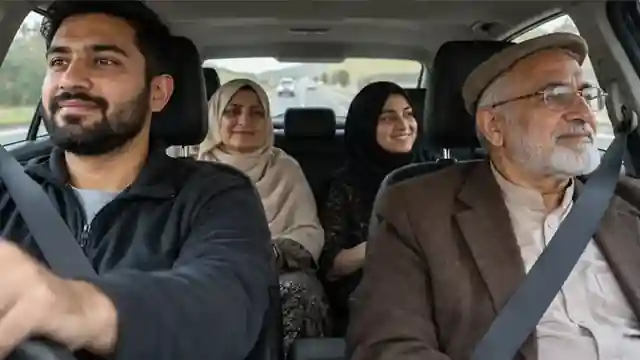
The first week after parents land from Pakistan is rarely about sightseeing. It is about car doors that open the wrong way for their muscle memory, dual carriageways that feel faster than the roads they know, and a seatbelt that suddenly becomes a negotiation. Hospitality on British roads is logistics: belts fitted correctly, breaks before fatigue, and medicines that stay on their Pakistan clock or their UK clock, not both by accident.
This is a road-safety and hosting guide for adult children who will do most of the driving. It is not clinical advice, and the suitcase photograph with this piece does not depict a named family or journey. Facts lean on the public Highway Code rules for drivers and motorcyclists and GOV.UK’s seat belts law pages, checked around September 2026. Always verify the live GOV.UK text before you treat a detail as current law.
Seatbelts before the motorway argument
Adult passengers aged 14 and over must wear a seat belt where one is available; for those adults, the passenger is responsible for wearing it. Explain the rule once, calmly, before the car moves: this is UK law in a fitted vehicle, not a personal preference of the younger generation. Offer the front passenger seat only if getting in and out is easier there and the belt can sit correctly: lap portion low over the pelvis, sash across the mid-chest and shoulder, not tucked under an arm or behind the back for “comfort.”
GOV.UK’s seat-belt pages are clear that medical exemption requires a doctor-issued Certificate of Exemption from Compulsory Seat Belt Wearing, kept in the vehicle and shown if stopped. A family rumour is not a certificate. If a parent has a genuine exemption document from a UK doctor, treat that as the documented exception. Do not invent one mid-journey.
Thick cushions, folded shawls, or aftermarket pads that push the body forward can spoil belt geometry. If a parent needs lumbar support, prefer adjustments the car already has: seat height, recline, head-restraint height, before inventing a pillow stack. Head restraints matter too. The Highway Code’s before-setting-off guidance treats proper adjustment as part of reducing neck injury risk in a collision. Take sixty seconds at the kerb. Do not wait until the M6 merge.
Rest stops as hospitality, not delay
Driving when tired raises collision risk. The Highway Code recommends planning sufficient breaks, including a minimum break of at least fifteen minutes after every two hours of driving, and stopping in a safe place if sleepiness arrives, not on a motorway hard shoulder used as a casual nap bay. It also advises against beginning a journey already tired and against long runs between midnight and 6 a.m., when natural alertness is at a minimum.
Translate that into hosting language. Build a toilet-and-stretch stop into the itinerary before anyone has to ask. Prefer services or town centres with level access, clean toilets, and somewhere to sit without climbing a food-court staircase. Long night runs after a late Heathrow landing are a false economy. Jet lag plus unfamiliar glare plus a host who has been “fine on three hours’ sleep” is how courtesy turns into hazard.
NHS guidance on jet lag describes it as a temporary sleep disturbance after crossing time zones and notes that symptoms can include tiredness and difficulty concentrating. That is relevant to whoever is behind the wheel after collecting parents at dawn, not only to the passengers. Split a Bradford–London or Birmingham–Scotland haul. Pack water, a light snack the parents already tolerate, and a charged phone with ICE contacts. Keep walking sticks, foldable seats, and prescription bags where a front-seat passenger can reach them without unbuckling mid-lane.
- Name the day’s hard limit in driving hours before you leave the driveway, including traffic buffers.
- Pre-mark two acceptable stops so “we will see” does not become an emergency pull-in.
- Agree who navigates aloud: one voice beats three relatives arguing over a roundabout.
- Protect the return journey the same way; hospitality fails on the tired drive home as often as on the outbound leg.
Medication timing without playing doctor
Visiting parents often travel with blister packs, blood-pressure tablets, diabetes supplies, or inhalers timed to Pakistan hours. Your job as host-driver is continuity and clarity, not diagnosis. Before the first long drive, ask them, or the sibling who packed the bag, to write each medicine’s usual time in both Pakistan and UK clocks for the first three days. Keep the list with the packets. Do not “help” by skipping a dose so someone can sleep through a scenic detour, and do not invent a new schedule from a WhatsApp forward.
The Highway Code is blunt on impairment: you must not drive under the influence of drugs or medicine, and for medicines you should check with a doctor or pharmacist and not drive if advised you may be impaired. That line applies to whoever is behind the wheel. If a parent usually drives in Pakistan and offers to share UK motorway miles on unfamiliar medication timing or jet lag, decline politely. Passenger comfort can include a short walk at a services area; it does not require them to take the keys.
Carry medicines in the cabin, not a boiling boot. If doses need refrigeration, plan the cold chain before you leave, not after a lay-by panic. Any sudden chest pain, confusion, severe breathlessness, or collapse is an emergency-services moment: call 999, not a family debate about “waiting until we reach uncle’s house.”
| Hosting decision | Safer default | Why |
|---|---|---|
| Who drives after a red-eye landing | A rested licensed driver, not the exhausted host by default | Highway Code fitness and tiredness rules |
| Seatbelt tucked “just for this trip” | No | Lawful wearing where fitted; passenger responsibility for adults 14+ |
| Parent offers to share motorway miles | Decline if jet-lagged, unfamiliar with UK roads, or on impairing medicine | Impairment and local road rules |
| Medicine schedule | Written dual-clock list for first three days | Continuity without host diagnosis |
The kindest journey is the one where nobody has to choose between dignity and a seatbelt, or between a tablet schedule and a host’s pride in nonstop driving.
Airport pickup and the first British dual carriageway
Heathrow, Manchester, and Birmingham arrivals often dump jet-lagged elders into a multi-storey car park before any motorway. Park as close to level access as you can. Load the boot yourself. Let parents sit and belt up before you join the exit spiral. Do not narrate every lane change as a test of their courage; quiet competence travels better. If the first destination is more than two hours away, treat the airport-to-home leg as Day One of the rest-stop plan, not as a heroic non-stop.
Car choice matters more than status. A lower car may be easier for some knees; a higher MPV may help others. Practise the seat slide and door angle at home before the airport run if you have changed vehicles. Keep a foldable step stool only if it does not become a projectile; secure loose objects. The Highway Code’s fitness rules still apply to the host who has been awake since Fajr arranging the pickup WhatsApp chain.
When relatives insist on “just a short drive”
Visiting parents sometimes want to see every cousin in a 120-mile radius in four days. Translate enthusiasm into a map with maximum driving hours per day. Cluster visits geographically. Accept that some relatives will come to you. A host who refuses an unsafe evening motorway run is not being Western; they are applying the same Highway Code break and tiredness logic that protects every other road user.
End the week with the same standards you started: belts on, breaks booked, medicines labelled, and a driver who is actually fit for the road. That is how a visit from Pakistan becomes a set of memories rather than a near-miss story told for years.
Sources and official profiles
Was this helpful?
Keep reading
Related stories
More from this desk, this beat, and the tags on this piece.




Readers
The conversation
0 notes
Anyone can leave a note. Guests add a name and email — no account required, and the email is never published.
No notes yet. Yours would be the first.