Finding Urdu speech and reading support for UK schoolchildren
How UK families find Urdu speech and reading support: library stock, teacher and SENCO routes, Local Offer pages, and community classes without clinical claims or tutor rankings.
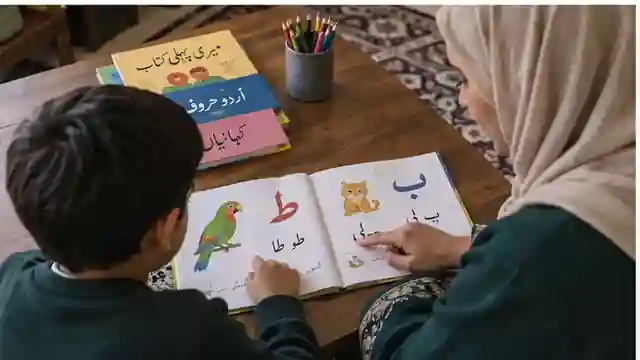
Parents notice different gaps. One child decodes English fluently but freezes on a simple Urdu line at a family gathering. Another speaks confidently in mixed Urdu and English at home, yet a teacher flags clarity or vocabulary. This is a discovery method for Urdu speech and reading support around UK school life. It is not a diagnosis, not speech-and-language therapy advice, and not a ranked tutor list.
Keep these questions separate so the loudest WhatsApp tip does not solve the wrong problem:
- Heritage language maintenance: stronger Urdu reading and speaking at home?
- A school literacy concern in English that sits beside a bilingual household?
- A possible speech, language, or communication need for school and health routes?
Those paths can overlap. They still need different first doors.
Start at the library shelf you can visit on a weeknight
Public libraries are still one of the cheapest ways to test whether a child will sit with Urdu script. Use GOV.UK’s doorway into local library services, then search the council catalogue for Urdu children’s books, bilingual picture books, dual-language readers, and storytime events. Ask whether stock can be reserved from other branches. A child who rejects dense nastaʿlīq on day one may still take a picture book with a few Urdu lines beside English. Borrow two books that get finished, not ten that become décor. Read aloud in whichever language keeps attention, then point to the Urdu line without turning the sofa into an exam hall.
If your library’s Urdu children’s section is thin, ask about inter-library loans and about community language collections held at a central branch. Some councils stock dual-language titles under “community languages” rather than under “Urdu” alone. Ask a librarian once with a clear age range rather than searching the catalogue only for adult poetry you will not actually read at bedtime.
National collections can widen what you know exists even when your branch shelf is short. The British Library’s Urdu collection guide is not a neighbourhood borrowing service, yet it helps parents and teachers see the range of Urdu publishing, children’s material, and research paths that sit behind the language. Use it to name titles or genres worth requesting locally. Use the council catalogue to put a book in a child’s hands this week.
When you borrow, build a small ladder rather than a random stack: one wordless or nearly wordless picture book for talk; one dual-language picture book for pointing between scripts; one short Urdu reader only when the child will tolerate sitting with it. Forced worksheets after a long school day teach resistance faster than literacy.
Separate EAL support from speech-and-language pathways
A child who is new to English, or who switches languages at home, may receive English as an additional language (EAL) support in school. That is not automatically the same as a speech, language, or communication need under SEND. Ask the teacher which frame they are using when they raise a concern. If the issue is English vocabulary for the classroom, the response may be EAL strategies and time. If the issue is unclear speech across languages, difficulty understanding instructions in any language, or stalled reading that does not match the child’s thinking, ask about SENCO involvement and whether a speech and language pathway belongs on the table.
Bilingualism itself is not a disorder. Do not accept a casual suggestion that “too much Urdu at home” is the cause of every classroom hesitation. Keep speaking the languages your household actually uses, and bring dated examples of what the child can and cannot do in each language when you meet the school.
Use the SENCO as a navigator, not as an Urdu teacher
If speech clarity, understanding instructions, or reading progress raises concern, speak to the class teacher first, then ask how to involve the special educational needs coordinator (SENCO). The Department for Education’s SEND code of practice (0 to 25 years) describes how schools identify needs and how SENCOs coordinate provision with families and professionals. A SENCO will rarely run an Urdu heritage class. They can clarify whether the school sees a broader speech, language, or literacy need and how to reach the Local Offer.
Be precise: home language, new-arrival status, and whether the worry is pronunciation, vocabulary, reading accuracy, or confidence. Bring dated examples. Ask what happens next and when you will review. Health referrals, if needed, go through school or NHS routes, not a magazine feature. Do not use this article to diagnose a speech disorder or to decide that bilingualism itself is the problem. Many bilingual children need time, books, and practice. Some need professional assessment. The school conversation is how you tell those situations apart.
Find the Local Offer before you buy a private package
Every local authority in England must publish a Local Offer describing support for children and young people with special educational needs and disabilities. Search your council’s Local Offer for speech and language therapy pathways, early years support, and how schools request help. That page will not teach Urdu. It will tell you whether the worry you are carrying belongs on a service pathway.
If the school agrees there may be a communication need, ask who makes the referral, what information you should gather at home, and how long families typically wait in your area. Waiting times change. A cousin’s timeline from another borough is not a promise.
Community classes: verify before you pay the term
Mosque annexes, community centres, and parent-run Saturday schools often teach Qur’anic Arabic, Urdu literacy, or both. They can be excellent for script familiarity and spoken practice. They are not interchangeable with speech-and-language therapy. Before you commit:
- Watch a class or speak to the teacher about age bands and script level.
- Ask how progress is checked (reading aloud, copy work, conversation) and how long sessions last.
- Confirm safeguarding basics the provider should be able to explain: who is in the room, pickup rules, and how concerns are raised.
- Match the class to your goal. Qur’an memorisation alone will not automatically produce fluent Urdu story reading.
Online apps and video calls with relatives abroad can supplement practice. Treat them as rehearsal, not as a replacement for books the child can hold or for school processes when a learning need is suspected. Avoid any programme that claims to cure speech disorders or guarantees exam outcomes.
Heritage language support is a cultural project. Special educational needs support is a legal and professional framework. A bilingual household can need both, one, or neither, and the discovery order matters.
Home practice that does not turn the sofa into a test centre
Short and regular beats rare and intense. Ten minutes with a finished picture book teaches more than an hour of unfinished worksheets after a long school day. Let the child choose between two suitable books. Point to repeated words. Ask them to teach a younger sibling or a grandparent a line they already know. Confidence is part of the skill.
If English schoolwork is heavy that week, keep Urdu gentle rather than abandoning it for months and then panic-buying a tutor in the holidays. Consistency matters more than performance theatre for relatives.
Record progress in the child’s terms: a finished book, a line read to a grandparent, a sound they can now produce. Avoid scoreboards that turn every sofa session into a report for aunties. Relatives who want to help can be given one job, such as listening to a known poem, rather than inventing a new curriculum every visit.
When to pay for private help, and when not to
Private Urdu tutors and online classes can be useful for heritage literacy when the goal is script and conversation. They are a poor substitute for NHS or school speech-and-language assessment when a communication disorder is suspected. Do not buy a package that claims to replace either path. Ask for a trial session, a clear age band, and a refund policy before you pay a term in advance.
If a private provider asks you to stop speaking English at home, or to stop speaking Urdu, treat that as a red flag unless a qualified professional involved in your child’s care has given specific clinical advice. This article cannot give that advice. A bilingual household usually needs both languages to stay alive while professionals, if involved, do their work.
A week of small checks beats a year of vague guilt
Pick one library visit, one calm teacher conversation, and one community lead to message. If Urdu is the priority, schedule short regular reading rather than holiday cramming. If school flags a wider communication need, follow the SENCO and Local Offer path and keep heritage practice gentle. Use official doors, keep notes, and match the next step to the gap you observed, not the loudest cousin’s theory about “kids these days.”
Sources and official profiles
Was this helpful?
Keep reading
Related stories
More from this desk, this beat, and the tags on this piece.



Pakistani names in British and American workplaces: pronunciation without embarrassment
Bilal Ahmed · 13 Sep 2026



Readers
The conversation
0 notes
Anyone can leave a note. Guests add a name and email — no account required, and the email is never published.
No notes yet. Yours would be the first.