UK winter coats over shalwar without bulk at the hem
Layer UK winter coats over shalwar without ankle bulk: coat length maths, soft structure, footwear clearance, school-run visibility, and Met Office cold-weather layering sense.
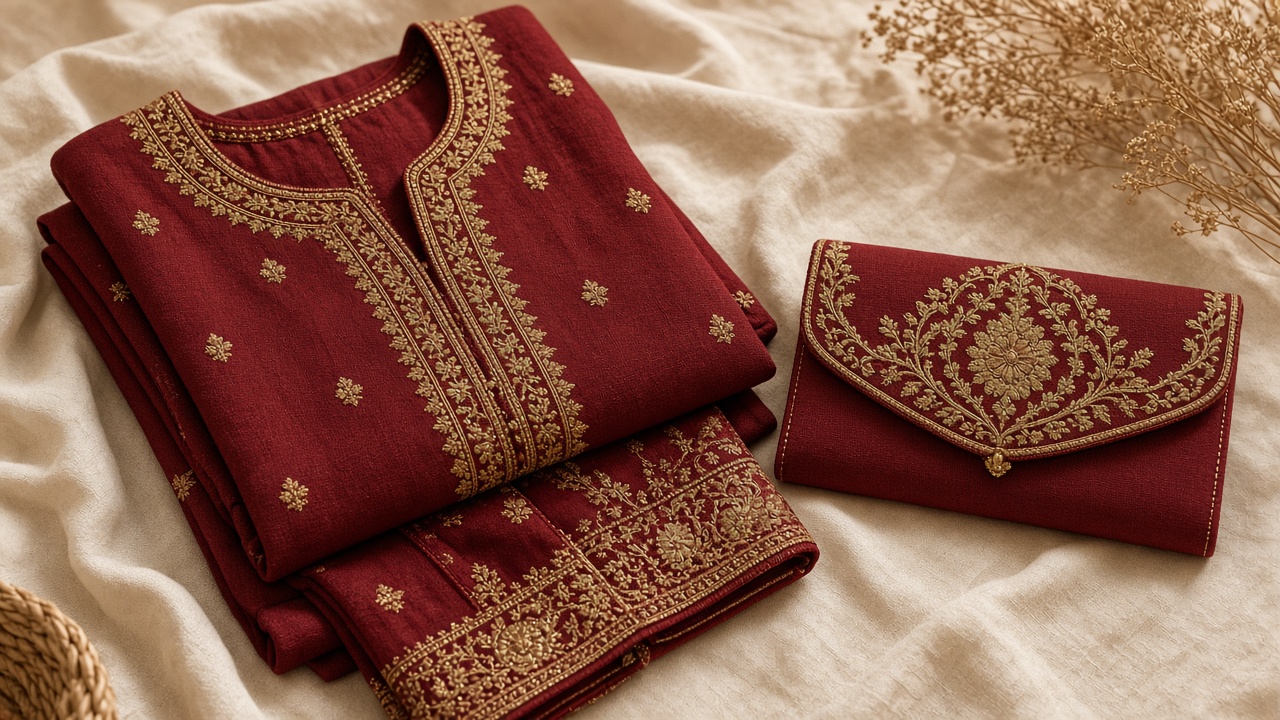
British cold wants a closed front and a hem that keeps wind out. A shalwar wants fall and ease at the ankle. Stack them carelessly and you get a coat that rides on a fabric doughnut, soaks rain into cuff gathers, or flashes lining every time you climb a bus step. This is a layering systems guide for diaspora wardrobes in the UK. It is not a ranked coat brand list, and not a rule that everyone must abandon traditional trousers for winter.
Decide which garment owns the silhouette
Pick one boss for the lower third:
- Coat-led: a longer wool or parka line that fully covers the shalwar hem. The trousers can be fuller; the eye reads the coat edge first.
- Shalwar-led: a cropped or hip-length coat that stops well above the fullest part of the shalwar. You need warmer socks, boots, or a longer kameez or under-layer because wind will find the gap.
The failure mode is the middle: a coat that lands exactly on the shalwar’s widest gather. That length fights the trousers for space and creates the bulk you notice in shop windows and hate by week two.
| Coat length | Works best with | Usual problem if mismatched |
|---|---|---|
| Hip / cropped | Narrower winter shalwar, longer kameez, boots | Wind at the midriff; coat hem chewing into gathers |
| Mid-thigh | Only if it clearly clears or clearly covers the gather | The classic “doughnut” bulk zone |
| Knee to mid-calf | Fuller shalwar worn coat-led | Too stiff a fabric fighting step height on buses |
| Long parka / wool maxi | Almost any shalwar volume underneath | Puddle drag if the hem is too long for your height |
Hem maths in a hallway mirror
Wear the shoes you will actually commute in. Stand on a hard floor. Button or zip the coat. Check four motions:
- Stand still. Does the coat hem sit cleanly above or fully below the shalwar’s maximum width?
- Walk ten steps. Does fabric pump at the ankle and shove the coat outward?
- Climb a step. Bus and train steps reveal whether the coat catches on cuff volume.
- Sit and stand. Bench seating pulls coats up; note whether the shalwar then balloons under a too-short hem.
Cold-weather layering that matches public advice
UK public cold-weather guidance favours several thinner layers over one thick garment so you can adjust as you move between heated trains and windy pavements. The Met Office’s advice on staying well in winter notes that several thin layers trap warm air better than a single heavy layer. GOV.UK’s keeping warm and well tips repeat the same layering principle and add footwear with good grip for icy surfaces. That is health and safety framing for British winter, not a fashion manifesto, and it maps cleanly onto a coat-plus-shalwar system: a breathable mid-layer under a weather shell, plus a silhouette owner at the hem.
Met Office guidance on getting out and about in winter also stresses checking the forecast, waterproofs, and adequate footwear before you leave. If the day’s risk is ice rather than rain, grip at the shoe matters more than embroidery at the cuff.
Reduce bulk without abandoning the shalwar
- Swap the day’s shalwar cut. Keep party-volume trousers for indoor events. For wet commutes, use a narrower winter shalwar, straight pant-style shalwar, or a lined cigarette cut in the same fabric family.
- Mind the sock and boot stack. Thick hiking socks plus gathered cuffs plus a coat hem at the same altitude is three layers claiming one altitude. Try a boot that takes the cuff inside or a sock height that stops before the gather.
- Use the kameez as weather seal. A longer tunic under a hip-length coat blocks wind better than arguing with the coat hem. Opaque tights or thermal leggings under lighter shalwar are a heat choice some people make; comfort and modesty preferences vary. Choose what your household actually wears.
- Watch rain wicking. Wide cuffs that drag on wet pavement darken and stretch. Hem tape or a slightly shorter tailor tweak on a “commute pair” is cheaper than replacing a coat.
British jobs the coat still has to do
Outerwear still has to handle wind, rain, and low winter light on school runs and station forecourts. Reflective detail and a hood you will actually raise matter more than matching embroidery. The Highway Code’s rules for drivers include responsibilities around vulnerable road users; as a pedestrian in dark clothing near traffic, you still benefit from being easier to see. A small reflective strip, a light-coloured scarf at the neck, or a bag with a reflective panel is practical kit, not a fashion betrayal. See GOV.UK’s Highway Code rules for drivers and motorcyclists for the wider road-user context, then dress for being noticed at the kerb.
Waterproofing claims on labels are not interchangeable. A shower-resistant fashion wool and a taped-seam parka behave differently in Manchester rain. If your shalwar is silk-blend party fabric, do not treat the coat as optional on a wet commute; the coat is the weather system, and the shalwar is the silhouette underneath.
Buying and briefing without a brand ladder
In store or on a return-friendly order, take the shalwar and shoes with you when you can. Ask for the garment’s back length in centimetres, not only size letters. If you use a tailor, brief them with photos of the coat hem and the trousers together: “shorten coat 3 cm so it clears this gather” or “taper only the lower shalwar for walking days.” Inspect evenness in daylight.
Useful tailor notes that prevent a second appointment:
- Which pair of shoes defines the finished length
- Whether the coat must clear a particular shalwar or many pairs
- Whether you want the shalwar tapered only from mid-calf down, leaving thigh ease
Children, school runs, and shared family coats
Kids’ shalwar under winter coats fails the same way adults’ do, only faster: growth spurts put the coat hem on the gather line within a term. Re-check lengths when you buy new trousers mid-year. A reflective bag charm or coat strip helps on dark pavements after after-school clubs. If siblings share a parkas, fit the coat to the child wearing the fullest shalwar that day, or keep a second silhouette plan (cropped coat plus boots) rather than forcing one length to serve every pair in the house.
Fabric weight under British damp
Heavy embroidered winter shawls under a fitted coat add bulk at the shoulder and shove the hem sideways when you walk. If you need both warmth and a clean coat line, put the heavy layer as a scarf outside the collar or choose a coat with enough chest ease for a light thermal, not a wedding shawl. Synthetic fill parkas forgive volume better than tailored wool when the day includes a buggy, a backpack, and a bus.
After rain, hang the coat open so the lining dries. A damp hem pressed against a wet shalwar cuff overnight is how “mystery smell” starts in a hallway cupboard. The layering system includes drying time, not only leaving the house.
Icy pavements and the shoe-coat-shalwar stack
When the forecast is ice rather than rain, the weakest point in the system is often the shoe, not the coat. GOV.UK cold-weather tips emphasise footwear with good grip; Met Office winter outdoor advice adds leaving earlier so you are not rushing on untreated pavements. A gathered shalwar cuff that hides a smooth dress shoe can make a slip more likely because you cannot see how the sole meets the ground. Prefer a boot with visible tread, or a shoe you already trust on frost, and keep the cuff either inside the boot or clearly above it so the sole remains honest.
If you carry a bag on one shoulder while holding a child’s hand, the coat hem will pull sideways. Re-check the silhouette owner after you load the bag. A coat that cleared the gather in an empty hallway may land on it once the school-run kit is on.
Workwear, Friday prayer, and the same coat
Many readers need one coat that covers office dress codes, school runs, and mosque entrances. Choose the silhouette owner first, then check whether the coat opens enough for layered shalwar kameez without straining buttons. A coat that only works over skinny jeans will punish you on Jummah weeks. Keep a foldable shoe bag in the pocket if you remove footwear at the mosque; wet pavement grit inside a wool lining is a separate failure mode from hem bulk.
Keep a commute pair and an event pair if your wardrobe allows it. The commute pair can be the narrower shalwar and the practical coat. The event pair can be the fuller trousers with a longer coat that covers them completely. Trying to make one silhouette do every British winter errand is how the doughnut returns.
The successful system is boring in the best way: one clear silhouette owner, a hem that does not argue, and ankles that stay dry enough to forget until you hang the coat.
Sources and official profiles
Was this helpful?
Keep reading
Related stories
More from this desk, this beat, and the tags on this piece.
Pakistani formalwear for a British wedding: groom and guest options
Zainab Noor · 13 Sep 2026
Pakistani maternity occasionwear: comfort without buying a one-night outfit
Zainab Noor · 13 Sep 2026
Readers
The conversation
0 notes
Anyone can leave a note. Guests add a name and email — no account required, and the email is never published.
No notes yet. Yours would be the first.