Gym
Strength training during Ramadan: a sustainable plan
A sustainable Ramadan lifting plan: one training window, less volume, familiar lifts, overnight fueling, and a calm return after Eid—not ordinary-month PRs.
By Sara Malik
Fitness editor
7 min read
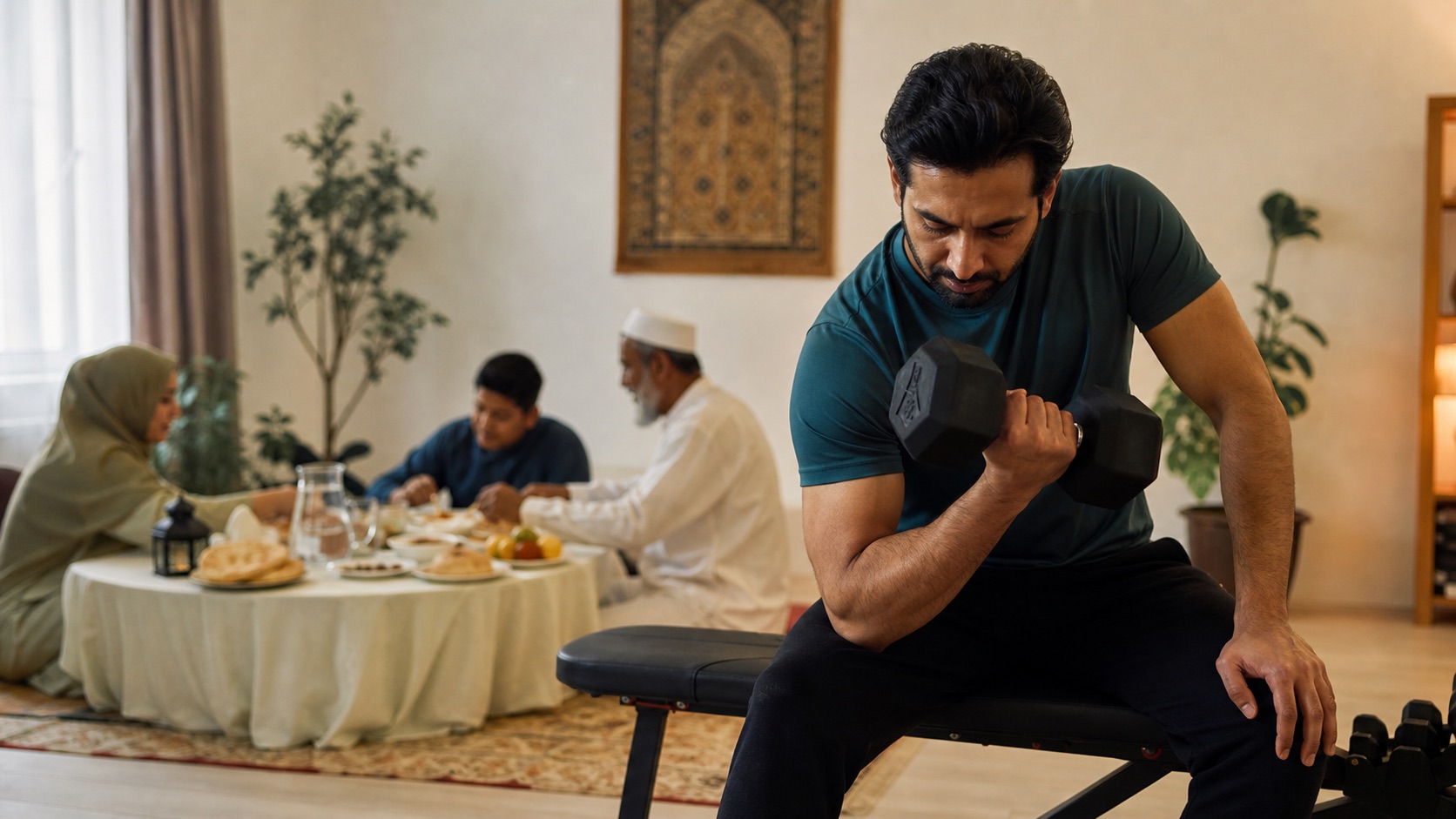
Strength training in Ramadan is not a contest to see whether discipline can overpower thirst. For most recreational lifters the useful goal is to preserve practice, strength, and joint health while fasting, prayer, meals, and sleep change the recovery budget. Maintenance is a successful training block. Progress that depends on ordinary-month sleep and daytime fluids can wait until after Eid.
Guidance below is general orientation for healthy adults. It draws on publicly available advice such as the British Dietetic Association’s note on sport and exercise during Ramadan and the clinical orientation published by Aspetar’s Ramadan evidence-informed guide (both checked around September 2026). It is not personalised medical advice. Pregnancy, diabetes, kidney disease, eating-disorder history, medication, and other conditions need individual guidance about fasting and exercise. Stop and seek appropriate help for dizziness that worries you, chest pain, unusual heart symptoms, or anything alarming.
Pick one training window your household can keep
| Window | Advantage | Trade-off |
|---|---|---|
| Before iftar | Food and fluid follow soon | You begin dehydrated; keep the session short and cooler |
| After a light iftar | Some fluid and energy available | Needs digestion time and a late schedule |
| Later evening | Better refuelling beforehand | May compete with taraweeh and sleep |
The BDA suggests moving higher-intensity work nearer iftar where practical and spreading fluids through the non-fasting hours. Aspetar’s practical summaries similarly favour placing moderate-to-heavy resistance work after breaking the fast when fluid and carbohydrate are available, and keeping any pre-iftar sessions shorter and lower in intensity. Choose one window and keep it for most of the month. Daily improvisation burns decision energy you need for recovery.
Household reality decides the window more than theory. If you cook iftar for a large family, a pre-iftar gym trip may be the only quiet slot—and that is still valid if you shorten the session. If taraweeh runs late, a compact post-iftar lift may protect sleep better than a heroic late-night split. Write the chosen window on the fridge so relatives stop inventing new times for you each evening.
Cut volume before you cut the lifts you know
Keep familiar compound movements—squat or leg press, a press, a row or pull, one hinge—and remove optional accessory sets, failure training, and novelty programmes. Two or three full-body sessions per week can maintain skill with fewer recovery demands than a five-day body-part split. The month is a poor time to learn a new Olympic lift or a maximal testing protocol.
Use repetitions in reserve: finish a set while technique remains clean. If warm-up weights feel unusually heavy, reduce load or end the session. A simple template is two controlled working sets per movement with longer rests than you use in ordinary months. Do not test one-repetition maximums while fasting. Log RPE or how the bar felt beside the kilos; the number alone lies when sleep is fragmented.
A week that respects the fast
A sustainable week often looks quieter on paper than social media plans admit:
- Two or three lifting days with the same four or five movements, not a rotating catalogue of “new stimuli.”
- One short mobility or walk day that does not compete with taraweeh or family labour.
- Deliberate rest after a broken night, travel, or an iftar that became a banquet.
- Heat discipline: if your gym is poorly cooled and you train before iftar, shorten further and avoid heated rooms.
Week one usually feels worse than week three for people whose sleep schedule is still shifting. Do not rewrite the entire plan after three hard days. Adjust load and session length first; only change the training window if the household truly cannot support it.
Fuel and fluid between maghrib and fajr
- Open iftar gently; distribute water across the evening rather than forcing a large volume at once.
- Include protein across evening meals and suhoor, alongside carbohydrate and varied foods you already tolerate.
- Protect a realistic sleep opportunity, including a nap if your schedule allows.
- Log how you feel—headache, mood, joint irritation—rather than only logging kilos on the bar.
Suhoor that is only fried leftovers plus tea sets up a rough afternoon. Prefer foods that sit well for you: eggs, yoghurt, bread, fruit, and enough salt and fluid for your own needs. Heavy pre-dawn frying is a dare to the workout, not fuel for it. If you train after iftar, leave at least some digestion time after dates, water, and a first plate before heavy squats; the gut and the bar rarely want the same minute.
Caffeine timing is personal. Some lifters keep a small evening cup; others find it wrecks the short sleep window after taraweeh. Treat caffeine as an experiment with a clear stop rule, not as mandatory “performance culture.” Electrolyte drinks are optional tools, not proof of seriousness—plain water plus ordinary food covers many recreational needs.
Gym politics without the guilt script
Pakistani and diaspora gyms often keep ordinary-month class times through Ramadan. That is a business choice, not a moral law. If peak hours clash with iftar, ask whether a short evening access window exists; if not, home dumbbells, a backpack hinge, and push-ups still count as training. Photographing a fasted PR is not piety. Leaving early when technique collapses is.
Women and men who share cooking labour should cost that labour into the plan. The person who shops, fries, and serves iftar already completed a session. Expecting them to also complete a full programme without sleep is how injuries and resentment arrive together.
Example sessions, not prescriptions
These templates illustrate dose, not destiny. Swap movements for ones you already perform safely.
- Forty-minute full body after a light iftar: goblet or machine squat 2×6–8; horizontal press 2×6–8; chest-supported row 2×8–10; Romanian hinge 2×6–8; optional carries or face pulls if energy remains. Rest longer than usual between sets.
- Twenty-five-minute pre-iftar maintenance: leg press or split squat 2×6; push-up or machine press 2× as many clean reps as leave two in reserve; band or cable row 2×10; stop. No failure, no drop sets.
- Travel or kitchen-heavy night: ten minutes of joint mobility, a brisk walk after iftar, and sleep. Count it as training integrity, not a missed day.
If a coach insists on ordinary-month volume “because champions don’t rest,” ask what recovery variable they are adjusting: sleep hours, fluid, or total sets. If the answer is none, the programme is a calendar ignoring physiology.
Travel, shift work, and shared kitchens
Ramadan that includes intercity travel, night shifts, or suhoor cooked in a shared hostel kitchen needs a smaller plan still. Pack a resistance band, keep one hinge and one press pattern, and treat hotel gyms as optional rather than mandatory. A delayed flight followed by a maximal deadlift is how backs become the month’s main character.
When relatives host consecutive iftars, protect one lifting day in writing and one complete rest day after the heaviest social night. Strength is not the only form of stewardship during the month; showing up for prayer and family without injury is also a plan.
After Eid
In the first week after Ramadan, add training volume gradually. Do not celebrate the return of daytime food and water with a maximal session. Appetite, sleep timing, and gut comfort can take days to settle. Rebuild accessories after the main lifts feel normal again. Judge the Ramadan block across the month, not from one energetic evening.
If you lost a little gym performance but kept joints calm and habits intact, the plan worked. Sustainable training respects the fast and leaves a body ready to continue afterwards.
Sources
- British Dietetic Association: Sport and exercise during Ramadan
- Aspetar: Ramadan evidence-informed guide
Sources and official profiles
Keep reading
Related stories
More from this desk, this beat, and the tags on this piece.
Pakistani gym etiquette for beginners: equipment, space and prayer-time awareness
Sara Malik · 13 Sep 2026 · 15 min
Your first month in the gym: what to learn before chasing weight
Sara Malik · 13 Sep 2026 · 15 min
Readers
The conversation
0 notes
Anyone can leave a note. Guests add a name and email — no account required, and the email is never published.
No notes yet. Yours would be the first.