A Karachi humidity week for hair, without a new ritual
Seven damp Karachi days: washing, tying, helmets, sea air, and office air-conditioning, without turning hair into a medical project.
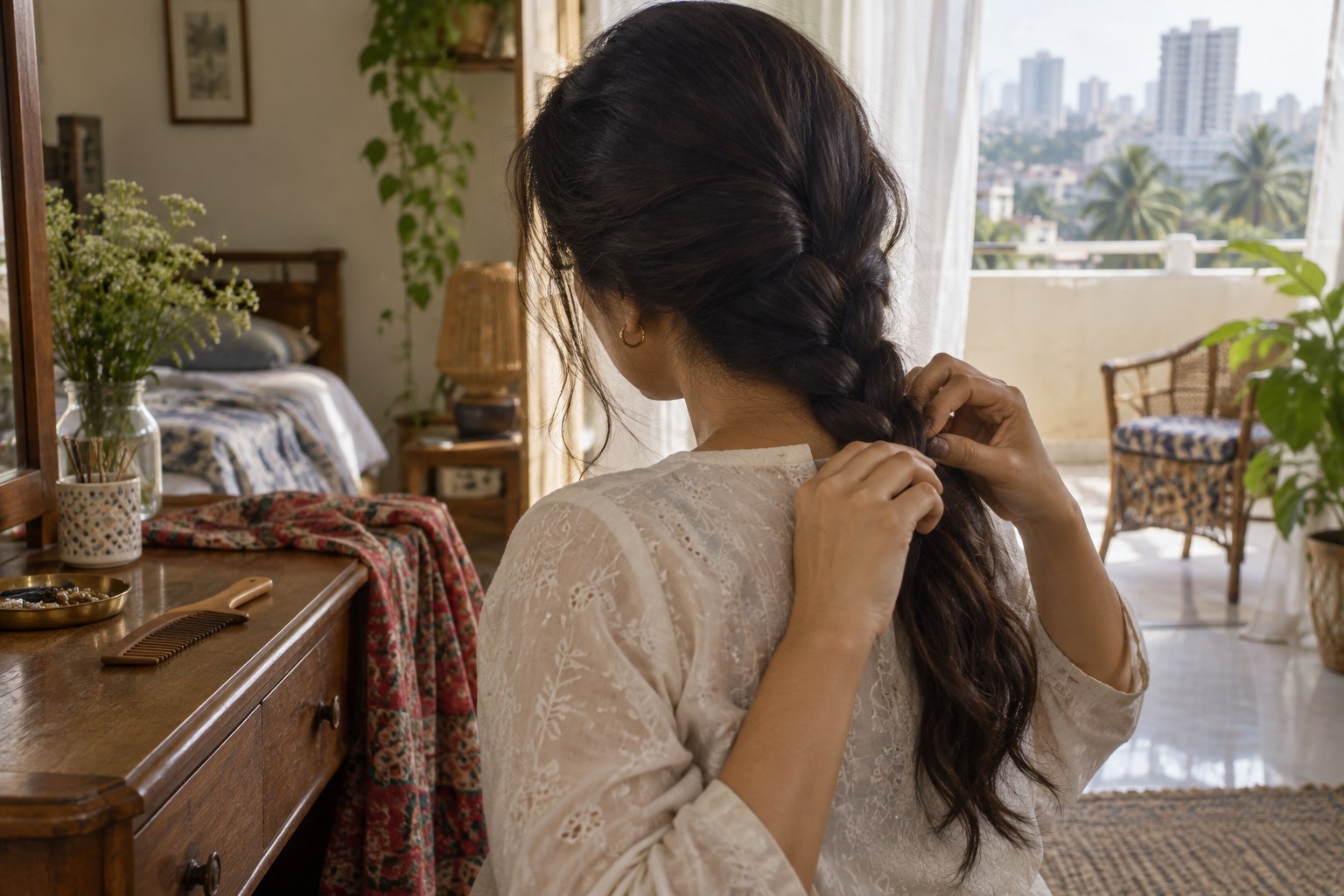
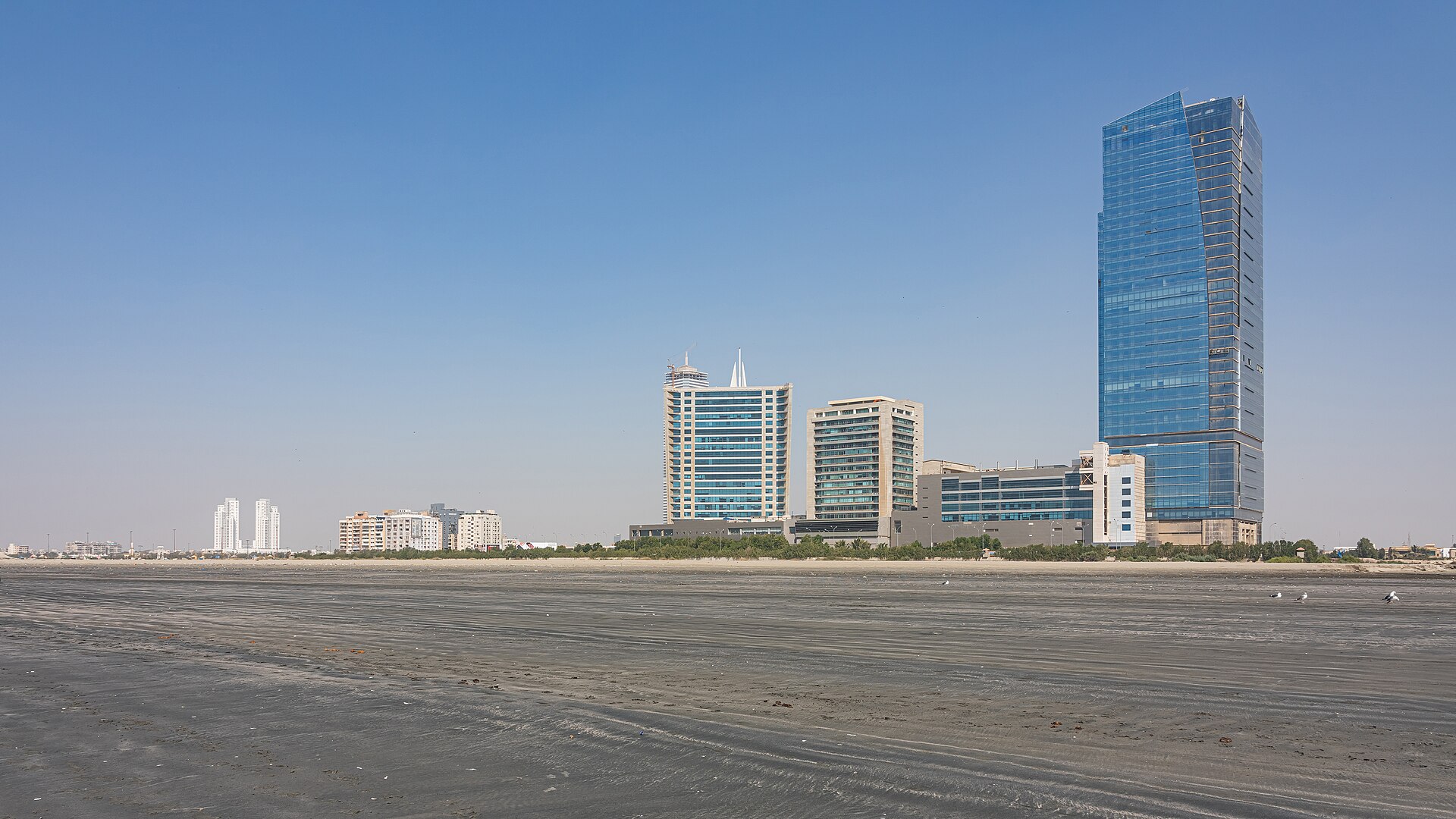
Karachi humidity is not a personality. It is air that will not dry a plait, a commute that includes a helmet or a sea breeze, and an office that then freezes the same scalp. A week of that weather does not require a new identity, a new oil, or a promise about growth. It requires a wash plan you can repeat, a tie that does not chew the hairline, and enough humility to stop layering products when the problem is weather.
If the week only works when you skip the helmet, the beach road, and the office, you do not have a hair routine. You have a veto on the city.
PakStyles beauty desk
Plan the week, not a miracle
Pick wash days before the weather picks them for you. Many Karachi scalps want more frequent washing in monsoon and less in a dry spell; yours may differ. The useful observation is itch, smell, and whether a style collapses by noon, not a rule imported from a cold climate. Wash with the mildest cleanser that actually cleans. If you need a second wash to feel clean, the first product is not doing the job, or you did not rinse.
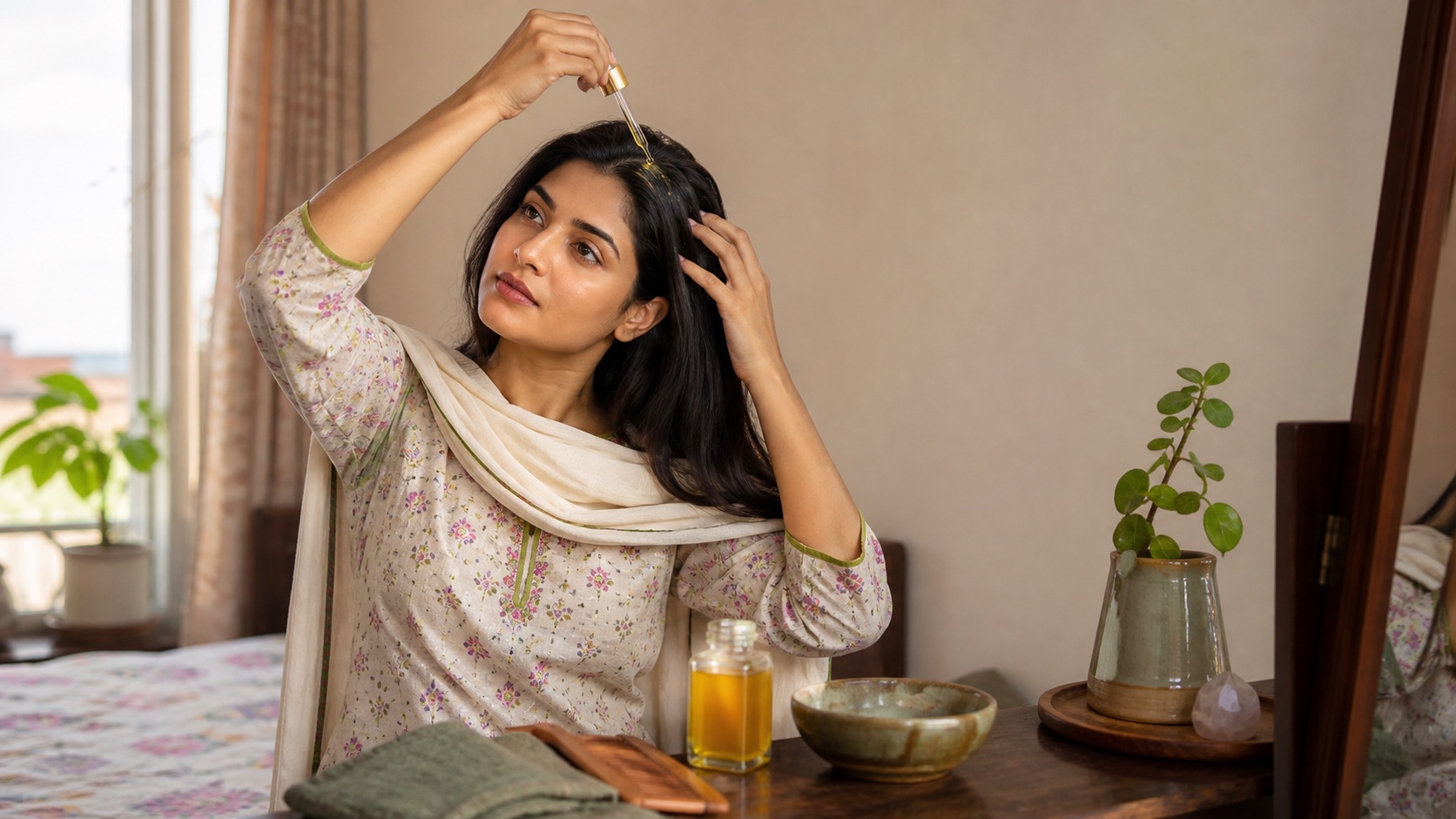
Leave-in layers stack. Humidity makes them stack faster. A cream plus an oil plus a spray plus a serum is how hair looks wet at 11am. Choose one leave-in at most for a working day. If you already oil as a separate practice, do not add a second oil because the air is wet. This piece is not an oiling guide. It is a reminder that oil on a humid scalp can sit there and collect dust.
| Weekday pressure | What usually helps | What usually makes it worse |
|---|---|---|
| Helmet commute | Loosen tie before helmet; cloth scrunchie; dry roots before sleep | Wet ponytail scraped through a tight band |
| Sea-road or Clifton air | Rinse when you can; low bun that survives gusts | Open lengths + heavy leave-in that never dries |
| Office AC after a wet street | Chair-back scarf or light covering if workplace allows | Hot iron on damp hair every afternoon |
| Monsoon itch / smell | Earlier wash day; thorough rinse | More oil “for protection” on an already wet scalp |
Salt air, helmet, and office air-conditioning
Clifton, the harbour roads, and any evening near the water will put salt on hair whether you “went to the beach” or not. Rinse when you can. A bun that was tight enough for a bike will leave a dent and a headache; a bun that was too loose will explode at the first sea gust. A low, slightly messy tie with a cloth scrunchie is not a style statement. It is how you arrive.
Helmets polish the crown and tug the hairline. If you ride every day, that is a mechanical fact. Loosen the tie before the helmet, not after, and do not scrape a wet ponytail through a tight band. In the office, air-conditioning will dry the same lengths the street just wet. A scarf or a light dupatta can sit between fabric and hair if your workplace allows it. Do not correct the thermostat with hair mythology. Carry a hook or a bag that is not nylon on a damp nape.
A seven-day skeleton you can actually repeat
- Day 1 (wash): Cleanse, rinse thoroughly, one leave-in maximum if lengths need it. Sleep with roots closer to dry than wet.
- Day 2 (helmet day): Low tie, cloth band, no new product stack.
- Day 3: Refresh with water on hands if frizz is cosmetic; wash early if itch or smell has started.
- Day 4 (sea-road evening): Rinse salt when you get in; do not “seal” salt with oil overnight.
- Day 5: Second wash of the week if humidity and commute demand it; otherwise a clean redo of the low tie.
- Day 6: Trim ends if they are splitting and catching; heat tools only on dry hair, and not as daily weather control.
- Day 7: Reset: wash if dirty, or leave alone if the week already worked. Do not invent a Sunday ritual to feel productive.
The skeleton is a starting map, not a medical protocol. Shift wash days when itch, smell, or collapse say so. The point is a week you can leave the house seven times without building a shrine of bottles.
Oil is not the only lever
Sleeping on wet hair in Karachi is how morning smell begins. Dry at least the roots. A cotton pillowcase is ordinary; a plastic-backed one is a greenhouse. If your hair breaks at the ends, trim. If it frizzes, that may simply be the week. Smooth with hands and water, not with a hotter iron every afternoon. Heat styling on damp hair in this climate is how you buy a repair later.
Colour, relaxers, and salon treatments are chemical events. The NHS overview of cosmetic procedures is written for a different health system, but the caution travels: these are not harmless lifestyle extras, and a magazine cannot personalise them. Do not book a major chemical service the night before a humid outdoor week and then blame Karachi for the result.
When hair trouble is a clinical question
The NHS page on dandruff distinguishes ordinary flakes from conditions that need medical care; it is a public explainer, not a diagnosis of your scalp. Persistent itch, thick scale, pain, or hair loss patterns that arrive suddenly belong with a clinician in Pakistan or wherever you receive care. Do not treat hair loss as a morality play about product loyalty.
A humid week succeeds if you can forget your hair for most of the day. Wash when you are actually dirty or itchy. Tie for the helmet you have. Rinse salt when you met the sea. Stop when the hair is clean enough to forget. Forgetting is the point. Hair that occupies the whole day has already lost to the city.
- Set wash days from observation, not from a cold-climate calendar.
- One leave-in, not a stack.
- Tie for helmet and wind; rinse salt when you met it.
- Take pain, sores, or sudden shedding to a clinician, not to a bottle.
Karachi will be humid again tomorrow. Give the week a wash plan, a kind tie, and a refusal to invent a ritual. The city is the climate. Your hair only has to get through it.
Hijab, helmets, and fabric against a damp nape
If you wear a hijab through a Karachi humid week, the inner layer against the nape matters as much as any serum. A damp synthetic against skin can feel like a greenhouse by noon. Rotate undercaps or inner scarves you can wash quickly, and do not invent a new oil ritual to solve a fabric problem.
Helmets over hijab add bulk and pressure points. Loosen what you can before the ride, and check the hairline after for breakage rather than masking sore spots with more product. If a particular undercap seam always rubs the same place, move the seam or retire that cap; chemistry will not fix a mechanical rub.
Office dress codes that require a polished blow-dry every day fight this climate. Where policy allows, a clean, controlled tie is a stronger professional signal than hair that was forced smooth at 8am and collapsed by 11. If policy does not allow it, keep a workplace-safe refresh (water on hands, a spare pin) rather than a full restyle with heat at lunch.
Swimming or a sudden monsoon drenching resets the week: rinse, gentle cleanse when you can, and do not sleep on chlorine or street water “until tomorrow”. Tomorrow’s smell starts tonight.
Product labels without a new religion
Fragrance-heavy creams can feel fresher in a humid city and still weigh hair down by noon. If a product needs three other products to “activate,” it is already too many steps for a Karachi workweek. Keep the label simple: cleanse, optional one leave-in, mechanical control with a tie.
Anti-dandruff shampoos exist for a reason when flakes and itch are ordinary; they are not a personality. Follow the product’s own use pattern, and if symptoms persist or worsen, return to the clinical line above rather than rotating through every bottle in a mart aisle.
Shared brushes in a family bathroom collect humidity and residue. Wash them. A clean brush will not cure weather, but a filthy one will redistribute what you just washed off.
Travel days inside the city (weddings, long markets, coastal roads) deserve the same honesty as office days: one plan for tying, one plan for rinsing, no suitcase of new bottles. Humidity does not reward variety. It rewards repetition that still leaves you enough time to live the rest of the day.
If a week goes well, keep the same wash days next week instead of rewarding yourself with a new bottle. Consistency is the only glamour humidity respects.
Sources and official profiles
Was this helpful?
Keep reading
Related stories
More from this desk, this beat, and the tags on this piece.




Readers
The conversation
0 notes
Anyone can leave a note. Guests add a name and email — no account required, and the email is never published.
No notes yet. Yours would be the first.