UK council recycling rules when mithai boxes pile up after Eid
How to sort post-Eid mithai boxes, trays, and ribbon under UK council recycling rules: find your local A–Z, treat grease as contamination, use food-waste streams where they exist, and stop guessing from a neighbour’s bin.
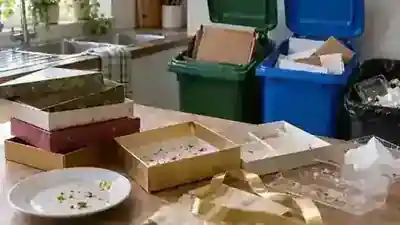
After Eid, British Pakistani kitchens collect a second harvest: stacked mithai boxes, syrup-sticky card lids, plastic trays, ribbon, and the odd foam insert nobody remembers buying. The temptation is to crush everything into the recycling wheelie bin and call it virtue. Councils do not grade intention. They grade materials. This is a local-rules navigation guide for that post-celebration pile. It is not a single national sorting chart, and not permission to invent what your borough accepts.

Your council’s A–Z beats a group-chat rule
Recycling collections in England and Wales are run locally. GOV.UK’s doorway for recycling collections and its tool to find your local council exist so you can open the page that actually empties your street’s bins. Search that site for “recycling A–Z,” “what goes in which bin,” or “cardboard.” Screenshot the entries for cardboard boxes, pizza or takeaway boxes, plastic trays, foil, and food waste. A neighbour in another borough can be sincere and still wrong for your collection contract.
Public explainers such as London Recycles’ note on cardboard recycling are useful for the physics: clean, dry card can usually be recycled; card that is really oily or food-contaminated often cannot, because grease interferes with pulping. Treat that as background literacy. Your council’s list still wins on collection day.
Sort the mithai pile by contamination, not nostalgia
- Clean, dry cardboard lids and outer boxes with crumbs shaken out: often recyclable where your council accepts cardboard. Flatten them.
- Grease-soaked, syrup-stained, or wet card: commonly general waste in many boroughs, or only the clean cut-away section if the A–Z allows that split. Do not “hope” oil will wash out in the lorry.
- Plastic trays and clear inserts: rinse if your council wants pots, tubs, and trays clean; check whether black plastic or polystyrene is excluded.
- Ribbon, glitter card, foam, and mixed gift packaging: usually residual waste unless your A–Z says otherwise. Glitter and foil-heavy finishes are frequent rejectors.
- Leftover sweets and syrupy scraps: food waste or residual waste per local rules, not the paper bin.
Some councils publish blunt examples for greasy takeaway pizza boxes: residual waste, or recycle only a clean lid. Mithai boxes fail the same way when ghee and sugar soak the base. If the lid is clean and the base is ruined, separate them when your guidance allows. If the whole box is sticky, stop negotiating with it.
| Item | Ask the A–Z about | Common failure |
|---|---|---|
| Card mithai box | Cardboard / paper; greasy takeaway-style card | Syrup-soaked base contaminating a clean stack |
| Clear plastic tray | Pots, tubs, trays; colour exclusions | Sticky sugar left on “recyclable” plastic |
| Foil tray or foil liner | Foil; whether it must be clean and scrunched | Foil still glued to card |
| Ribbon / bow | Often not listed because it is residual waste | Tied around a recyclable box and never removed |
| Broken barfi / syrup scrap | Food waste caddy rules | Hidden under card that then gets rejected |
Food waste, smells, and the week after Eid
Where your council collects food waste, scrape syrup and broken pieces into that stream rather than hiding them under cardboard that will be rejected. Rinse trays that belong in dry recycling so leaked sugar does not glue a whole sack together or attract pests in warm weather. Large flattened card that will not fit the bin may need a household recycling centre trip. Check opening hours before you build a corridor sculpture.
Odour is a household problem as well as a sorting one. A sealed food-waste caddy liner beats an open sweet box sweating in a warm kitchen. If your building uses shared bins, do not leave sticky trays beside the chute “for someone else to decide.” Contaminated shared recycling can spoil a whole collection for neighbours.
When the A–Z is silent
Do not treat “recyclable-looking” as recyclable. A gold-printed mithai sleeve can be mostly card and still fail if coatings, foil, or food residue push it outside the accepted paper-and-card stream. When the A–Z is silent, email or phone the council with a one-line description: “cardboard sweet box with greasy base and clean lid: what should we do?” A clear answer beats contaminating a lorry load for the sake of optimism.
If you host a large Eid open house, put a sorting station near the gift table before guests leave: clean lids in one bag, rubbish in another, food scraps in a third. Guests will not do this perfectly. You still reduce the midnight mountain.
Hosting volumes: open house versus family mithai stack
A quiet family Eid and a hundred-person open house produce different recycling piles. For large hosting, stage three containers in the kitchen before guests arrive: recycling for confirmed clean card and rinsed trays, residual waste for ribbons and ruined boxes, food waste for scraps. Put a relative in charge of the station who is not also frying. Guests follow a labelled bin more readily than a lecture mid-salaam.
If you receive mithai as gifts across several days, sort daily. A week of sticky boxes compressed under a sink is how clean lids pick up syrup from ruined bases. Flatten clean card as you go so the recycling bin still closes on collection night.
Foil, plastic film, and the “looks fancy” trap
Gold-stamped sleeves, cellophane windows, and foil liners make mithai boxes look ceremonial and recycle poorly when materials are mixed. Separate what you can: peel foil from card when it lifts cleanly; leave fused laminates in residual waste if your A–Z does not list them. Do not bag glitter ribbons inside a recycling sack “to keep things tidy.” Tidiness that contaminates a load is not civic virtue.
If your council accepts clean foil, scrunch it into a ball large enough not to fall through sorting machinery when guidance says so. Tiny foil sweet cups often fail that test. When unsure, residual waste is the honest choice.
Post-Eid recycling is housekeeping with a civic rulebook. Sort by material and dirt, open your own council’s page, and let the syrupy bases go where they will not spoil the clean card you did manage to save.
Sources and official profiles
Was this helpful?
Keep reading
Related stories
More from this desk, this beat, and the tags on this piece.


Moving from Pakistan to the UK: what household items are worth bringing
Rabia Kamal · 13 Sep 2026


Readers
The conversation
0 notes
Anyone can leave a note. Guests add a name and email — no account required, and the email is never published.
No notes yet. Yours would be the first.