Pakistani wedding jewellery materials and price questions explained
Decode Pakistani wedding jewellery prices by naming materials honestly—solid gold, plated metal, kundan-style settings, polki, glass and synthetics are not interchangeable.
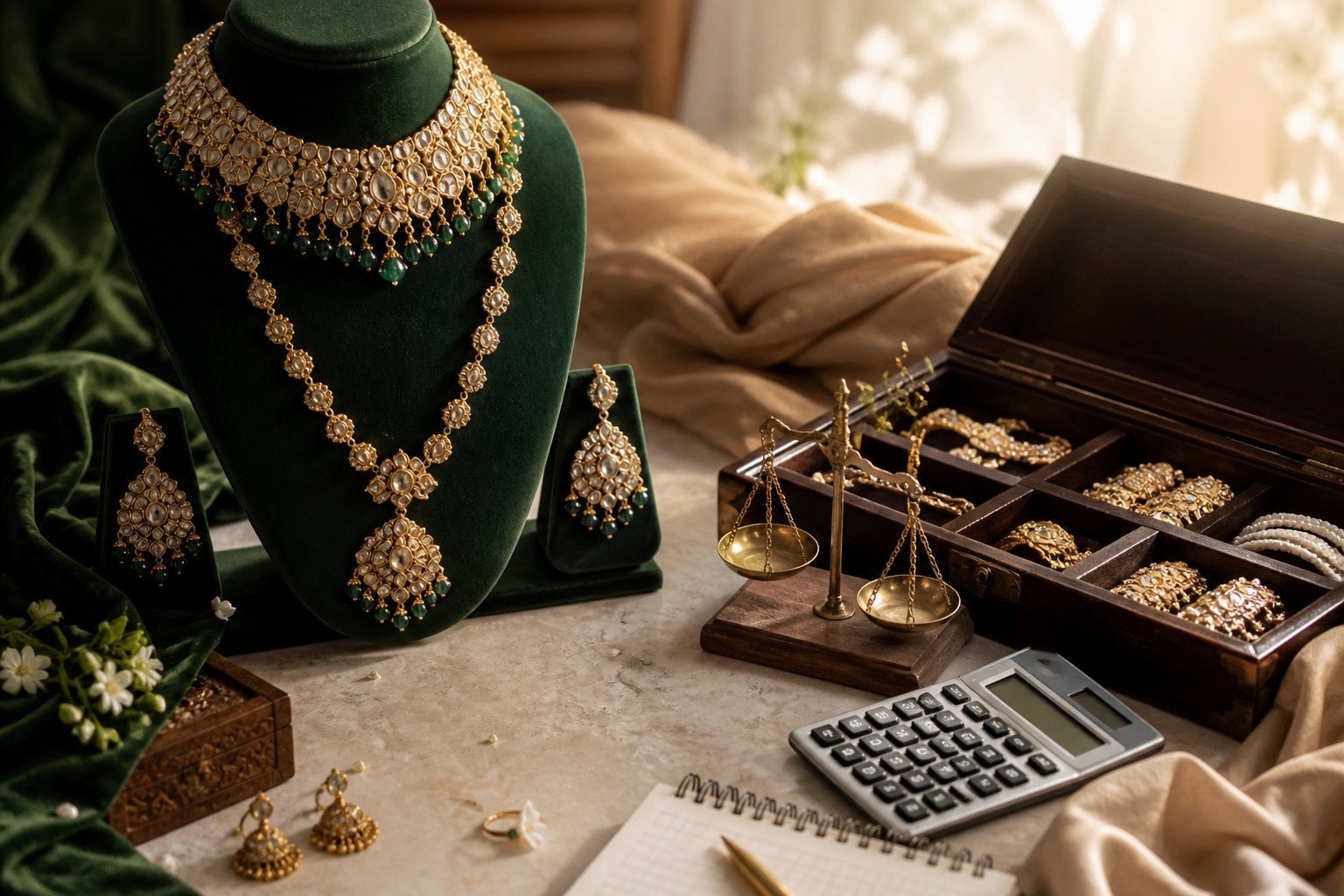
Wedding jewellery prices make sense only after the material vocabulary does. Solid gold, gold-plated base metal, kundan-style settings, polki diamonds, glass and synthetic stones can sit in similar silhouettes while meaning entirely different things for cost, repair and resale. If a seller cannot name what each visible surface is, you cannot interpret the quote.
This explainer helps buyers ask clearer questions for Pakistani bridal sets used in Pakistan and the diaspora. It does not appraise jewellery or recommend dealers. For US shoppers, the FTC publishes plain-language guidance on buying platinum, gold and silver jewelry and maintains broader jewelry guides for how materials should be described in trade.
Ask what every visible surface is made from
Point to the metal, the large stones, the small accent stones, the pearls or pearl-like beads, and the backing. Ask for each in turn. Useful answers sound like “22k gold frame,” “gold-plated silver,” “glass in foil setting,” “cubic zirconia,” or “natural diamond polki with foil.” Vague answers—“mixed materials,” “traditional bridal set”—are not material disclosures.
Plating thickness and base metal change how quickly wear shows at edges and clasp points. If you need the set for multiple events, ask how plating should be cared for and whether repair is offered.
Polki and kundan describe different things
In bridal retail speech, polki often refers to cut diamonds or diamond-like stones set with foil, while kundan refers to a traditional setting method using highly refined gold to seat stones. Shops sometimes blur the words. Your job is to learn whether you are paying for diamonds, simulants, glass, or a craft technique applied to non-diamond stones.
| Term you hear | Question to ask | Why it changes price |
|---|---|---|
| Gold | Karat? Solid or plated? Weight of gold content? | Bullion content vs fashion plating |
| Polki | Diamond or simulant? Certificate? | Stone identity dominates value |
| Kundan | Setting method on which stones/metal? | Labour and materials differ widely |
| Pearl | Natural, cultured, or imitation? | Imitation pearls are common in fashion sets |
Weight predicts comfort and repair
Try the full set for ten minutes: sit, stand, turn your head, hug. Necklace length should clear the neckline you will wear. Earrings should not lever painfully once the dupatta is pinned. Matha patti and jhoomar add load to hair structures—coordinate with the hairstylist. Heavier is not automatically better.
- What is the gold weight and karat, separately from labour and stones?
- Which stones are included in the headline price?
- Is there a buy-back or exchange policy, and on what terms?
- What is the timeline for resizing or repair before the event?
UK buyers paying deposits should keep records and understand general consumer principles via Citizens Advice and GOV.UK consumer protection. A fashion bridal set can be the right tool for a single wedding season; an heirloom purchase needs different evidence. Clear material language is the discount that never expires.
Sources and official profiles
Was this helpful?
Keep reading
Related stories
More from this desk, this beat, and the tags on this piece.
Pakistani bridal jewellery names: tikka, jhoomar, matha patti and what each piece does
Zainab Noor · 13 Oct 2026
Buying Pakistani gold jewellery in the UK: read the hallmark before the receipt
Zainab Noor · 13 Oct 2026

Readers
The conversation
0 notes
Anyone can leave a note. Guests add a name and email — no account required, and the email is never published.
No notes yet. Yours would be the first.