Building a winter storm go-bag for diaspora households
Build a winter storm go-bag for US diaspora homes around Ready.gov kit themes: water and warmth, medicines, documents, car kit, and shelvable snacks your household will actually eat.
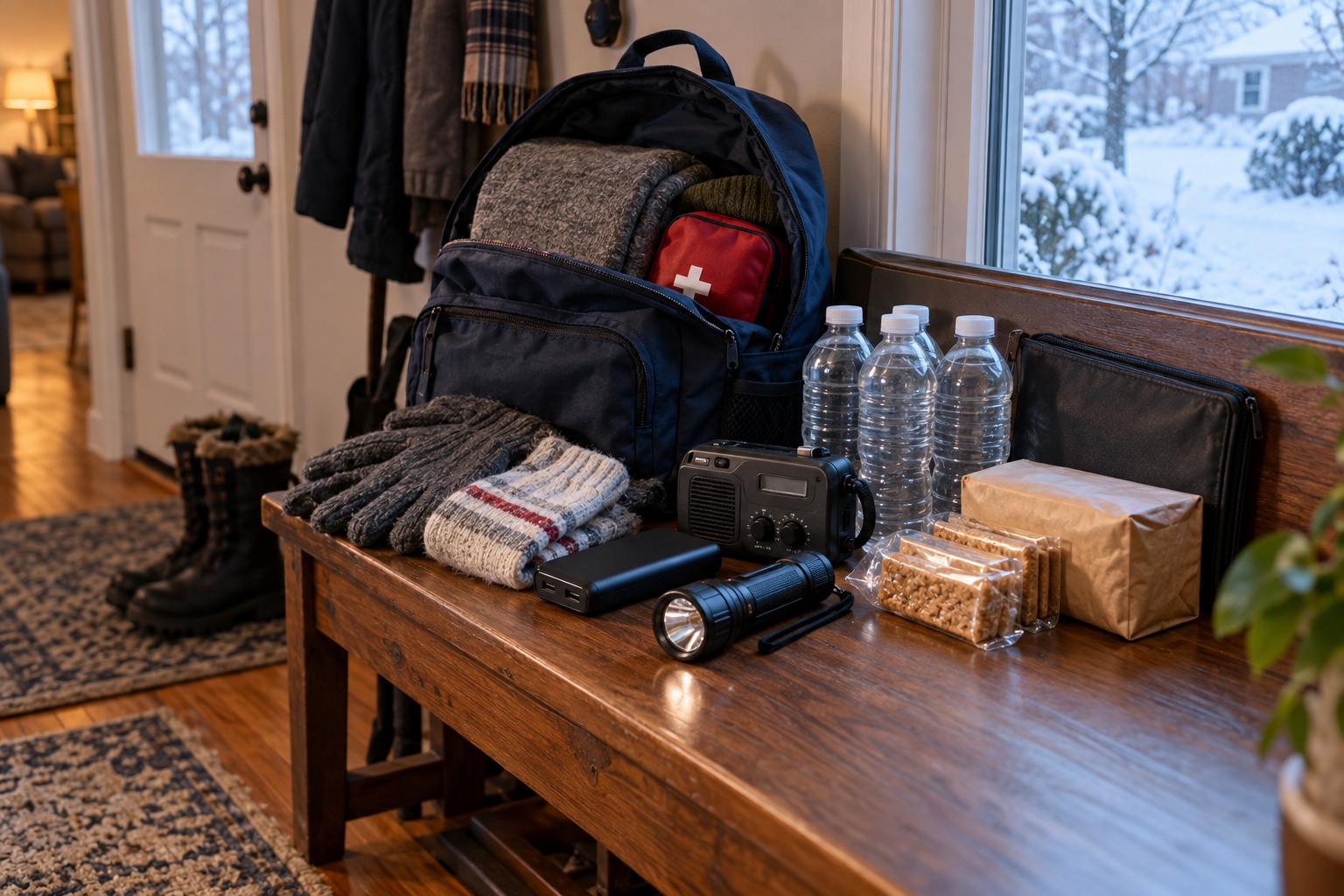
A winter storm that cuts power, closes roads, or forces a short move to a warmer relative’s house does not care whether your pantry is stocked for a wedding week. What matters is a bag you can lift: water, calories, warmth, light, medicines, and the papers that prove who you are. This is a preparedness checklist for US diaspora households, built around themes from the federal Ready campaign’s emergency kit guidance and winter-weather pages (checked around September 2026), plus the extras many Pakistani and broader South Asian homes forget until pharmacies and grocery aisles are already dark. It is household planning, not a personalised emergency plan for every county, and not medical advice.
Ready.gov’s basic kit logic is blunt: after an emergency you may need to manage for several days with what you packed. Store kit items in airtight bags inside one or two easy-to-carry containers. Keep versions where life actually happens (home, and often car or workplace) because storms do not wait for you to be in the kitchen. Winter adds cold as a primary hazard. Ready’s winter-weather guidance stresses shelter, layered clothing, supplies for several days without power, medication needs, pets, and a separate car kit if you might be stranded.
The carry layer: Ready.gov basics sized to leave the house
Build the go-bag as the portable slice of a fuller home kit. Prefer a backpack or wheeled duffel one adult can move on ice without drama. Use Ready.gov’s kit checklist as the spine.
- Water: Aim toward Ready’s planning figure of about one gallon per person per day for drinking and sanitation, then pack what you can actually carry for seventy-two hours. Sealed bottles beat “we will fill them when the alert hits.”
- Food: Several days of non-perishable calories that need no fridge and little or no heat. Include a manual can opener if anything is canned.
- Light and signal: Flashlight, extra batteries, whistle; a battery-powered or hand-crank radio that can receive weather alerts if you have one.
- First aid and hygiene: A small first-aid kit, moist towelettes, garbage bags, soap or sanitiser, masks if your household uses them for dusty or crowded shelters.
- Power and maps: Phone chargers, a charged power bank, a paper local map if signal dies.
- Warmth: Complete change of cold-weather clothes, sturdy shoes, hats and gloves, and a warm blanket or sleeping bag rated for chill, not a decorative throw.
Medicines and documents before the snack debate
Ready’s expanded kit list calls out prescription medications, everyday non-prescription needs, glasses or contact supplies, infant and pet items, cash, and copies of important family documents. For diaspora households, treat this as non-negotiable packing, not an afterthought behind the thermos.
- Medicines: Pack a labelled pouch with current prescriptions, a simple list of drug names and doses, and any devices you cannot improvise (inhaler spacers, glucose supplies, CPAP backup power if clinically required; ask your clinician what is realistic for a short displacement). Rotate stock before expiry. This article cannot tell you how many days of a controlled medicine you may carry. Follow your prescriber and pharmacy rules.
- Documents: Waterproof pouch or sealed bag with copies of IDs, immigration or visa papers your household relies on, insurance cards, a household contact sheet, and bank or benefits references you would hate to reconstruct from memory. Prefer copies or encrypted digital backups plus one small paper set, not every original certificate in a bag that can be lost. Store originals according to your own risk tolerance. The go-bag’s job is proof and continuity, not a complete archive.
- Cash: Small bills help when card readers and ATMs fail with the grid.
- Contacts: Write phone numbers for relatives out of state, a paediatrician or clinic, and your pharmacy. Phones die. Paper does not need a charger.
Halal-friendly snacks that survive the bag
Ready asks for non-perishable food. Diaspora kitchens still need food people will eat when stressed. Skip anything that spoils, leaks syrup, or requires a questionable microwave in a stranger’s shelter.
- Reliable calories: Sealed nuts, roasted chana, shelf-stable dried fruit without chocolate coatings that melt against a phone charger, protein bars your household already trusts for gelatine and emulsifiers, sealed crackers, shelf-stable milk alternatives if someone depends on them.
- Halal check: Read labels for gelatine, animal enzymes, and alcohol-based flavourings the way you would for a school lunch. Prefer sealed products you have verified on a calm day, not a panic aisle grab when shelves are half empty.
- Comfort without sabotage: Tea bags and instant coffee are light. A metal bottle of water matters more than a glass thermos of doodh patti that can shatter in a trunk. Dates travel well if packed so they do not crush into a single sticky brick.
- Infants, elders, allergies: Formula, purees, soft foods, and allergen-safe backups belong in the bag if those people will move with you. Pets need food and water too if they come.
Shelter-in-place versus leave: pack for both
Some storms strand you at home without power. Others force a short drive to a warmer relative or a public shelter. The go-bag should support both. At home, add spare blankets, a safe indoor lighting plan that does not involve candles near curtains, and a cooler strategy if the fridge fails. Ready’s winter guidance emphasises layered clothing and several days of supplies without power. If you must leave, the same bag should already contain medicines, documents, and calories so you are not packing under ice warnings.
Multi-generational households should decide who carries which bag. One adult should not be responsible for every child’s spare clothes and every elder’s medication list while also driving on ice.
Where the bag lives, and who can find it in the dark
Put the bag on a known hook or shelf, not behind seasonal décor. Tell every adult where it is. If elders or teens may need to leave without you, walk them through the zipper once. After Ramadan or a wedding, do not raid the go-bag for “just this once” snacks and forget to refill. Ready’s maintenance advice applies: keep food cool and dry, replace expired items, and rethink the kit when the household changes (new baby, new prescription, move to a colder state).
Power outages and medical devices
If someone in the household depends on powered medical equipment, ask their clinician and device supplier what a realistic outage plan looks like before winter. Ready’s kit logic cannot replace that clinical conversation. Know where the nearest open clinic or relative with a generator lives. Keep device batteries charged on a schedule, not only when forecasts turn dramatic.
For ordinary phones, a charged power bank and a car charger matter. Conserve battery by designating one communication device for updates rather than streaming video through a blackout.
In a storm, the winning household is the one that can leave or shelter without inventing a shopping list on black ice. Pack water, warmth, light, medicines, documents, and calories your family will actually eat. Use Ready.gov as the spine, then add the diaspora layer so the bag works for your real household, not a generic poster.
Shelter-in-place versus leave
Some storms strand you at home without power. Others force a short drive to a warmer relative or a public shelter. The go-bag should support both. At home, add spare blankets, a safe indoor lighting plan that does not involve candles near curtains, and a cooler strategy if the fridge fails. If you must leave, medicines, documents, and calories should already be packed.
Multi-generational households should decide who carries which bag. If someone depends on powered medical equipment, ask their clinician what a realistic outage plan looks like before winter. Know which neighbours you can text for a jump start or help carrying an elder down icy steps, and write those numbers on paper in the bag.
Sources and official profiles
Filed under
Was this helpful?
Keep reading
Related stories
More from this desk, this beat, and the tags on this piece.



Readers
The conversation
0 notes
Anyone can leave a note. Guests add a name and email — no account required, and the email is never published.
No notes yet. Yours would be the first.