How a men's kurta should fit when you want it sharp, not tight
A good kurta fit starts at the shoulder, then lets the body move. Check sleeve length, chest ease, side slits and hem position before you blame the size label.
A kurta can be expensive, embroidered and still look wrong because the shoulder sits two centimetres too far out. Menswear fit is often discussed as chest size, but the shoulder and sleeve tell the eye whether the garment belongs to the person wearing it.
Start with the shoulder seam
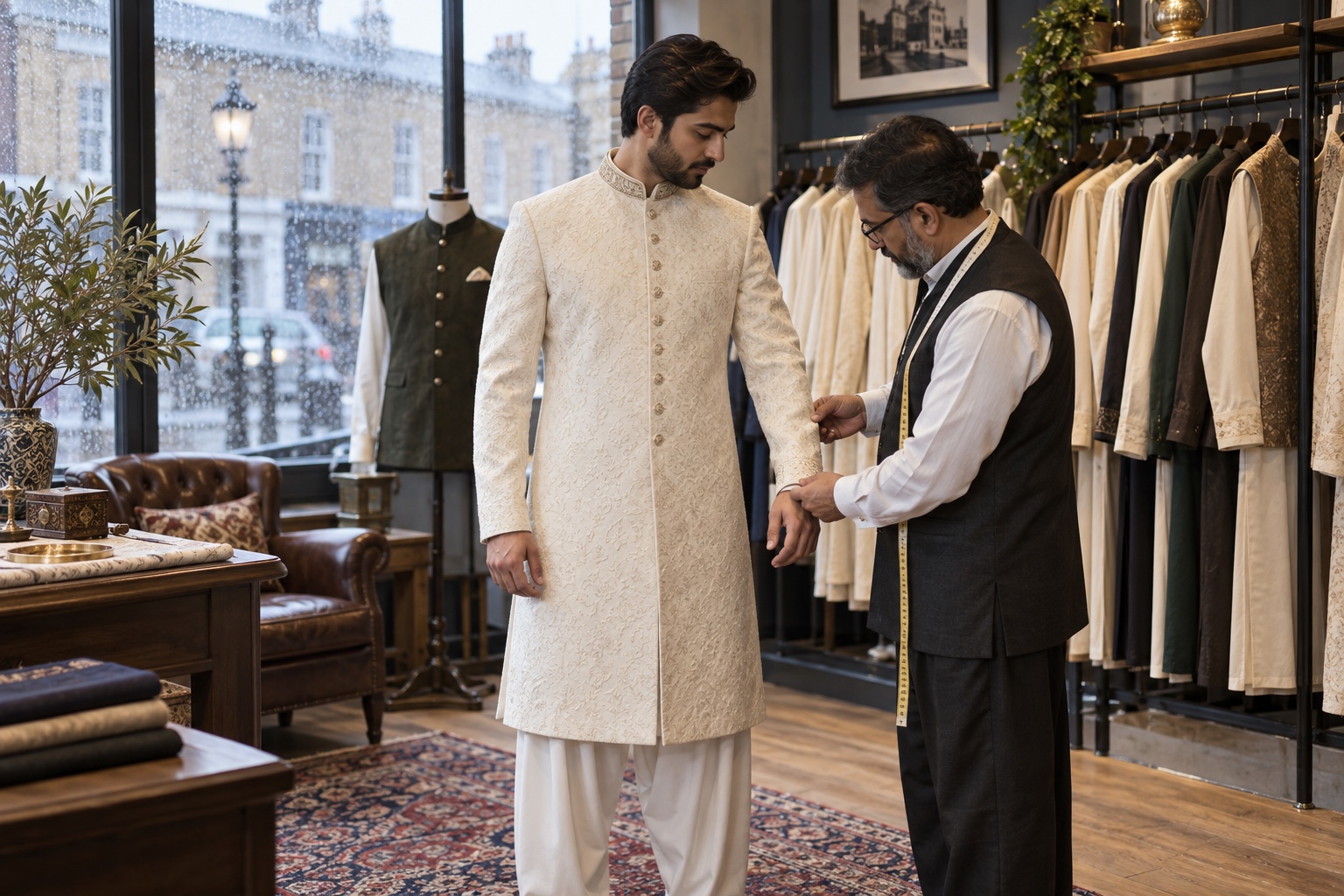
The seam should sit close to the natural end of your shoulder. A slightly relaxed kurta can drop a little, but if the seam falls well onto the upper arm the whole garment begins to read oversized rather than easy.
Raise both arms and reach forward. A clean fit should still let you move without the chest pulling sharply or the entire kurta climbing towards the neck.
Leave enough room through the chest and stomach
Traditional kurtas are not intended to behave like fitted shirts. You need enough ease to sit, pray, drive and eat comfortably. The fabric should skim rather than cling.
If the placket gapes when you sit or horizontal tension lines appear across the chest, size up or alter the side seams rather than hoping the cloth will relax permanently.
Sleeves should finish with intention
For a classic full sleeve, the cuff usually works around the wrist bone. Too long and it bunches into the hand; too short and it looks borrowed. If you roll sleeves regularly, make sure the forearm is not cut so narrow that the roll becomes a tourniquet.
Kurta length changes the whole proportion
Longer is not automatically more formal. The best length depends on height, trouser style and the cut of the garment. A straight kurta worn with slim trousers can look balanced around the knee, while a shorter contemporary cut may sit above it.
Try the kurta with the trousers and shoes you intend to wear. Judging the hem over jeans and trainers tells you less about how it will sit over shalwar and khussa.
Side slits should begin where movement needs them
Very high slits can expose more than expected when sitting; very low ones can restrict walking. The slit should allow stride without making the lower half flare awkwardly.
The collar is a comfort check
A band collar should sit neatly without pressing the throat. Fasten the top button and turn your head. If you immediately want to undo it, the neck measurement or collar construction is wrong.
Do the chair test before removing tags
Sit, cross one leg, raise your arms, bend to tie a shoe and put your hands in the pockets if there are any. Clothes should survive normal life, not only the mirror.
A sharp kurta is not the smallest one you can button. It is the one where the shoulder looks deliberate, the body can move and the length makes sense with the rest of the outfit.
Judge the whole outfit, not the isolated item: How a men's kurta should fit when you want it sharp, not tight
How a men's kurta should fit when you want it sharp, not tight makes more sense when shoes, underlayers, jewellery, dupatta, coat and event length are considered together. A garment that looks balanced barefoot in a bedroom can sit differently with heels, winter outerwear or a heavy necklace.
Fabric behaviour is part of fit: How a men's kurta should fit when you want it sharp, not tight
With men kurta fit guide as the focus, Lawn, cotton, chiffon, organza, raw silk, velvet and heavily embroidered net distribute weight differently. The same measurements can feel generous in one fabric and restrictive in another because stiffness, lining and surface work change how the cloth moves.
Ask about backing, lining and care before committing. A beautiful fabric that cannot tolerate your climate, commute or cleaning routine may spend more time in storage than on the body.
Prioritise the hard-to-alter areas: How a men's kurta should fit when you want it sharp, not tight
In practical terms for men kurta fit guide, Shoulders, armholes, engineered embroidery and fixed motifs are usually more complicated than a simple hem or side seam. When choosing between sizes, protect the areas that would require reconstruction and plan to refine the easier ones later.
For expensive formalwear, ask a tailor about alteration potential before purchase. One professional opinion can prevent buying a bargain that requires rebuilding.
Online product pages should answer technical questions: How a men's kurta should fit when you want it sharp, not tight
Applied specifically to men kurta fit guide, Look for garment measurements, fabric composition, piece count, model height, lining information, care instructions and returns. Save screenshots. If the listing cannot tell you what is actually being supplied, the campaign image is doing too much of the selling.
Comfort is part of formality: How a men's kurta should fit when you want it sharp, not tight
For a reader working through men kurta fit guide, A wedding or Eid outfit may be worn for six, eight or twelve hours. Tight armholes, unstable dupattas, unbroken shoes and a waistband that only works while standing can turn a beautiful outfit into a long negotiation.
Care starts on the first day: How a men's kurta should fit when you want it sharp, not tight
For how a men's kurta should fit when you want it sharp, not tight in particular, Keep spare fabric, care labels and alteration offcuts. Photograph valuable embroidery before cleaning and identify stains when taking formalwear to a specialist. Delicate work is easier to preserve when the next person knows what happened to it.
Do not improvise aggressive stain removal, ironing or steaming on unknown embellishment. A slower professional treatment is cheaper than replacing damaged handwork.
Use styling to solve real problems: How a men's kurta should fit when you want it sharp, not tight
With how a men's kurta should fit when you want it sharp, not tight as the focus, A shawl can provide warmth, a belt can control volume, a second scarf can provide practical head coverage and a lower shoe can rescue a long event. Styling is not only decoration; it is how a garment is adapted to real conditions.
Choose additions that reduce friction rather than create another thing to manage.
Keep a final-event checklist: How a men's kurta should fit when you want it sharp, not tight
The point of how a men's kurta should fit when you want it sharp, not tight is not to create a perfect product shot. It is to let the wearer move through the day with enough comfort and confidence that the clothes stop demanding attention.
A practical way to use this guide: How a men's kurta should fit when you want it sharp, not tight
In practical terms for how a men's kurta should fit when you want it sharp, not tight, Save the small details that will be difficult to reconstruct later: measurements, ingredient ratios, product names, family decisions, alteration notes or care instructions. A short record turns the next attempt into an improvement rather than another first try.
Applied specifically to how a men's kurta should fit when you want it sharp, not tight, Choose a reversible test where possible. Cook a half batch, wear the shoes at home, try one skincare change or ask one clear family question. Low-cost tests produce better information than making a large commitment because the first answer sounded confident.
What to review after the first attempt: How a men's kurta should fit when you want it sharp, not tight
For a reader working through how a men's kurta should fit when you want it sharp, not tight, Ask what worked, what created friction and what information you wish you had known earlier. Change one or two variables rather than rebuilding the whole plan. This keeps the useful parts and makes the next version easier.
For how a men's kurta should fit when you want it sharp, not tight in particular, The strongest PakStyles advice is meant to reduce uncertainty, not create another standard people have to perform. Use the framework, keep the parts that fit your household and update the rest when your circumstances change.
One final editorial note: How a men's kurta should fit when you want it sharp, not tight
How a men's kurta should fit when you want it sharp, not tight is most useful when treated as a framework rather than a rigid instruction. Recheck current rules, health advice or product directions where they matter, and keep your own notes about what worked. The extra few minutes spent documenting the result usually save far more time the next time the same decision appears.
Photograph fit problems in a way a tailor or seller can use: How a men's kurta should fit when you want it sharp, not tight
With how a men's kurta should fit when you want it sharp, not tight as the focus, Take front, side and back photographs in plain light, then one close image of the specific issue. Keep the camera level and avoid posing. A twisted shoulder, pulling side seam or hem problem is easier to diagnose when the body is standing naturally.
In practical terms for how a men's kurta should fit when you want it sharp, not tight, Include a tape measure in one image if the dispute is about length or width, and keep the original measurement chart or order confirmation. Clear evidence turns “this feels wrong” into a solvable alteration or customer-service conversation.
Think about repeat wear before the first event: How a men's kurta should fit when you want it sharp, not tight
Applied specifically to how a men's kurta should fit when you want it sharp, not tight, Ask how the garment could be restyled after the wedding, Eid or formal dinner. A blouse that works with a plain skirt, a waistcoat that works over white, or a dupatta that can move to another suit earns its wardrobe space more easily.
A final practical check: How a men's kurta should fit when you want it sharp, not tight
For how a men's kurta should fit when you want it sharp, not tight, judge the item in the conditions in which it will actually be used. Sit, walk, raise your arms, try the footwear, test the drape, or pack and unpack the fabric as relevant. Product photographs and a few minutes in front of a mirror can hide the pressure points, slipping, creasing or weight that become obvious over a full event.
For how a men's kurta should fit when you want it sharp, not tight, keep receipts, measurements, spare fabric and care information until the outfit has been worn successfully. A small alteration or storage decision made early is usually easier than repairing embroidery, replacing a damaged finish or discovering on the wedding day that a beautiful item does not move the way the wearer needs.
Sources and official profiles
Filed under
Was this helpful?
Keep reading
Related stories
More from this desk, this beat, and the tags on this piece.


Readers
The conversation
0 notes
Anyone can leave a note. Guests add a name and email — no account required, and the email is never published.
No notes yet. Yours would be the first.