Modest formalwear for US corporate galas
Translate black-tie-adjacent US corporate gala invitations into modest coverage, silhouette, fabric weight, and layers that read formal under ballroom light, without brand rankings or invented dress-code law.

A corporate gala invitation that says “black tie,” “black tie optional,” or “formal attire” rarely explains how to honour coverage, hijab, or a preference for longer lines. Pakistani and broader Muslim professionals in the United States are left translating a Western formal vocabulary into garments that still look intentional under ballroom light. This article is that translation. It does not rank brands, designers, or rental houses, and it does not invent your employer’s written policy.
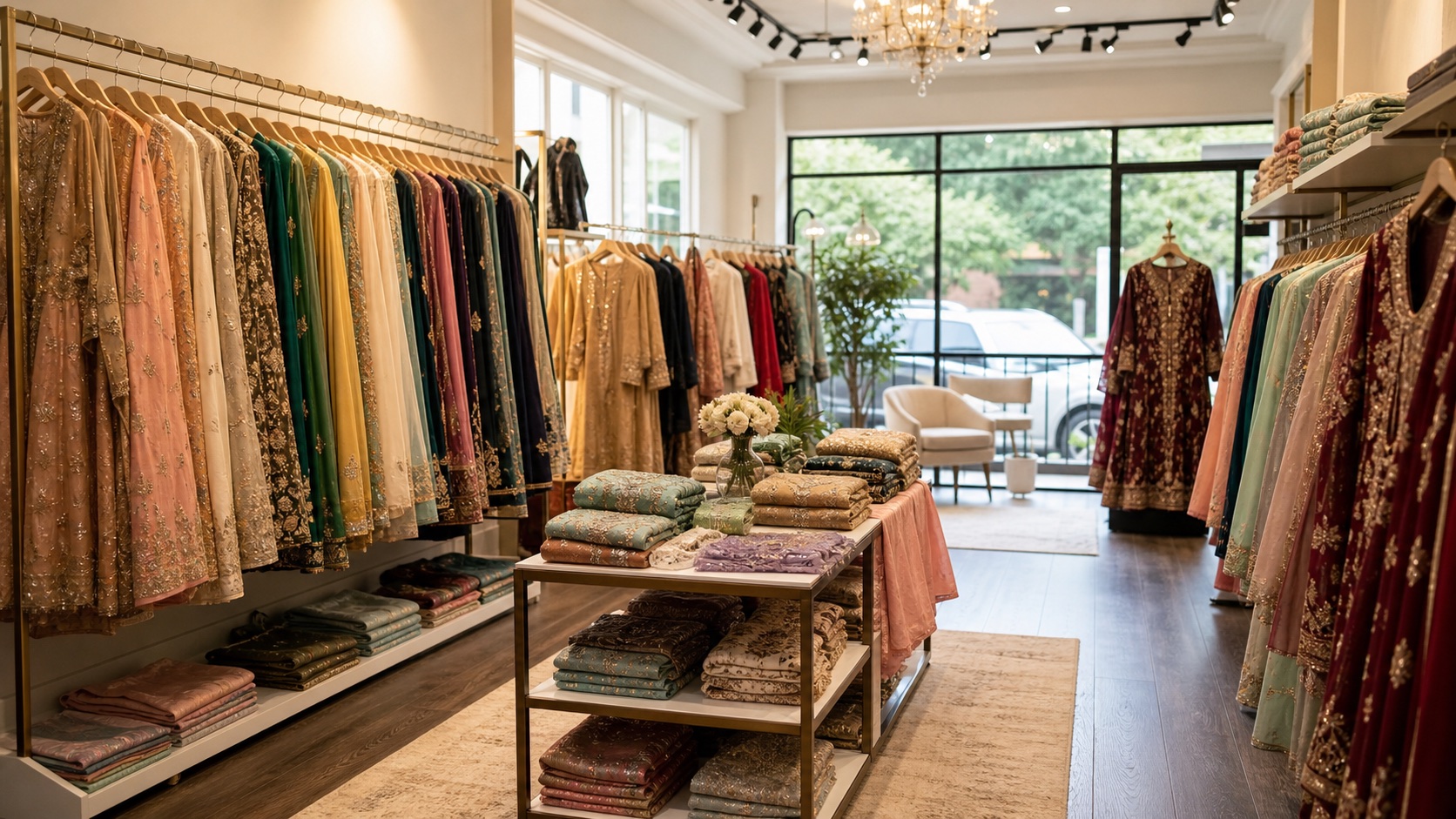
Read the invitation as constraints, not as a shopping mood
Start with the words on the card or calendar invite, then with the room you will actually enter: hotel ballroom, museum atrium, outdoor terrace with heaters, stage with company logos. “Black tie” usually signals evening formal (dark suits and evening dresses in mainstream US corporate culture) while “black tie optional” and “cocktail” leave more range but still punish athleisure, daytime lawn, and loud novelty prints. If HR or the host sent a FAQ, treat that as primary. Cousin aesthetics from a wedding WhatsApp are secondary.
Write your own modesty brief in one sentence you can reuse: wrist coverage, hem length when seated and when climbing stairs, neckline depth, whether a slit is acceptable, whether a dupatta or evening wrap is part of the look or only a bag spare. Formalwear fails most often when the photograph in your head ignores how you sit through a plated dinner and walk a carpet in view of colleagues.
Industry norms vary. Finance and law galas often skew conservative. Creative agencies and university events may tolerate more colour and texture. Tech company parties sometimes say formal and deliver branded sneakers; do not trust that rumour without a photo from last year. When the invitation is ambiguous, choose the cleaner, more formal reading of the code. It is easier to remove a wrap than to invent formality in a hotel bathroom.
| Invitation language | Modest translation to test |
|---|---|
| Black tie / formal | Evening fabric, long clean line, covered shoulders or intentional sleeve, low-contrast colour, shoes you can stand in for speeches. |
| Black tie optional | Same formality ceiling, slightly more flexibility in colour or texture; still not daytime printed lawn. |
| Cocktail / semi-formal | Shorter evening length only if your coverage standard allows it; otherwise ankle length with lighter fabric and quieter jewellery. |
| Creative black tie | One deliberate texture or colour story, not a costume. Keep coverage rules intact. |
Silhouettes that read gala without copying a strapless template
Modest formalwear for these rooms is usually about clean structure and controlled shine, not about recreating a strapless column with apologetic layers. Long column dresses or jumpsuits with opaque fabric, sleeves cut for raising a glass, and a neckline that stays put when you lean forward tend to photograph and network better than heavy bridal embroidery under fluorescent wash.
For many men, a well-fitted dark suit or tuxedo vocabulary with a modest shirt line still meets black-tie-adjacent expectations. Add cultural texture through fabric quality and restrained accessories rather than a full ceremonial sherwani unless the invitation culture of that industry event clearly welcomes it. A sherwani can look magnificent and still read as costume in a room of tuxedos if the industry’s visual language is rigid. Know the room before you fight it.
If you wear a hijab, plan the evening line the same way you plan the dress: a fabric that holds a smooth edge under flash, a secure wrap that survives handshake weather, and a colour that either matches the deepest tone of the outfit or deliberately contrasts in one controlled register. Evening sheen can work when the rest of the look stays matte. Avoid last-minute safety pins that show on a company photographer’s crop.
When religious dress meets a company dress code
Some readers are not only translating taste. They are navigating sincerely held religious dress practices inside a workplace event. The US Equal Employment Opportunity Commission’s public guidance on religious garb and grooming in the workplace explains that Title VII generally requires covered employers to make exceptions to usual dress rules for sincerely held religious practices unless doing so would pose an undue hardship. The fuller EEOC religious garb guidance includes modest clothing among the examples of religious dress practices, and it notes that customer preference or co-worker discomfort is not a lawful basis for refusing accommodation in ordinary circumstances.
That guidance is about employment law framing, not a styling tip and not personalised legal advice. A gala invitation is still an invitation. If your employer has a written policy, an employee-resource-group note, or a history of accommodating hijab, long sleeves, or ankle-length lines at company events, read those documents first. If you need an accommodation for religious dress at a work-related formal event, raise it with HR or your manager in ordinary workplace channels rather than improvising a confrontation at coat check. PakStyles cannot tell you how your specific employer will decide a case.
Fabric weight, colour, and the corporate camera
Heavy bridal zardozi that thrives in a mehndi hall can look busy and hot under stage LEDs. Matte or softly lustrous evening fabrics usually photograph cleaner. Deep jewel tones and near-blacks often read more formal than bright daytime pastels. Sequins in a narrow zone can work; sequins as the entire surface can fight the company photographer’s flash.
Air conditioning, outdoor cocktail hours, and stage lighting argue for a planned wrap, cape, or tailored jacket that matches the garment’s deepest colour so it looks composed when it stays on. Choose the wrap before the night. A pashmina grabbed from a hotel gift shop will look like a pashmina grabbed from a hotel gift shop.
Test colour under two lights: warm household bulbs and a cool white bathroom LED. Many jewel tones shift toward brown or grey under ballroom wash. If the dress only looks right in one light, bring a second option or a jacket that stabilises the colour story.
Jewellery, bags, fragrance, and motion tests
Jewellery and handbags should survive a security tray and a buffet plate. Leave ceremonial pieces that need constant adjustment at home. Carry a small repair kit: fashion tape, spare pins, blotting papers, a stain wipe, and comfortable backup flats if the venue allows a discreet swap after official photos.
Fragrance and makeup also belong to the corporate register. A heavy attar that reads celebratory at a wedding can overwhelm a plated dinner table. Choose something quieter; colleagues will stand close for photographs.
Two nights before, dress fully (shoes, coverage layers, bag, outer wrap) and do the real motions: sit, stand, climb a stair, raise an arm for a toast, put on a coat. Note what rides up, gaps, or digs. Alter locally if a hem or sleeve is the only gap between “almost” and “ready.” Borrowed inspiration photos are fine; unpaid brand rankings are not how PakStyles settles a gala.
When South Asian formalwear belongs, and when it distracts
Some industries and employee-resource-group evenings welcome cultural formalwear as part of the room’s diversity story. Others are visually conservative. If you choose a modern saree drape, an embroidered jacket over a column dress, or a restrained sherwani, make sure the silhouette still reads evening and the coverage rules you set for yourself still hold when you sit.
Men who want a waistcoat, pocket square, or subtle South Asian textile detail can often stay inside black-tie-adjacent expectations more easily than a full ceremonial outfit. Women who want a dupatta as part of the look should decide whether it is structural (pinned, weighted, intentional) or a spare in the bag. A trailing unsecured dupatta becomes a buffet hazard and a photo distraction.
If your workplace has an employee resource group or a written diversity note about cultural dress at company events, read it. If it does not, ask a trusted colleague who attended last year what the room actually wore, not what the invitation hoped.
Renting, borrowing, and alteration timing
Rental houses and cousin wardrobes can solve a one-night formal need, but they still require the same opacity check, motion test, and coverage brief. Borrow early enough to alter a hem. Same-day pickup leaves no time to discover a sheer panel under ballroom LEDs. If you buy, prioritise fit and opacity over embroidery density. A tailor who understands sleeve mobility for handshakes is more valuable than a last-minute embellishment.
Budget for shoes you can stand in through speeches. Formal photographs rarely show the blister; the networking hour does. Confirm return windows and deposit terms in writing if you rent. A “dry clean only” rental clause is ordinary; a surprise fee for ordinary wear is not. Ask before the night, not after.
A simple night-of sequence
- Steam or press at home; hotel irons destroy delicate hems.
- Dress, then do one full sit-stand-stair check before you leave.
- Pack the repair kit and a lint roller in the bag, not in a separate tote you will leave in the car.
- Arrive with the wrap on if the outdoor cocktail hour is cold; remove it only when the room temperature makes sense.
- After official photos, swap to backup flats if you need them, then work the room.
The goal is to look like yourself at the company’s formal register: covered, composed, and free to do the actual work of the evening without managing a garment crisis.
Sources and official profiles
Was this helpful?
Keep reading
Related stories
More from this desk, this beat, and the tags on this piece.
Pakistani maternity occasionwear: comfort without buying a one-night outfit
Zainab Noor · 13 Sep 2026
Mosque-event dressing: practical Pakistani outfits for prayer and hosting
Zainab Noor · 13 Sep 2026
Readers
The conversation
0 notes
Anyone can leave a note. Guests add a name and email — no account required, and the email is never published.
No notes yet. Yours would be the first.