Packing UK Eid leftovers into Monday lunchboxes
How British Pakistani kitchens turn Eid trays into Monday school and office lunches: shallow cooling, rice caution, thermos versus cold-lane packing, and allergen labels that match shared tables.
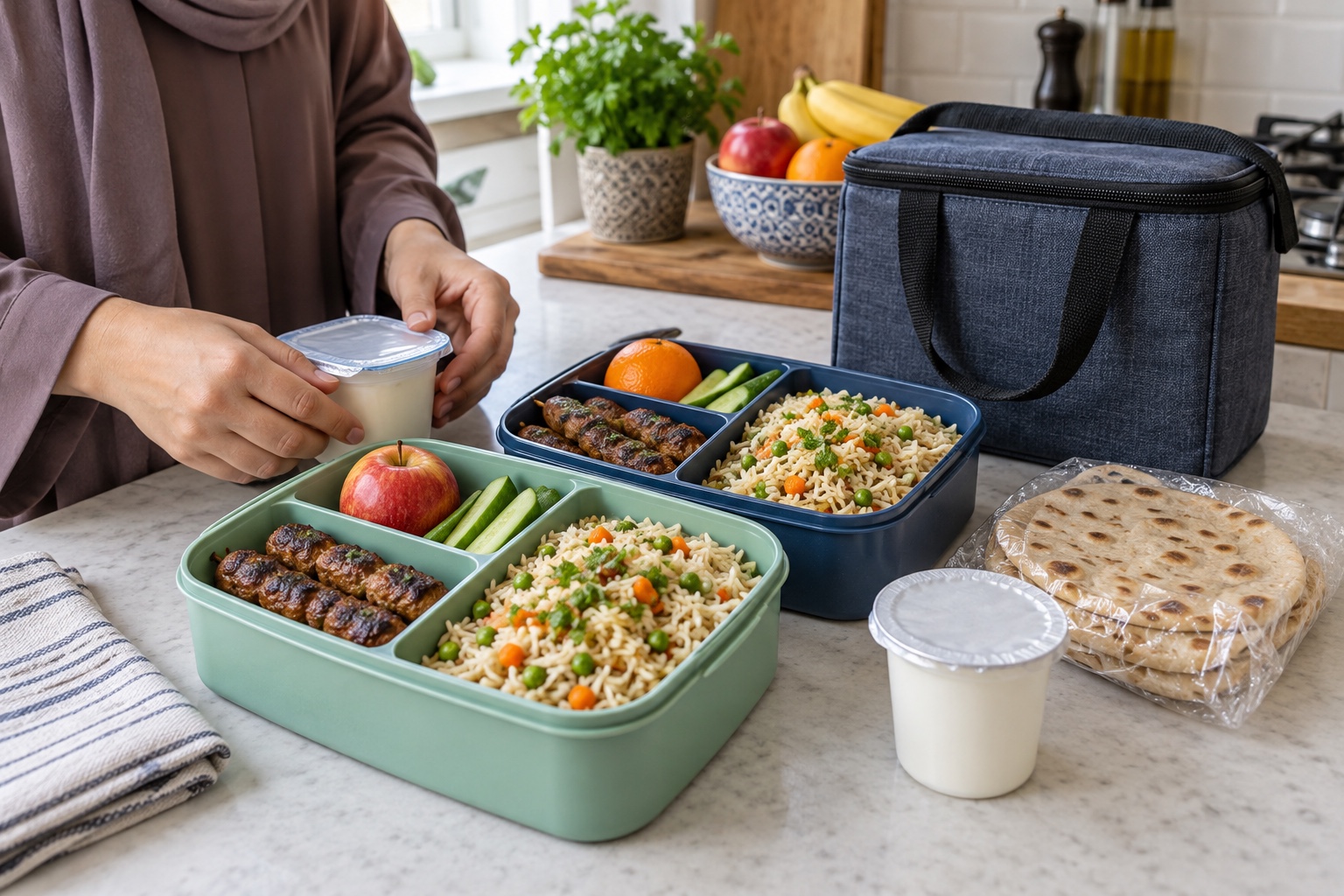
By Sunday night after Eid, the fridge looks like a second feast: trays of biryani stacked under foil, koftas in a deep bowl, sheer khurma in a jug that will not fit beside the milk. Monday still arrives with a school bag and an office microwave queue. The useful question is not whether leftovers are “allowed.” It is which dishes can travel safely, which should freeze, and which should be eaten at home while they are still honest food.
This piece is for British Pakistani households converting an Eid surplus into weekday lunches. Food-hygiene notes follow UK Food Standards Agency and NHS public guidance checked around September 2026. It is not personalised medical advice, a calorie plan, or a claim that any leftover dish is nutritionally complete for every child or adult.
Treat the leftover table as a second cook
Guests leave. The cooker is still warm. The temptation is to leave deep trays on the counter while you hug people in the hallway. That hour is when rice and meat spend longest in the temperature range bacteria like. The Food Standards Agency’s chilling guidance is the practical UK baseline: cool cooked food promptly, use shallow containers so the centre drops temperature faster, and refrigerate once the food is no longer steaming hot. NHS advice on preparing and cooking food safely makes the same household point in plain language: do not leave cooked food sitting out for long stretches, and reheat leftovers until steaming hot.
Before anyone naps, do one pass with three destinations: eat tonight, pack for Monday, freeze. Portion Monday first while you still have clean boxes and mental energy. Freeze what you will not finish within a day or two. Leave the “maybe someone will nibble” tray only if you can cool and refrigerate it properly; otherwise decide honestly and bin what sat warm too long. Thrift that creates Monday stomach trouble is not thrift.
Rice after Eid needs its own lane
Biryani, pilau, and plain rice are the dishes most likely to sit in a warm tray while goodbyes drag on. The FSA’s home food fact checker explains why leftover rice is a special case: uncooked rice can contain spores of Bacillus cereus that survive cooking. The longer cooked rice stays at room temperature, the more likely bacteria or toxins make it unsafe. Reheating does not reliably destroy toxins that formed while rice sat warm.
Public FSA advice for leftover rice is specific: chill as quickly as possible, ideally within about an hour, by dividing into smaller portions rather than leaving rice in the cooker, steamer, or pan; keep refrigerated rice for no more than a day before reheating; reheat only once until steaming hot throughout; eat promptly. Cold rice may be eaten if it was cooled quickly and refrigerated, and should be consumed within 24 hours under that guidance. Freezing is allowed if rice goes into the freezer quickly after rapid cooling; defrost in the fridge and reheat until steaming hot before eating.
For a Monday lunchbox with no school fridge, choose a route you can defend. Send rice only in a preheated thermos that keeps it hot until lunch. Or send rice that was cooled quickly after Eid, refrigerated overnight, packed with a strong ice pack, and eaten cold the next day within that short window. If neither route is realistic, keep the rice for an adult dinner at home with a proper reheat, and send the child chapati, potatoes, or pasta instead. Cultural pride does not require a cloakroom biryani that spent three hours beside a radiator.
Which Eid dishes survive a British lunch bag
| Eid leftover | Monday format that usually works | Often fails when |
|---|---|---|
| Dry kebabs, seekh, or roasted chicken pieces | Cold lane with ice pack; wrap separate from wet salad | Packed warm; sauced until the wrap soaks |
| Kofta or qeema in gravy | Preheated thermos; spoon packed | Half-filled flask; bag tipped on its side |
| Biryani or pilau | Hot thermos route, or carefully chilled cold route within FSA rice window | Warm box left ambient until midday |
| Daal or haleem | Thermos for adults or schools that allow hot food | Leaking lid; no spoon; child cannot open flask safely |
| Chapati, paratha, or naan | Packed dry, separate from gravy | Wrapped against wet salan overnight |
| Sheer khurma or creamy desserts | Usually better as a home dessert; if packed, sealed and iced | Shared school table with nut pieces unlabelled |
| Samosas or pakoras | Fully cooled; school allows fried foods; separate from juice | Packed hot into a sealed box; soggy steam |
Taste cold before you pack. Rice that sat under gravy overnight is a different dish from fresh pilau. If the texture is past saving for a child who will not reheat, send something simpler: yoghurt against an ice pack, fruit, and a dry kebab that will not weep through paper. Adults with a reliable microwave can take a labelled box of keema to reheat until steaming hot; that is a different logistics problem from a primary-school cloakroom.
Hot lane, cold lane, and the Eid flatbread problem
Give each vessel one job. A thermos is for food that must stay hot until the sitting: daal, nihari, keema, or mild salan. Rinse the flask with boiling water, empty it, fill with piping-hot food, seal, and keep upright. A half-filled flask cools faster. An ice pack or frozen water bottle is for the cold lane: sandwiches, cheese, yoghurt, cut fruit, and leftovers that would live in your fridge at home. Mixing hot and cold in one soft bag without insulation is how both jobs fail.
Flatbreads dry out or go leathery when they sit against wet gravy. Pack them separately. If Monday’s lunch is a wrap, assemble in the morning from cold fillings rather than leaving a sauced roll sealed overnight. For picnic-style bags that sit away from a fridge, the FSA’s guidance on keeping food safe on a picnic is a useful UK baseline: keep perishable items cold, keep bags closed and out of direct sun, and throw away perishables that have sat warm too long in hot weather rather than sniff-testing them into a second chance.
Allergen honesty after a feast table
Eid kitchens often include nuts in desserts, sesame on snacks, egg in batter, and dairy in almost everything. Shared school tables and office fridges make other people’s allergies your logistics problem even when your household has none. England’s Department for Education publishes statutory allergy safety in schools guidance that expects schools to manage food-allergy risk and to set clear expectations for packed lunches brought from home. Read your school’s packed-lunch and allergy policy before you send pistachio barfi “as a treat” or unmarked sesame sweets.
Label the lid with the dish name, the date, and any allergens that matter for the room the food will enter. The FSA’s pages on allergen information for consumers explain how the major allergens are communicated in UK food contexts. A lunchbox note does not need to be a legal essay. It does need to be true. If your own child has a diagnosed allergy or medical dietary need, that belongs with the school’s medical process, not with improvisation from this article.
Freeze the surplus that will not earn a lunch slot
Not every tray deserves a Monday bag. Freeze surplus within a day or two if you will not eat it, after rapid cooling in shallow portions. Label bags with the dish, spice level, and date. Reheat from frozen or thawed-in-fridge food until steaming hot throughout, and only reheat the portion you will eat. FSA cooking guidance is clear that leftovers should be reheated until steaming hot all the way through; do not warm rice or meat to “just edible” and call it done.
Food that returns from school or the office uneaten after a warm morning in a bag should not automatically become Tuesday’s lunch. If perishable food sat ambient for hours, treat it as a waste decision guided by FSA picnic and leftover caution. Thermos food that was still hot at lunch and came home quickly is a different case from yoghurt that spent the day beside a radiator.
A Sunday-night sequence that fits Eid exhaustion
- Clear deep trays into shallow boxes while the kitchen is still staffed.
- Separate rice into small portions immediately; refrigerate or freeze on the FSA timeline.
- Choose Monday’s hot-lane or cold-lane format before you sleep.
- Set aside dry proteins and flatbreads for lunch; freeze heavy gravies you will not reheat properly.
- Write allergen and date labels while you still remember what went into the dessert.
- In the morning, pack from fridge or preheated thermos, not from a warm hob.
Eid abundance is meant to be shared across days, not abandoned in the back of the fridge until it smells like regret. Monday still needs a lunch that arrives intact, labelled, and safe to open at a desk or a shared table. The feast was hospitality. The lunchbox is logistics with the same respect for the people who will eat it.
Sources and official profiles
Filed under
Was this helpful?
Keep reading
Related stories
More from this desk, this beat, and the tags on this piece.
Ghee, butter and vegetable oils: the heart-health difference is mostly the fat profile
Sara Malik · 18 Oct 2026

Why South Asian heart-disease risk is higher in the UK—and why ethnicity is not destiny
Sara Malik · 21 Oct 2026

Vitamin D and South Asian skin in the UK: why NHS advice is different year-round
Sara Malik · 20 Oct 2026

Readers
The conversation
0 notes
Anyone can leave a note. Guests add a name and email — no account required, and the email is never published.
No notes yet. Yours would be the first.