Vegetarian Pakistani meals built around daal, beans, and vegetables
Build vegetarian Pakistani meals from daal, beans and vegetables that already have their own techniques—contrast, texture and acid—rather than deleting meat from a meat menu.
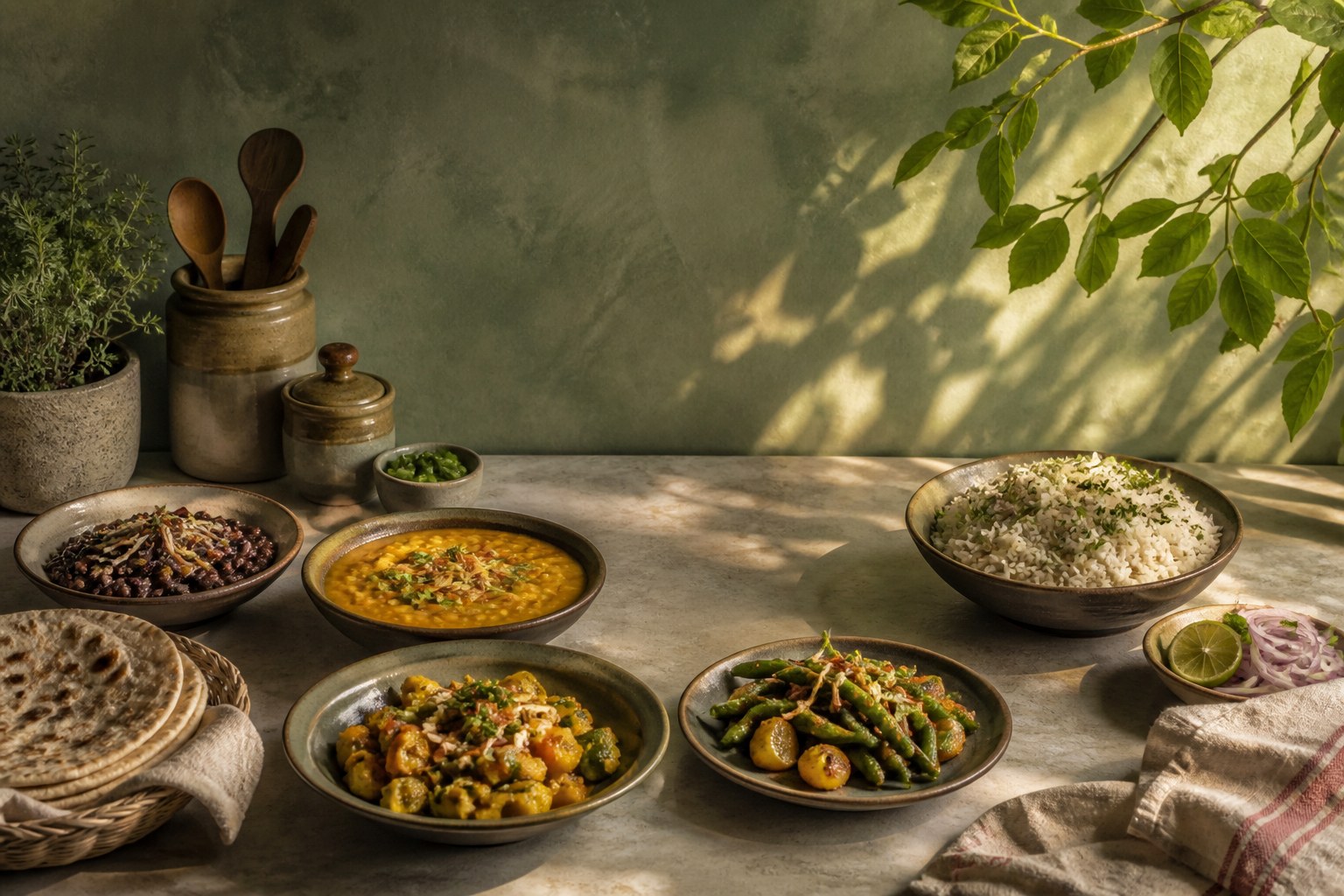
Vegetarian Pakistani cooking is not a meat menu with the protein removed. Daal, beans, gourds, greens, aubergine and okra already have their own techniques, textures and failure modes. The useful question is not “what can replace chicken tonight?” It is which pulse or vegetable will carry the plate, what will contrast it, and how the leftovers will be chilled safely before anyone asks for a second helping.
This guide is for households that cook Pakistani food regularly—across Pakistan, the UK and the US—and want meatless meals that feel complete rather than apologetic. It is a plate-building method, not a medical nutrition plan. Anyone with clinical dietary needs should take advice from a qualified clinician; the food-safety notes below summarise public guidance and do not replace it.
Start with the pulse, not the absence of meat
A satisfying vegetarian Pakistani plate usually rests on one primary pulse or bean dish, one vegetable with its own character, bread or rice in a controlled amount, and something sharp or crunchy that resets the mouth. When those four jobs are assigned deliberately, the meal stops sounding like a compromise.
Daal is the weekday backbone for a reason: it is cheap, freezes well when cooled properly, and accepts a late tarka of tempered oil, garlic, cumin or dried chillies without needing a second shopping trip. Masoor cooks quickly and remains thin enough for a spoon. Moong can be cooked plain for recovery days or with a light tarka when you want fragrance without heaviness. Chana daal wants a longer simmer and rewards a firmer bite. Maash (urad) is denser and often better as a smaller supporting bowl than as a bottomless pot for a whole week.
Household taste still matters. Some families want daal thin enough to drink from the edge of a bowl; others want a ladle that stands up. Neither is more authentic. What fails is serving three soft, beige dishes with no contrast and then concluding that vegetarian food is incomplete.
| Pulse | Typical texture job | What to put beside it |
|---|---|---|
| Masoor | Light, pourable, fast | Crisp okra, lemon, raw onion |
| Moong | Soft, gentle, adaptable | Dry aloo, yoghurt, green chilli |
| Chana daal | Firm, nutty, slower | Tomato-onion salad, pickles |
| Maash | Dense, creamy when blended | Simple sabzi, not another heavy stew |
| Chickpeas / lobia | Week-ready protein that reheats | Flatbread and a sharp chutney |
Beans make the week practical
Chickpeas and black-eyed beans (lobia) earn their place because they survive the refrigerator better than many fried vegetables. Cook a large pot once, chill it promptly in shallow containers, and reheat only what you need. In the UK, the Food Standards Agency’s chilling guidance emphasises cooling leftovers quickly and refrigerating them rather than leaving pots on the hob. In the US, the USDA FSIS leftovers page similarly advises refrigerating leftovers within two hours (one hour in very hot conditions) and reheating leftovers thoroughly.
A practical week might look like this: Sunday chickpeas with a tomato-onion base; Monday the same chickpeas thinned into a soup with spinach; Tuesday a dry sabzi and fresh roti so the fridge does not become one beige stew; Wednesday lobia with a cucumber salad; Thursday a lighter moong while you use remaining bread. Variety is not aesthetic. It is how you keep people eating vegetables without bargaining.
Canned chickpeas are not a compromise if you rinse them and give them a proper base of onion, tomato, ginger and spice. Dried beans cost less and taste fuller when soaked and cooked gently; they also demand planning. Keep both options in the cupboard so a late decision does not default to takeaway meat.
Dry sabzi protects vegetable character
Many vegetarian menus fail because every dish is wet. Okra (bhindi), aubergine (baingan), cauliflower, bottle gourd (lauki) and spinach each need a method that preserves what makes them themselves. Okra wants high heat and minimal stirring so it does not turn slimy. Aubergine can take a smoky char or a controlled stew, but not both jobs at once unless you intend a mash. Cauliflower should still taste like cauliflower after the spices; if the pan is crowded, it steams instead of browning. Lauki is mild and benefits from lemon and black pepper more than from another heavy spice paste.
Think in contrasts. If the daal is soft and spoonable, the vegetable should offer bite or roasted edges. If the vegetable is rich with oil, the pulse should stay lighter. A plate of two soft stews and soft bread is why people declare they “need meat.” The declaration is often about texture boredom, not a biological requirement for that particular evening.
Seasonal shopping helps more than novelty spice mixes. Winter greens behave differently from summer tori. Monsoon tomatoes can be watery; cook them down longer or switch to a drier spice approach. Diaspora shops may offer frozen methi, spinach and okra that are legitimate weeknight tools when fresh produce is tired or expensive.
Acid, crunch and fat are not garnish
Vegetarian Pakistani food often tastes “incomplete” when cooks forget the finishing tools that meat fat otherwise provided. Lemon, raw onion, green chilli, chaat masala, pickled carrot, crushed papad, and a measured spoon of ghee or tempered oil are structural, not decorative. Acid cuts starch. Crunch interrupts softness. A late tarka announces aroma without requiring another protein.
Yoghurt belongs here too, but only when the household can keep it cold and when nobody at the table has an allergy or intolerance that makes it unsafe. The FDA’s food-allergy overview is a reminder that milk is a major allergen in the United States; UK households should treat declared allergies with the same seriousness and read labels on shop-bought raita mixes and crisps. If yoghurt is off the table, lean harder on lemon, onion and pickle rather than forcing a substitute that nobody likes.
Fat still matters in small amounts. A teaspoon of ghee in a tarka can make a lean daal taste finished. Pouring half a cup because the meal “needs richness” usually muddies the vegetable. Measure.
Rice and leftover discipline
Rice is where vegetarian menus quietly become unsafe. The FSA’s home food fact checker explains that cooked rice should be cooled quickly—ideally within an hour—refrigerated, eaten within about a day when kept chilled, and reheated only once until steaming hot throughout. Do not leave rice in the cooker overnight “for tomorrow’s daal.” Portion it, chill it, and freeze what you will not eat soon.
The same logic applies to cooked daal. Large pots cool slowly. Divide into shallow containers, refrigerate promptly, and reheat until piping hot. The FSA’s cooking guidance is the reference for thorough reheating in UK homes; FSIS leftovers guidance serves the same role for US kitchens. Reheating a portion in a covered pan with a splash of water often restores daal better than a dry microwave blast, but the safety test remains heat throughout, not nostalgia for yesterday’s consistency.
Shopping, hosting and what this method refuses
Keep two or three pulses dry or canned, one green vegetable that cooks fast, one longer-cooking vegetable, lemons, onions, and a tarka kit. Batch the labour you dislike: a larger onion base cooled safely can cover two or three evenings; bread cooked for two nights can revive on a hot tawa.
When guests expect meat, announce the menu early and make the plate abundant in contrast rather than apology speeches. Children often negotiate texture before ideology—offer a milder daal and cucumber before a bitter karela experiment on a tired school night.
This method does not invent protein grams as moral scorekeeping, treat paneer as mandatory, or promise conversion of every meat-first guest. Cook for the people who live in the house first. If you want a single test of whether a vegetarian Pakistani meal worked, ask what returned for lunch tomorrow: a daal with character after careful reheat, a dry sabzi that did not collapse, and onion salad refreshed with lemon beat any overloaded thali photograph.
A seven-evening sketch without repeating one stew
Monday: masoor with dry bhindi, roti, lemon. Tuesday: chickpeas thinned with spinach, plain rice cooled and stored correctly if leftover. Wednesday: moong with roasted cauliflower and onion salad. Thursday: lobia with cucumber and a small paratha. Friday: chana daal with tomato salad and a hotter tarka. Saturday: aubergine and a lighter daal for guests who want abundance without two heavy stews. Sunday: cook beans or chickpeas for the week, cool in shallow containers, and freeze one portion before the drawer fills with identical leftovers.
Adjust spice for the people at the table, not for an imagined audience online. Keep green chilli as a side for those who want heat. Keep one mild bowl for children or guests who do not. The plate still reads as Pakistani food when the pulse is cooked properly, the vegetable keeps its character, and the finishing acid arrives on time.
Sources and official profiles
Was this helpful?
Keep reading
Related stories
More from this desk, this beat, and the tags on this piece.
Shami kebab that freezes well: cook the mixture dry before you shape it
Hassan Raza · 5 Oct 2026
Readers
The conversation
0 notes
Anyone can leave a note. Guests add a name and email — no account required, and the email is never published.
No notes yet. Yours would be the first.