Skin routines that survive UK central heating and dry winters
Manage UK winter dryness with gentler cleansing, emollient layering on damp skin, humidifier caution and clear signs to ask a pharmacist or GP, without product rankings or diagnoses.
British Pakistani winters often mean radiators on before the light fades, wool against the neck, and indoor air that pulls moisture from skin that already spent summer under stronger sun or air-conditioning abroad. Tight cheeks after a hot shower, flaking around the nose, or knuckles that crack in the office are common seasonal complaints. They are not a diagnosis, and this article is not one either. It is a practical map of what to change first when central heating and cold wind meet skin that suddenly feels underfed.
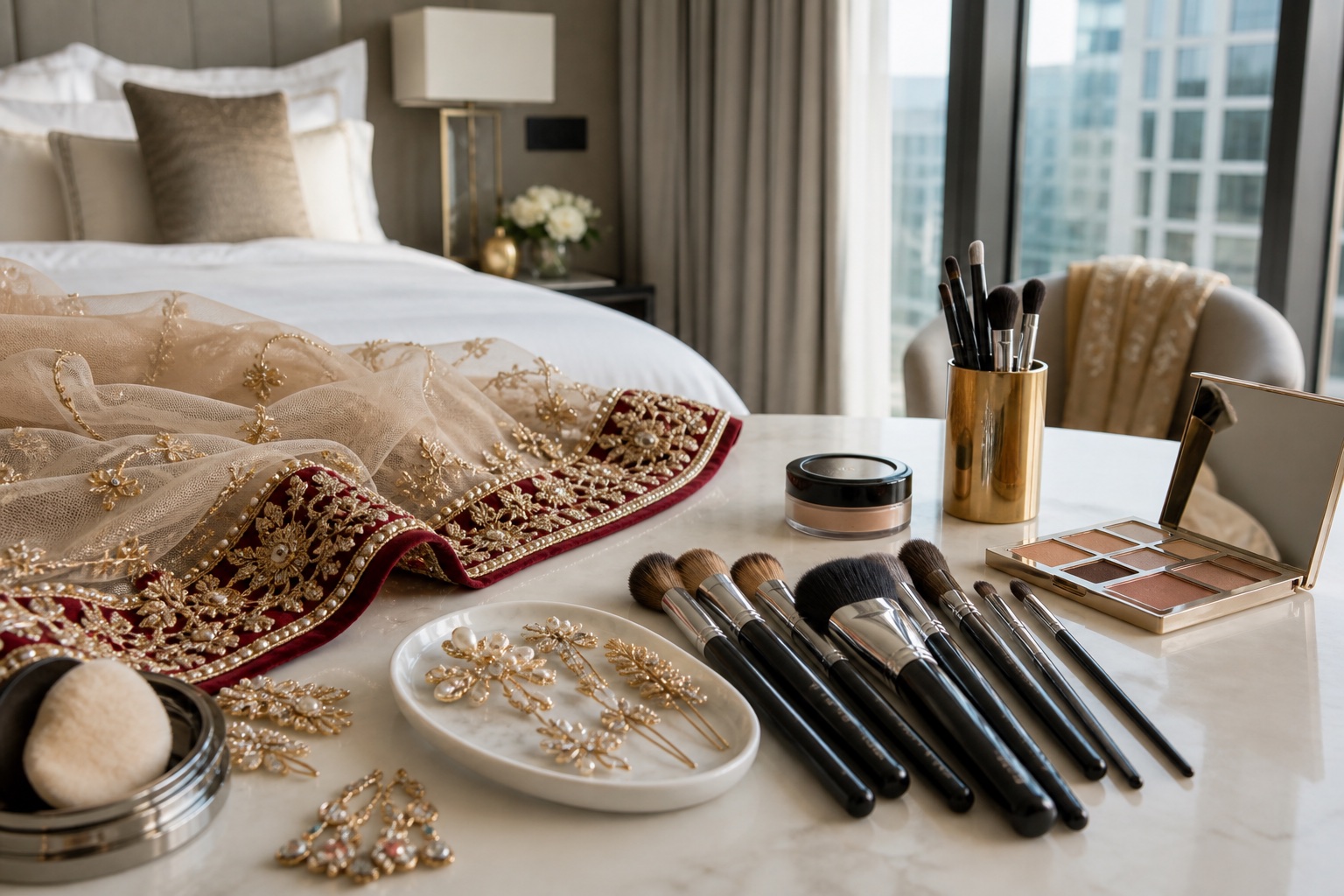
The photograph with this piece is thematic beauty-desk stock. It does not depict a named person, clinic or product. Nothing here replaces advice from a pharmacist, GP or dermatologist for your own skin.
Start with the week you actually live
Office heating, school runs, mosque visits, and kitchen steam during wedding season all change how dry skin feels by Thursday. A routine that only works on a quiet Sunday will not survive January. Place cream where the drying happens: by the kettle, in the coat pocket, beside the bathroom sink used for wudu. Products left in a bedroom drawer help only once a day.
If you travel between a dry UK flat and a humid visit abroad in the same winter, expect a reset each time you return. Reapply the boring sequence for several days before judging a cream a failure.
What the heating does to a routine
Warm dry rooms increase water loss from the skin’s surface. Hot showers feel comforting after a commute and then strip further. Fragrance-heavy washes and alcohol-heavy toners can leave a temporary “clean” feeling that reads as tightness an hour later. The useful winter shift is usually subtractive before it is additive: shorter, warmer (not scalding) showers; a gentler cleanser; moisturiser applied while skin is still slightly damp; and a decision about whether every active serum still earns its place when the barrier is already stressed.
Commuting multiplies the problem. Outdoor cold, wind and rain, then a blast of dry office heating, then another cold walk home. Hands take the worst of soap, sanitiser and wet fabric gloves. Lips crack on the same cycle. A winter routine that only thinks about the face will miss where most people actually hurt.
Layering without turning the bathroom into a lab
Think in jobs, not brand ladders. A light leave-on lotion or cream can go on first if you need slip and daytime wear under makeup. A richer cream or ointment-style emollient can follow on the driest zones (cheeks, shins, hands), especially at night. The NHS explains emollients as moisturising treatments that help trap moisture. It notes that creams often suit daytime use while greasier ointments can help very dry skin at night, and that leave-on products are ideally used often, including after washing. Smooth rather than scrub. If you also use a prescribed steroid or other treatment, ask a pharmacist or clinician about order and waiting time rather than guessing from a social-media reel.
Apply emollient after washing while skin is still slightly damp, as NHS-style guidance commonly recommends, so moisture is less likely to escape. You cannot “overuse” plain emollient in the way people fear with actives, but you can choose textures you will actually apply. A perfect ointment left in the tube helps nobody.
Hands and lips need their own plan: a tube that lives by the kettle, another in the coat pocket, and a habit of reapplying after wudu or dishwashing. If wool scarves itch, try a soft cotton layer against the skin so the problem is friction as much as dryness.
Wudu, dishwashing and the British Pakistani day
Repeated wetting and drying strips hands. Pat dry, then emollient. Keep a plain cream near the sink used for wudu if that is part of your day. Fragrance-heavy “beauty” hand creams that sting on cracked skin are not a moral failing to endure; switch to something bland and occlusive enough to stay put.
Dishwashing and hot kitchen work during wedding season or Eid entertaining add another drying cycle. Gloves help some people and irritate others. If gloves are used, dry hands and reapply emollient after. Do not treat burning or weeping skin as a badge of hosting.
Melanin-rich skin myths that waste winter
Dryness is not “only a fair-skin problem.” Barrier stress from heating, hot water and wind is common across skin tones. Flaking can show as ashy cast on melanin-rich skin and still needs emollient care, not only a new foundation. Conversely, pigment-changing products marketed for “glow” are a poor first response to winter tightness. Fix comfort and barrier basics before cosmetic experiments.
Do not scrape dry skin with harsh scrubs because it looks dull under office lights. Smooth emollient, reduce hot water, and give the barrier days. If dark patches, sudden pigment change, or painful inflammation appear, that is a clinical conversation, not a serum ladder.
What to pause when the barrier is stressed
Winter is a poor moment to begin multiple new exfoliating acids, strong retinoids, or experimental brightening routines unless a clinician has set that plan. If your skin is already tight and flaking, simplify. Cleanse gently, moisturise, protect from cold wind with soft layers, and reintroduce actives later if they still make sense. Marketing calendars do not have to match your barrier’s calendar.
Makeup can sit on winter skin if the base is comfortable. Heavy matte formulas over untreated dryness often emphasise texture. That is an observation about comfort, not a product ban.
A minimal winter sequence you can actually keep
- Wash with lukewarm water and a gentle cleanser or emollient soap substitute if that suits you.
- Pat dry; leave skin slightly damp.
- Apply leave-on cream generously to face and any dry body zones.
- Add richer ointment to the driest patches at night.
- Reapply hand cream after wudu, dishes and sanitiser.
- Pause new actives until skin feels comfortable again.
Children, elders and shared bathrooms
Family bathrooms in UK terraces often share one radiator-dry climate. Elders may need richer emollients and help reaching lower legs. Children may need fragrance-light products and supervision so they do not slip on greasy bath surfaces. NHS-style emollient advice commonly notes slip risk when oils and ointments meet wet floors. Wipe the tub edge. Use a mat if needed. Keep products labelled so a guest does not treat someone else’s tube as general moisturiser.
If one person has a prescribed treatment, do not redistribute it as winter skincare for the whole house. Prescriptions are individual.
When the pharmacist or GP is the next step
Persistent itch, cracked bleeding skin, weeping patches, sudden rashes after a new product, or dryness that does not ease after consistent emollient use deserves professional advice. A community pharmacist can often guide over-the-counter emollient choices and red-flag symptoms. A GP appointment matters when pain, infection signs, sleep loss or a possible underlying condition is in play. Pregnancy, eczema history, and medicines that dry the skin all change the conversation. Bring that context rather than asking for a one-line “best cream.”
If a new product leaves a burning rash, stop it. Contact dermatitis is a recognised problem; the NHS page on contact dermatitis is a starting point for understanding irritant and allergic patterns, not a self-diagnosis tool. Treat current NHS dry-skin guidance and the emollient pages above as starting points, and verify what you read on the live NHS site. Do not use a magazine routine to delay care for skin that is infected, severely inflamed or rapidly changing.
| Situation | First move | Escalate if |
|---|---|---|
| Tightness after hot showers | Shorter warmer washes; emollient on damp skin | Cracks, bleeding, sleep loss |
| Dry hands from wudu or dishes | Pat dry; cream by the sink; reapply often | Weeping, spreading rash, pain |
| Flaking with new “actives” | Pause experiments; simplify to cleanse and moisturise | Symptoms persist or worsen after stopping |
Winter skin that survives UK heating is usually boring on purpose: fewer experiments, more occlusive comfort, cleaner humidifiers, and a clear line to a pharmacist when the barrier is asking for help you cannot give with another serum.
Sources and official profiles
Was this helpful?
Keep reading
Related stories
More from this desk, this beat, and the tags on this piece.

How to read a Pakistani skincare ingredient list without chasing trends
Nadia Shah · 13 Sep 2026
Readers
The conversation
0 notes
Anyone can leave a note. Guests add a name and email — no account required, and the email is never published.
No notes yet. Yours would be the first.