· Updated
Wellness without the imported vocabulary
An essay on care that already exists in Pakistani life—prayer, walking, sleep, food, boundaries with phones—without buying a new vocabulary of wellness products.
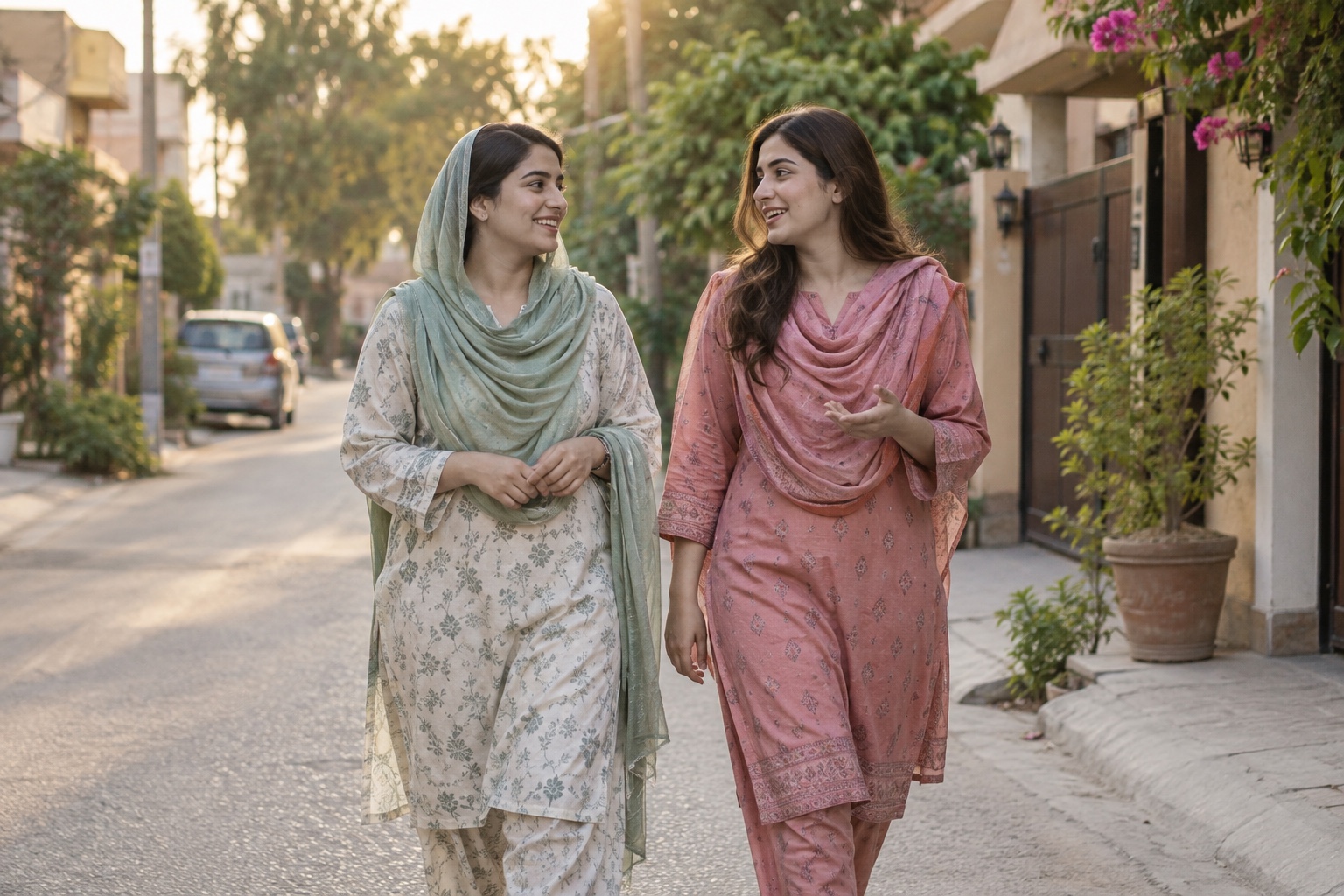
Prayer, a walk, a boundary with your phone, and the difference between care and a shopping list. Your grandmother did not call it somatic. She called it sitting in the sun.
Pakistani cities are flooded with imported wellness language: detoxes that are just marketing, “self-care” that means a purchase, and Latinate words for ordinary rest. Some of the underlying needs are real—sleep, movement, quiet, friendship, medical care when required. The vocabulary often sells a solution that was never missing so much as unnamed in English.
Name the need without buying the aesthetic
If you are exhausted, the need may be sleep, a lighter evening schedule, or clinical help for mood or anaemia—not a new jade tool. If you are lonely, the need may be a call or a visit—not a course that teaches you to journal about loneliness in prettier handwriting. If you are unfit, the need may be walking and strength—not a detox tea.
NHS guidance on physical activity and the Eatwell Guide are plain on purpose: move regularly, eat a balanced pattern, do not outsource health to mystique. They are written for British systems, yet their plainness is useful anywhere marketing has become louder than evidence.
Practices that already have local names
Many households already hold pieces of a calmer week:
- Prayer and quiet sitting that interrupt the feed.
- A walk after dinner when streets allow.
- Fruit, dahi, and ordinary meals instead of a punitive cleanse.
- Visiting elders, which is social medicine of a kind algorithms cannot sell.
- Friday rhythms and Eid pauses that force a different pace—even when they are imperfect and noisy.
None of these require a Sanskrit or English rebrand to become legitimate. Renaming them can help some diaspora readers explain boundaries at work. Renaming them into products helps retailers.
When the imported word is hiding a medical issue
Burnout language can describe real overload. It can also delay a GP visit for depression, thyroid disease, or sleep apnoea. “Holistic” should not mean “avoid clinicians.” Skin, hair, and weight claims deserve particular caution; PakStyles does not diagnose, and cosmetic marketing is not clinical evidence.
If sleep is collapsing, mood is flattening, or body symptoms are new and severe, seek qualified care. Wellness content that discourages medicine is not care. It is a brand position.
Phone boundaries without a digital detox retreat
A useful boundary is specific: no phone at the dinner dastarkhwan; no scrolling in bed for thirty minutes; mute the family group after 11pm except for true emergencies. A useless boundary is a weekend “detox” that returns to the same 2am pattern on Monday.
Put the charger outside the bedroom if that is safe for your household’s emergency needs. Replace the first morning scroll with water, light, and a short walk when streets are appropriate for you. The point is attention, not purity.
Family WhatsApp groups deserve special mention. They carry love, logistics, and sometimes relentless urgency. Mute is not disrespect when it preserves sleep. Agree house rules for overnight messages where you can. Elders who expect instant replies may need a daytime call instead of a 1am voice note culture that exhausts working adults.
Movement and food without the moral theatre
Walk. Climb stairs. Carry shopping. Strength-train on a floor if the gym is a rumour. Eat dal, eggs, yoghurt, vegetables, fruit, and meat when you can—see kitchen logic on protein and roti rather than deleting wheat to please a forum.
Heat changes what “go for a run” means; WHO heat guidance belongs in any summer wellness conversation that includes outdoor exercise. Rest is not laziness when the wet season or a heatwave makes heroes look foolish.
Care that costs money versus care that costs attention
Some paid help is legitimate: physiotherapy, therapy, a trustworthy trainer, a medical test. Some paid help is a scented candle with a manifesto. Ask what problem the purchase solves after the packaging is in the bin. If the answer is “it makes me feel like a person who has a routine,” a free routine may do the same work.
| Need | Often enough | Often a purchase in disguise |
|---|---|---|
| Quiet | Phone out of reach; door closed; short walk | Branded silence retreat you cannot afford monthly |
| Fitness | Walking + twice-weekly strength | Endless class packs you skip |
| Food | Regular meals with protein and plants | Detox kits and miracle powders |
| Mood | Sleep, daylight, friends, clinical care if needed | Unregulated advice from charismatic feeds |
Refuse the shame economy
Imported wellness often arrives with shame: your oil is wrong, your mother’s cooking is wrong, your rest is unproductive unless photographed. Refuse that economy. Care can be ordinary. Sitting in the sun—when UV and heat allow—remains a human habit older than the word wellness. Walking to the corner and back counts. Sleeping through the night counts. Saying no to another event counts.
Diaspora readers sometimes feel pressure to perform wellness in English for workplaces while performing endless availability for family in Urdu and Punjabi at night. The double shift is real. The solution is rarely a new vocabulary. It is fewer obligations, clearer sleep, and help that may include clinical care—not a latte bowl renamed as healing.
Keep the useful imports: evidence-based medicine, good physiotherapy, clear nutrition science. Leave the vocabulary that exists mainly to sell you a version of yourself you already had before the advertisement loaded.
Sleep as infrastructure
Before you buy a wellness gadget, audit sleep. Same rough bedtime. Light in the morning. Caffeine timing that matches your actual nerves rather than a colleague’s. Fans and earplugs in noisy streets. A bedroom that is for sleep rather than for endless scrolling and arguments.
Pakistani family homes can make perfect silence impossible. Imperfect sleep hygiene still beats none: dim lights after a certain hour, fewer devices in beds, negotiated quiet for shift workers. Infants and elders change the equation; the goal is not Instagram stillness. The goal is enough rest to remain kind and employed.
Community care versus consumer care
Checking on a neighbour, cooking for a mourning house, attending a wedding without making it your content—these are older forms of care than a subscription box. They can also exhaust women disproportionately when labour is uneven. Wellness that ignores unequal domestic labour is incomplete. Sharing dishwashing may do more for a household’s nervous systems than a scented candle in a cupboard nobody opens.
Men’s wellness talk in gyms often skips friendship beyond banter. Walking with a friend without filming it remains allowed. So does saying you are not fine. Imported stoicism and imported vulnerability scripts both miss the point if they become performances. Plain speech to someone trustworthy is older and usually cheaper.
A weekly care list that fits a Pakistani calendar
Seven small moves beat one spectacular retreat: two walks, two strength sessions or floor circuits, three evenings with phones out of bedrooms, one unhurried meal with someone you like, one administrative hour for medical appointments or money stress so it does not haunt sleep, Friday or Sunday quieter time if your tradition includes it, and one ask for help when labour is unfairly stacked.
None of these require a new word. They require repetition. If a purchased class supports the list, use it. If a purchased class replaces the list with shame, cancel it. Wellness is not a personality. It is the boring infrastructure that lets you remain available for work, prayer, family and joy without burning the week to ash.
When English marketing and Urdu family duty collide, translate your boundary into the language that will be heard—health, sleep, doctor’s advice—rather than into a vocabulary that sounds like you have joined a foreign cult of the self. Clarity travels better than jargon.
Teaching the next generation without a brand
Children learn care by watching adults sleep, walk, eat regular meals and apologise when wrong—not by watching adults buy powders while scorning roti. If you want less phone anxiety in teenagers, model phone-free meals. If you want less body shame, refuse commentary on relatives’ plates. Imported wellness often smuggles old shame in new packaging. Leave both at the door.
The vocabulary can go. The care can stay. That is the whole argument.
Sources and official profiles
Filed under
Was this helpful?
Keep reading
Related stories
More from this desk, this beat, and the tags on this piece.

Why South Asian heart-disease risk is higher in the UK—and why ethnicity is not destiny
Sara Malik · 21 Oct 2026

Vitamin D and South Asian skin in the UK: why NHS advice is different year-round
Sara Malik · 20 Oct 2026



Readers
The conversation
0 notes
Anyone can leave a note. Guests add a name and email — no account required, and the email is never published.
No notes yet. Yours would be the first.