UK thrifted blazers for modest office layers
How to inspect UK charity-shop and resale blazers for modest office wear over kurtas or shirts: shoulders, lining, sleeves, opacity, and trader versus private-sale returns.
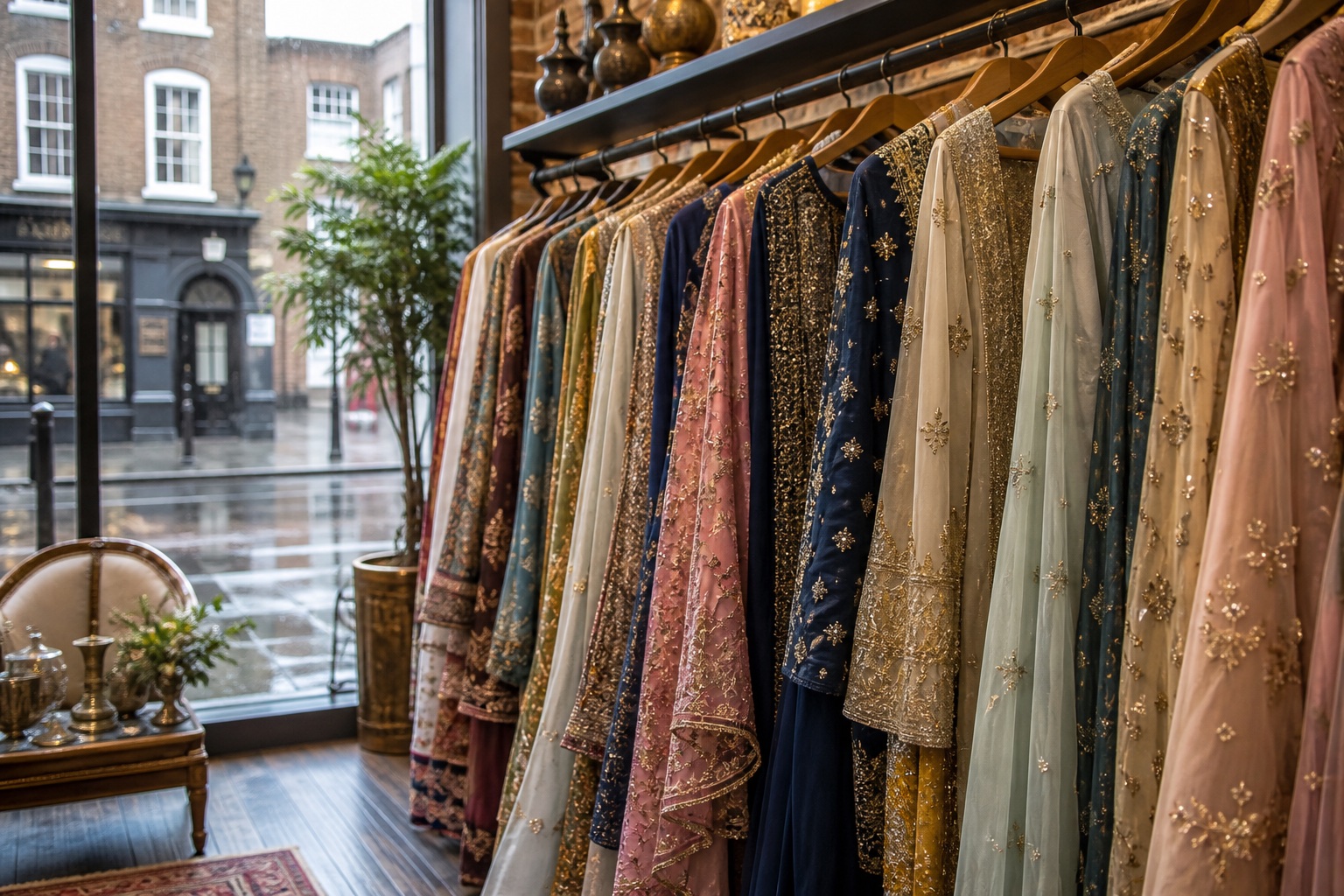
A thrifted blazer earns its peg when it behaves like a modest office layer: enough structure to look intentional over a kurta or button-down, enough ease to raise a hand in a meeting, and fabric that does not announce every underlayer under British fluorescent light. Charity rails and resale apps are full of almosts: beautiful lapels on collapsed shoulders, perfect colour with a torn lining, “size 12” that only fits if you never sit. This is an inspection method for those rails. It does not rank shops or invent “best finds.”
Consumer framing below was checked against Citizens Advice guidance around September 2026. It is general orientation for England; check the matching advice if you are in Scotland, Wales, or Northern Ireland, and always read the seller's own change-of-mind policy before you travel across town.
What a modest office layer actually demands of a jacket
Try the blazer over the garment you will wear to work, not over a thin vest the shop lighting flatters. You need the fronts to close without straining if you button; many people wear them open, but the button stance still reveals whether the chest and hip ease will fight a hijab pin, a dupatta drape, or a longer kurta hem. Sleeve length should cover to the wrist when arms hang, then still allow a shirt cuff or thin knit sleeve underneath without ballooning.
Opacity matters more than label prestige. Hold the back panel up to the window. Pale linen blends and worn tropical wools can silhouette a dark underlayer the second you step outside. A slight shoulder pad is useful; a pad that has migrated into a lump will photograph as damage under office LEDs.
Length matters for kurtas. A blazer that ends awkwardly at the widest point of a printed kurta can chop the outfit visually. Prefer a length that clears or intentionally covers the print break you care about. Sit down in the fitting area. Office life is sitting.
Hands-on checks before the till
- Shoulders and pitch. The seam should sit at the end of your shoulder bone, not halfway down the upper arm. Lift both arms as if reaching a shelf; listen for lining tears and watch whether the collar gapes away from the neck.
- Lining and underarm. Turn the sleeves inside out. Look for splits at the armhole, deodorant maps, and loose canvassing that bunches when you bend an elbow. A repairable open seam is different from a shredded underarm.
- Buttons, buttonholes, and vents. Work every button. Check that rear vents are not ripped at the stress point, common on jackets that lived on office chairs.
- Smell and storage. Smoke, moth treatment, and damp cupboard odours cling to wool. A short outdoor airing may clear shop scent; a sour chemical smell after that is a walk-away if you share a small flat or an open-plan desk.
- Alteration honesty. A good tailor can shorten sleeves (watch buttons and working cuff detail) and take in side seams slightly. They cannot invent missing shoulder width or erase a permanently stretched collar.
Fabric behaviour under UK offices and British weather
Tropical wool and wool blends often earn their keep for year-round offices: they breathe better than heavy polyester, crease less than linen, and layer over cotton kurtas without clinging. Pure linen looks elegant on the rail and then wrinkles into a map of your commute. Heavy structured polyesters can look sharp and then trap heat under a hijab or scarf. There is no universal winner; there is only the fabric that survives your week.
Check for sun fade along the shoulders and lapels: the parts that faced shop windows or previous owners' sunny desks. A navy that has gone patchy will look cheaper than a charcoal with honest wear at the cuffs. Cuff wear you can sometimes hide by shortening; shoulder fade you will see in every meeting.
Trader, charity shop, private seller
Buying from a business, including many charity shops and online traders, usually brings Consumer Rights Act standards: goods should be of satisfactory quality, fit for purpose, and as described, judged against age, price, and disclosed wear. A private individual sale is closer to buyer beware. Citizens Advice's pages on returning faulty goods are the useful starting point: rights can apply to second-hand items when goods are not as described or not of satisfactory quality, and you generally will not have those rights for faults you were told about, should have spotted on a reasonable inspection, or caused yourself.
Change of mind is a shop policy, not an automatic refund right. Citizens Advice also explains changing your mind as a separate issue from faulty goods. Ask before you pay whether unworn returns are allowed, how many days you have, and whether you need the original ticket. Keep the receipt in the same bag as the jacket until you have worn it through one full workday (sit, commute, layer, pray if you do so at the office, so the inspection finishes in real life, not only under the rail light.
Online resale versus the charity rail
App photos hide underarm stains and collar stretch. Ask for a photo of the lining, the underarm, and the jacket on a hanger with a measuring tape across the shoulders. If the seller refuses, walk away; another blazer will appear. For collection in person, do the same daylight and movement checks you would in a shop. For postage, understand whether you are buying from a business or a private seller before you assume refund rights.
Factor cleaning costs into the price. A “bargain” wool jacket that needs professional cleaning after moth treatment may cost more than a mid-priced high-street layer on sale. Budget the clean before you congratulate yourself.
Layering over shalwar kameez and hijab hardware
A blazer that works over a shirt can fail over a kameez with side slits or a pinned hijab. Check whether the lapel fights your pin line when you turn your head. Check whether the hem catches on a slit when you sit. If you wear a long pendant or badge lanyard, see whether it nests cleanly or snags the button stance.
For prayer at the office, practise a clean removal and re-hang so the jacket does not hit the floor. A thrifted lining that is already weak will tear first at the armhole during hurried on-off cycles. That is a fit and fabric issue, not a piety issue.
Colour strategy for mixed wardrobes
Navy and charcoal forgive more underlayers than bright colours. Cream and pastels show every shadow of a dark kurta. Reds and emeralds can work if opacity and fade checks pass, but they limit what you wear underneath. Start neutral unless you already own the underlayers that match a bold jacket.
Patterned blazers need quieter kurtas. Busy embroidery plus loud checks reads as two outfits competing. If the thrift rail offers a subtle herringbone at good shoulders, that often earns more weeks than a novelty print.
Building a small rotation, not a rail of maybes
One navy and one black or charcoal will cover most modest office weeks if fit and opacity are right. A patterned blazer is optional flair, not a first purchase. Hang with space so shoulders do not crush. Use a soft brush after rainy commutes. If the jacket smells of damp after a wet week, air it fully before returning it to a closed wardrobe.
Walk away from mystery odours that survive a short airing, from shoulders that fall halfway down the arm, from linings shredded at both underarms, and from prices that only make sense if you pretend cleaning and tailoring are free. A thrifted blazer that clears shoulders, lining, opacity, and smell becomes the quiet frame for the rest of a modest wardrobe. Everything else on the rail can wait for another lunch break.
Keep a spare sewing kit for loose buttons the first week. A thrifted jacket often loses one button in the first commute. Reattach it before the hole stretches. That five-minute fix is cheaper than pretending the jacket was never right.
Sources and official profiles
Was this helpful?
Keep reading
Related stories
More from this desk, this beat, and the tags on this piece.
Office Eid lunch dressing: festive without looking ceremony-ready
Zainab Noor · 13 Sep 2026
What to wear to a job interview when you prefer Pakistani clothes
Zainab Noor · 13 Sep 2026
Pakistani workwear for teachers: movement, pockets and washability
Zainab Noor · 13 Sep 2026
Readers
The conversation
0 notes
Anyone can leave a note. Guests add a name and email — no account required, and the email is never published.
No notes yet. Yours would be the first.