A wedding dupatta that stays put without twenty visible pins
The stable dupatta is planned around fabric, weight and movement. Anchor it at two useful points, protect delicate embroidery and leave enough slack to sit, hug and dance.
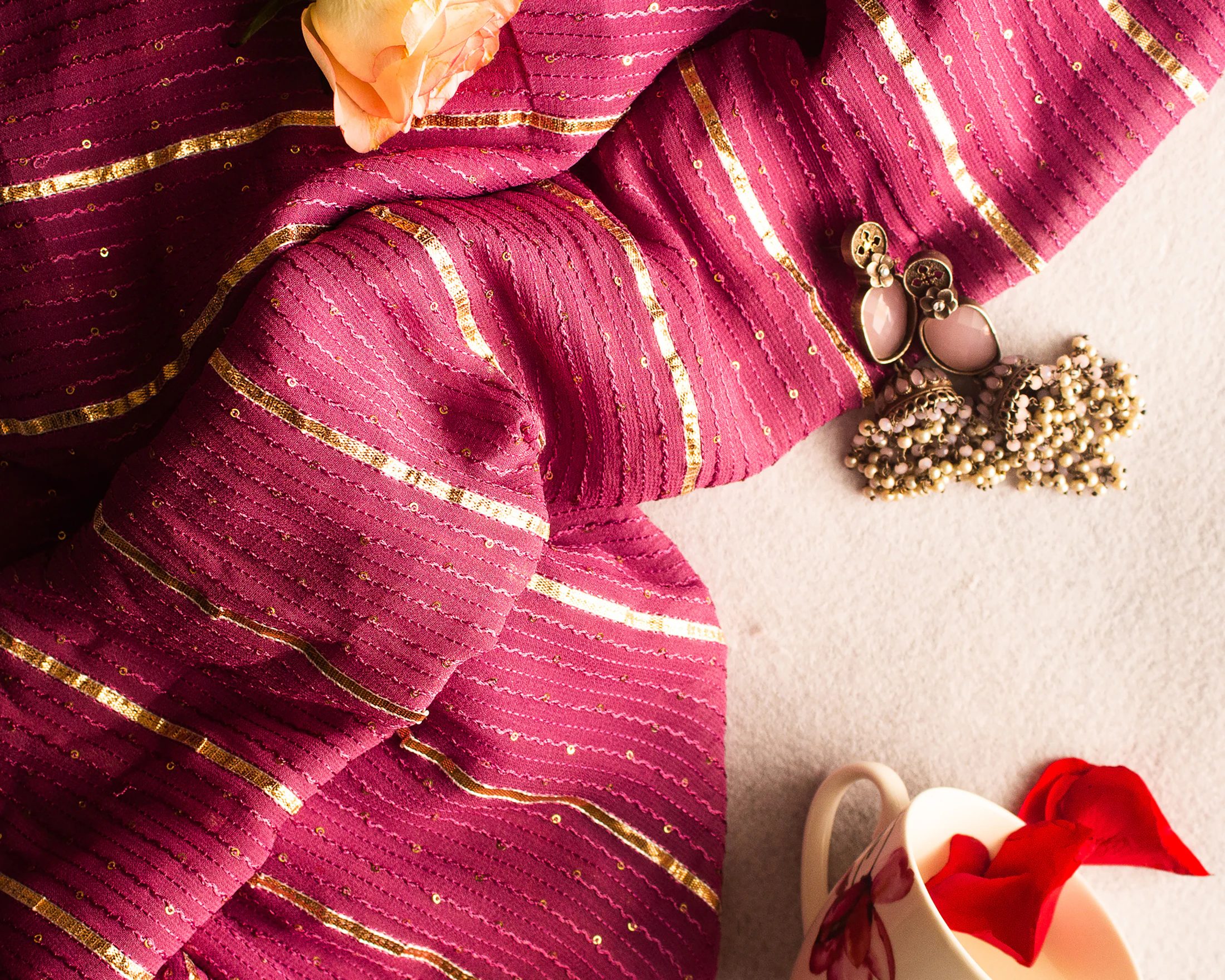
A dupatta usually fails in motion, not in the mirror. It looks perfect while you stand still, then one end travels backwards during the first hug, a shoulder pin pulls the kameez, or a heavy border slowly drags the whole arrangement towards the floor. Stability starts with fabric and weight, not with adding more pins after the problem appears.
Decide what the dupatta is being asked to do
A light chiffon dupatta worn on one shoulder has a different job from a heavy net dupatta covering the head for a nikah. Before pinning, decide whether you need head coverage, free arms for dancing, an open neckline for jewellery, or a border visible in photographs.
One drape rarely does every job perfectly. A bride may even use separate dupattas for head and shoulder rather than forcing one heavily worked piece to perform both.
Find the weight before you find the pin
Hold the dupatta by its border and notice where it pulls. Dense embroidery, sequins and gota can make one edge much heavier than the centre fabric. Anchor the heavy edge to a structurally stable part of the outfit, such as a shoulder seam, rather than to a delicate floating sleeve.
Use two strong anchors instead of a map of small pins
For many guest looks, one concealed pin at the shoulder and one at the opposite waist or second shoulder gives enough control. Leave a soft loop of fabric between them so you can sit and raise an arm.
Safety pins can snag fine chiffon and organza. Fine dressmaking pins, small safety pins used through seam allowances, or discreet magnetic fasteners may suit different fabrics, but magnets can be unsuitable around some medical devices and can damage or mark certain embellishments. Test any fastening on an inconspicuous area.
Pin through structure where possible
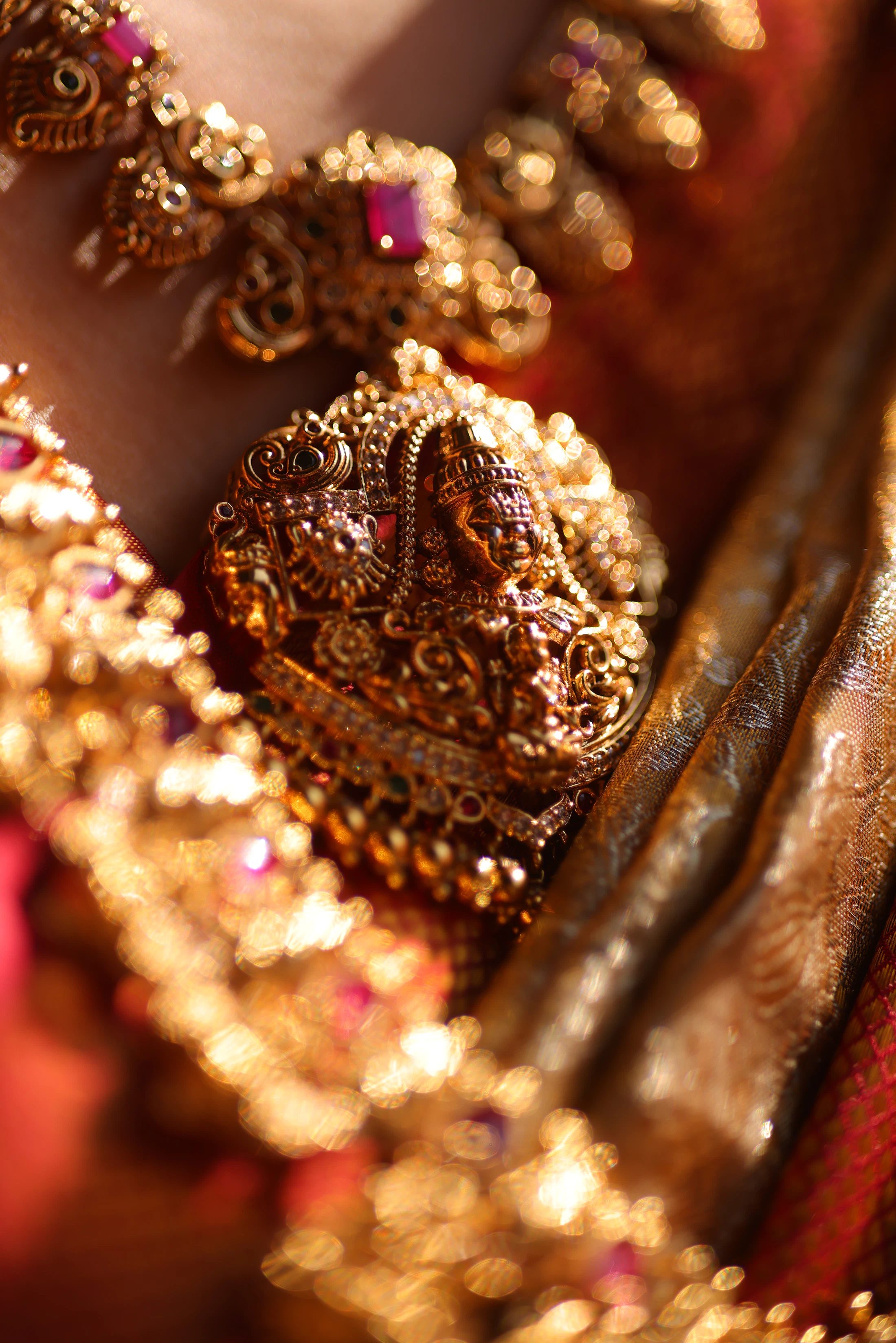
A shoulder seam, waistband seam or sturdy inner layer can take tension better than a single layer of delicate net. If the dupatta has a heavy border, catch a little of the border backing rather than piercing decorative stones.
For head drapes, hair pins should secure the fabric to a hairstyle that can carry it. A slippery silk scarf over freshly smoothed hair needs more planning than a textured fabric over a bun.
Do the chair test
After pinning, sit down, turn your head, hug yourself, reach forward and raise both hands. If the neckline drags, shoulder pin bites or fabric becomes tight across the back, add slack before leaving home.
Then walk up and down stairs in the shoes you will wear. Long back drapes can be caught by heels or other guests.
Keep an emergency kit small
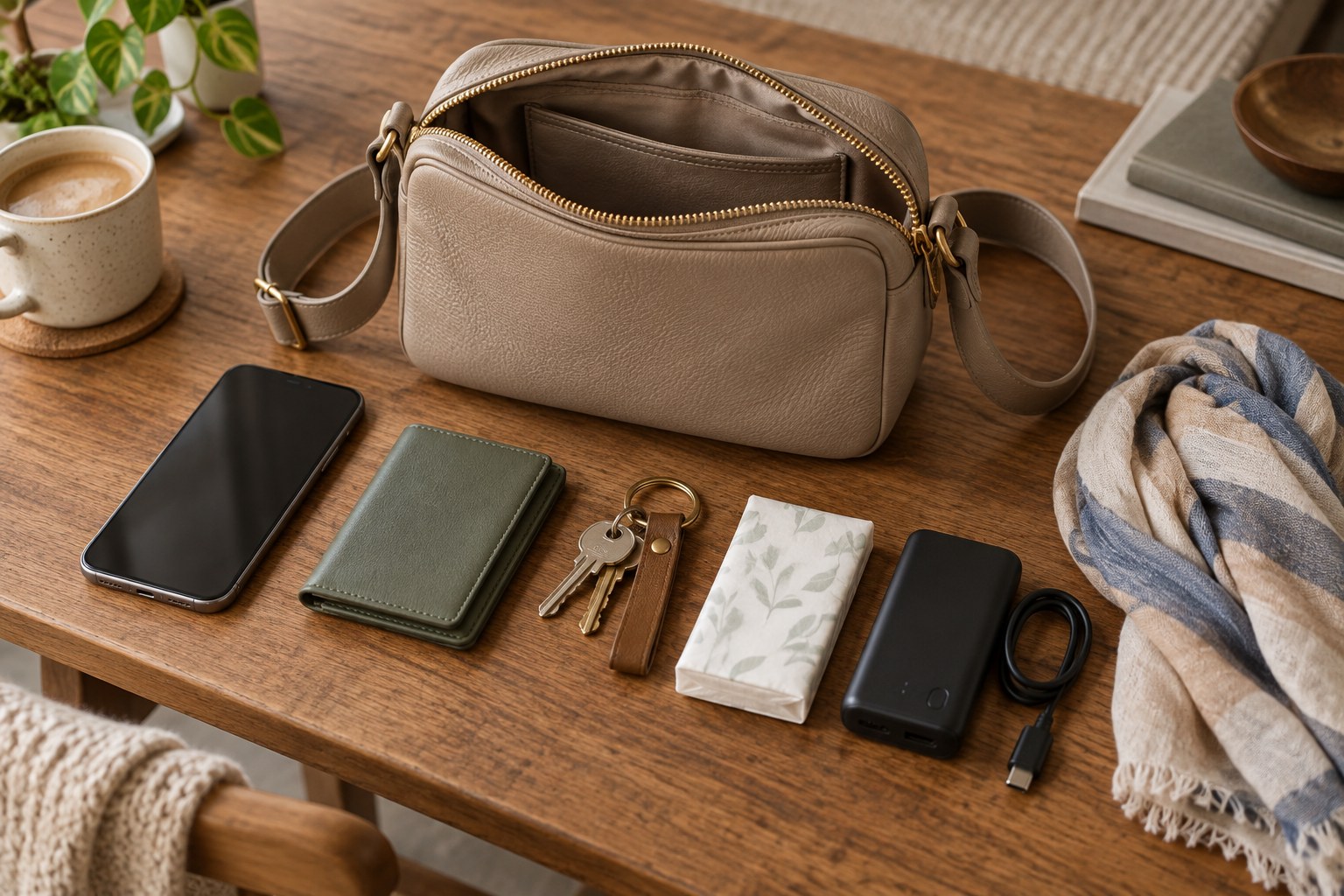
Two spare pins, a tiny sewing kit and fashion tape suitable for fabric are enough for most guest emergencies. You do not need an entire styling case in the handbag.
The point of pinning is to stop thinking about the dupatta. Once it stays through a greeting, a meal and a dance without asking for constant adjustment, the engineering can disappear and the fabric can go back to looking effortless.
Budget for the finished, wearable version
The purchase price may not include tailoring, lining, shoe changes, dry cleaning, jewellery repair or international return postage. Add those likely costs before deciding which option is actually better value.
A cheaper garment that needs major reconstruction can cost more than a better-fitting piece bought once. Equally, a simple alteration can make an affordable outfit work for years.
Let personal comfort overrule performative fashion: A wedding dupatta that stays put without twenty visible pins
Applied specifically to how to pin dupatta wedding, A wedding guest does not need to wear the heaviest available outfit, and a modest dresser does not need to accept overheating as the cost of coverage. Choose fabric, fit and shoes that support the way you want to participate in the day.
Photographs matter, but they occupy seconds. The garment has to carry the hours between them.
Use a final event or purchase checklist: A wedding dupatta that stays put without twenty visible pins
Before committing to how to pin dupatta wedding, check fit in motion, fabric behaviour, shoe compatibility, weather, care requirements, alteration options and return terms. For formal events, add transport, coat storage and emergency repair items.
For a reader working through how to pin dupatta wedding, Good style decisions usually look less dramatic on a checklist than on a feed. That is a strength: clothing that fits the body, climate and event gives the wearer more room to be the interesting part.
Start with the job the garment has to do: A wedding dupatta that stays put without twenty visible pins
For how to pin dupatta wedding, begin with the real setting: workday, wedding, travel, summer heat, winter venue, prayer, dancing or daily errands. A garment can look beautiful in a product image and still be wrong for the hours you need it to perform.
For how to pin dupatta wedding in particular, Write down the non-negotiables before shopping or altering: sleeve coverage, pocket needs, shoe height, ability to sit comfortably, preferred neckline and whether the piece must survive public transport or a long car journey. Those requirements are more useful than a trend board.
Fit should be checked in motion: A wedding dupatta that stays put without twenty visible pins
With how to pin dupatta wedding as the focus, Stand in front of the mirror, then sit, reach, bend the elbow, raise the arms and walk. Pakistani clothing often relies on ease, side slits and layered fabric; a fit that looks smooth while standing can become restrictive when the body moves.
Fabric changes what the same cut feels like: A wedding dupatta that stays put without twenty visible pins
In practical terms for how to pin dupatta wedding, Lawn, linen, cotton, raw silk, velvet, chiffon, organza and heavily embroidered net have different weight, drape and breathability. The same measurement can feel loose in a soft fabric and restrictive in a stiff lined one.
Think about the complete outfit before altering one piece: A wedding dupatta that stays put without twenty visible pins
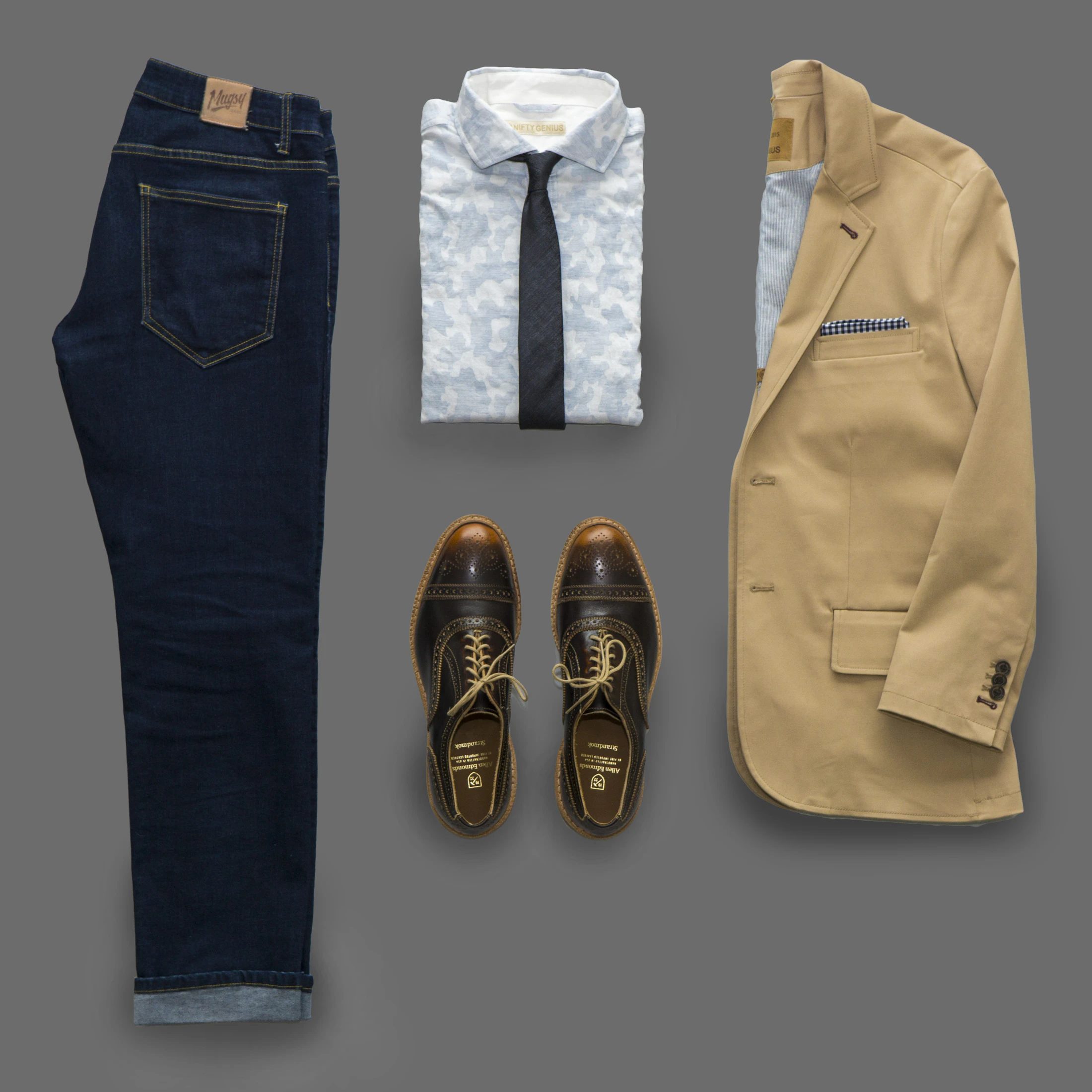
Applied specifically to how to pin dupatta wedding, Shoes change trouser and lehenga length. Jewellery changes neckline comfort. A dupatta can alter shoulder balance. A coat can crush a structured sleeve. Bring or at least photograph the other pieces when making an important fit or styling decision.
Online buying needs technical information: A wedding dupatta that stays put without twenty visible pins
Look beyond the campaign image for garment measurements, fabric composition, piece count, care instructions and return terms. A seller that provides only model height and a size label is giving you much less information than a proper measurement chart.
Save screenshots at purchase because product pages can change. If the order is customised, confirm in writing which measurements, colours and alterations were agreed.
Alteration potential is part of value: A wedding dupatta that stays put without twenty visible pins
A garment with sensible seam allowance, removable borders and straightforward construction has a longer useful life than one that can only fit one exact body shape. Ask a tailor what can realistically be changed before rejecting or buying an expensive piece.
Questions to resolve before acting on A wedding dupatta that stays put without twenty visible pins
With a wedding dupatta that stays put without twenty visible pins as the focus, What is personal? Body measurements, health conditions, family expectations, budget, climate and skill level can change the best choice. Use the article as a framework rather than forcing your circumstances into somebody else's exact answer.
How to use the A wedding dupatta that stays put without twenty visible pins information
Save the small number of details that would be annoying to reconstruct later: measurements, booking references, successful ingredient ratios, product names, alteration notes or family decisions. A short record turns the next purchase, trip, meal or event from a fresh problem into an iteration.
Finally, prefer a reversible experiment when one is available. Test one skincare product, cook a half batch, pin the dupatta at home, make a small transfer, walk a shorter route or ask the host one clear question. Low-cost tests produce better information than making a large commitment because the first answer sounded confident.
Do the final check in the conditions where a wedding dupatta that stays put without twenty visible pins will actually be worn
Try the outfit with the real shoes, underlayer, jewellery, coat or dupatta and walk in ordinary lighting rather than only a fitting-room mirror. Sit for several minutes, use stairs and check whether hems, sleeves and fastenings stay where they were intended.
For an event, pack one or two realistic repair items—spare pins, a small sewing kit, blister plasters—not an emergency suitcase. If an outfit requires constant correction to survive a normal evening, the fit or styling plan needs work before the event.
Keep care and alteration information with the garment: A wedding dupatta that stays put without twenty visible pins
With a wedding dupatta that stays put without twenty visible pins as the focus, Store the spare fabric, care label, purchase details and notes about any alterations together. Formal Pakistani clothes can remain useful for years, and a future tailor benefits from knowing what has already been shortened, released or moved.
When passing clothing to another family member, pass that information too. Good garments have a longer life when the next wearer knows what the fabric can tolerate and where hidden seam allowance or matching offcuts still exist.
Sources and official profiles
Was this helpful?
Keep reading
Related stories
More from this desk, this beat, and the tags on this piece.

How to get haldi and turmeric stains out of wedding clothes without making them worse
Zainab Noor · 2 Oct 2026


Readers
The conversation
0 notes
Anyone can leave a note. Guests add a name and email — no account required, and the email is never published.
No notes yet. Yours would be the first.