Cricket kit guide for British and American beginners
A safety-first cricket kit guide that helps UK and US beginners borrow intelligently and buy only after understanding their role and ball type.
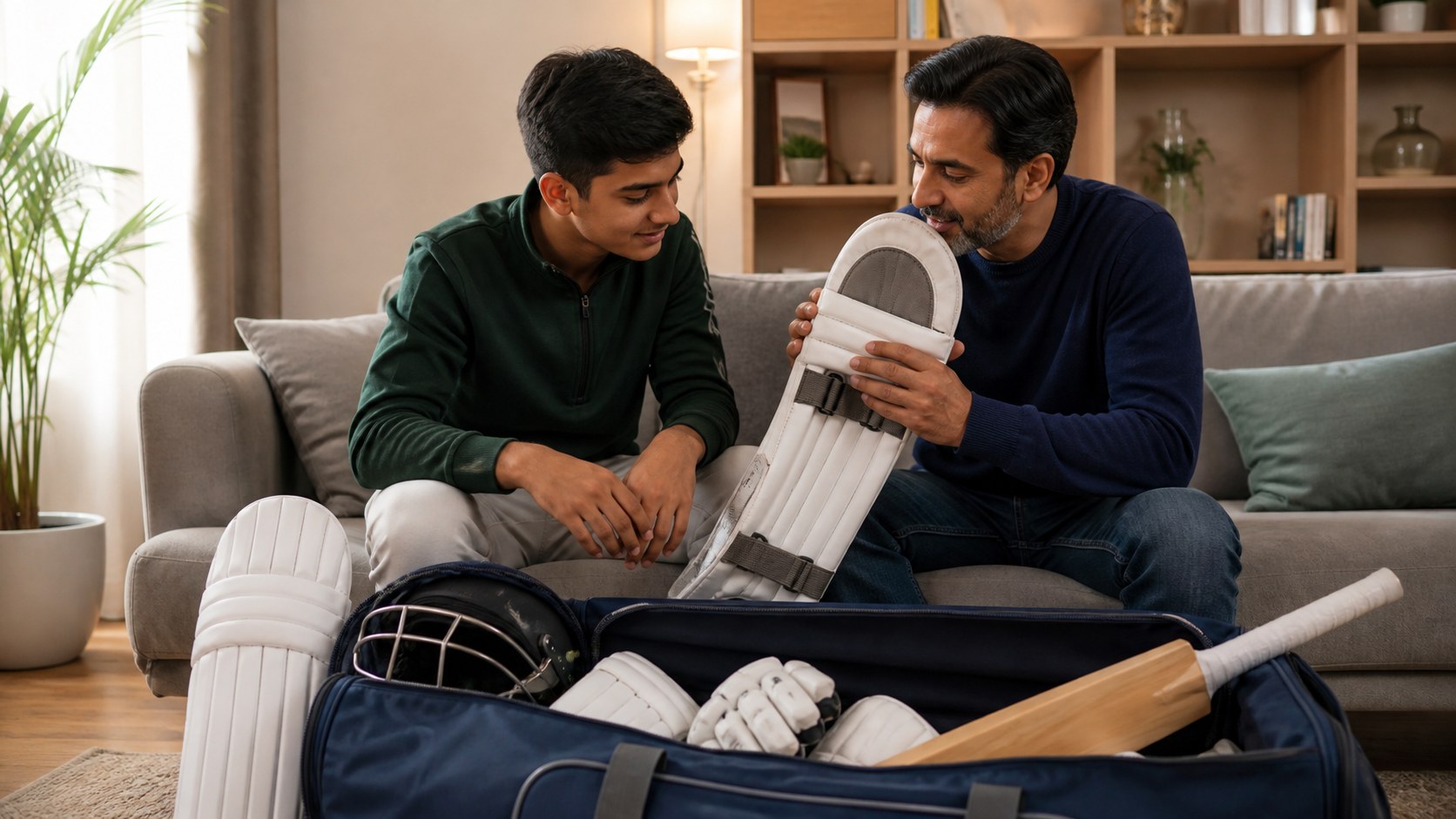
Buy cricket kit after you know which ball you will face, which role you will play, and which safety rules your club follows. Beginners in Britain and America waste money most often by purchasing a full hardball set before they have settled on softball, tape-ball, indoor nets, or open-age hardball—and by buying a helmet that does not match the ball size they will actually face.
In England and Wales, the England and Wales Cricket Board publishes recreational safety rules that treat under-18 hardball participation differently from adult play. The ECB’s helmet guidance and recreational cricket safety regulations are the documents to read before you spend. In the United States, leagues and academies set their own standards; still treat British Standard labelling and club borrowing as your first filter rather than marketplace “beginner bundle” marketing.
Decide the ball before you decide the bat
Softball and tape-ball formats teach timing and catching with lower impact risk. Hardball cricket demands protective equipment that soft formats do not. If your first eight weeks will be nets with a tennis ball, rubber ball or indoor ball, do not buy a top-end hardball bat and a full pad set “to grow into.” Learn movement with borrowed kit, then upgrade when a coach or captain confirms you will bat or keep against a hard ball regularly.
Ask three questions at the club desk or academy counter:
- Which ball size and weight do juniors and adults use here?
- Is helmet use mandatory or strongly recommended for my age and role?
- What can I borrow for the first month without buying?
Use the ECB club finder if you are still choosing a British club. In the US, ask the league administrator for written kit expectations rather than relying on a single coach’s preference.
Helmets: standard, ball size and fit
For recreational hardball cricket under ECB rules, junior players must wear a helmet with a faceguard or grille when batting, and in specified keeping and close-fielding situations. Compliant head protectors should be labelled to British Standard BS7928:2013. The ECB also explains that helmets are tested against different ball sizes: a men’s standard ball and a junior ball are not interchangeable assumptions.
Practical buying rules:
- Prefer a helmet tested for the ball you will face. If a junior will play open-age cricket with an adult ball, choose a helmet tested for that adult ball where possible.
- Where a women’s ball is used and there is no dedicated test listed for that size, ECB recreational guidance has recommended helmets tested against both junior and adult balls because a smaller ball can find a gap above a faceguard designed for a larger ball.
- Adults are often strongly advised to wear helmets when batting, keeping up to the stumps, or fielding close; check whether your league makes that advisory or mandatory.
- Fit matters as much as the label. The helmet should sit level, the grille should clear the peak without pressing the nose, and the chin strap should hold under movement. Try club loan helmets before ordering online from measurements alone.
Do not buy a fashion-coloured helmet that lacks clear standard labelling. Do not assume a hockey, baseball or cycling helmet substitutes for a cricket head protector.
What to borrow first, what to buy second
| Item | Borrow first? | Buy when | Beginner note |
|---|---|---|---|
| Helmet | Yes, if club stock fits and is labelled correctly | You bat/keep regularly against hard ball | Match ball-size testing; never share a damp liner casually without cleaning habits your club accepts |
| Bat | Yes for early nets | You know length, pick-up and format | Weight and balance beat brand prestige |
| Batting pads | Often | Hardball match play | Straps and knee roll must stay put when you run |
| Batting gloves | Sometimes | Hardball or heavy netting | Finger protection and grip matter more than colour |
| Box / groin protector | Rarely share | Immediately for relevant hardball roles | Personal item; ECB rules require it for specified junior male hardball situations alongside helmet use |
| Thigh, arm, chest guards | Yes | You face pace regularly | Add after technique coaching, not before |
| Keeping gloves and pads | Yes | You keep weekly | Standing up vs standing back changes needs |
| Footwear | Sometimes trainers for soft formats | Outdoor hardball or wet British outfields | Spikes or moulded soles according to surface rules |
Bats: length, pick-up and English willow marketing
Hold the bat beside your leg with the toe on the ground: for many juniors and shorter adults, the top of the handle should sit near the hip crease without forcing a cramped stance. More important than a tape measure is pick-up—the feeling of the bat’s weight when you pick it up to play a shot. A heavy “middle” that looks impressive in a shop can slow your hands in nets.
Kashmir willow and English willow are both used; price tracks grain marketing as much as match performance for beginners. A mid-range bat that you can swing repeatedly beats an expensive blade you fear scuffing. Ask whether the bat is ready to use or needs knocking in, and follow the maker’s preparation advice rather than inventing your own oiling ritual from social media.
American beginners coming from baseball should not assume transfer of bat length logic. Cricket bats are held differently, swung on a different path, and judged by how they pick up for defensive and driving shots, not by exit-velocity marketing.
Pads, gloves and the kit that actually gets hit
Batting pads should cover the knee roll securely when you take guard and when you sprint a single. Loose straps that migrate mid-over are a safety and confidence problem. Gloves need enough finger protection for the ball you face; soft formats can tolerate lighter gloves, hardball should not.
Add thigh pads, arm guards and chest guards when pace or bounce makes bruises likely—not because a bundle discount included them. Wicketkeepers need gloves sized to their hands and pads matched to whether they stand up to the stumps. Under ECB recreational rules, junior keepers standing up must wear a helmet with grille or an approved face protector; adults should treat that as strong practice even when not forced.
Footwear, clothing and British versus American surfaces
British club cricket often means damp outfields, soft ground and changing light. Spikes or moulded soles may be required or preferred depending on the ground. American parks and academy carpets vary widely: some ban metal spikes; some are hard enough that ankle support matters more than traditional cricket spike patterns. Ask the ground rules before ordering white shoes online from a UK catalogue if you play in California or Texas heat on artificial surfaces.
Whites or coloured kit are club politics as much as performance. Prioritise layers you can move in, moisture management for summer, and pockets that do not snag pads. Sunglasses and sunscreen for fielding sessions are part of kit culture in bright US venues; they are not vanity accessories.
A four-week buying sequence that avoids waste
- Week 1: Join sessions with borrowed helmet (if hardball), bat, pads and gloves. Confirm ball type in writing if you can.
- Week 2: Buy personal items you should not share casually—box where required, socks, baselayers, a kit bag, water bottle.
- Week 3: Buy footwear suited to your surfaces once you know home and away grounds.
- Week 4+: Buy a bat and gloves that match your confirmed format; then pads and helmet once fit and standard are verified in person.
If you are a parent of a junior in England or Wales, read the age-specific helmet, fielding-distance and bowling-load rules in the ECB recreational safety documents rather than copying an older sibling’s kit list. Age is calculated by the player’s actual age under those regulations, not loosely by “U13 team” branding.
US-specific buying traps
Imported “Pakistan kit” marketplaces can be excellent value and can also ship mislabelled protection. Verify helmet standard markings, return policies and sizing charts in centimetres and inches. Shipping delays matter when the season has already started; borrow through the club while a special-order bat arrives.
Do not treat Major League Cricket broadcast gear as a shopping list. Professional players receive sponsored protection fitted by staff. Your first job is compliant protection and a bat you can pick up for two hours of nets without wrist fatigue.
Maintenance that extends cheap kit
Dry pads and gloves after damp British matches. Do not leave a wet helmet liner sealed in a boot. Oil and knock bats only as the manufacturer advises. Replace cracked grille welds and compressed foam rather than taping over structural damage. A cheap bat maintained well outlasts an expensive bat left in a hot car.
Label junior kit. Shared club bags swallow left-hand gloves and mismatched pads faster than any online store can replace them.
When to spend more
Spend more when you have a stable role: opening batter facing new balls, keeper standing up weekly, or a junior moving into open-age hardball. Spend less on aesthetic upgrades—stickers, coloured grips, matching bags—until the protective stack and bat pick-up are settled.
If budget forces a choice, prioritise a correctly standardised helmet and a bat with usable pick-up over branded clothing. Cricket rewards repetition. Kit that keeps you practising safely is better than kit that photographs well at the first fixture.
Beginners in both Britain and America improve fastest when equipment decisions follow format and role. Let the club’s ball and the ECB’s safety documents set the floor; let your confirmed position decide what you own.
Junior pathway notes for parents
If your child is moving toward open-age cricket in England or Wales, read the consent and age-eligibility sections of the ECB recreational safety regulations rather than relying on WhatsApp summaries. Helmet and box requirements attach to specified hardball activities for under-18s; fielding distance rules also protect younger players. Bring a labelled water bottle, spare grips and a helmet you have checked for BS7928:2013 marking before the first hardball match—not after a scare in the first over.
Growth spurts change pad and helmet fit quickly. Budget for adjustments mid-season. A helmet that rocked last April may sit high by July.
Nets kit versus match kit
Sidearm throws and bowling machines can be harder on toes and fingers than a sleepy Sunday league medium-pacer. Many players use older gloves for nets and keep match gloves dry. That is sensible. Using a cracked grille “only for nets” is not. Replace damaged protection regardless of venue.
Indoor shoes may differ from outdoor spikes; check facility rules so you do not arrive with illegal footwear and spend the session in socks.
When friends gift branded kit, thank them and still verify standards and fit. Affection does not convert an unlabelled helmet into a compliant one.
Sources and official profiles
Was this helpful?
Keep reading
Related stories
More from this desk, this beat, and the tags on this piece.


Why South Asian heart-disease risk is higher in the UK—and why ethnicity is not destiny
Sara Malik · 21 Oct 2026
Vitamin D and South Asian skin in the UK: why NHS advice is different year-round
Sara Malik · 20 Oct 2026


Readers
The conversation
0 notes
Anyone can leave a note. Guests add a name and email — no account required, and the email is never published.
No notes yet. Yours would be the first.