Coke Studio Pakistan: seasons, formats, and a listener's route in
A listener\u2019s map of Coke Studio Pakistan across producer eras\u2014from Rohail Hyatt through Strings, Hamza/Kazi and Xulfi\u2014plus a contrast-based route.
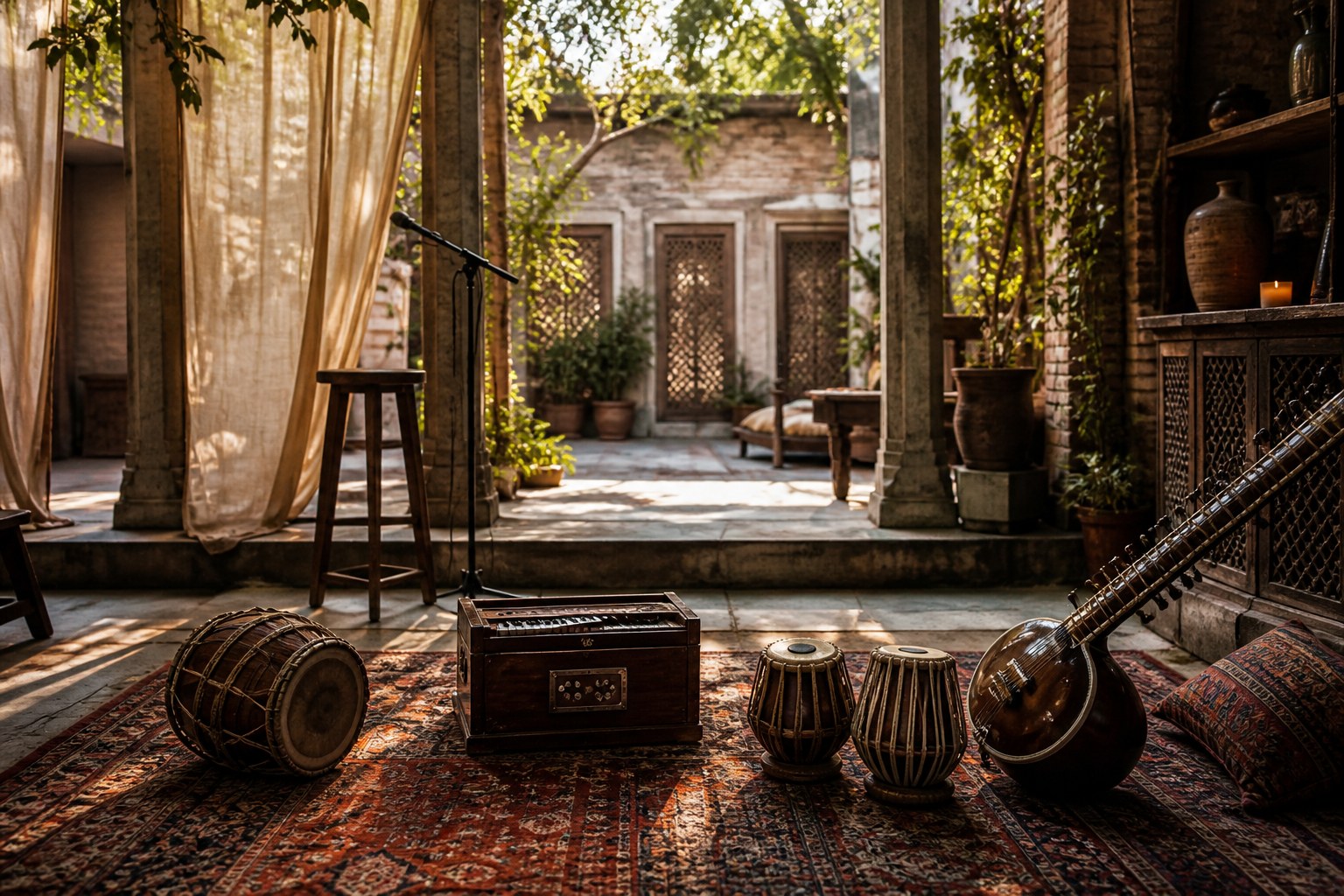
Coke Studio Pakistan is best approached as a televised arrangement laboratory: a changing house-band and production model where folk, pop, classical, devotional and electronic choices become audible and visible. Season numbers alone do not explain why two performances feel like different shows. Producer eras do.
This guide maps those eras, warns against treating every song as an original composition, and offers a contrast-based listening route. Prefer official uploads on the Coke Studio Pakistan YouTube channel.
The early live-studio grammar (Rohail Hyatt, seasons 1–6)
From 2008, Rohail Hyatt’s early seasons made musicianship legible through a house band, visible instruments and long-form performance energy. Part of the appeal was watching arrangement happen in a shared room. The repertoire often drew on existing folk, classical, film and devotional material re-heard through contemporary studio craft. That grammar taught a generation to hear Pakistani tradition as living arrangement. It also created a nostalgia trap: later seasons that look more like music videos can be judged as less authentic simply for changing the frame.
Strings era (seasons 7–10)
When Bilal Maqsood and Faisal Kapadia of Strings produced seasons 7–10, the show’s popular address and scale shifted. Broader pop instincts and a changed sense of event television marked the period. Listeners who prefer rawer early-season textures sometimes dismiss this era too quickly; listeners who discovered Coke Studio here sometimes never walk backward. Both omissions flatten the laboratory metaphor. Use contrast, not loyalty, as your method.
Season 11 and the Hyatt return
Ali Hamza and Zohaib Kazi’s season 11 is often discussed as an experimental bridge before Rohail Hyatt returned for seasons 12 and 13. Returns matter because they are never simple restorations. Audiences had changed; platforms had changed; the show’s international clip culture had intensified. Hearing Hyatt’s second stint beside the first is a study in what can be recovered and what cannot.
Xulfi eras (seasons 14–15)
After Hyatt’s second departure, Zulfiqar Jabbar Khan (Xulfi) led seasons 14 and 15. Coverage in Dawn Images and later industry reporting including Music Ally describes a shift toward more original composition and a music-video production grammar—individual songs with dedicated visuals rather than the older episodic live-studio frame. Whether a listener prefers that shift is aesthetic judgement. That the shift happened is a production fact. Originals change the ethical listening question: you ask whether a new song earns its length and collaboration.
Brand politics and boycott debates around sponsors can also shape how a season is received in a given year. Separate those reception facts from the musical labour inside tracks when you can; both can matter to a household without being identical questions.
What Coke Studio is not
It is not the origin of every song it features. It is not a neutral archive. It is not a substitute for mehfil logic or classical training cultures. It is a branded platform with genuine musical labour inside it. Holding those sentences together prevents both cynicism and boosterism.
A contrast-based listener’s route
- One early Hyatt-era performance with visible house-band interplay.
- One Strings-era performance aimed at broad pop clarity.
- One season 11 experiment that surprised you.
- One Hyatt-return performance, compared with your early-era pick.
- One Xulfi-era original with video grammar.
- One performance whose credits send you to a poet or folk source outside the show.
| Era cue | Approx. seasons | Listen for |
|---|---|---|
| Hyatt early | 1–6 | Live-room interplay; re-hearing traditional material |
| Strings | 7–10 | Popular scale; event-television clarity |
| Hamza/Kazi | 11 | Experiment and bridge risks |
| Hyatt return | 12–13 | Recovery vs reinvention under new platform conditions |
| Xulfi | 14–15 | Originals; cinematic video grammar |
Household listening without brand war
Families argue about Coke Studio the way they argue about cricket captains: loyalty hardens faster than listening. Disarm the war by assigning contrast homework rather than declaring a favourite season. Ask each person to bring one track from an era they usually skip. Play both. Talk about arrangement, not about who is culturally correct.
Using the show as a syllabus rather than a feed means keeping a short notebook: season, producer era, whether the material is original or re-heard, one instrumental detail, one credit followed outward. Shuffle mode defeats that syllabus. So does a “best of” playlist that erases era difference.
International clip culture often isolates a vocal peak without the arrangement that earned it. Restore the full official upload before judging. When a performance remakes a poem or folk line, spend one evening with a source recording or text if you can find one; Coke Studio then becomes a doorway rather than a replacement.
This page will not crown a best season. It will insist that format history is part of musical meaning. Once you can hear producer eras as different laboratories, season numbers stop being a ranking game and start being a map.
Using Coke Studio as a syllabus, not a feed
Feeds erase era difference. A syllabus restores it. Keep a short notebook: season number, producer era, whether the material is original or re-heard, one instrumental detail, one credit followed outward to a poet or folk source. Six entries from six eras teach more than fifty liked clips from one era.
Household brand wars soften when you assign contrast homework. Each person brings a track from an era they usually skip. Play both fully from the official channel. Talk about arrangement, house-band interplay, and video grammar—not about who is culturally correct. Loyalty hardens faster than listening; method reverses that.
International clip culture isolates vocal peaks. Restore the full upload before judging. When a performance remakes a poem or film line, spend one evening with a source text or earlier recording if you can find one. Coke Studio then becomes a doorway into a longer musical life rather than a replacement for it.
Remember what the show is not: not the origin of every song, not a neutral archive, not a substitute for mehfil or classical training cultures. It is a branded laboratory with real labour inside. Once producer eras are audible as different laboratories, season numbers stop being a ranking game and start being a map you can actually use.
Originals, remakes, and the credit trail
Early Coke Studio seasons taught millions to re-hear traditional and film material through contemporary studio craft. Xulfi-era seasons shifted weight toward originals and cinematic videos. Both modes require credit literacy. For remakes and re-hearings, follow the poem or folk line outward. For originals, ask whether collaboration and length are earned. Refusing that distinction produces either nostalgia purity tests or amnesia about sources.
Producer eras also changed what “live” meant on screen. Visible house-band interplay is one pleasure; crafted music-video storytelling is another. Judging one by the other’s criteria is how brand wars start. Use the contrast route instead: one track per era, notebook in hand, official uploads only, one source credit followed outside the show.
Brand politics around sponsors can shape a season’s reception in a given year. Separate those debates from musicians’ labour when your household can; both may matter without being identical. The laboratory metaphor survives either way. Season numbers are a map. Your ears still have to walk it.
Platform change and the international ear
Coke Studio’s life on YouTube changed who could overhear Pakistani arrangement experiments and how quickly a vocal peak could detach from its episode. International ears are welcome; detached peaks are still a teaching problem. Restore official full uploads. Name producer eras. Follow credits outward. The international ear becomes a better ear when it accepts homework.
Inside Pakistan and the diaspora, the show also became a generational handshake and a generational argument. Use it as a handshake: shared listening with contrast. Refuse it as a purity court. Laboratories change equipment. The question is what each era made audible—not which era gets to exile the others from memory.
House bands, featured voices, and credit generosity
Featured vocalists often receive the entire public memory of a Coke Studio performance. Arrangement, house-band interplay and production choices built the weather those vocals move through. Practise credit generosity: name a bassist’s line, a reed phrase, a rhythmic switch, a producer era. Generosity does not shrink the singer. It tells the truth about a laboratory.
When originals dominate later seasons, credit generosity still matters—songwriters, co-producers, video directors. Format change does not cancel labour. Your notebook should get more crowded with names, not less. That crowding is how a branded show becomes a map of Pakistani musical work rather than a shrine to solo charisma.
A one-month household syllabus
Week one: early Hyatt and Strings contrast. Week two: season 11 surprise plus Hyatt return. Week three: Xulfi original with video grammar. Week four: follow one credit outside the show to a poet, folk source or earlier film song. Keep official uploads only. Write four notebook lines each week.
At month’s end, hold a listening dinner where each person plays their least favourite era’s best discovery. The rule is curiosity, not conversion. Coke Studio Pakistan will keep changing equipment. Households that practise contrast will keep hearing music instead of only rehearsing brand loyalty.
Sources and official profiles
Was this helpful?
Keep reading
Related stories
More from this desk, this beat, and the tags on this piece.

A nikah in England is not automatically a civil marriage: check the legal registration
Bilal Ahmed · 28 Oct 2026

Urdu and Panjabi in England and Wales: what Census 2021 language data shows
Bilal Ahmed · 28 Oct 2026
Walima explained: what the reception is for and why every family does it differently
Bilal Ahmed · 27 Oct 2026
Dholki, mayun and mehndi: why Pakistani pre-wedding events are not the same thing
Bilal Ahmed · 25 Oct 2026
NADRA Family Registration Certificate: what an FRC proves and what it does not
Bilal Ahmed · 22 Oct 2026
Readers
The conversation
0 notes
Anyone can leave a note. Guests add a name and email — no account required, and the email is never published.
No notes yet. Yours would be the first.