Contemporary artists connecting Pakistan and New York
A medium-led route into six contemporary practices linking Pakistan and New York through painting, sculpture, installation, and performance.
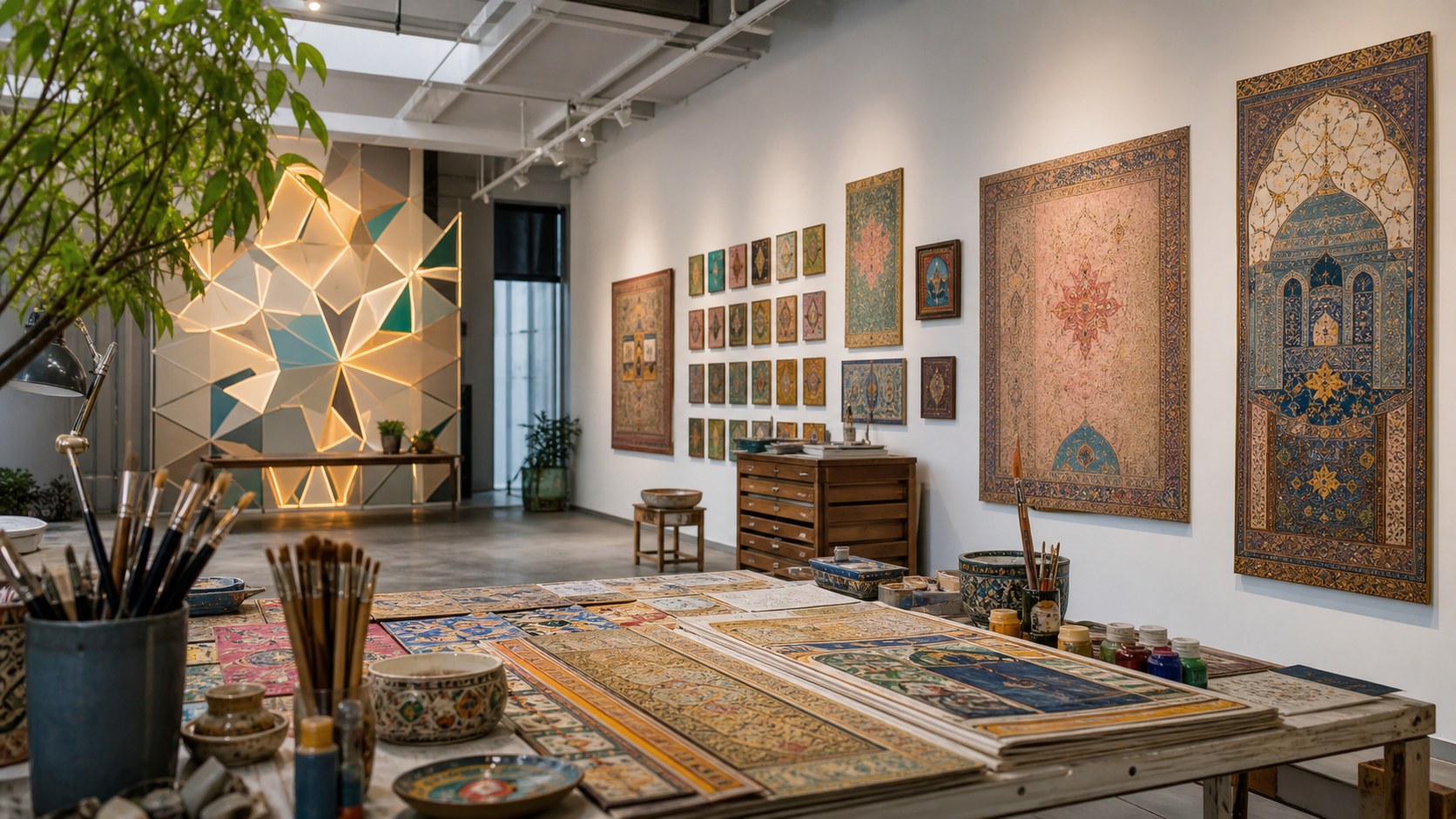
New York has been a studio base, exhibition context, or institutional platform for many artists connected to Pakistan, but geography alone does not explain the work. The rewarding comparison is how each artist handles material, figure, history, space, and spectatorship.
We selected artists with official sites or authoritative representing-gallery biographies and bodies of work substantial enough for independent study. The grouping describes a geographic connection, not a shared movement.
Compare by medium, not by biography alone
Shahzia Sikander moves from Indo-Persian miniature training into animation, mosaic, and large-scale installation—scale itself becomes part of the argument.
Salman Toor stays close to oil and the figure, building rooms of friendship and vulnerability that repay slow looking.
Anila Quayyum Agha turns pattern into architecture through light and shadow; the viewer’s body completes the work.
Huma Bhabha builds hybrid figures confronting monumentality and ruin.
Ambreen Butt layers miniature-trained paper work with contemporary subjects of power and labour.
Baseera Khan uses performance, textiles, and installation to test access and representation in lived space.
A method for one afternoon in New York
Begin with one project per artist. Follow references only after attending to scale and material. Use official exhibition pages for current dates.
- Use official exhibition pages for current dates.
- Distinguish birthplace, training, residence, and subject.
- Credit artworks with title, year, medium, and source when sharing.
Spectatorship changes the work
Painted intimacy asks for close looking; patterned shadow asks you to walk; monumental sculpture asks for bodily scale. Do not judge every practice by the same phone-screen distance. Installation views on museum and gallery pages often teach more than cropped details.
Institutional context without outsourcing looking
Museum pages from MoMA, the Whitney, and the Met can supply essays and installation views. They do not replace spending time with the work’s material facts. The New York connection is a map of studios and exhibitions, not a single aesthetic.
Record what you learned
Write one dated sentence after each purchase, appointment, or meal: what clarified the decision, what failed, and what you would ask next time. Specific family memory beats another generic recommendation thread. Confirm current hours, stock, menus, and policies on official sites before you act on any name in this article.
Inclusion is editorial rather than paid. Named businesses and institutions appear because their official pages support an inspectable research path, not because PakStyles has audited every claim or endorsed every outcome.
When facts are time-sensitive—prices, hours, shipping windows, exhibition dates, allergen policies—recheck close to the day you need them. A strong article cannot freeze a living menu, stockroom, or gallery schedule.
Keep a dated note of who promised stock location, ship window, wearable date, or service scope—and when they promised it. Ambiguity is more expensive than another email.
Before you close the tabs, write the wearable date, the fulfilment location, and one non-negotiable on a single line. That line is more useful than another saved moodboard when the family chat starts rewriting the plan.
Sources and official profiles
Was this helpful?
Keep reading
Related stories
More from this desk, this beat, and the tags on this piece.
A nikah in England is not automatically a civil marriage: check the legal registration
Bilal Ahmed · 28 Oct 2026

Urdu and Panjabi in England and Wales: what Census 2021 language data shows
Bilal Ahmed · 28 Oct 2026
Walima explained: what the reception is for and why every family does it differently
Bilal Ahmed · 27 Oct 2026
Dholki, mayun and mehndi: why Pakistani pre-wedding events are not the same thing
Bilal Ahmed · 25 Oct 2026
NADRA Family Registration Certificate: what an FRC proves and what it does not
Bilal Ahmed · 22 Oct 2026
Readers
The conversation
0 notes
Anyone can leave a note. Guests add a name and email — no account required, and the email is never published.
No notes yet. Yours would be the first.