Culture
Contemporary qawwali after Nusrat: listening without imitation myths
Contemporary qawwali after Nusrat is not a field of lesser copies. Hereditary parties, women performers, shrine traditions, concert stages and digital production continue to reshape the form.
By Bilal Ahmed
Culture editor
3 min read
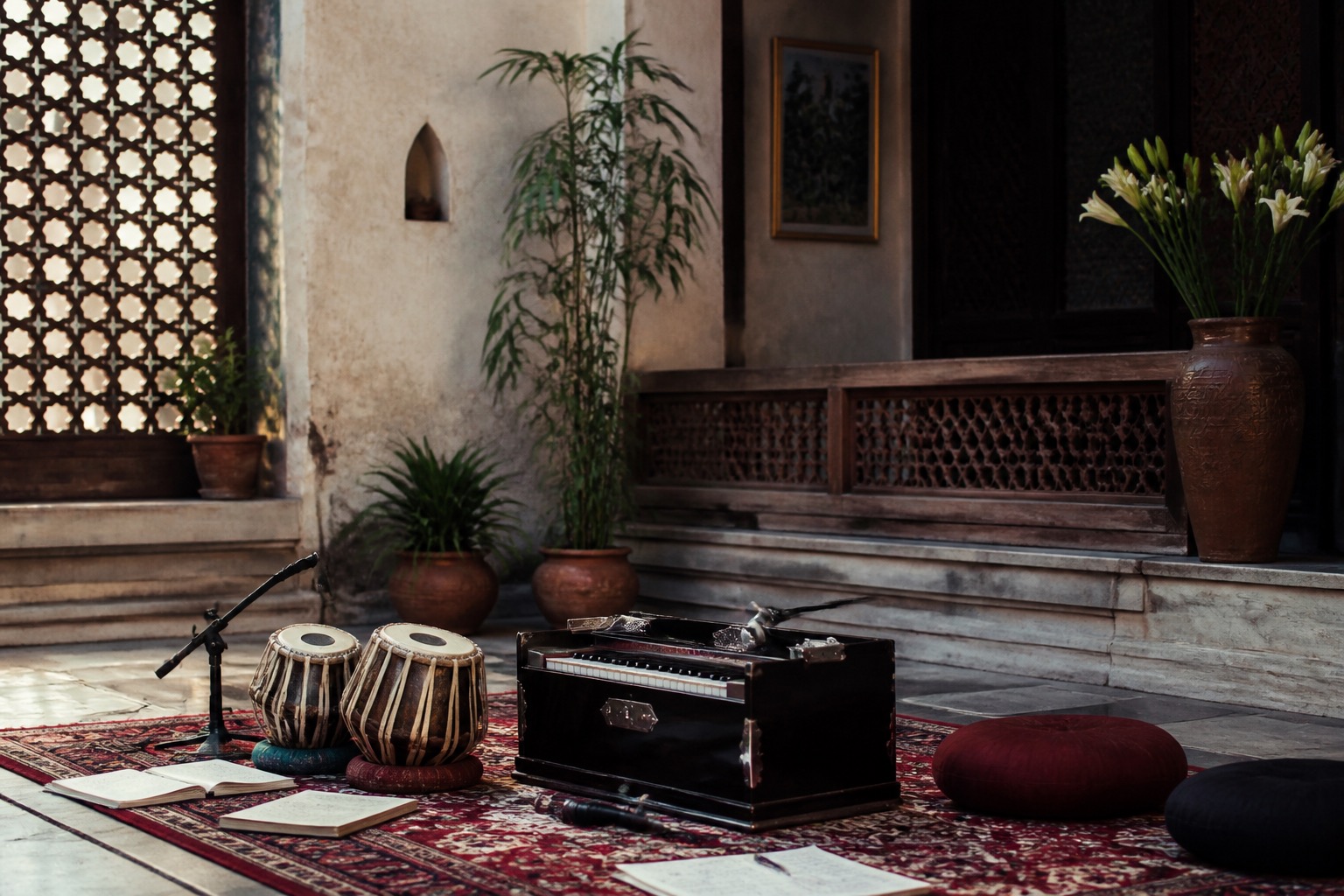
Contemporary qawwali after Nusrat is not a field of lesser copies. Hereditary parties, women performers, shrine traditions, concert stages and digital production continue to reshape the form.
What makes a contemporary qawwali performance feel alive rather than merely familiar?
— A question for PakStyles readers
The ensemble remains the foundation
Lead voice, supporting singers, clapping, harmonium and percussion create collective momentum. Celebrity framing should not erase the party.
Slow down at “The ensemble remains the foundation” and identify the example doing the argumentative work. Name its date, maker, place or material where the public record allows. In Contemporary qawwali after Nusrat: listening without imitation myths, that precision gives readers something they can examine and challenge instead of asking them to accept a broad cultural claim on trust.
Lineage is knowledge, not automatic quality
Family transmission can preserve repertoire and technique, but each performance still needs to be heard on its own terms. Verify lineage claims rather than repeating posters.
Compare “Lineage is knowledge, not automatic quality” with one genuinely different example. Similarities may reveal a pattern, while differences expose the limits of the category. Keep regional, linguistic, religious, class and diaspora variation visible rather than presenting one household or institution as the whole of Pakistan.
Women challenge the imagined stage
Women have participated in devotional music in varied settings even when commercial qawwali visibility is male-dominated. Coverage should source histories without novelty language.
Ask whose labour disappears when “Women challenge the imagined stage” is described too quickly. Credit makers, translators, technicians, organisers and communities where evidence supports it. Attribution improves the story and helps readers follow the subject beyond the best-known public name.
Digital length changes listening
Short clips privilege climax, while full performances reveal development. Seek official complete recordings, identify poetry and restore the time the form requires.
Bring the argument back to something observable. For “Digital length changes listening”, a reader should be able to visit, read, listen, inspect or verify the example. That makes disagreement productive: another person can add evidence, correct a date or show where Contemporary qawwali after Nusrat: listening without imitation myths needs a wider frame.
Where to continue after Contemporary qawwali after Nusrat
Google Arts & Culture: Pakistan is a starting point for the current record connected with Contemporary qawwali after Nusrat: listening without imitation myths. Check dates, credits and availability at the source; then follow the names, works and institutions mentioned above rather than relying on a search-result summary.
What makes a contemporary qawwali performance feel alive rather than merely familiar? If you have a strong answer, name the specific example or first-hand experience that shaped it.
What would you add—or challenge? What makes a contemporary qawwali performance feel alive rather than merely familiar? Keep the conversation attached to a named work, tested method, dated source, or first-hand observation so it improves the guide for the next reader. Before commenting on Contemporary qawwali after Nusrat: listening without imitation myths, revisit one complete example and note the detail that confirmed—or overturned—your first impression. Include enough context for somebody else to find or repeat it: the work or product name, city or venue where relevant, approximate date, and the particular choice you noticed. That is more valuable than a vote for “best”.
Sources and official profiles
Filed under
Keep reading
Related stories
More from this desk, this beat, and the tags on this piece.
Ramadan hosting etiquette when your guests fast differently
Bilal Ahmed · 13 Sep 2026 · 15 min
Recording grandparents’ stories: an ethical family oral-history guide
Bilal Ahmed · 13 Sep 2026 · 16 min
How diaspora families archive old photographs before they disappear
Bilal Ahmed · 13 Sep 2026 · 17 min
Music for a Pakistani wedding without one endless generic playlist
Bilal Ahmed · 13 Sep 2026 · 16 min
Pakistani names in British and American workplaces: pronunciation without embarrassment
Bilal Ahmed · 13 Sep 2026 · 14 min
Readers
The conversation
0 notes
Anyone can leave a note. Guests add a name and email — no account required, and the email is never published.
No notes yet. Yours would be the first.