Finding Urdu books and presses in North America
Find Urdu reading in the US and Canada by starting with your library card, expanding through WorldCat and university holdings, then verifying presses and sellers. Not a permanent shop directory.
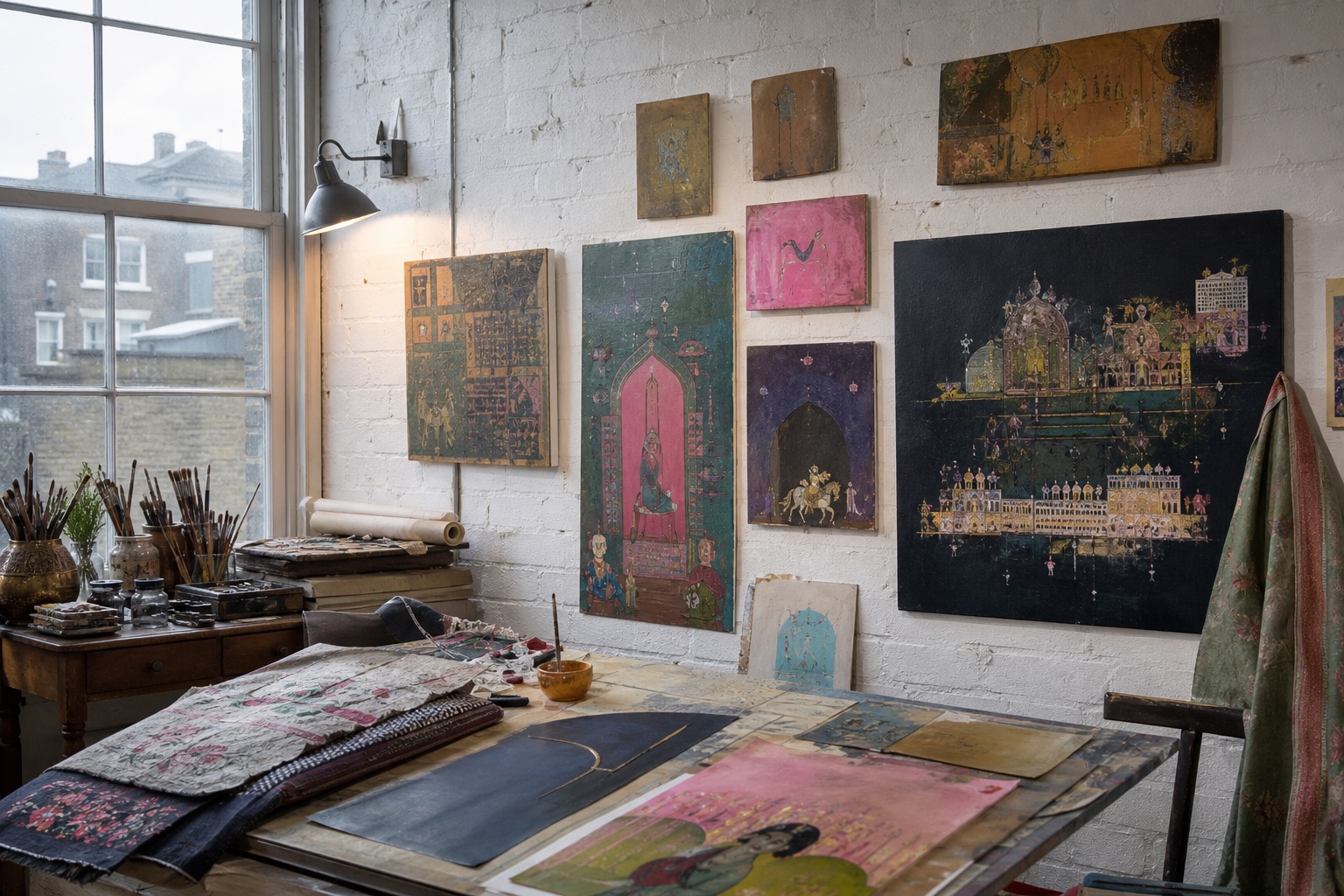
The cousin who “knows a bookshop” is rarely wrong about taste and often wrong about hours, stock, and shipping. In North America, Urdu titles live in uneven places: a public-library hold that arrives in three weeks, a university stack you can only use on-site, a Canadian university press textbook still in print, and an online seller whose catalogue changes with every shipment from Karachi or Lahore. This is a discovery guide for how to find books. It is not a ranked directory of stores.
Decide the job before you search. A picture book for a five-year-old, a nazm anthology for yourself, a research periodical from 1910, and a classroom qaida are different problems. Mixing them into one frantic marketplace scroll produces either the wrong script level or a reprint whose publisher you cannot name.
Start where you already have a card
Open your local public-library catalogue and search by language (Urdu / اردو), by Romanised author, and by title in both scripts if the system allows. Holdings vary sharply by metro. Some systems have growing children’s and bilingual shelves. Others have almost nothing beyond a few donated novels. Place holds early. Ask whether the system supports interlibrary loan for materials held elsewhere in the state, province, or consortium. A thin local shelf is not the end of the trail. It is the first filter.
If your library’s language filter is unreliable, ask a librarian how they tag South Asian languages in that catalogue. One precise staff tip beats twenty keyword guesses that dump Hindi and Urdu results into the same unsorted pile.
Widen the map with WorldCat, then narrow again
WorldCat aggregates records from thousands of libraries. Search a title or author, then use the language facet for Urdu, and set your location so “Find a Copy” shows institutions near you. Note which libraries hold the edition you want (public, university, or research) and whether the item is circulating or reference-only. Take that record back to your own library and ask about interlibrary loan or reciprocal borrowing. WorldCat itself does not lend books to individuals.
University and research collections matter when you need older periodicals, tazkiras, or specialised monographs that never appear in neighbourhood branches. The University of Chicago’s pages on the Urdu Research Centre preservation project and the related Urdu Research Library Consortium catalogue describe a major historical Urdu collection whose microfilm access for US partners runs through research-library channels, not a weekend browse for paperback fiction. The Library of Congress Urdu-language results are another way to identify titles and editions before you request anything locally. Treat these as research doors: confirm access rules, reading-room appointments, and what travels on loan.
Presses that publish for North American readers
“Urdu press” in diaspora talk often means a South Asian imprint you hope a seller will import. Separately, North American university presses occasionally publish Urdu-related work you can order through ordinary academic channels. McGill-Queen’s University Press’s Urdu for Children series (edited by Sajida Alvi) was built as instructional material for North American children learning Urdu as a heritage or second language: textbooks, workbooks, teacher materials, and audio components aimed at classroom and home use. Check the press page for which volumes are still listed, then buy through the publisher’s own routes or a bookseller that cites the same ISBN.
Scholarly presses also carry translations and studies that sit beside, rather than replace, popular fiction. Columbia University Press’s listing for The Romance Tradition in Urdu is an example of how dastan and literary history enter North American catalogues. Useful if you want annotated English access to a tradition; not a substitute for buying contemporary Urdu novels in Nastaliq.
When a relative names a Lahore or Delhi publisher, search the imprint plus ISBN on WorldCat or the publisher’s own site before paying a middleman. Confirm edition, year, and script. Reprint quality and paper stock vary. That is a product fact, not a moral judgement on the seller.
Online and storefront sellers: verify, then buy
Independent shops and mail-order catalogues fill gaps libraries cannot. They also close, rebrand, and change shipping rules. Treat every recommendation as a lead to verify on the day you order.
- Prefer a named domain and contact path. A live site with shipping policy, return terms, and an email or phone you can reach beats an Instagram story with a cash-app handle alone.
- Match title, author, and ISBN to what you already found in a library or press record when possible.
- Read shipping geography carefully. Cross-border orders between Canada and the US may mean duties, slower post, and different return rules than a domestic parcel.
- Ask about children’s printing quality if you are buying qaida and picture books. Some sellers state plainly that paper and colour standards differ from mass-market North American children’s lines.
- Keep the receipt and the ISBN. If the wrong edition arrives, you need both.
One example of a Canada-based seller with a public catalogue and documented Canada/US shipping FAQ is Urdu Bazaar. Inclusion here means the shop publishes verifiable policies you can check yourself. It is not a PakStyles endorsement, ranking, or guarantee of stock. Hours, inventory, and rates change. Open their current FAQ and product page before you rely on anyone’s screenshot. The same verification habit applies to mosque book tables, bazaar stalls, and “someone’s uncle imports everything”: useful when current, invisible when not.
Children’s shelves need a different filter
For heritage learners, ask whether the book is a qaida (letter practice), a picture book with sparse text, a dual-language reader, or dense adult prose someone hoped a child would “just absorb.” Level mismatch is the most common disappointment after shipping delays. If possible, borrow a similar level from the library before you buy a stack of hardbacks.
Audio helps. If a press or seller lists companion audio, note the format (CD, download, app) and whether it still works on your devices. A workbook without the sound component can stall a household that is learning script from scratch.
Poetry, fiction, and religious texts are not one aisle
A Ghalib selection, a contemporary novel, a children’s qaida, and a Qur’an with Urdu translation belong to different acquisition paths. Poetry often appears in anthologies and academic editions. Popular fiction may travel through import sellers. Religious texts may be available through mosque book tables with their own donation or pricing norms. Do not assume one seller stocks all four well. Search by form first, then by title.
Budgets, donations, and the slow shelf
Used copies and library discards can build a home shelf cheaper than new hardbacks, but check for missing pages in children’s qaidas and for brittle bindings on older poetry. Mosque and community book tables sometimes sell or donate stock after events. Apply the same ISBN and edition habits you would online.
If you are buying for a classroom or Sunday school, ask whether the institution needs multiple identical ISBNs, worksheets that may be photocopied under the publisher’s terms, or audio licences. Institutional purchasing is a different conversation from one picture book for a niece.
A working order of operations
- Name the reader and the form (child’s reader, adult fiction, poetry, reference, research).
- Search your library; place holds; ask about interlibrary loan.
- Locate the title on WorldCat or a research catalogue; note holding libraries and editions.
- Check whether a North American press still lists the work.
- Only then pay an online or storefront seller whose policies and ISBN you have verified today.
Digital reading without abandoning print habits
Some readers use apps, scanned periodicals, or ebook editions when Nastaliq print is scarce. Treat digital sources with the same publisher discipline: named imprint, known translator if any, and a legal acquisition path. A random PDF forwarded in a group chat may be incomplete, mistitled, or unlawfully copied. Library ebook platforms sometimes carry Urdu or bilingual titles; ask a librarian which apps your card unlocks.
Audio of poetry and children’s lessons can support print practice, especially for adults returning to script. Pair audio with a physical page when possible so the ear and eye learn together.
Urdu reading culture in the diaspora is built less on one legendary aisle and more on this sequence: catalogue, hold, press page, then a seller you can still find next month. When the cousin’s bookshop tip is real, the method will confirm it. When it is nostalgia, you will still have a book on the way.
Sources and official profiles
- WorldCat
- University of Chicago: Urdu Research Centre Preservation Project
- Digital South Asia Library: Urdu Research Library Consortium
- Library of Congress: materials in Urdu
- McGill-Queen’s University Press: Urdu for Children, Book 1, Volume 1
- Columbia University Press: The Romance Tradition in Urdu
- Urdu Bazaar
Was this helpful?
Keep reading
Related stories
More from this desk, this beat, and the tags on this piece.


Recording grandparents’ stories: an ethical family oral-history guide
Bilal Ahmed · 13 Sep 2026
Readers
The conversation
0 notes
Anyone can leave a note. Guests add a name and email — no account required, and the email is never published.
No notes yet. Yours would be the first.