Humayun Saeed: actor, producer, and television entrepreneur
How to evaluate Humayun Saeed as romantic lead and industrial force\u2014through television longevity, commercial cinema, Mere Paas Tum Ho, and Six Sigma Plus.
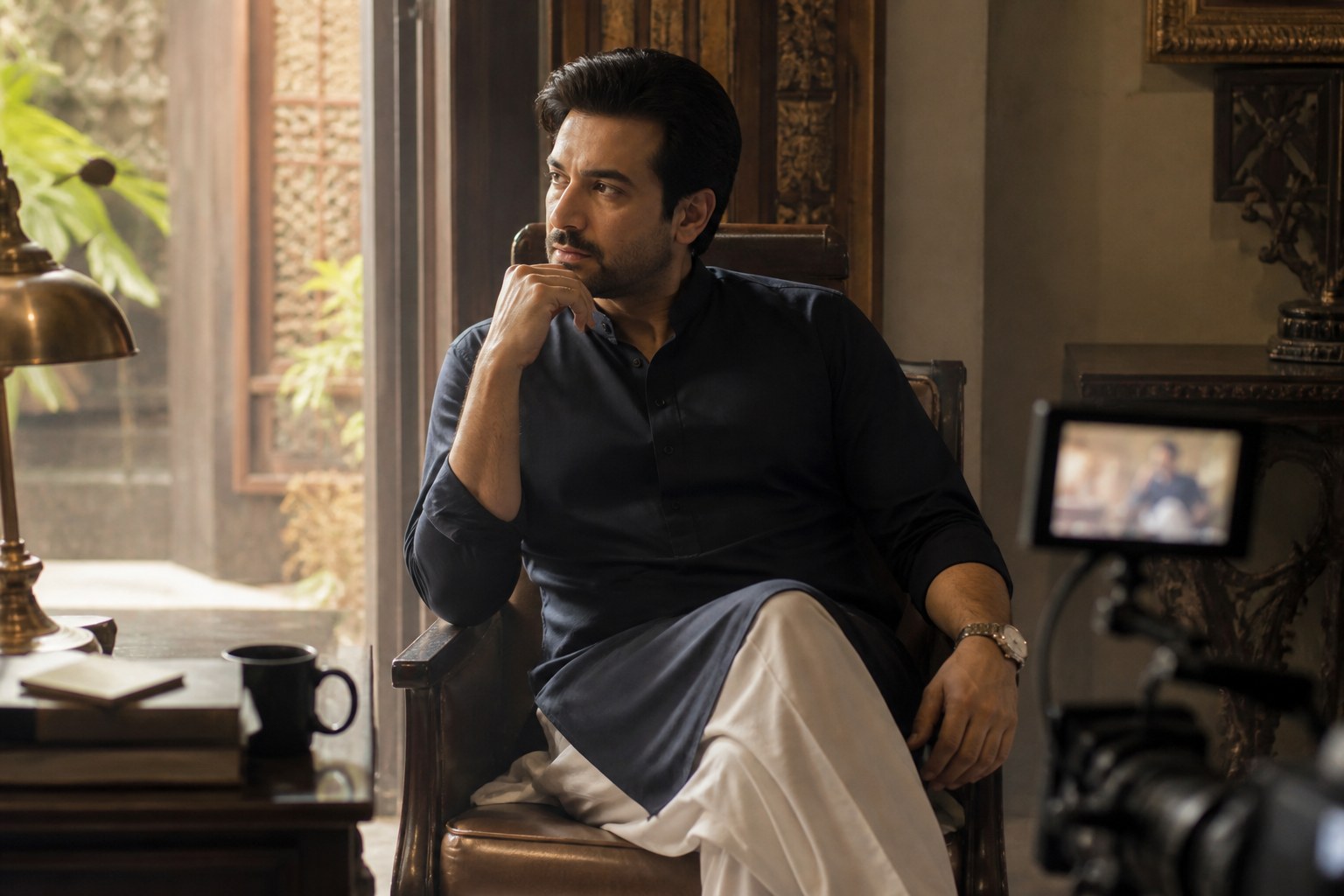
Humayun Saeed is both a face in front of the camera and one of the people who has helped decide what Pakistani commercial television looks like behind it. Evaluating that double position requires two criteria that should not be collapsed: performance craft in specific roles, and industrial influence through production choices. Popularity explains scale. It does not settle either question alone.
The romantic lead across television eras
Saeed’s longevity as a leading man is itself a professional fact. Urdu television’s visual grammar, episode lengths, and moral vocabularies have shifted across decades; an actor who remains castable through those shifts has learned to adjust charm, authority and vulnerability to different writers’ rooms. The trap for viewers is nostalgia compression—judging a 2000s serial and a late-2010s mega-hit by one timeless standard of good acting.
Watch older work for what the era rewarded: slower escalation, different ideals of masculinity, different camera patience. Watch later work for how closely he still plays those codes, and where he lets irritation, ego or moral certainty become less flattering. Continuity of stardom is not continuity of the same performance. Longevity also invites generational conflict in living rooms. Older viewers may defend an earlier romantic code; younger viewers may reject the gender politics of a later mega-hit. Separate era conventions from personal endorsement.
Commercial cinema and star negotiation
Films such as Punjab Nahi Jaungi use star charisma, comedy, family conflict and musical scale to address a broad theatrical audience. These pleasures are real. So are questions about gender politics, class fantasy and whose dignity the joke protects. Commercial cinema also reveals negotiation: how much force a female co-star is written to have against the hero’s momentum, and how celebrity casting substitutes for surprise.
Theatrical comedy and television intimacy ask for different sizes of performance. A laugh that works in a cinema may flatten a close-up serial scene; a glance that carries television may disappear on a wide wedding set. When evaluating Saeed across media, name the medium before ranking the work.
Mere Paas Tum Ho and cultural argument
Mere Paas Tum Ho became appointment television and a flashpoint over betrayal, masculinity, class and judgement. Popularity explains cultural scale: living rooms argued, clips travelled, phrases entered casual speech. Popularity does not certify the correctness of every idea the script advances.
Separate Saeed’s performance labour from the text’s moral architecture. What does he do with stillness and speech when the character seeks sympathy? Where does the camera ask you to align? Where do supporting characters absorb consequences the lead escapes? International clip culture often extracts monologues as standalone masculinity sermons. Resist that extraction. Television rhetoric depends on preceding scenes, camera alignment, and who absorbs consequences. Restore the episode or refuse the slogan.
Six Sigma Plus and producer power
Saeed co-runs Six Sigma Plus with Shahzad Nasib, a production banner associated with numerous commercial television serials and film projects. Earlier partnerships preceded that house; the structural point remains: a star-producer participates in selecting material, talent climates and budgets.
Production power creates responsibilities fan discourse often skips. Which writers get repeat commissions? Which actresses are cast as moral centres versus cautionary tales? Which stories about class mobility or marital betrayal saturate a season? Marketing language from any production house should be read as marketing; dated reporting from outlets such as Dawn’s entertainment coverage is a better check. Producer power also includes the quiet work of schedules, budgets, and relationships with networks such as those visible through ARY Digital and HUM TV ecosystems. Fans rarely see that labour; guides should still name it as real.
How to evaluate a star who also greenlights
- Judge acting on named scenes, not on brand affection.
- Judge producing on slates and patterns across multiple titles.
- Do not treat ratings alone as moral victory.
- Do not treat controversy alone as proof of artistic bravery.
- Distinguish on-screen character ethics from off-screen labour practices you cannot see without reporting.
- Update both scorecards when new work appears; popularity will remain noisy.
| Lens | Question | Evidence to prefer |
|---|---|---|
| Performance | What does he do with stillness, speech, status? | Named scenes; complete episodes |
| Text | What moral architecture does the script advance? | Plot consequences; supporting-character costs |
| Production | What patterns recur across a slate? | Credits, casting patterns, dated reporting |
| Reception | What did living rooms argue about? | Cultural scale without treating scale as correctness |
A viewing route that keeps both jobs visible
- One earlier television romance, watched for era conventions.
- One commercial film, watched for star negotiation.
- Mere Paas Tum Ho, watched as rhetoric and performance.
- One Six Sigma Plus production in which Saeed does not star.
- One recent credit verified via ARY Digital or HUM TV listings.
Television entrepreneur can become flattering fog. Strip it back to operations: companies, co-founders, recurring directors and writers, relationships with networks. International viewers sometimes read Pakistani mega-serials through the lens of prestige limited series; that lens misleads. Episode abundance and moral debate are features of the form. Saeed’s importance is partly about embodying it and partly about helping manufacture it.
Industrial stardom and audience responsibility
When a star also greenlights, audience critique has a second channel: not only how he acts, but which stories his machinery amplifies. That critique should stay evidence-based. Cite titles, tropes, casting patterns. Avoid treating a production house as a cartoon villain or as a national treasure beyond question.
Emerging actors watching Six Sigma Plus visibility should study two things: the kinds of roles the house repeatedly funds, and the kinds of roles it rarely funds. Industrial patterns teach more than a single viral launch. Viewers who only follow Saeed as a romantic brand miss half the story; viewers who only critique him as a producer without watching scenes miss the other half.
This profile will not rank him as the greatest anything, will not use marriage detail as career explanation, and will insist that actor and producer are related jobs that still need separate sentences. Popularity is weather. Craft and power are the climate you study.
What Six Sigma Plus visibility teaches emerging actors
Industrial stardom creates a curriculum even when no one publishes a syllabus. Emerging actors watching Saeed’s machine should study which writers return, which actresses are written as moral centres versus cautionary tales, and which class stories get repeated until they feel like weather. Those patterns are more instructive than a single viral launch interview.
Viewers have a parallel curriculum. When a mega-serial saturates a season, ask what else was crowded out of the schedule. Ratings measure attention; they do not measure the health of a drama ecosystem. A household that only watches star vehicles will misread Pakistani television as a single personality sport.
Producer-actors also shape the temperature of publicity. Press that treats every controversy as bravery should be met with the same scepticism as press that treats every rating as proof of virtue. Ask what the camera aligned you with, who absorbed consequences, and whether the production slate shows curiosity or only repetition.
Keep the two scorecards dated. After each new credit, update one sentence on performance and one sentence on industrial pattern. If you cannot write the second sentence because you never checked a non-starring Six Sigma title, that gap is the assignment. Popularity will remain noisy. Craft and power still reward quieter attention—and separate sentences.
Mere Paas Tum Ho without the slogan extraction
International clip culture turned portions of Mere Paas Tum Ho into portable masculinity sermons. A careful viewer restores the preceding scenes, names who absorbs consequences, and separates Saeed’s labour from the script’s moral architecture. You can find a performance magnetic and still reject a text’s gender politics. You can also find a text culturally revealing without crowning it as wisdom.
That double capacity is adult media literacy. Pakistani mega-serials reward it because they are long enough for rhetoric to change mid-stream. Judging a hundred-episode argument by one monologue is like judging a novel by a paragraph that travelled well on WhatsApp.
Industrial stardom makes the literacy urgent. When the same face helps greenlight what living rooms argue about, audiences who only watch as fans miss half their power as citizens of a media culture. Watch as a viewer of scenes and as a reader of slates. Date both notes. Refuse marriage gossip as career explanation. Popularity is weather; craft and power remain the climate.
Longevity without nostalgia compression
Urdu television’s moral vocabularies shifted across the decades Saeed remained castable. Watching an earlier romance beside a later mega-hit without adjusting for era conventions produces false verdicts about decline or improvement. Ask what the era rewarded: pace, apology rituals, how much privacy a couple was allowed on screen, how class was signalled. Then ask what Saeed still does with charm, irritation and moral certainty inside those changing codes.
Cinema adds another era problem. Theatrical comedy of the mid-2010s and television intimacy of the late 2010s are different machines. A laugh calibrated for a hall may flatten a close-up; a glance calibrated for television may vanish on a wide wedding set. Name the machine before ranking the actor. Two scorecards—performance and power—still need a third quiet column for medium.
Sources and official profiles
Was this helpful?
Keep reading
Related stories
More from this desk, this beat, and the tags on this piece.


A nikah in England is not automatically a civil marriage: check the legal registration
Bilal Ahmed · 28 Oct 2026

Urdu and Panjabi in England and Wales: what Census 2021 language data shows
Bilal Ahmed · 28 Oct 2026

Walima explained: what the reception is for and why every family does it differently
Bilal Ahmed · 27 Oct 2026

Dholki, mayun and mehndi: why Pakistani pre-wedding events are not the same thing
Bilal Ahmed · 25 Oct 2026

NADRA Family Registration Certificate: what an FRC proves and what it does not
Bilal Ahmed · 22 Oct 2026
Readers
The conversation
0 notes
Anyone can leave a note. Guests add a name and email — no account required, and the email is never published.
No notes yet. Yours would be the first.