Imran Qureshi: miniature painting, gardens, and architectural space
Imran Qureshi makes beauty and violence occupy the same surface. This guide reads miniature discipline, red spills as garden and wound, and architecture as page.
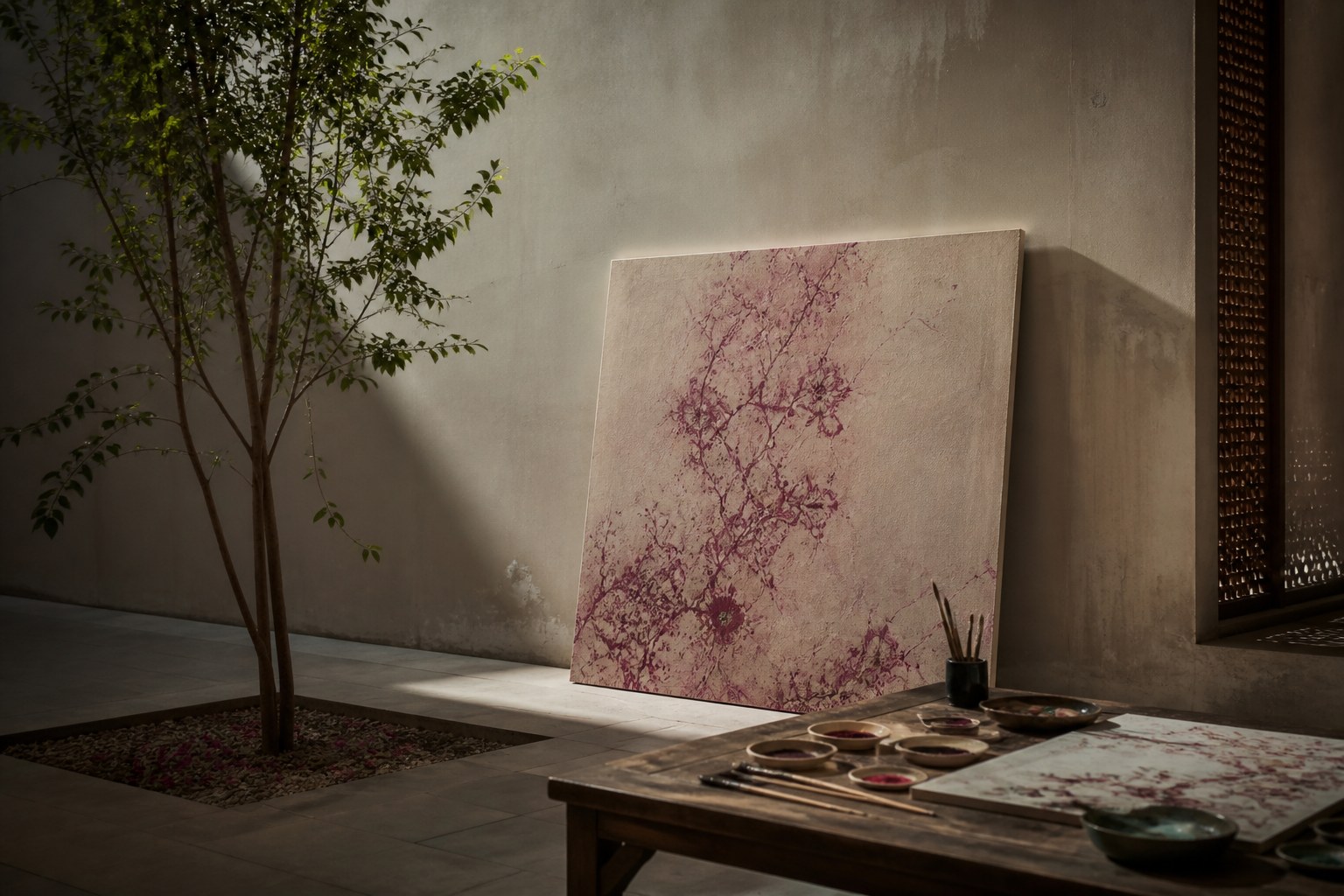
Imran Qureshi makes beauty and violence occupy the same surface: miniature precision can open into red spills, foliage, and architectural floors that read as both garden and wound. The question is not whether beauty is allowed after violence—it is how looking is trained.
Can beauty make political violence more visible—or does it risk making it easier to consume?
— PakStyles culture desk
Miniature discipline under pressure
Qureshi studied miniature painting at Lahore’s National College of Arts and later taught in that tradition. Art in Embassies’ profile describes him among pioneers of Pakistan’s neo-miniature movement, integrating contemporary themes with Mughal-informed technique.
The Met’s 2013 Roof Garden commission pages document how he scaled foliate patterns born in miniature practice onto architecture. Read the Roof Garden commission beside the related miniatures display.
Red is paint, wound, and garden
Museum texts describe Qureshi’s use of red acrylic in response to bombings in Lahore, with foliate forms that evoke both blood and ornamental gardens. Do not reduce the work to a single allegory; stay with the double reading the installations demand.
Architecture becomes the page: floors, courtyards, and roofs inherit the discipline of the wasli while exposing viewers to weather, footsteps, and civic space. Looking is embodied, not only optical.
How to look without stopping at symbolism
Symbolism is a doorway. Technique is the room: gold leaf, emulsion, squirrel-hair brush traditions as taught and adapted, splash distance, and the time it takes to turn a spill into leaves. Watch that labour.
This profile uses museum and institutional sources. It does not invent private motives. Beauty here is not consolation; it is a method for keeping violence visible without turning it into spectacle alone—an unresolved tension the work asks viewers to hold.
Sources and official profiles
Was this helpful?
Keep reading
Related stories
More from this desk, this beat, and the tags on this piece.

A nikah in England is not automatically a civil marriage: check the legal registration
Bilal Ahmed · 28 Oct 2026

Urdu and Panjabi in England and Wales: what Census 2021 language data shows
Bilal Ahmed · 28 Oct 2026
Walima explained: what the reception is for and why every family does it differently
Bilal Ahmed · 27 Oct 2026
Dholki, mayun and mehndi: why Pakistani pre-wedding events are not the same thing
Bilal Ahmed · 25 Oct 2026
NADRA Family Registration Certificate: what an FRC proves and what it does not
Bilal Ahmed · 22 Oct 2026
Readers
The conversation
0 notes
Anyone can leave a note. Guests add a name and email — no account required, and the email is never published.
No notes yet. Yours would be the first.