Pakistani films for a family movie night
A family movie-night method for choosing Pakistani cinema by age, mood, language and conversation rather than one universal “family-friendly” list.
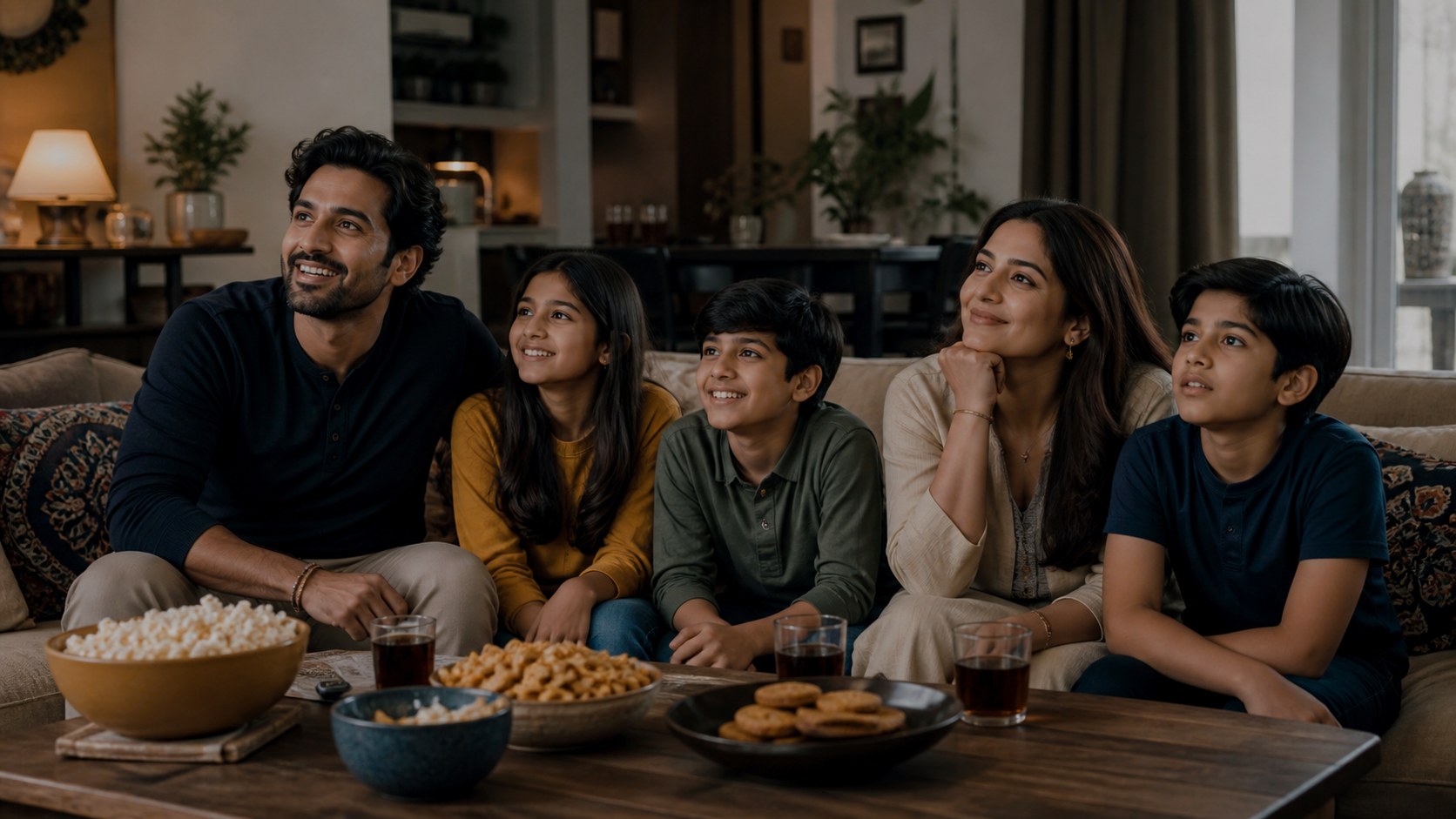
There is no single stack of “best Pakistani films for families,” because households disagree about language, humour, romance, violence and how late a school night can run. A useful movie night is a decision method: age, mood, runtime, subtitles, legal access and the conversation you are willing to have afterwards. Ranking lists go stale when streaming licences move; the method travels.
PakStyles will not invent availability claims for your country or pretend a film is universally suitable. Check the rating guidance on the service you use, preview for themes if children are present, and prefer legal streams or discs. Piracy is not a cultural shortcut.
Start with the room, not the canon
| Household constraint | What it changes |
|---|---|
| Mixed ages (under 10 + teens + adults) | Favour comedy, music, adventure; postpone heavy political or sexual themes |
| Urdu learners | Need accurate subtitles or bilingual comfort; avoid dense period dialogue as a first film |
| School night | Runtime under ~2 hours; start on time; no “one more episode” drift into trilogy |
| Guests who are new to Pakistani cinema | Choose clarity of story over insider references |
| Elders who want classics | Agree a classic slot and a contemporary slot across two nights, not a fight in one |
Write the constraint on a note before you browse. Algorithms optimise for engagement; you are optimising for a room that still likes each other at the credits.
Know the lanes of Pakistani cinema you might enter
Family nights often move among a few lanes: classic Lollywood musicals and social dramas; contemporary commercial films with song sequences; quieter independent or festival films; telefilm and drama serials that behave like long movies; documentaries. Each lane has different risks. A classic may contain attitudes toward gender or class that need adult framing. A contemporary comedy may include jokes that do not travel. An acclaimed indie may be brilliant and wholly unsuitable for children.
Do not treat “Pakistani film” as a genre. Treat it as an industry history with regional centres, censorship contexts, diaspora co-productions and uneven archives. A Karachi story and a northern mountain romance are not interchangeable evenings.
Subtitles, dubbing and language politics
Prefer subtitles over dubbing when your household can manage them; dubbing often flattens register and humour. For Urdu learners, pausing once or twice to check a phrase can help—constant pausing kills pace. If elders struggle with small subtitle text, increase size in the player settings before the film starts, not after the third complaint.
Films in Punjabi, Pashto or other languages may need different subtitle quality. Check a sample if the platform allows. A film whose subtitles are incomplete is a poor choice for a first shared night with mixed fluency.
Themes that need a plan, not a surprise
- Romance and physical intimacy: agree household thresholds; have an exit plan (pause, different film) without shaming teens.
- Violence and vigilantism: common in some action and political films; not automatic “family.”
- Partition, war, extremism: historically important; often too heavy for mixed-age first nights—better as planned adult–teen viewings with context.
- Class satire and domestic cruelty: comedy can cut; check whether younger viewers will only hear the laugh track.
- Religious representation: treat with care; do not use a film as a substitute for family religious education or as a weapon in a disagreement.
After difficult films, ask concrete questions: What surprised you? Who had power in that scene? What felt unfair? Avoid turning the sofa into an exam.
A shortlist method that does not pretend to be permanent
- Pick the lane (classic / contemporary comedy / music-led / quieter drama).
- Filter by runtime and rating on your legal service.
- Read two recent viewer notes that mention subtitles and themes—not only star ratings.
- Confirm at least one adult has seen it or a trusted preview.
- Have a backup film of a different lane if the first fails in twenty minutes.
Named examples rotate through public conversation—classic social films and musicals, later commercial revivals, diaspora-facing titles, and television dramas people treat as shared culture. Use names as starting queries, then verify suitability and access yourself. Do not treat a magazine shortlist as a certificate of family-friendliness.
Television dramas as movie-night alternatives
A tightly written two-episode block of a drama serial can fit a school night better than a long film. Choose completed arcs when possible so cliffhangers do not colonise the week. Drama serials often discuss class, gender and family pressure with more room than a two-hour film; they also vary widely in tone. The same preview rules apply.
Music, snacks and the social half
Song sequences are part of the pleasure for many households. If someone wants to talk through songs, agree whether this night is “cinema silence” or “living-room commentary.” Both are valid; mixing them without agreement causes conflict. Keep snacks simple and allergen-labelled. Pause for tea at a natural break rather than freezing a quiet emotional scene.
Invite children to choose between two pre-approved options rather than the entire catalogue. Autonomy within boundaries builds taste faster than adult dictatorship followed by adult resentment.
Legal access and archiving memory
Use licensed platforms, festivals, library discs or legitimate purchases. Availability changes by territory; a film free in one country may be absent in another. If you care about a title long-term, note the director, year and original title so you can search again when licences move. For older cinema, restoration quality varies; a muddy transfer can unfairly convince young viewers that “old Pakistani films are boring.”
Photographing the living room for social media is optional. Consent of guests—especially children—comes first. A movie night is a private cultural practice before it is content.
Two sample evening shapes
School-night comedy: runtime under two hours; light snacks; one backup; lights out by a stated time; five-minute chat after credits about a favourite scene, not a lecture.
Weekend classic + context: shorter runtime or agreed intermission; one adult prep note on year and place; conversation after about what has changed in clothes, cities or gender rules—without mocking the past for sport.
Family movie night succeeds when the film matches the room’s real limits. Pakistani cinema is large enough to reward curiosity across decades; it is also uneven enough that “just put something Pakistani on” is not a plan. Choose the constraint first, preview honestly, stream legally, and let pleasure—not representation pressure—decide whether you press play on the sequel tomorrow.
Classics, remasters and the “boring old film” problem
Young viewers sometimes reject older Pakistani cinema because of transfer quality, pacing or values that feel distant. Choose a restored or cleaner transfer when you can. Prepare one sentence of context: year, city, why the song mattered. Do not mock the past for sport; do not demand reverence either. If the room checks out after twenty minutes, switch to the backup without a lecture. Taste grows across many nights, not one forced classic.
Music-led films can bridge generations when the plot is thin but the songs are shared memory. Agree whether singing along is welcome. A household that wants cinema silence and a household that wants a karaoke living room need different nights.
Documentaries and “edutainment” traps
Documentaries about cities, crafts, cricket or migration can work for older children and teens when runtime is modest and the tone is not traumatic. Preview. A film about violence or disasters may be important and still wrong for Friday snacks. Edutainment that lectures the diaspora about identity often fails as entertainment; prefer films that trust the audience. Save heavy political documentaries for planned adult–teen viewings with time to talk afterwards.
Hosting guests who are new to Pakistani cinema
Choose clarity of story, decent subtitles and a runtime that respects a work night. Avoid insider comedies that require knowledge of television personalities. Offer a one-line orientation—“this is a Karachi comedy from the 2010s”—then let the film speak. After credits, ask what felt familiar or surprising rather than quizzing guests on cultural literacy. A good first film invites a second night; a confusing first film ends the experiment.
If guests include people fasting, recovering from illness or sensitive to loud sound, adjust volume and snack timing. Hospitality sits beside the playlist.
Keep a household film log
After each night, write four lines: title, year if known, who was in the room, and whether you would replay it. Note subtitle quality and any theme that surprised you. The log prevents accidental repeats, helps grandparents request classics with specifics, and builds a family canon without outsourcing taste to algorithms. Over a year, that notebook becomes more useful than any static “best Pakistani films” list—because it records what your household could finish together, legally, and still discuss kindly at the credits.
When licences move and a favourite title disappears, the log’s director-and-year line lets you search again without relying on a half-remembered song sequence. Continuity of curiosity matters more than any single platform’s carousel.
Sources and official profiles
Was this helpful?
Keep reading
Related stories
More from this desk, this beat, and the tags on this piece.


A nikah in England is not automatically a civil marriage: check the legal registration
Bilal Ahmed · 28 Oct 2026

Urdu and Panjabi in England and Wales: what Census 2021 language data shows
Bilal Ahmed · 28 Oct 2026

Walima explained: what the reception is for and why every family does it differently
Bilal Ahmed · 27 Oct 2026

Dholki, mayun and mehndi: why Pakistani pre-wedding events are not the same thing
Bilal Ahmed · 25 Oct 2026
NADRA Family Registration Certificate: what an FRC proves and what it does not
Bilal Ahmed · 22 Oct 2026
Readers
The conversation
0 notes
Anyone can leave a note. Guests add a name and email — no account required, and the email is never published.
No notes yet. Yours would be the first.