Pakistani illustrators and graphic artists shaping contemporary culture
How to credit, commission, and archive Pakistani illustration—from editorial metaphor to lettering—without collapsing designers into brand accounts.
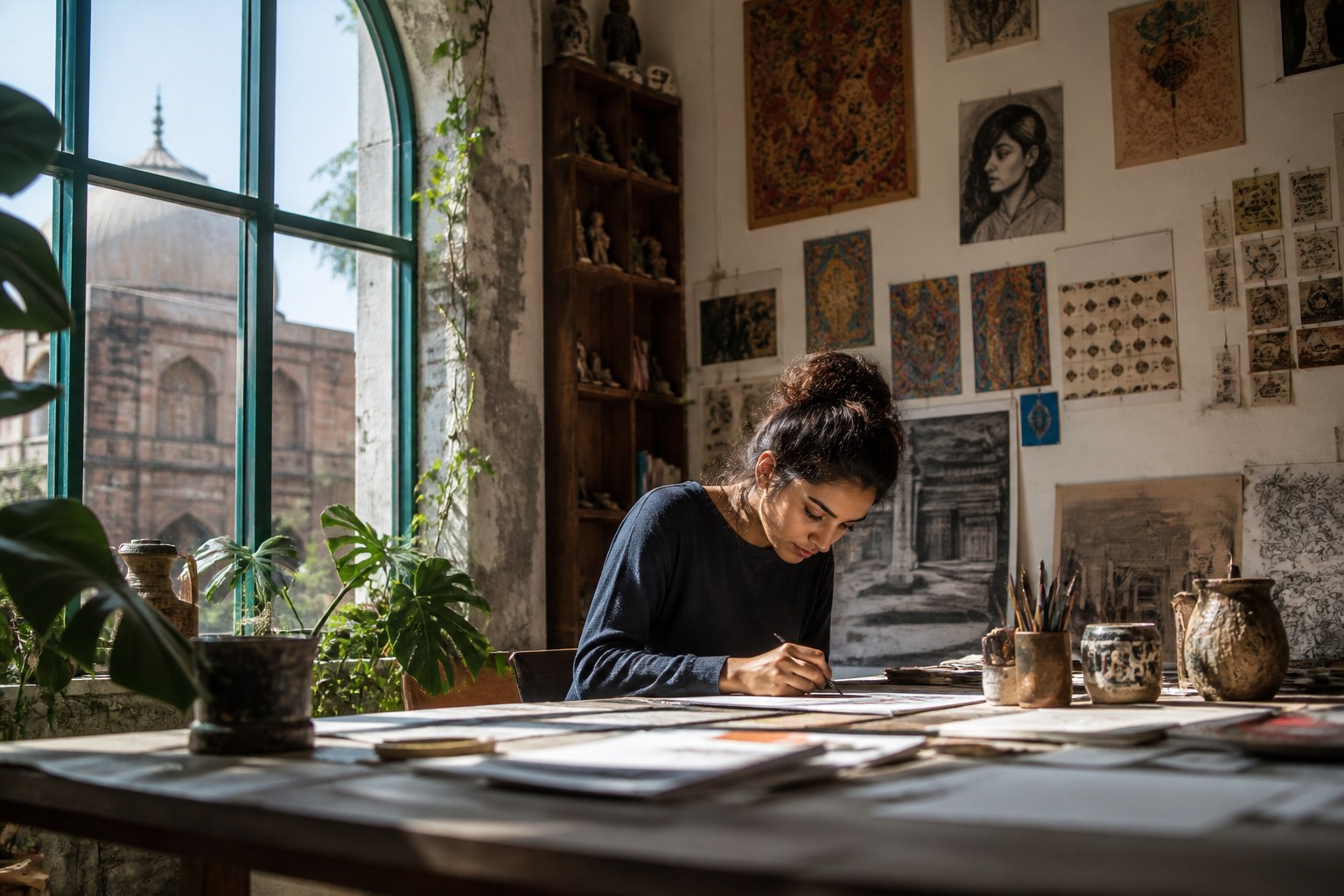
Pakistani illustrators and graphic artists shape how political arguments, brands, publications, and festivals look—yet credit often collapses into the client’s logo. This page is a labour and literacy guide: how to commission, attribute, archive, and read illustration and lettering without turning designers into interchangeable content engines. It is not a ranked directory.
If you removed the illustrator’s name, would the image still be treated as authored work—or as free atmosphere?
— PakStyles culture desk
Authorship before aesthetics
Editorial illustration, poster design, type design, motion graphics, and calligraphy-informed lettering are different jobs that share a public confusion: audiences praise the “look” while forgetting the contract. Start with names, dates, and usage rights. Professional associations such as ico-D, the Society of Illustrators, and AIGA publish ethics and practice resources that travel across borders even when a particular Pakistani designer is not a member.
When a festival poster goes viral, ask who drew it, who art-directed it, who owns the files, and whether the illustrator was paid for secondary merchandise use. Viral praise without pay is still extraction.
Urdu lettering and Latin interfaces
Much contemporary Pakistani graphic culture lives between scripts. App interfaces, bilingual packaging, and diaspora posters negotiate Urdu naskh or nastaliq aesthetics with Latin layouts. Good lettering is not “Arabic-looking English.” It is spacing, rhythm, and cultural register—formal, playful, reverent, satirical—chosen on purpose.
When commissioning bilingual work, budget for a lettering specialist, not only a translator and a decorator. Mis-shaped Urdu is not a cute error; it can be illegible or disrespectful. Ask for process proofs at large size.
Metaphor, politics, and the soft censorship of taste
Illustration often carries political metaphor when photography cannot. That power attracts both brave clients and cautious ones. Designers may be asked to “say it without saying it.” Document the brief. If a metaphor is diluted beyond recognition, that is an editorial decision with authors—not a mysterious market force.
Taste policing also shapes what is judged “professional.” Overly globalised corporate gradients can erase local visual wit; overly folkloric ornament can trap designers in tourist expectation. Critique the brief’s ideology, not only the illustrator’s talent.
How to commission without chaos
Write a brief that names audience, usage (print run, web duration, social crops), delivery formats, revision rounds, and kill fees. Request portfolios of comparable work, not only moodboards stolen from other artists. Pay deposits. Credit on publication. Archive final files with the illustrator’s name in the filename—basic, rarely done.
Diaspora organisations commissioning Pakistan-related events frequently underpay because “exposure” is offered to community. Exposure does not pay rent in Karachi or Manchester. If the budget is small, reduce scope rather than moralise.
Archiving ephemeral graphics
Posters peel, Instagram posts vanish, and festival websites 404. Illustration that shaped a season of public culture can disappear faster than paintings. Designers and clients should deposit PDFs, print files, and credited photographs in shared drives with dates. Libraries and design schools can collect with permission. Without archives, Pakistani graphic history becomes rumour.
Students should practise reverse-image searches ethically: to find authors for attribution, not to harvest unpaid references. If you cannot find an author, do not treat the image as public domain décor.
Motion and GIFs complicate authorship further—animators, illustrators, and editors share frames. Credits should list roles. A single “design by” line that erases collaborators repeats the problem this guide exists to correct.
Read contemporary Pakistani illustration as work with contracts, scripts, and deadlines. Aesthetic admiration is welcome; it is incomplete without naming who laboured and under what terms. That standard is how a culture keeps its graphic memory alive.
Credit the hand. Pay the invoice. Keep the file. Those three habits will do more for Pakistani illustration than another anonymous “design inspiration” round-up.
From poster walls to app icons: where graphic labour hides
Pakistani cities still run on printed persuasion—election symbols, tuition centre banners, film one-sheets, wedding invitation suites—while diaspora life runs on Instagram carousels and WhatsApp flyer JPEGs. Both economies hide labour. The person who kerned the Urdu headline, the person who traced a cricket mascot, and the person who resized assets for five aspect ratios may be three people or one exhausted freelancer. Editors and clients should ask.
Design education in Pakistan and abroad does not always teach negotiation. Young illustrators underprice to enter industries that will not later raise rates voluntarily. Community organisations can set floor fees publicly. Publications can publish rate bands. Silence protects only the budget holder.
Calligraphy-informed logos are a special hazard zone. A respected calligrapher’s style may be mimicked by underpaid vector tracing. If you want the tradition’s dignity, budget for practitioners who know the pen’s pressure, not only the Bezier tool. Digital tools are fine; erasing the craftsperson is not.
Political satire illustration requires risk assessment. What is publishable in one city may endanger an artist in another. Editors assigning such work should discuss contingency, anonymity options, and legal review without treating the illustrator as disposable edge.
International design awards can help careers and distort local priorities toward jury fashion. Use them as one signal among portfolios, peer respect, and repeated delivery under constraint. A designer who reliably solves bilingual packaging for a mid-market brand may be more culturally consequential than a once-viral festival key visual.
Archive your commissions. Name files with artist, project, and year. Twenty years from now, someone will try to write Pakistani graphic history; do not leave them only screenshots without authors. Credit is how a contemporary culture remains legible to itself.
Studios, collectives, and the myth of the lone genius
Graphic culture in Pakistani cities often runs through small studios where roles blur: the same person may illustrate on Monday, animate on Tuesday, and invoice on Wednesday. Collectives share equipment and clients; they also share credit disputes. When profiling work, ask how many hands touched the file. Lone-genius narratives flatter magazine profiles and erase assistants.
Diaspora studios commissioning “something Pakistani” for a charity gala should brief beyond paisley defaults. Provide content, audience, and constraints. Ask for three conceptual directions priced equally. Choose one and pay for exploration already delivered. Ghosting after unpaid pitches is theft of hours.
Typefoundries and custom lettering for Urdu-Latin pairs deserve particular investment because bad defaults harm millions of readers daily in interfaces. Supporting that infrastructure is cultural policy by other means—even when done by a private app company.
Women and gender-minority designers navigate safety in client meetings, street photography for research, and online harassment after political jobs. Ethics guidelines from AIGA and related bodies discuss harassment and fairness; adapt them explicitly in contracts. A pretty portfolio cannot compensate for a dangerous workplace.
Finally, teach audiences to see. Run caption workshops where participants must name the illustrator before discussing symbolism. The habit of naming is the beginning of a public that can sustain graphic art as art, not only as ambient brand noise.
Commission with a written brief, pay on the schedule you promised, and print the illustrator’s name where the public will see it. Pakistani graphic culture becomes contemporary history only when those ordinary professional acts become ordinary. Until then, even brilliant images risk travelling as orphaned style. This guide’s job is to make orphaning harder—and authorship harder to erase.
Sources and official profiles
Was this helpful?
Keep reading
Related stories
More from this desk, this beat, and the tags on this piece.
A nikah in England is not automatically a civil marriage: check the legal registration
Bilal Ahmed · 28 Oct 2026
Urdu and Panjabi in England and Wales: what Census 2021 language data shows
Bilal Ahmed · 28 Oct 2026
Walima explained: what the reception is for and why every family does it differently
Bilal Ahmed · 27 Oct 2026
Dholki, mayun and mehndi: why Pakistani pre-wedding events are not the same thing
Bilal Ahmed · 25 Oct 2026
NADRA Family Registration Certificate: what an FRC proves and what it does not
Bilal Ahmed · 22 Oct 2026
Readers
The conversation
0 notes
Anyone can leave a note. Guests add a name and email — no account required, and the email is never published.
No notes yet. Yours would be the first.