Pakistani photographers to study beyond social media
How to study Pakistani photography as sequence, ethics, and archive—beyond the beautiful feed—without inventing a ranked canon.
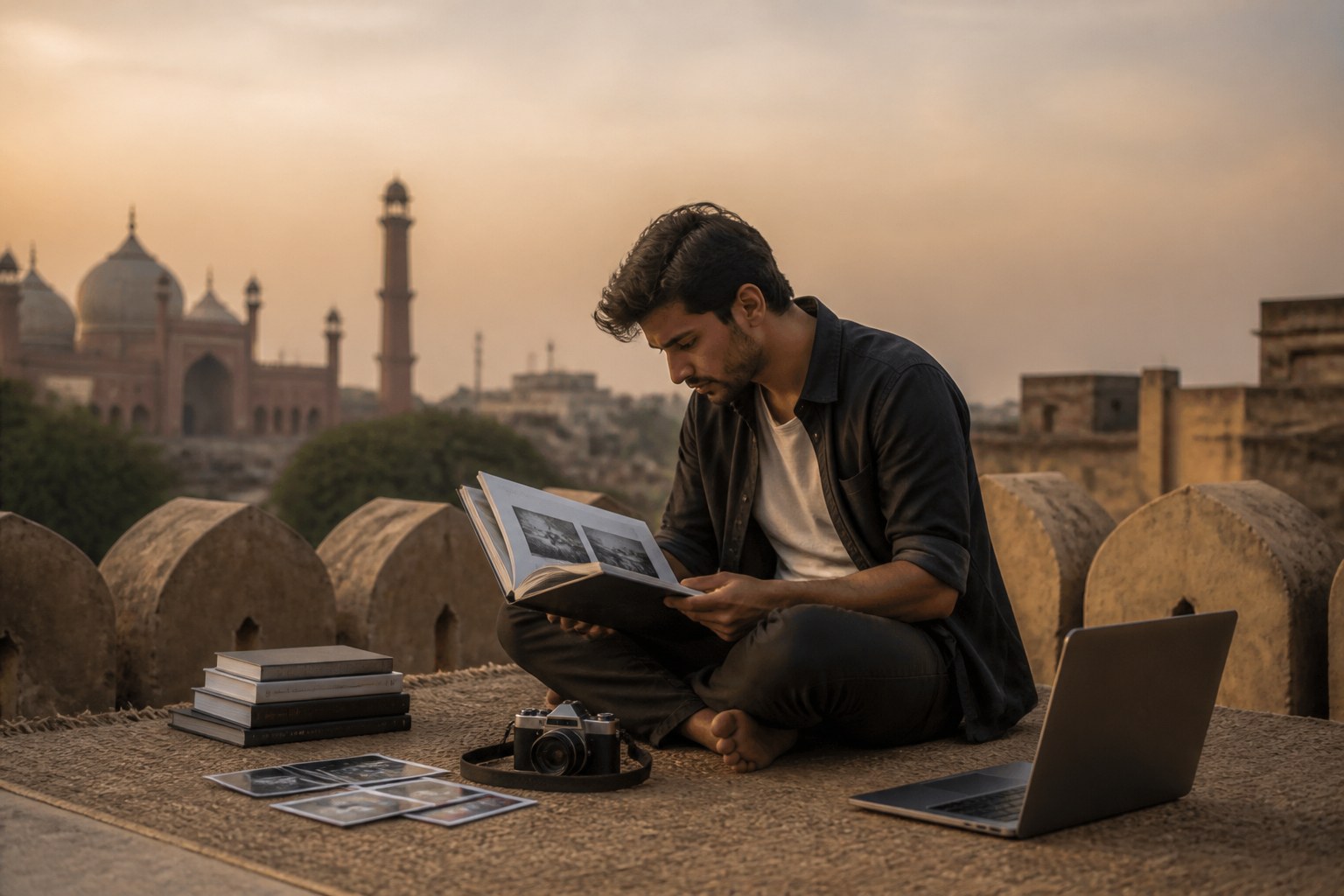
Pakistani photography on social media is abundant, beautiful, and often context-poor. Follower counts measure distribution, not ethics, sequence, or archival durability. This page is a study method—how to read photo essays, consent, captions, and books—rather than a ranked canon of “best photographers.” Named examples appear only as routes into practice, not as a podium.
What does this photograph ask you to believe—and what evidence outside the frame would you need before sharing it?
— PakStyles culture desk
Sequence over single image
A feed rewards the singular stunning frame. Serious photographic study rewards the sequence: how an essay opens, where it pauses, what it refuses to show, and how captions change meaning. When evaluating a Pakistani photographer’s body of work, seek published essays, exhibition sequencing, or photobooks before concluding from three viral posts. Magnum’s educational materials and World Press Photo’s case studies—via Magnum Photos and World Press Photo—offer transferable lessons about editing even when the photographers under discussion are not Pakistani.
Ask what the twelfth image does that the first cannot. If the answer is “nothing,” you may be looking at a moodboard, not an essay. Moodboards have uses; they are not interchangeable with documentary or art essays.
Consent, risk, and caption ethics
Photographing protest, poverty, devotion, or private celebration in Pakistan and its diasporas carries asymmetric risk. Subjects may face social, legal, or political consequences that the photographer—especially one with a foreign passport or large platform—does not. Ethical study asks: Was consent meaningful? Are faces identifiable in contexts that endanger? Do captions exoticise or specify? Do edits imply a narrative the photographer did not witness?
World Press Photo debates about manipulation and staging are relevant tools, not gossip about winners. Apply the same scrutiny to Instagram carousels that claim to “show the real Pakistan.” Real is a high claim. Demand process notes.
Archives beat algorithms
Social platforms disappear, re-rank, and strip metadata. Archives, museums, and libraries—when they hold Pakistani photographic collections—offer dated prints, contact sheets, and provenance. The British Library’s Endangered Archives Programme guidance is useful orientation for anyone thinking about preservation, digitisation ethics, and community custody, even when a particular project is not Pakistan-specific.
Family albums and community archives are also photographic culture. They rarely trend. Studying them with permission teaches different lessons about class, gender, and ceremony than conflict photography does. Do not treat conflict images as the only serious genre.
How to build a study list without inventing a canon
Start from institutions: museum exhibitions, festival programmes with transparent curation, photobook publishers, and wire agencies with correction policies. Note Pakistani photographers across genres—portrait, landscape, conflict, fashion, conceptual—without forcing one to represent the nation. When you name someone, link an official portfolio or institutional page. If you cannot find one, ask why you are naming them.
Diaspora readers should also study how Pakistani subjects appear in international photojournalism: which visual clichés recur, which regions are over-photographed, which middle-class interiors never appear. Critique of representation is part of photographic literacy.
Books, prints, and the economics of looking
A photobook forces sequence and pacing; a print forces attention to paper, ink, and scale; a phone forces speed. Each economy trains a different viewer. If your only encounter with a Pakistani photographer is through compressed JPEGs, say so in your notes. Then seek a book, a show, or a high-resolution institutional image before writing strong claims about craft.
Festivals and open calls can be discovery tools if their juries and sponsors are transparent. They can also be vanity mills. Read the fine print. Inclusion is not automatic quality. The same is true of brand collaborations that hire photographers for campaign aesthetics—useful as commercial history, incomplete as documentary ethics.
Teachers can assign two tasks: edit a ten-image sequence from a published essay into five without destroying the argument, and write captions that add fact rather than mood. Both tasks expose how meaning is made after the shutter clicks.
Study Pakistani photography as labour, ethics, and sequence. Leave follower counts in the metrics dashboard where they belong. The pictures that matter longest are usually the ones that still make sense when the platform is gone.
Conflict photography and the saturation problem
Pakistan has been intensely photographed through lenses of security, disaster, and political crisis. Those images can be necessary. They can also saturate global perception until weddings, factories, libraries, and ordinary middle-class rooms become unthinkable. A study programme should deliberately counter-balance: assign one conflict essay and one domestic or labour essay in the same month, each with ethics notes.
Caption language does heavy ideological work. Words like tribal, extremist, bustling, and exotic often smuggle conclusions into seemingly neutral descriptions. Replace them with verifiable specifics: place names, dates, organisational actors, and what the photographer could actually see. If you cannot replace them, the caption is not ready.
International prize circuits sometimes reward a narrow visual grammar of suffering. Local audiences may recognise omissions that foreign juries miss. Hold both recognitions. Neither automatically invalidates a photograph; both should complicate easy sharing.
Diaspora families also make photographs constantly. Treating only professional conflict work as “Pakistani photography” erases the majority practice. Permissioned study of family albums—migration airports, first snow, eid mornings—belongs in literacy training precisely because it resists the newsroom’s adrenaline.
Building a personal syllabus
Week one: read Magnum or World Press materials on editing and standards. Week two: choose one Pakistani photographer with an official portfolio and write a sequence analysis of twelve images. Week three: compare that sequence to a news agency gallery on a related subject, noting caption differences. Week four: visit or request access guidance for an archive or library collection, using Endangered Archives thinking about custody and consent.
That syllabus produces literacy without pretending to crown national champions. Adjust genres to your interests—fashion, cricket, landscape, devotion—while keeping ethics constant. The method is the point of this page; names are temporary tutors.
When you publish or teach from photographs, model correction culture. If a caption is wrong, fix it visibly. If consent is withdrawn where feasible, respect the limit. Pakistani photographic culture deserves the same seriousness we demand of painting and architecture elsewhere in this catalogue.
Fashion, cricket, and other non-crisis genres
Commercial and sports photography in Pakistan are rigorous craft cultures with their own ethics problems—retouching, access, labour conditions on set, and who owns a likeness. They are not unserious because they are not tragic. Studying a cricket boundary photographer’s timing or a fashion campaign’s colour control can teach attention as sharply as a conflict essay teaches moral caution.
Separate craft admiration from brand endorsement. A beautifully lit campaign may still rest on exploitative production. Ask about assistants’ credits, location permissions, and whether street portraits in a “fashion story” were compensated. Those questions travel across genres.
Online tutorials have democratised technique while sometimes erasing local histories of studio photography in cities such as Lahore and Karachi. When possible, pair a contemporary feed with historical studio portraits from museums or family collections to show continuity of pose, backdrop, and aspiration.
Finally, remember soundless scrolling. Many photographic essays were meant to be discussed in rooms. Rebuild that room: a class, a family table, a critique group. Pakistani photography beyond social media is not only a search for better images. It is a search for better conditions of looking—slower, more accountable, and less addicted to the single frame that performs well at midnight.
Metadata, reverse search, and digital forensics lite
Serious looking now includes light digital hygiene. Check whether an image circulating as “Karachi today” is years old or from another city. Reverse-image search is a starting tool, not a verdict. EXIF data may be stripped by platforms; absence of metadata is common and not proof of fraud. Still, date claims deserve scepticism when a photograph is used to inflame breaking-news emotion.
Photographers can help by maintaining dated portfolios with clear captions and by correcting misattribution when their work is stolen. Audiences can help by refusing to share unidentified atrocity images or disaster photos that turn victims into unverifiable spectacle. Literacy is collective.
Universities and collectives in Pakistan occasionally host critiques and exhibitions that never trend internationally. Seeking those programmes—through art schools, Alliance Française calendars, British Council arts listings, or local festival PDFs—beats waiting for a New York profile to anoint someone. Discovery is labour.
When this page is used in a classroom, require students to submit a source log: portfolio URL, essay title, date accessed, and one ethical question they cannot yet answer. Unanswered questions are part of photographic maturity. Certainty on day one is usually borrowed swagger.
Pakistani photography beyond social media is not a secret club. It is a set of slower habits—sequence, consent, archive, correction—that any committed viewer can practise. Start with one essay, one archive note, and one refusal to share what you cannot responsibly caption. The feed will still be there tomorrow; your attention does not have to be cheapened by it today.
Sources and official profiles
Was this helpful?
Keep reading
Related stories
More from this desk, this beat, and the tags on this piece.
A nikah in England is not automatically a civil marriage: check the legal registration
Bilal Ahmed · 28 Oct 2026

Urdu and Panjabi in England and Wales: what Census 2021 language data shows
Bilal Ahmed · 28 Oct 2026
Walima explained: what the reception is for and why every family does it differently
Bilal Ahmed · 27 Oct 2026
Dholki, mayun and mehndi: why Pakistani pre-wedding events are not the same thing
Bilal Ahmed · 25 Oct 2026
NADRA Family Registration Certificate: what an FRC proves and what it does not
Bilal Ahmed · 22 Oct 2026
Readers
The conversation
0 notes
Anyone can leave a note. Guests add a name and email — no account required, and the email is never published.
No notes yet. Yours would be the first.