US library holds for bilingual Urdu picture books
How to use US public library catalogues, holds and interlibrary loan to keep Urdu and bilingual picture books rotating through a diaspora home.
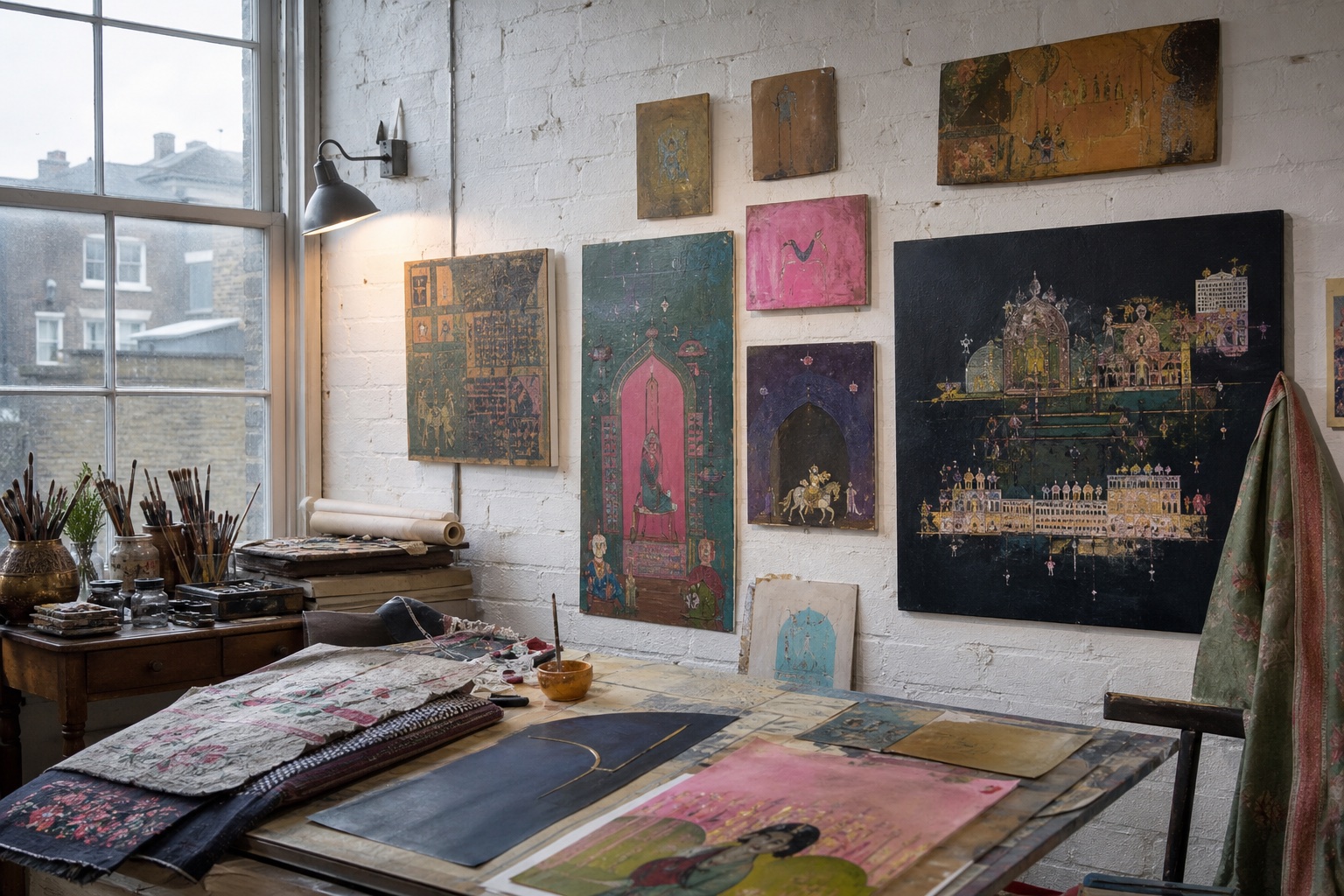
Buying every Urdu picture book you want is expensive and unnecessary when a library card can rotate titles through the house. The skill is searching and waiting, not owning a permanent shelf of books children outgrow in a month. For US Pakistani and South Asian diaspora families, bilingual picture books are often scarce on the local branch display even when they exist somewhere in the system. Holds and interlibrary loan are how those titles reach your Saturday.
This article teaches a discovery method for US public libraries. It does not invent a national ranking of "best Urdu collections," and it does not claim any particular city has adequate stock. Catalogue tools, loan rules, and fees vary by system. Confirm the live policy where your card is issued. Public catalogue and bibliographic tools referenced below were checked around September 2026.
Start in your own catalogue before you shop online
Log into your city or county catalogue with the card you actually use. Try keywords and subject terms: Urdu, bilingual, dual language, Pakistan, Pakistani, and the names of languages written in Arabic script if your system offers language filters. Filter to children's or picture books. Place holds early; popular bilingual titles move slowly across branches. Ask the children's librarian whether your system participates in a regional sharing network before you assume a title is unreachable.
If a title is checked out everywhere, a hold still queues you. If the title is not owned, ask about interlibrary loan (ILL). Many systems will request a physical book from another library when local stock fails. Processing can take weeks. Fees and limits vary. Staff, not a screenshot from a friend in another state, will tell you what your card allows.
Use bibliographic tools to identify exact titles
Vague searches for "Urdu kids book" return noise. Build a shortlist with exact titles, authors, and ISBNs when you can. WorldCat and the Library of Congress's public presence at loc.gov, including language-filtered searches such as the Library's Urdu-language search facet, help you verify that a book exists and how it is catalogued. Bring that precision to your librarian. "Something in Urdu" is a hope. "This ISBN, this author, this bilingual edition" is a request staff can act on.
Note whether a title is dual-language on facing pages, Urdu-only, romanised, or English with occasional Urdu words. Those are different reading experiences for a preschooler. A child who rejects dense nastaʿlīq on day one may still take a picture book with a few Urdu lines beside English.
Build a standing request list that survives busy weeks
Keep a notes app of ISBNs or titles relatives recommend. When one hold arrives, place the next. Pair an English bedtime favourite with an Urdu or bilingual title so reading time does not become a fight about which language "counts." Rotate formats: one week an animal story, one week a family story, one week a concept book for colours or counting if those exist in your catalogue.
Track due dates the way you track school forms. Bilingual picture books are often thin and easy to misplace under a sofa. A lost ILL copy can carry fees and strain goodwill. Teach children that the barcode belongs to the public, not to the household shelf.
Talk to the children's desk like a collaborator
Children's librarians hear collection gaps all year. A polite, specific purchase suggestion with title, ISBN, age range, and a sentence about local family demand is more useful than a complaint that "there is nothing for us." Libraries track holds and requests. Community centres and weekend schools sometimes lend as well; verify hours and deposit rules yourself rather than trusting a forwarded flyer.
Ask whether storytimes ever include dual-language books, and whether volunteers can recommend titles that circulate well. You are not asking staff to become Urdu tutors. You are asking them to help you find materials the catalogue already knows how to move.
Cataloguing quirks that hide Urdu books
Some systems shelve bilingual books under English with a language note. Others use a world-languages section. Others bury titles under "Juvenile fiction" with a language facet you must open manually. If the first search fails, try the author's name in both romanisation and, if the catalogue supports it, original script. Ask staff which facet they trust for world languages in children's materials.
Romanisation varies. The same author's name may appear under different spellings across records. WorldCat and Library of Congress records help you spot alternate spellings before you tell a librarian the book "does not exist." Persistence is part of the method; so is knowing when to hand the ISBN to a professional searcher at the desk.
Holds logistics for busy households
Set catalogue notifications to email or app alerts you will actually see. Pick a default pickup branch on your commuting route, not the closest branch to a relative who will not collect for you. If a hold arrives while you are travelling, freeze or suspend holds if your system allows, rather than burning the hold window and restarting a three-week queue.
Keep a tote by the door for returns. Late bilingual picture books are still late fees. Children can carry the tote into the branch and place books on the return desk; that ritual makes the library feel like their civic space, not only yours.
Language politics without the fight
Some children resist Urdu because school English carries status. Some parents push Urdu so hard that reading time becomes a correction session. The library method helps because the book is borrowed, temporary, and chosen from a public shelf. It is harder to treat a three-week loan like a permanent exam syllabus.
If grandparents want to read aloud, let them lead a session in the language they are fluent in, even if that is not the script you hoped for. Fluency and affection teach more than a perfect orthography lesson delivered in tension. Use the next hold to balance script exposure when the mood is lighter.
When the collection is thin
Thin stock is common outside large metro systems. Escalate in order: local hold, regional share, ILL, purchase suggestion, then, only if needed, buy a single favourite to own while the library still supplies variety. If relatives abroad post recommendations, ask for the ISBN before you search. Parallel US or UK editions, when they exist, are often easier for systems to buy and lend than Pakistan-only printings.
A diaspora bookshelf can be temporary and still be rich. Holds teach children that Urdu stories live in the same public system as every other language the city funds. Your standing request list is the quiet engine. The catalogue is the map. The hold shelf is where diaspora literacy meets public infrastructure.
Read aloud in whichever language keeps attention, then point to the Urdu line without staging a quiz. Let children choose the next hold from two options you preselected. Ownership of choice keeps the ritual alive after novelty fades. Document titles that circulated well so your next purchase suggestion cites demand, not only aspiration.
If a purchase suggestion is declined, ask whether a paperback, older edition, or licensed digital borrow exists. Digital Urdu children's options are uneven; do not assume an app replaces physical picture books for shared lap reading. Ask staff what formats their licences actually include.
The win is not a perfect home library. The win is a child who expects Urdu stories to appear in the same tote as dinosaur books, borrowed under the same civic rules, returned on the same due date. Keep asking. Keep placing the next hold. The public catalogue is larger than any one branch display suggests.
If your system offers Libby, Hoopla, or similar apps, search Urdu there too, but treat digital as a supplement for independent reading, not a replacement for lap-shared picture books. Confirm language filters in each app; they are inconsistent. When a digital title works, note the publisher for future purchase suggestions.
Seasonal displays sometimes hide bilingual stock in "world languages" corner bins rather than the main picture-book wall. Walk the children's room once a month with your standing list in hand. Serendipity still works when you know the ISBN you will place on hold if the physical copy is already out.
Sources and official profiles
Was this helpful?
Keep reading
Related stories
More from this desk, this beat, and the tags on this piece.


Readers
The conversation
0 notes
Anyone can leave a note. Guests add a name and email — no account required, and the email is never published.
No notes yet. Yours would be the first.