Desserts after dinner, not after a photoshoot
How to end a Pakistani meal with kheer, falooda, citrus, or fruit—scaled for appetite, temperature, and the people still at the table.
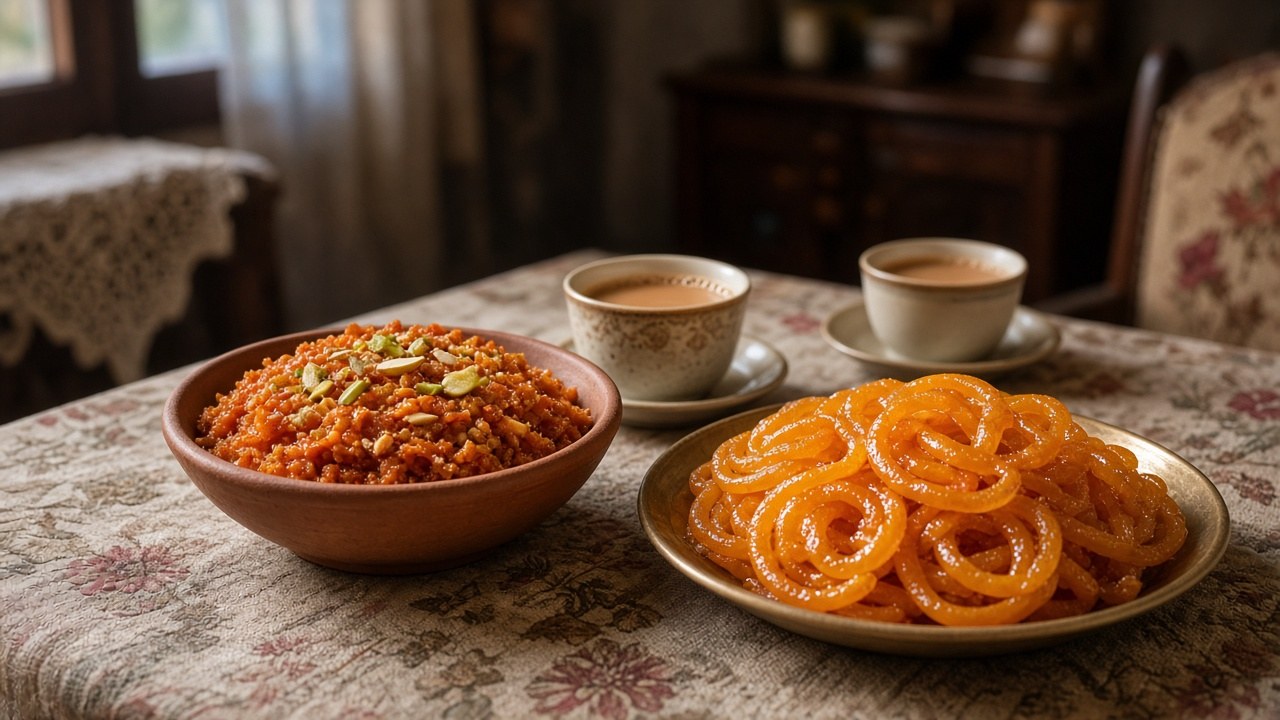
The dessert that photographs best is rarely the dessert the table finishes. A tower of cream can hold its posture under a phone light; warm kheer slouches in a bowl and disappears before anyone remembers to flat-lay the spoon.
Pakistani sweets live by temperature, occasion, and what came before them. Jalebi wants the short distance between fryer and hand. Gajar ka halwa wants winter carrots and enough warmth for the ghee to loosen. Sheer khurma belongs to Eid morning because it can be ladled between greetings. Kheer often tastes more complete after a night in the refrigerator, when rice and milk have stopped behaving like strangers. This page is about the second life of dessert: the last plate of a dinner that wants to end, not open a negotiation with gold leaf.
Answer the meal before you answer the camera
After biryani, kebabs, and a salan that left oil on the lips, offer something cool, milky, citrus, or fruit-led. Another monument to richness is not generosity; it is stubbornness. After a lighter daal-and-roti night, warm halwa or a small piece of fresh gulab jamun may be exactly right. Match fat with contrast, spice with cold, and quantity with how people are sitting—not with how a buffet mezzanine looks from above.
Portions should invite a second spoon instead of making the first one a commitment. Put nuts, syrup, condensed milk, or cream on the side when they are additions rather than the dessert’s structure. A guest who is full can still taste; a guest who is trapped under a slice the size of a brick cannot.
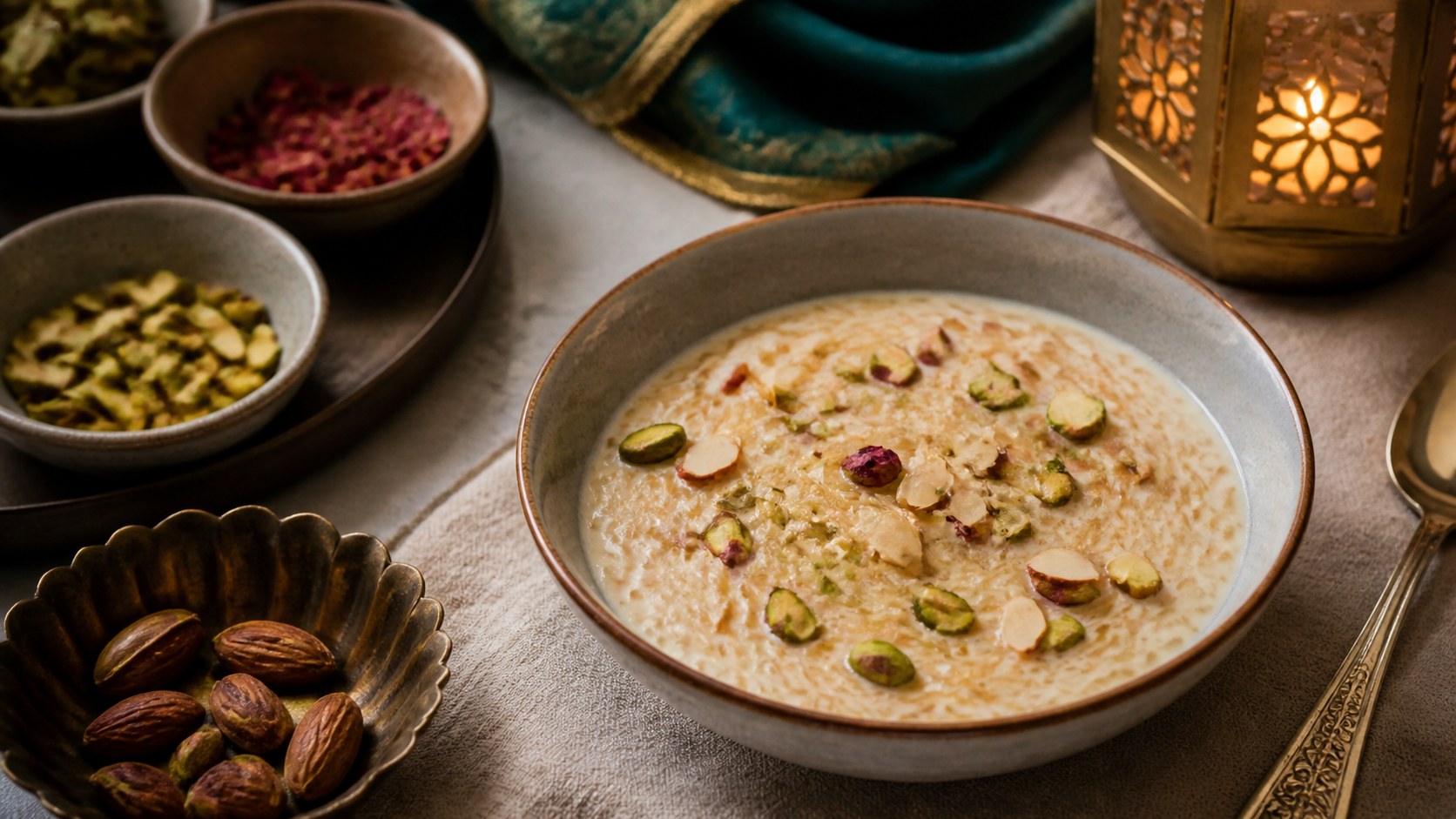
Kheer that still tastes like milk
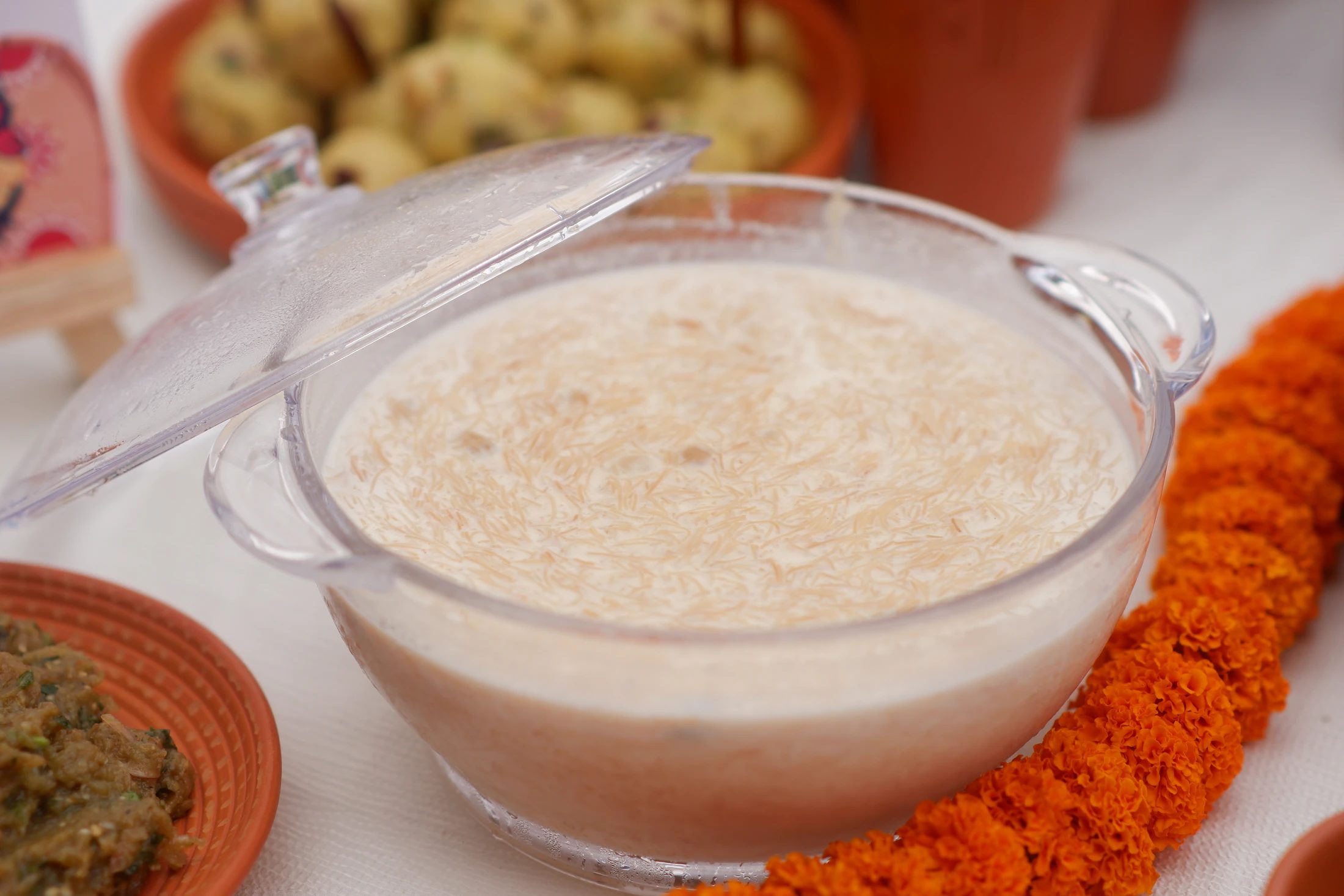
Good kheer is milk and rice cooked until they agree, not a white sauce thickened in a hurry. Use a heavy pan, stir with patience, and stop where the spoon leaves a wake rather than a trench. Cardamom if you like it; a nut that is actually toasted; a serving temperature cold enough to close a spicy dinner. Hotel kheer is often garnish with ambition. Home kheer is a pot you cannot ignore—and that attention is the method.
If you make it ahead, cool it promptly in shallow containers and refrigerate. Dairy desserts are perishable food. UK readers storing leftovers can take ordinary kitchen caution from the Food Standards Agency’s guidance on chilling food safely and on cooking and reheating: cool promptly, keep cold, and reheat until steaming if you serve warm. The physics travels even when the fridge is in Karachi.
Falooda when the air is rude
Falooda is a street dessert that also works at a table if you refuse to build it like a tower. Kulfi or ice cream, soaked vermicelli, rose that smells like rose rather than soap, basil seed if that is your stall’s habit. In Ramadan it can be mercy after a dry day. At Eid it can be a crowd. Neither requires gold leaf.
Serve falooda when the weather argues with you, not because a menu photograph insisted. Fridge-stale rose syrup and icy vermicelli that never softened are not nostalgia; they are a reason to walk to a better stall—or to skip sweet and drink water. If you assemble at home, chill the components separately and combine at the table so the ice cream does not melt into a pink soup while someone looks for the good spoons.
The gulab jamun problem, and a citrus exit
Gulab jamun is fine when it is hot, syrup-light, and not sitting in a tray from yesterday. It is a poor default personality for every dinner. After nihari or a heavy karahi, many tables want lemon, cold milk, orange cake, or fruit with chaat masala more than another ball of sugar. Citrus against ghee-heavy mains is a structural choice: acidity resets the mouth so conversation can continue.
If you have an oven and a grudge against another jamun, a simple orange or lemon cake—served in thin slices—ends a meal without demanding a second stomach. Fresh fruit is also dessert when you are honest about being full. Honesty is underrated confectionery.
| If dinner was… | Prefer… | Usually avoid… |
|---|---|---|
| Biryani / kebabs / rich salan | Cold kheer, falooda, citrus, fruit | Another deep-fried syrup sweet as the only option |
| Daal, sabzi, lighter roti meal | Warm halwa, small fresh jamun, zarda | Oversized buffet pastry stacks |
| Sehri / hurried Suhoor | Dates, yoghurt, fruit, leftover sheer khurma carefully reheated | A fryer you cannot supervise while half awake |
| Eid visiting circuit | Tea + mithai box as greeting food | Plating the entire box after a full karahi |
Mithai is a message; dinner is a meal
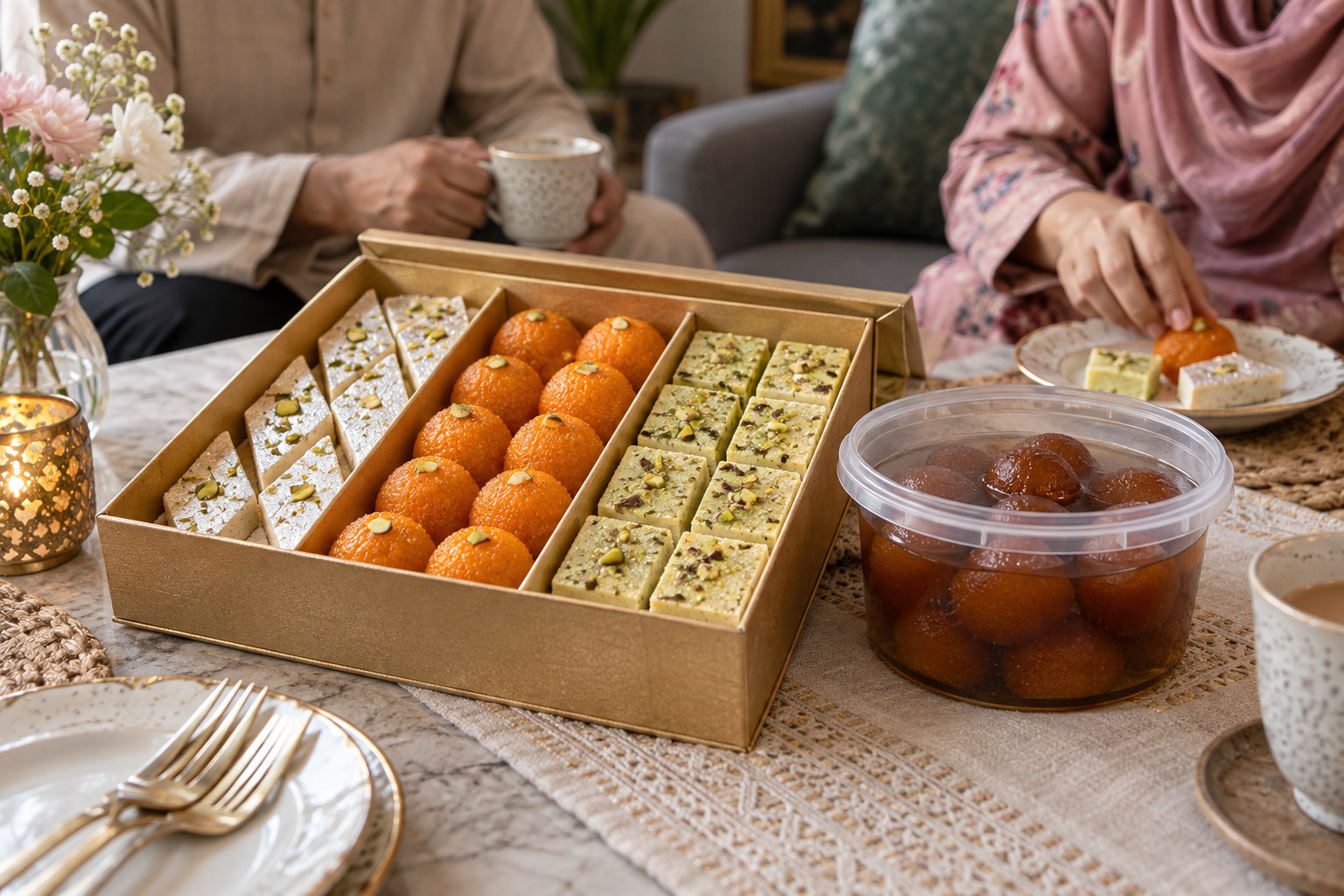
The box that arrives at Eid is a social fact. You do not have to plate it after a karahi. Put it out for guests with tea. End your own dinner with the quiet plate. Confusing the two is how Pakistani tables become sticky and slightly sad at 11pm.
If you name a bakery or mithai shop, say what it does distinctly—fresh jalebi at a known hour, a barfi that travels, a cream roll that should be eaten the same day—rather than crowning it “best.” Inclusion is not endorsement. Ask about nuts, dairy, and gluten when you serve mixed company; cut pieces smaller before declaring them too sweet, leave the last one visible, and tell people what is inside before they bite.
Hotel buffets will keep doing the gold-leaf thing
You do not have to. A buffet dessert is designed to photograph from a mezzanine. A dinner dessert is designed to end a conversation politely. Order the second. If a restaurant only has the first, skip sweet and go home to kheer, fruit, or nothing. Nothing is also a dessert. It is called being full.
Make one dessert well and buy another from a specialist whose work you trust. There is no virtue in producing five bowls at home while missing the dinner you meant to share. Clear plates, make tea, and bring dessert when the room is ready—not when the camera is.
Ramadan and Eid change the job of sweetness
In Ramadan, the first sweetness after sunset is often dates and water, not a plated dessert. That sequence settles the gut before fried snacks and fuller food. If you still want a composed sweet later, keep it smaller than an Eid breakfast portion. A heavy falooda immediately after a large iftar fry can sit badly; a smaller cold bowl an hour later often sits better.
Eid morning is when sheer khurma earns its reputation: milk, dates, vermicelli, nuts, and a house full of people who will not sit for a formal course. Taste at serving temperature. Cold sheer khurma reads sweeter than the warm pot did the night before. If several households contribute, agree who is bringing the dairy dessert before three pots arrive and none can be refrigerated. Label nuts. Replenish a small serving bowl from the fridge rather than leaving the entire batch in a warm lounge.
Visiting season multiplies mithai boxes. Treat them as circulating gifts and tea food. Your own dinner can still end with fruit. Guests who have already eaten three sugary stops before they reach you will thank you for restraint more than for a fourth monument.
Zarda, halwa, and desserts people forget to portion
Zarda should show separate grains and small interruptions of nut or peel, not a sweet porridge dyed yellow. Serve it in modest scoops beside savoury rice only when the table actually wants a sweet rice course—often a wedding or festive lunch, not a Tuesday karahi. Suji or gajar halwa wants warmth; cold fridge halwa can taste greasy unless gently loosened. Gajar ka halwa in particular is seasonal logic: it tastes of winter markets, not of an air-conditioned August dining room trying to prove abundance.
Kulfi is dense because air was not whipped into it. Serving it rock-hard turns density into work. Take it out with enough time to become edible, not enough time to become unsafe on a warm sideboard. Slice, do not sculpt.
Store by ingredient, not by the word mithai
Dairy, fried syrup sweets, and dry confections have different safe lives. Ask the maker when uncertain. Do not stretch freshness for sentiment after a warm journey in a car boot. For picnic-style outdoor serving—iftar on a roof, beach boxes, park Eid visits—the FSA’s advice on keeping food safe outdoors is a useful checklist even on a Pakistani family mat: keep cold food cold, do not leave perishable sweets in the sun, and throw out what has sat too long.
Allergen honesty matters more than garnish geometry. If a dessert contains nuts, say so before the plate lands. If someone cannot eat dairy, do not offer “just a taste” of kheer as hospitality. When you buy for a crowd, purchase closer to serving time for jalebi and cream-filled pieces, and earlier for denser barfi that travels. A labelled lid is more useful than a gold ribbon.
End sweet, end small. Kheer that tastes like milk. Falooda when the air is stupid. Cake if you have an oven. Fruit if you are honest. Leave the table able to talk. That is the dessert’s job—and it does not require a photoshoot to be true.
Sources and official profiles
Was this helpful?
Keep reading
Related stories
More from this desk, this beat, and the tags on this piece.
Readers
The conversation
0 notes
Anyone can leave a note. Guests add a name and email — no account required, and the email is never published.
No notes yet. Yours would be the first.