Sheer khurma for Eid morning: toast first, sweeten later
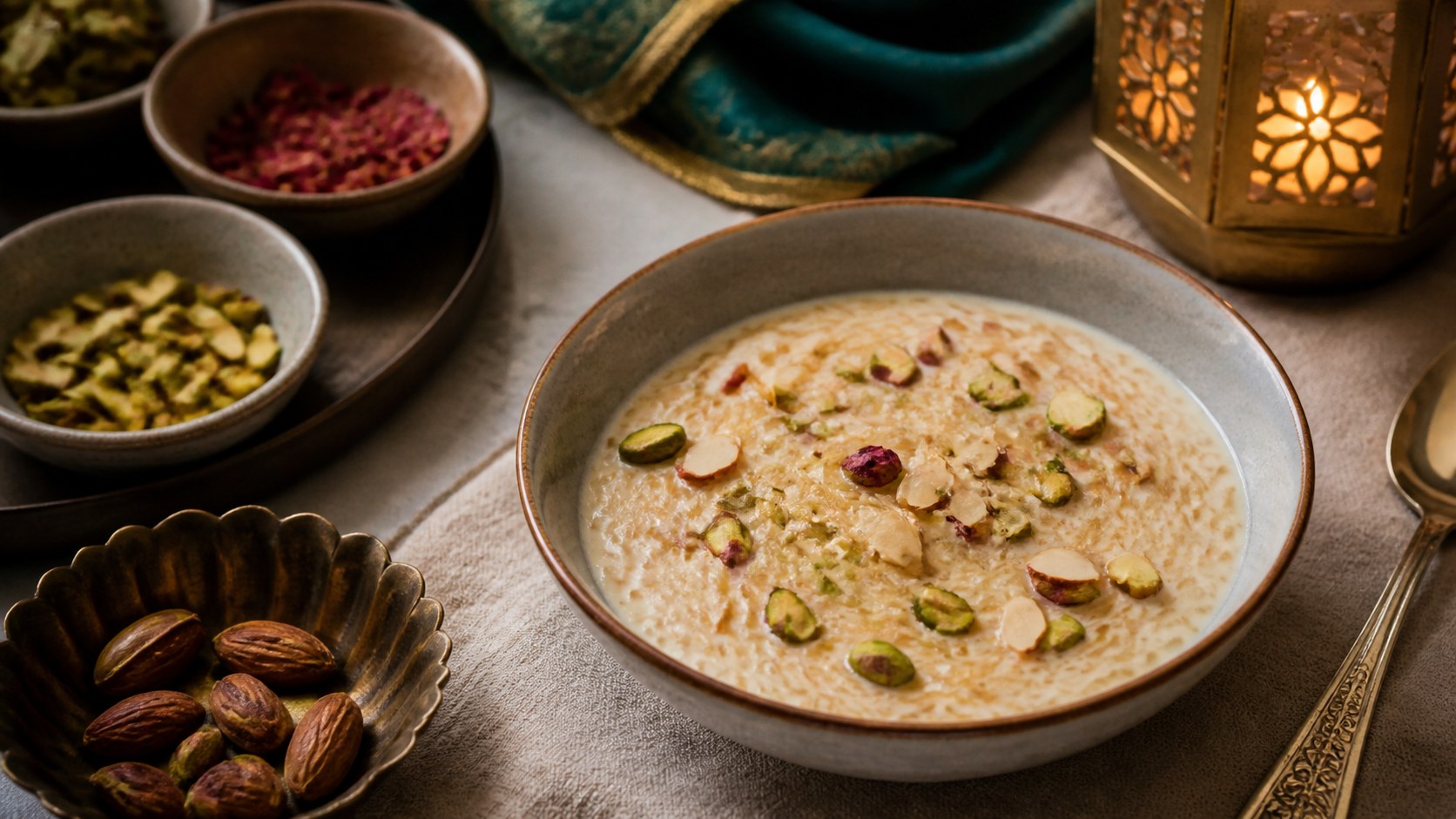
Sheer khurma tastes richer when the vermicelli and nuts are toasted separately, dates soften in the milk and sugar is added only after the pot has begun to reduce.
Eid sheer khurma has to do two jobs. It needs to taste special at breakfast, then remain pleasant when relatives arrive hours later and somebody reheats the pot. That is why the best home method separates the ingredients by what they need: vermicelli wants brief toasting, dates want time in warm milk, nuts want enough heat to smell fragrant, and sugar should not arrive so early that sweetness hides whether the milk has developed any depth.
Build the pot in layers
For six to eight small bowls, start with 1.5 litres whole milk, 60–80g fine vermicelli, 6 to 8 dried dates or soft dates sliced, 3 tablespoons ghee, cardamom and a handful each of almonds and pistachios. Raisins are optional; every family seems to have a position on them.
Warm a spoon of ghee and toast the nuts briefly. Remove them before they darken. In the same pan, add a little more ghee and toast the broken vermicelli until lightly golden. Fine seviyan can go from pale to burnt in less time than it takes to answer the door.
Let the dates flavour the milk
Bring the milk to a gentle simmer in a heavy pan with crushed cardamom and the sliced dates. Keep the heat low enough that the milk does not catch. After 10 to 15 minutes, the dates should soften and some of their sweetness should move into the milk.
Add the toasted vermicelli and cook only until tender. Fine vermicelli needs minutes, not a long boil.
Add sugar after tasting
Start with less sugar than you think you need. Dates, raisins and sweet garnishes all contribute. Add perhaps 75g, dissolve it, taste, then decide. The aim is a dessert whose cardamom, milk and nuts are still recognisable after the sweetness arrives.
Stop while it still looks a little loose
Sheer khurma thickens as it stands because the vermicelli continues to absorb milk. If the pot is already dense on the stove, it can become claggy by the second round of guests. Switch off when it coats a spoon but still pours freely.
Fold most of the toasted nuts through and keep some for the top. A few drops of kewra or rosewater can be added off the heat if that belongs to your family's version; restraint matters because both can dominate milk quickly.
Serving across a long Eid morning
If the pot will sit out, food safety matters more than nostalgia. Keep the bulk chilled once it has cooled, then reheat smaller portions until steaming hot rather than repeatedly warming the entire pan. For cold service, refrigerate promptly and keep it cold.
If reheated sheer khurma has thickened, loosen it with a little milk. Do not add water unless you want the flavour diluted as well as the texture.
There is no single correct bowl
Some Pakistani homes make sheer khurma almost drinkable. Others make it closer to kheer. Some use dried dates, some fresh; some add khoya, coconut or chironji. Those differences are family signatures, not errors.
The useful technical rule is simpler: toast what benefits from browning, simmer what needs infusion, sweeten after tasting and stop the cooking one stage before your desired final thickness.
Make the method repeatable, not ceremonial: Sheer khurma for Eid morning
Sheer khurma for Eid morning: toast first, sweeten later becomes easier when the method is broken into jobs rather than memorised as one long recipe. Identify the stages that create flavour, the stage that creates texture and the stage where the dish is simply finishing. That distinction helps when a different pan, stove or ingredient changes the timing.
In practical terms for sheer khurma recipe, Experienced family cooks often appear to “just know” when to move on. What they are reading is colour, smell, sound and resistance. Pay attention to those cues and write them into your own notes so the next batch depends less on memory.
Control water before adding more ingredients: Sheer khurma for Eid morning
Applied specifically to sheer khurma recipe, Many Pakistani dishes become heavy or flat because water enters faster than it leaves: wet onions, juicy tomatoes, thawed meat, yoghurt or vegetables can all change the pan. Before adding flour, starch or extra spice to fix texture, ask whether the recipe simply needs more evaporation.
For a reader working through sheer khurma recipe, A wide pan, uncovered cooking and patient heat are often more useful than adding another thickener. When you do add water, add it for a reason—tenderising, cooking rice, creating shorba—not because the pan looks unfamiliar for thirty seconds.
Season in layers, then taste near the end: Sheer khurma for Eid morning
For sheer khurma recipe in particular, Salt and spice behave differently as liquid reduces. Add enough early to season the main ingredient, then reserve the final adjustment until the sauce, rice or filling is close to its finished concentration. This is especially important in large batches.
With sheer khurma for eid morning as the focus, Fresh ginger, green chilli, lemon, coriander, mint or garam masala can supply the final lift without making the dish saltier or hotter throughout. Finish for contrast instead of trying to solve every flavour problem with more chilli powder.
Scale with surface area in mind: Sheer khurma for Eid morning
Doubling sheer khurma for eid morning in the same pan changes the cooking environment. More food releases more water, cools the pan and slows browning. For guests, use two pans, brown in batches or allow substantially more reduction time.
Strong spices and salt do not always scale perfectly by multiplication. Add most of the calculated amount, taste once safe and adjust. A large family pot is easier to correct before the final spoonful of salt than after it.
Make-ahead choices should protect texture: Sheer khurma for Eid morning
Long-cooked meat bases, daal and some curries often improve after resting. Fried coatings, fresh herbs, crisp papri, breads and raw salad do not. Stop the make-ahead work at the point where the component most likely to deteriorate has not yet been added.
Cool cooked food promptly, use shallow containers where helpful, label the date and reheat safely. A well-planned freezer or fridge stage should reduce tomorrow's work without making tomorrow's dinner taste like storage.
Use leftovers as ingredients, not punishment: Sheer khurma for Eid morning
A dry kebab mixture can become a sandwich filling, reduced curry can be loosened for rice, daal can be reheated with a fresh tarka and cooked meat can move into a wrap. The best second meal changes format rather than asking everyone to eat the exact same plate again.
Keep food-safety rules separate from creativity: cool promptly, refrigerate or freeze appropriately and reheat thoroughly. A clever leftover is only useful when storage has been safe.
Serve around the main dish rather than beside it competitively: Sheer khurma for Eid morning
If sheer khurma for eid morning is rich, add acidity or freshness. If it is dry or grilled, yoghurt or chutney can provide moisture. If it is already fried, the rest of the table does not need to be fried too. Think in contrasts.
Respect variation while understanding structure: Sheer khurma for Eid morning
Families across Pakistan and the diaspora cook the same named dish differently. Regional ingredients, migration, budget and preference all leave marks. Learn the structural idea of the dish, then adapt honestly.
That approach lets sheer khurma for eid morning remain recognisable without turning family variation into an authenticity argument. A living cuisine survives because cooks understand enough to change it deliberately.
Putting the Sheer khurma for Eid morning guide into practice
Save the small details that will be difficult to reconstruct later: measurements, ingredient ratios, product names, family decisions, alteration notes or care instructions. A short record turns the next attempt into an improvement rather than another first try.
With sheer khurma for eid morning as the focus, Choose a reversible test where possible. Cook a half batch, wear the shoes at home, try one skincare change or ask one clear family question. Low-cost tests produce better information than making a large commitment because the first answer sounded confident.
What to review after trying Sheer khurma for Eid morning
Ask what worked, what created friction and what information you wish you had known earlier. Change one or two variables rather than rebuilding the whole plan. This keeps the useful parts and makes the next version easier.
The strongest advice in this Sheer khurma for Eid morning guide is meant to reduce uncertainty, not create another standard people have to perform. Use the framework, keep the parts that fit your household and update the rest when your circumstances change.
What to remember about Sheer khurma for Eid morning
Sheer khurma for Eid morning: toast first, sweeten later is most useful when treated as a framework rather than a rigid instruction. Recheck current rules, health advice or product directions where they matter, and keep your own notes about what worked. The extra few minutes spent documenting the result usually save far more time the next time the same decision appears.
Sources and official profiles
Filed under
Was this helpful?
Keep reading
Related stories
More from this desk, this beat, and the tags on this piece.
Readers
The conversation
0 notes
Anyone can leave a note. Guests add a name and email — no account required, and the email is never published.
No notes yet. Yours would be the first.