Gulbahar’s Opening: Sara’s Boundary and Diya’s Engagement
Published episode-one criticism places Sara’s resistance to a second marriage beside Diya’s own prospective engagement. Neither is simply a solution for the other.
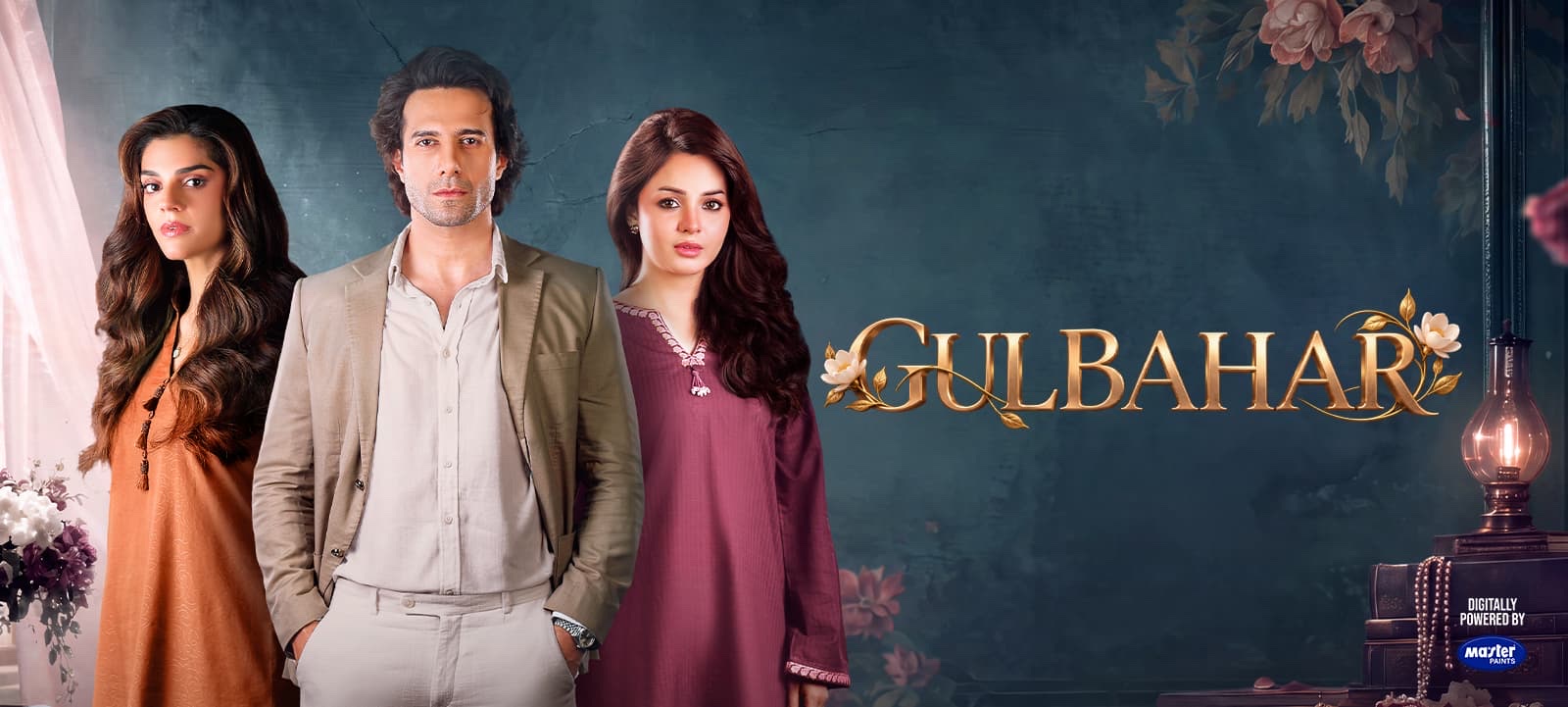
Opening-premise analysis based on published episode-one criticism. Contains early spoilers; later developments and the eventual ending are outside this assessment.
Twelve years of marriage should count as a life, even when other people insist on describing what is missing. That is the most useful starting point for Gulbahar, whose opening places Sara and Sheheryar’s relationship under pressure over children.
FUCHSIA’s September 17 review describes Sheheryar as content with Sara, while his sister presses for a second marriage and an heir. Diya’s less affluent family knows the couple; her own prospective engagement is to her cousin Azer. The review raises a later connection between the households as a possibility, not an established arrangement.
Sara does not need to be simplified
A woman can grieve the absence of a child and reject the solution someone else proposes. Those positions are not inconsistent. The emotional difficulty begins when a family treats her longing as permission to decide what she must surrender.
FUCHSIA describes Sara rejecting a second marriage, then watching a mother and child at a restaurant. Read together, these details resist treating grief as consent: wanting a child does not mean accepting someone else’s proposed solution.
Diya is not a solution to another household
The connection between families with different resources makes the premise more complicated than a prospective triangle. When one household can offer opportunities another lacks, apparent generosity can sit beside pressure without anyone naming it as such.
Diya’s prospective engagement matters because she is not introduced as an unattached answer to Sara’s difficulties. Her own family relationships already exist. Interpreting her solely through the older couple would reproduce the reduction the premise invites us to question.
It would also be reductive to make the two women the sole authors of the conflict. Sheheryar’s position belongs at its centre. A narrative that gives him everyone’s sympathy while leaving the women to absorb the costs would evade the most consequential decisions.
The opening leaves the triangle unresolved
HUM’s official opening episode identifies the production with Sanam Saeed, Emmad Irfani and Komal Meer, writer Aliya Bukhari and director Mehreen Jabbar. It premiered in September 2026; a launch assessment cannot responsibly predict the moral shape of its ending.
Gulbahar’s opening proposition is strongest when Sara’s established life and Diya’s emerging one are both treated as complete subjects. Neither woman should have to become a lesson for the other.
For another discussion of choices within arrangements made by others, read our Dar-e-Nijaat analysis.
What viewers are saying on X
Niche preserved several identifiable early reactions to Gulbahar’s opening stretch. These are individual posts, not a poll.
Public reaction on X
Public reaction on X
Public reaction on X
HUM credits for an early-run marriage story
HUM’s drama page for Gulbahar credits Aliya Bukhari as writer, Mehreen Jabbar as director and Momina Duraid Productions as producer, with a Wednesday–Thursday 8:00pm slot. Episode one (16 September 2026) and episode two (17 September) name Sanam Saeed, Emmad Irfani and Komal Meer among the billed performers.
Contemporary reporting described the pair returning as spouses after Kafeel, with promotional emphasis on marital strain and questions around conception and adoption. Early-episode criticism must keep that scope honest: two days of releases do not support claims about the eventual series arc.
What this opening review can — and cannot — tell you
As of 24 September, the responsible claim is narrower than a verdict on the serial. The available evidence establishes the opening conflict, the creative team and the early pressure around Sara and Diya. It does not establish which relationship the drama will ultimately endorse or how later episodes will distribute responsibility.
That limited scope is a strength rather than a weakness. Gulbahar is still new enough that a review pretending to know the shape of the whole story would be less useful than a careful account of what the opening actually sets up.
Filed under
Was this helpful?
Keep reading
Related stories
More from this desk, this beat, and the tags on this piece.

Ek Chadar Maili Si: Why the Reported 2026 HUM Drama Still Needs Verification
Bilal Ahmed · 24 Sep 2026




Readers
The conversation
0 notes
Anyone can leave a note. Guests add a name and email — no account required, and the email is never published.
No notes yet. Yours would be the first.