Verifying US halal meat labels beyond the sticker
Read US halal meat labels with FSIS context: what federal wording signals, which questions beat a logo glance, and why no single certifier is the only authority for every household.
A green sticker on a US meat package answers one marketing question and leaves three household ones open: who supervised the claim, what the claim actually covers, and whether that standard matches how your kitchen cooks. Diaspora shoppers who treat the logo as a fatwa, or who treat USDA inspection as religious certification, both misread the same label. This is label literacy for the freezer aisle and the butcher counter. It is not a ranking of certifiers, and not a ruling for anyone else’s table.
USDA’s Food Safety and Inspection Service (FSIS) polices whether meat and poultry labels are truthful and not misleading under federal inspection rules. It does not appoint a single Islamic authority for American Muslims, and it does not decide which madhhab or household practice is correct. Guidance below draws on public FSIS labelling materials checked around September 2026. Packaging, suppliers, and your own criteria still have to be verified for the product in your hand.
What the federal mark does, and does not do
An official USDA inspection mark on meat or poultry means the product was produced under federal inspection requirements. It is a food-safety and labelling-oversight signal. It is not, by itself, a certificate that the animal was slaughtered or processed to your household’s halal standard.
FSIS’s public glossary of meat and poultry labelling terms is blunt about religious wording: products labelled with references to “Halal” or “Zabiah Halal” must be handled according to Islamic law and under Islamic authority. “Kosher” has a parallel requirement of rabbinical supervision. Those sentences describe what establishments must be able to support when they print the word. They do not crown one organisation as the only legitimate authority for every Muslim shopper in the United States.
Read “Halal” and “Certified Halal” as different sentences
In a June 2020 FSIS constituent update on label approval, the agency explained a practical split that still helps shoppers parse packaging: a factual “Halal” claim on an otherwise ordinary inspected label may be eligible for generic approval when it complies with labelling rules, while an explicit “Certified Halal” claim is treated more tightly. Establishments submitting such labels must include current certification documentation, and the label must identify the certifying individual or organisation (or the certifier’s website) on the same panel as the claim.
Translate that into grocery behaviour without turning FSIS into a theologian:
- Find the claim’s grammar. Is it simply “Halal,” a symbol with a name beside it, or the words “Certified Halal”?
- Find the named authority, if any. A logo without a readable organisation name on the same panel is a weaker shopping signal than a claim you can look up.
- Do not assume “certified” equals “the only correct Islam.” Certification is a documentation pathway some establishments use. Households still decide whether that pathway matches their practice.
- Do not assume “no logo” equals haram. Some trustworthy butchers explain zabihah practice in person without a supermarket-style mark. Absence of a sticker means you ask. It does not automatically answer yes or no.
Separately, FSIS’s religious-exemption poultry directive distinguishes inspected products that carry a Halal claim and the mark of inspection from poultry produced under an approved religious exemption that does not bear the inspection mark. Most diaspora shoppers are buying inspected retail packs. The exemption lane is a different regulatory story. If a label looks unusual (head-on birds, noneviscerated language, no inspection legend), read it carefully or ask before you treat it like ordinary tray-pack chicken.
Questions that beat a logo glance
At a counter or on a producer’s contact page, run a short script and keep the answers. Your job is information for your household, not a public fatwa.
- Which exact SKUs are claimed as halal: every protein in the case, or only some?
- Who is the Islamic authority or certifier named for those SKUs, and where can I read their scope?
- Is stunning used or not, and is that stated in writing for this product line?
- Do marinades, broths, spice blends, or casings introduce alcohol, pork-derived gelatin, or enzymes you need to avoid?
- Are cutting boards, grinders, and knives dedicated, or how is cross-contact handled?
If staff cannot answer, or answers shift between visits, narrow the purchase: buy a clearly labelled line you can re-verify, choose a butcher who documents practice, or cook a vegetarian main that night. Vague confidence is not a substitute for a sentence you could repeat to a fasting relative.
Ground meat, mixed cases, and the marinade trap
Whole cuts are easier to track than ground products that may combine trim from multiple sources. Ask whether the grinder is dedicated and whether “halal” ground beef is always made from the same claimed line. Pre-marinated trays and kebab mixes need a second look: the meat claim and the sauce claim are not automatically the same sentence. A zabihah chicken tossed in a marinade with wine or ambiguous “flavouring” is a different product from plain chicken you season at home.
Deli and hot-bar items are another lane. A sticker on raw packs in the meat case does not automatically cover the cafeteria’s gravy or the fried chicken under a heat lamp. Ask about those SKUs separately.
Restaurant menus are not the same as packaged labels
A grocery pack with a named certifier and a restaurant menu that says “halal chicken” are different evidence problems. Restaurants may source from multiple suppliers, change vendors, or apply the word only to some dishes. Ask the same sourcing questions, keep the answers, and decide for your household. A social-media story from 2019 is not today’s supply chain.
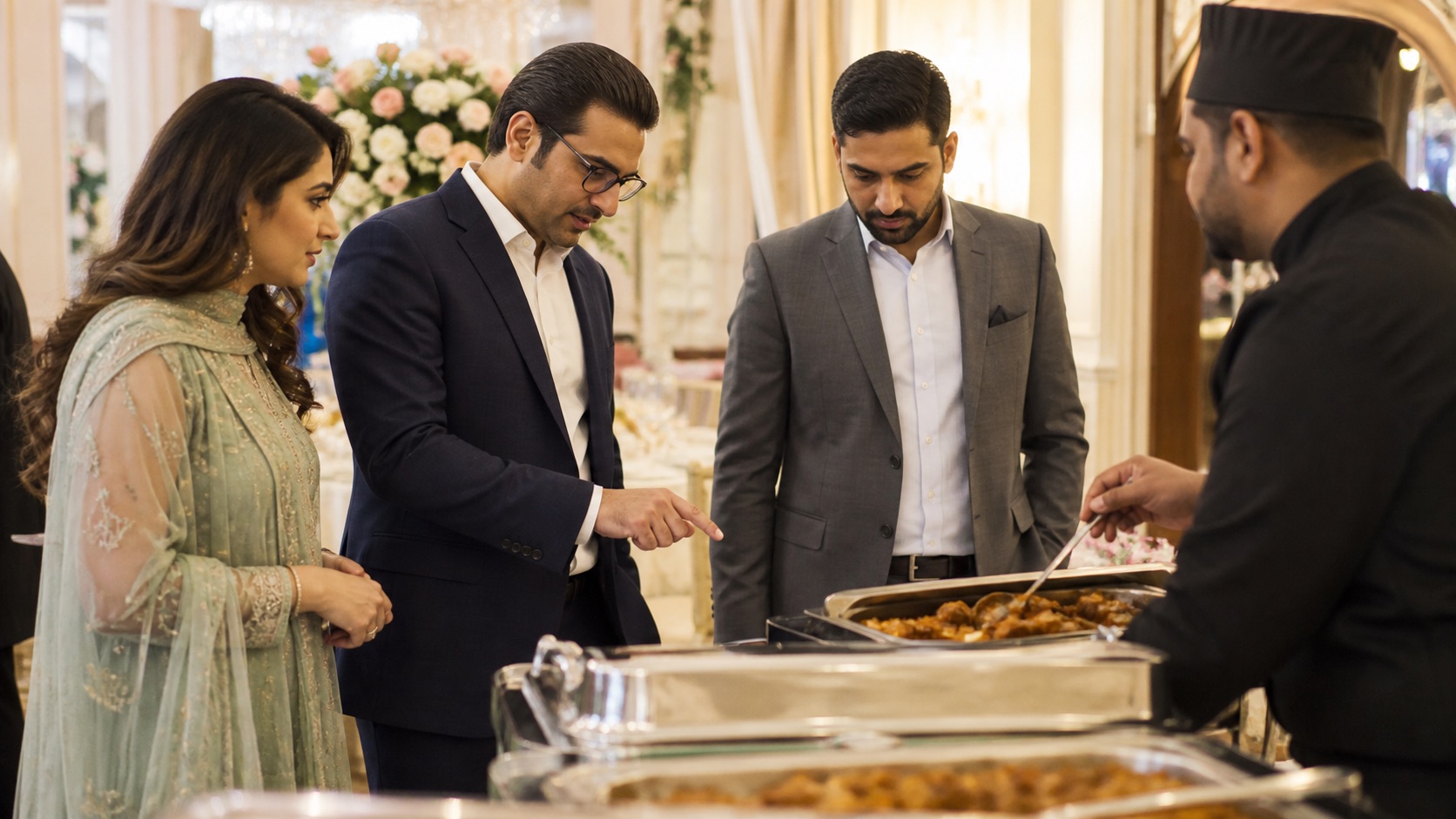
Catering trays for office iftars and weddings deserve the same script: which SKUs, which supplier, which additives, confirmed for the event date. Label literacy at the store does not automatically travel to the banquet hall.
Household standards without crowning a sole certifier
Pakistani and broader Muslim households in the US disagree for real reasons. Some accept mainstream supermarket poultry with a named certifier. Some insist on a known zabihah butcher. Some avoid stunned slaughter. Some focus on gelatin and sauces more than the slaughter debate. PakStyles will not invent a national winner. Use labels and answers to match your criteria, and do not shame a cousin whose criteria differ when their package still tells a coherent story.
When you do rely on a certifier, treat the name as a lead to verify (scope, product list, complaint channel), not as an automatic endorsement from this magazine. When you rely on a neighbourhood butcher, treat the relationship as ongoing verification: ask again when ownership, suppliers, or grinders change.
Keep food safety as a second, non-negotiable layer. Halal status does not stop meat from needing refrigeration, prompt cooking, and careful leftover handling. Use FSIS consumer pages on leftovers and food safety for temperature and time questions. Religious wording on the sticker does not rewrite those rules.
Price, quality, and the honesty trade
Halal-claimed meat is not automatically fresher or better tasting, and cheaper packs are not automatically dishonest. Separate religious verification from quality judgement. Smell, colour, sell-by dates, and cold-chain handling still matter. A coherent religious claim on a poorly refrigerated tray is still a food-safety problem.
When travelling between cities, do not assume the brand you trust in Houston uses the same supply chain in California. Re-ask the questions when the packaging, plant code, or certifier name changes.
The package that earns a place in your cart is the one whose claim you can explain in one calm sentence: which product, on what religious basis, checked against which household rule, beyond the sticker’s colour.
Restaurant menus and catering trays
A grocery pack with a named certifier and a restaurant menu that says “halal chicken” are different evidence problems. Restaurants may source from multiple suppliers or apply the word only to some dishes. Ask the same sourcing questions and keep the answers. Catering trays for office iftars and weddings deserve the same script: which SKUs, which supplier, which additives, confirmed for the event date.
When you verify a product line, write the certifier name, brand details, and the date you checked in a shared household note. Re-verify when packaging or butcher ownership changes.
Sources and official profiles
Was this helpful?
Keep reading
Related stories
More from this desk, this beat, and the tags on this piece.

Readers
The conversation
0 notes
Anyone can leave a note. Guests add a name and email — no account required, and the email is never published.
No notes yet. Yours would be the first.