Menswear
Pakistani menswear and sherwanis to shop in the USA
Six US routes for kurtas, waistcoats, and sherwanis—Houston, Edison, Brooklyn, and brand checkout—plus seated fit tests that beat chest size alone.
By Zainab Noor
Fashion writer
7 min read
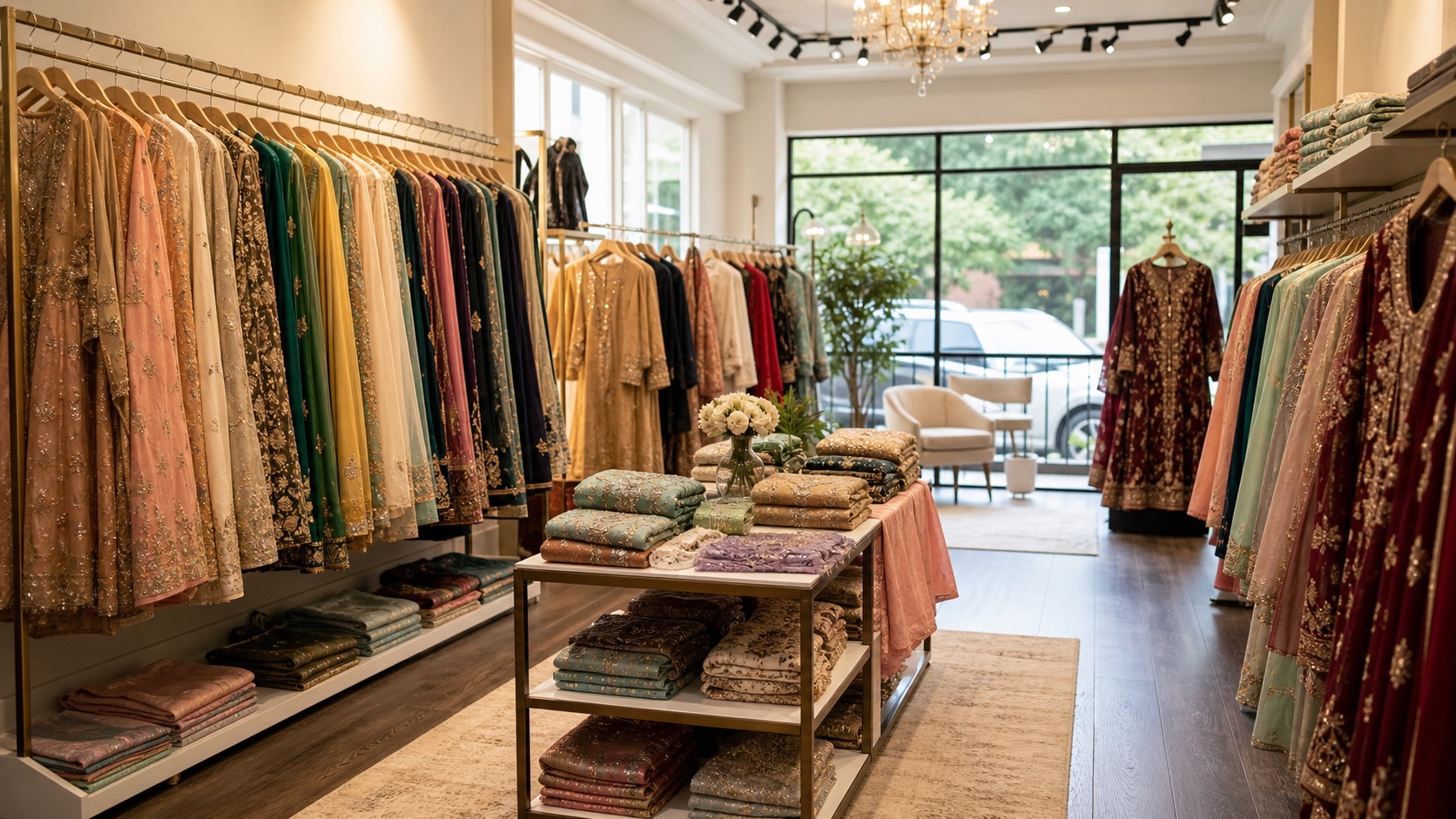
Pakistani menswear looks forgiving until a collar presses, a shoulder collapses, or a sherwani cannot be worn while seated. Everyday kurtas and groomwear need different tests, timelines, and alteration skills. The six US routes below are starting points with official sites—Houston and New Jersey boutiques, a Brooklyn stitching shop, and a direct-brand storefront. Inclusion is editorial, not paid. Confirm current men’s stock, hours, shipping, and alteration capacity before you travel or pay.
Decide the job before you open six tabs
Ask three questions first: Is this an everyday kurta you will wear sitting at a desk and standing for salaam, or a sherwani that must survive a seated dinner? Do you need the garment wearable in two weeks or two months? Will one person shop, or will a baraat party of five cousins text five different chest numbers into the same chat?
Those answers choose the route. Multi-brand floors help when you want to compare labels in person. Custom stitching helps when the bridal colour story is already fixed. Direct-brand checkout helps when you already know the designer language—and still plan local alterations for length and shoulder.
Six routes with different jobs
String & Thread in Houston is a multi-brand destination with Pakistani designer clothing, ready-to-ship US stock, and a physical floor you can walk. Use it when you want to compare labels in person and leave with something that already exists in a US size run.
Rangreza in Edison, New Jersey, combines a boutique floor with nationwide online shopping across Pakistani labels, wedding clothes, menswear, and everyday outfits. It is a practical East Coast stop when the whole family is dressing and the men need more than an afterthought rack.
AMZI Collections in Brooklyn spans Pakistani and broader South Asian clothing with custom stitching, bridalwear, and menswear. Go here when measurements, not browsing, are the point—especially for a sherwani or waistcoat that must match a bridal colour story.
House of Huda offers a Houston store and online catalogue for Pakistani formal, festive, and ready-to-wear dressing. Useful when you need festive kurtas and waistcoats without committing to a full groom couture process.
Bridals & More in Houston is an appointment studio for custom Pakistani bridal and formal garments. For men, treat it as a consultation route when the groom outfit must be built alongside the bridal commission rather than bought off a separate impulse scroll.
Zara Shahjahan US is the label’s official US storefront for current collections and direct-brand checkout. Use it when you already know the designer language you want and need a domestic checkout path—then still plan local alterations for length and shoulder.
Metro logistics: Houston, Edison, Brooklyn
Houston rewards a planned Saturday: traffic, parking, and heat will punish a “quick look” that becomes three boutiques without water or appointment buffers. Edison’s Roosevelt Avenue corridor logic is different—family shopping often stacks womenswear and menswear in one trip, so men’s needs get lost unless someone holds a written list. Brooklyn custom work needs measurement discipline and a schedule that survives bridge traffic; do not treat a first consultation as a same-week wearable promise.
If you live outside these metros, decide whether you will travel once for a fitting or rely on courier plus a local tailor. A direct-brand shipment that arrives with perfect embroidery and wrong sleeve pitch still needs a local needle. Budget that needle into the timeline.
Fit tests that beat chest size alone
Button the garment. Sit fully in the chair you will actually use at the venue. Lift both arms as if greeting elders. Walk in the trousers and shoes planned for the day. A sherwani that looks sharp standing can trap the hips when you sit for dinner; a kurta collar that looks fine in a mirror can press after an hour of talking. Check sleeve pitch and shoulder seam placement before you negotiate embroidery upgrades.
Group orders—baraat parties, ushers, family waistcoats—need a named coordinator, one measurement method, and a written collection date. Do not let five cousins invent five chest numbers. Ask who owns alterations after delivery, and whether the shop will still recognise the order if the courier splits packages.
Read fibre and care labels before the first steam. US textile apparel labeling rules are why fibre content, origin, and care instructions appear on most garments; the FTC’s apparel and labeling overview and Care Labeling Rule guidance explain what those tags are for. Photograph them when you buy, especially for heavily embellished pieces that may need professional cleaning rather than a hopeful machine wash.
Everyday kurtas versus groomwear calendars
An everyday kurta can often be bought closer to the date if US stock exists and the collar sits correctly. Groomwear usually cannot. Embroidery density, lining, and matching trousers create longer lead times even when the shop is in Houston or Edison. If the bridal colour story is fixed, bring a fabric reference to the men’s appointment rather than a phone screenshot washed out by fluorescent light.
Waistcoats and sherwanis behave differently under venue lighting. A fabric that looks muted in a boutique can flash under warm LEDs; a heavy lining that felt fine in air-conditioning can become punishing in a summer outdoor nikah. Ask whether a lighter lining option exists before you upgrade embroidery that adds weight.
For returning diaspora shoppers used to Lahore timelines, US alteration capacity is the hidden constraint. A perfect imported sherwani still needs a local tailor who will touch embellished seams carefully. Identify that tailor when you place the order, not the week of the walima.
Build a two-shop shortlist
Start with one multi-brand floor (String & Thread or Rangreza) and one route that does something different—custom stitching at AMZI, a bridal-studio consultation at Bridals & More, or a direct label checkout at Zara Shahjahan US. Send both the same brief: event date, ZIP code, measurements or group size, budget ceiling, and one non-negotiable (colour match, seated comfort, delivery deadline).
Compare written replies, not homepage polish. Domestic checkout does not guarantee domestic stock. A national website does not make every service local. If a reply cannot say where the garment is today and who alters it after arrival, keep shopping.
Import delay ownership and the wearable date
Many US checkouts still depend on post-order movement from overseas workshops. That can be honest and still dangerous for a fixed walima date. Ask who owns delay if embroidery, lining, or a size run slips. Put the wearable date—the day the outfit must be altered, pressed, and on the body—in the same email as the deposit. Ship date is a logistics milestone; wearable date is the one that matters in photographs.
- Confirm stock location in writing.
- List every included component.
- Book alteration rounds before the parcel moves.
- Test the full look seated in final shoes.
The useful US menswear purchase is the one that survives the dinner chair, the greeting line, and the humidity between parking lot and hall—not the one that only looked complete on a hanger.
Sources and official profiles
Filed under
Keep reading
Related stories
More from this desk, this beat, and the tags on this piece.
Pakistani formalwear for a British wedding: groom and guest options
Zainab Noor · 13 Sep 2026 · 15 min
Sherwani fit guide: shoulders, length, closure and trousers
Zainab Noor · 13 Sep 2026 · 17 min
Readers
The conversation
0 notes
Anyone can leave a note. Guests add a name and email — no account required, and the email is never published.
No notes yet. Yours would be the first.