Pakistani menswear for weddings: kurta, waistcoat, achkan, and sherwani
Climb the Pakistani wedding menswear ladder deliberately: kurta, waistcoat, achkan and sherwani change formality, proportion and heat load—they are not four prices for one silhouette.
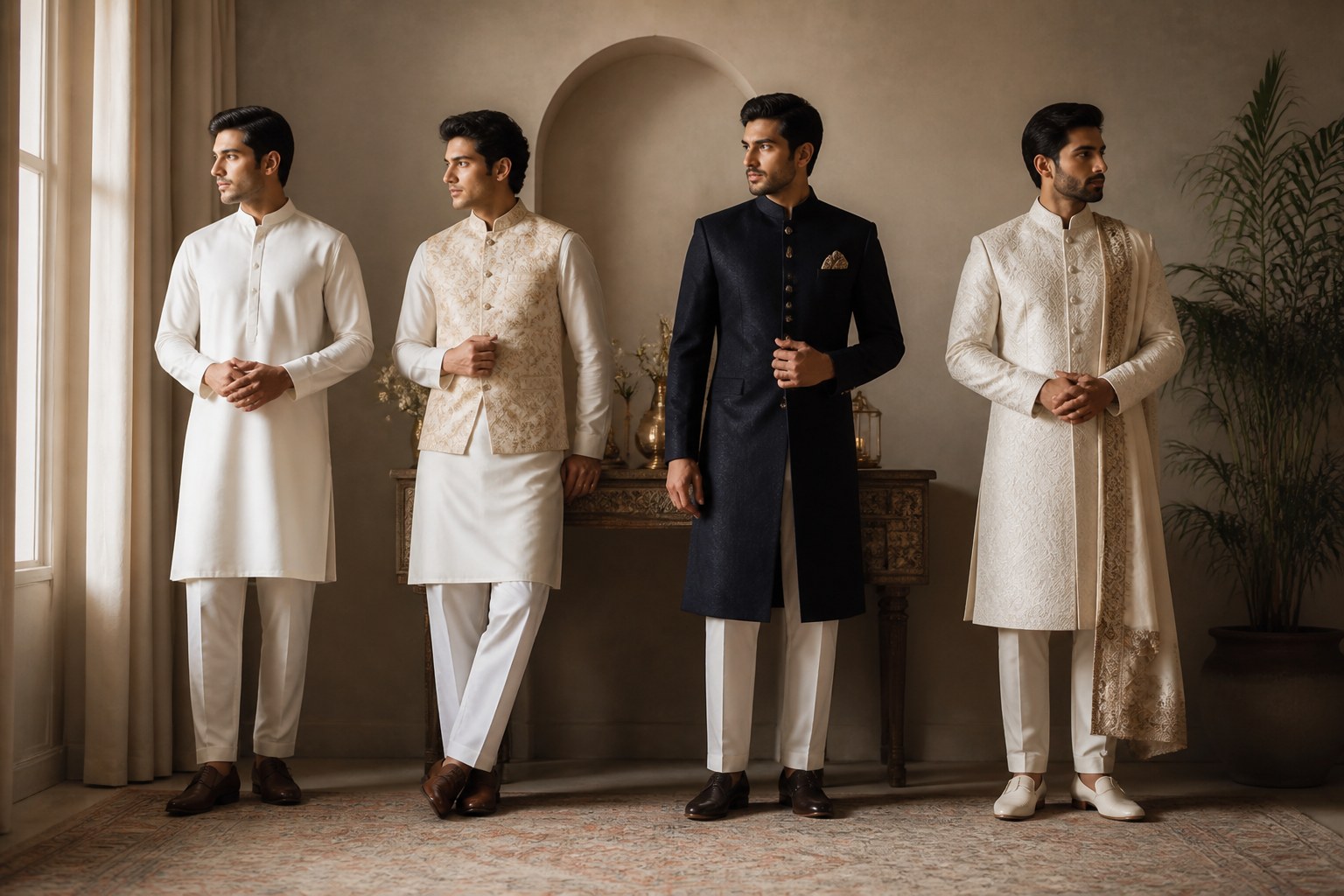
Pakistani wedding menswear becomes easier once the formality ladder is clear. A kurta, a waistcoat, an achkan and a sherwani are not four price points for the same outfit. They change silhouette, structure, heat load and how formal you read in the room.
This guide is for grooms, groomsmen and guests choosing among common South Asian formal options. Family traditions differ; treat the ladder as a decision tool, not a universal etiquette law.
Kurta–pajama for flexible events
A well-cut kurta with pajama or trouser remains the most adaptable choice for daytime events, mehndi guests and warm venues. Fabric weight matters more than embroidery volume. Cotton and light blends breathe; heavy silk blends look rich and trap heat under lights.
Fit checks: shoulder seam at the shoulder, sleeve ending where you want cuff jewellery or a watch to sit, and side vents that do not gape when you sit. Length should clear the confusion between tunic and coat.
Waistcoat changes proportion
A waistcoat over a kurta adds vertical structure and photographs as more finished without the full commitment of a long coat. It also adds a heat layer. Choose one if the event is air-conditioned or evening-cool; reconsider for midday outdoor mehndi. Button stance and length should flatter without riding up when you raise your arms for greetings.
Achkan and sherwani carry ceremony
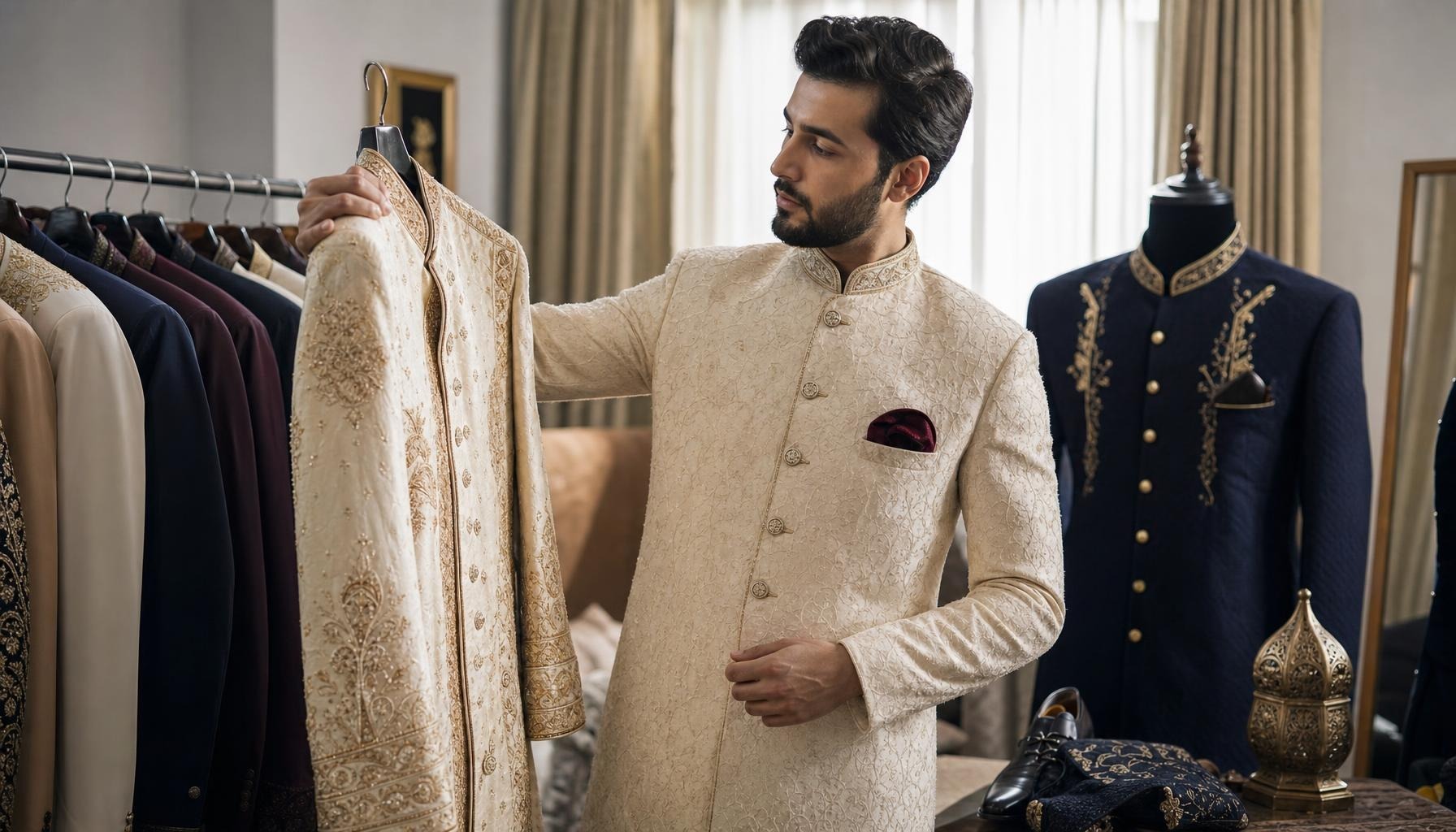
Achkan and sherwani occupy the ceremonial end of the ladder. Exact definitions vary by tailor and region; in practical shopping speech, both refer to long, structured coats worn for formal wedding events. The sherwani is frequently the most formal statement for a groom. Do not argue vocabulary in the shop—argue fit, fabric and occasion.
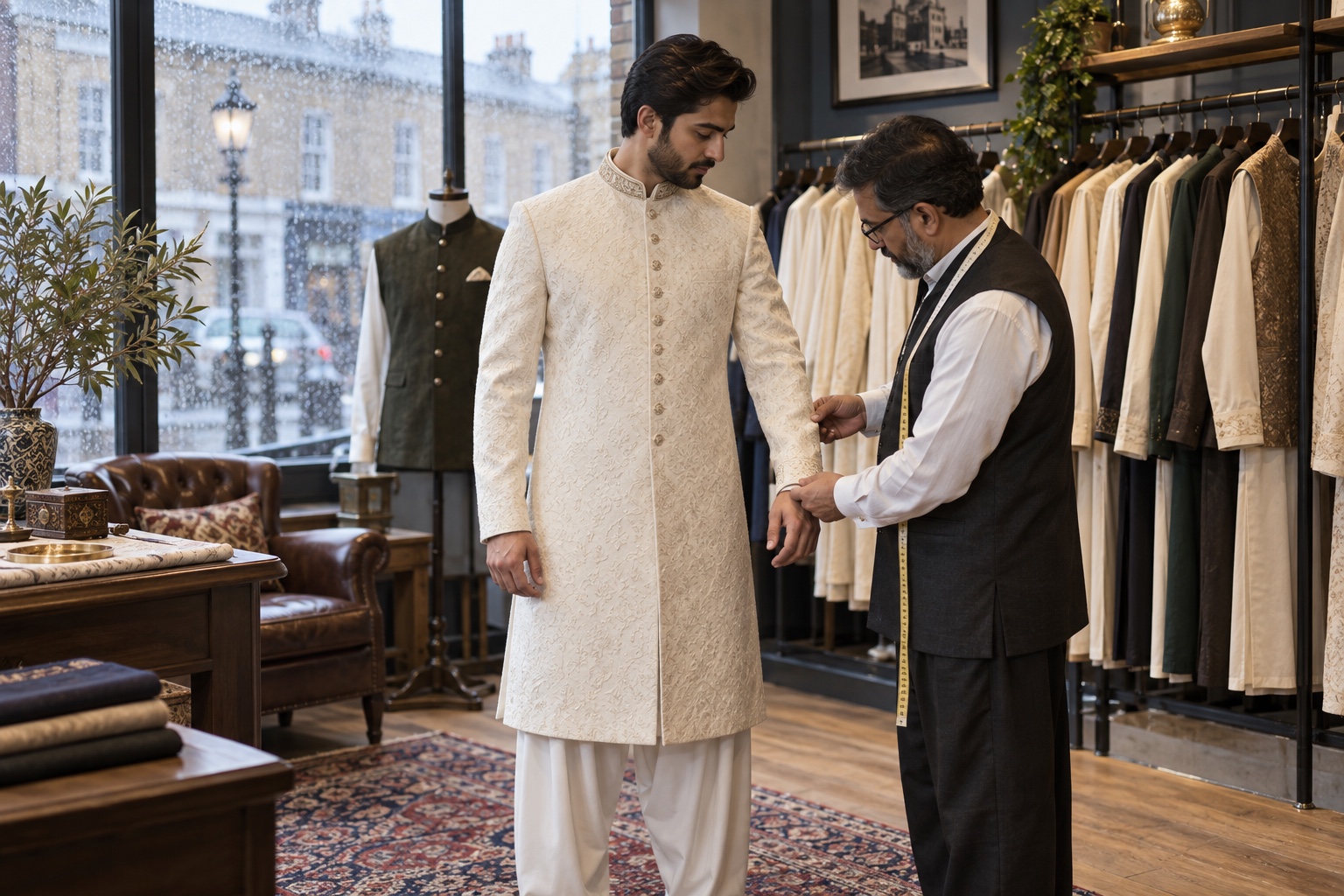
Structure means canvassing or firm stitching at the chest and shoulder. Soft costume sherwanis without structure collapse on camera. Try sitting, hugging and doing a mock rukhsati walk. If the collar bites or the hem kicks forward, fix it before embroidery conversations continue.
| Garment | Formality signal | Watch-outs |
|---|---|---|
| Kurta–pajama | Flexible / guest daytime | Fabric weight; vent behaviour |
| Kurta + waistcoat | Elevated guest / evening | Heat; button pull |
| Achkan-style long coat | Formal ceremony | Collar comfort; stride |
| Sherwani | Peak formal / groom | Structure; shoe pairing; alterations lead time |
Shoes and trousers finish the argument
Khussa, formal slip-ons or polished shoes should match the coat’s seriousness and the venue floor. Trouser break and churidar gather need a standing and sitting check—especially if you will be on stage. Belts, watches and rings should not fight embroidery.
Ordering, care labels and deposits
Made-to-measure lead times slip. Build buffer before the wedding week. Keep measurements, deposit receipts and promised delivery dates. UK buyers can review general consumer framing via Citizens Advice and GOV.UK consumer protection rights. US buyers should still read care instructions; the FTC explains care labeling expectations for covered apparel in US commerce.
Choose the rung of the ladder that matches the event’s heat, formality and your role. A perfect kurta in the right room beats a struggling sherwani worn for status alone.
Sources and official profiles
Was this helpful?
Keep reading
Related stories
More from this desk, this beat, and the tags on this piece.
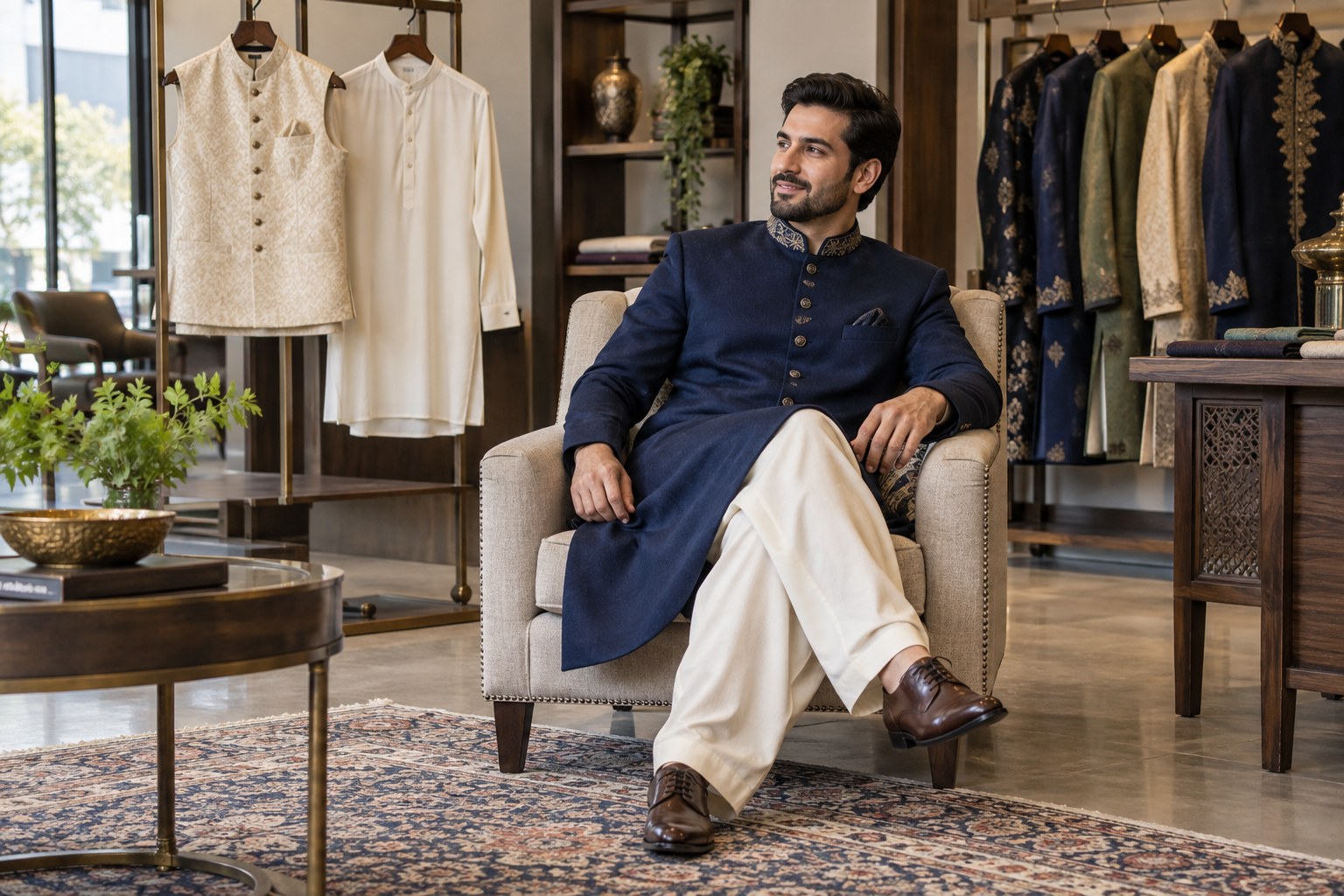
Sherwani, achkan and prince coat: three formal menswear silhouettes, not synonyms
Zainab Noor · 25 Oct 2026
Readers
The conversation
0 notes
Anyone can leave a note. Guests add a name and email — no account required, and the email is never published.
No notes yet. Yours would be the first.