Fairy Meadows without the fantasy: access, risk, and preparation
A candid Fairy Meadows guide focused on transport risk, hiking and informed choice.
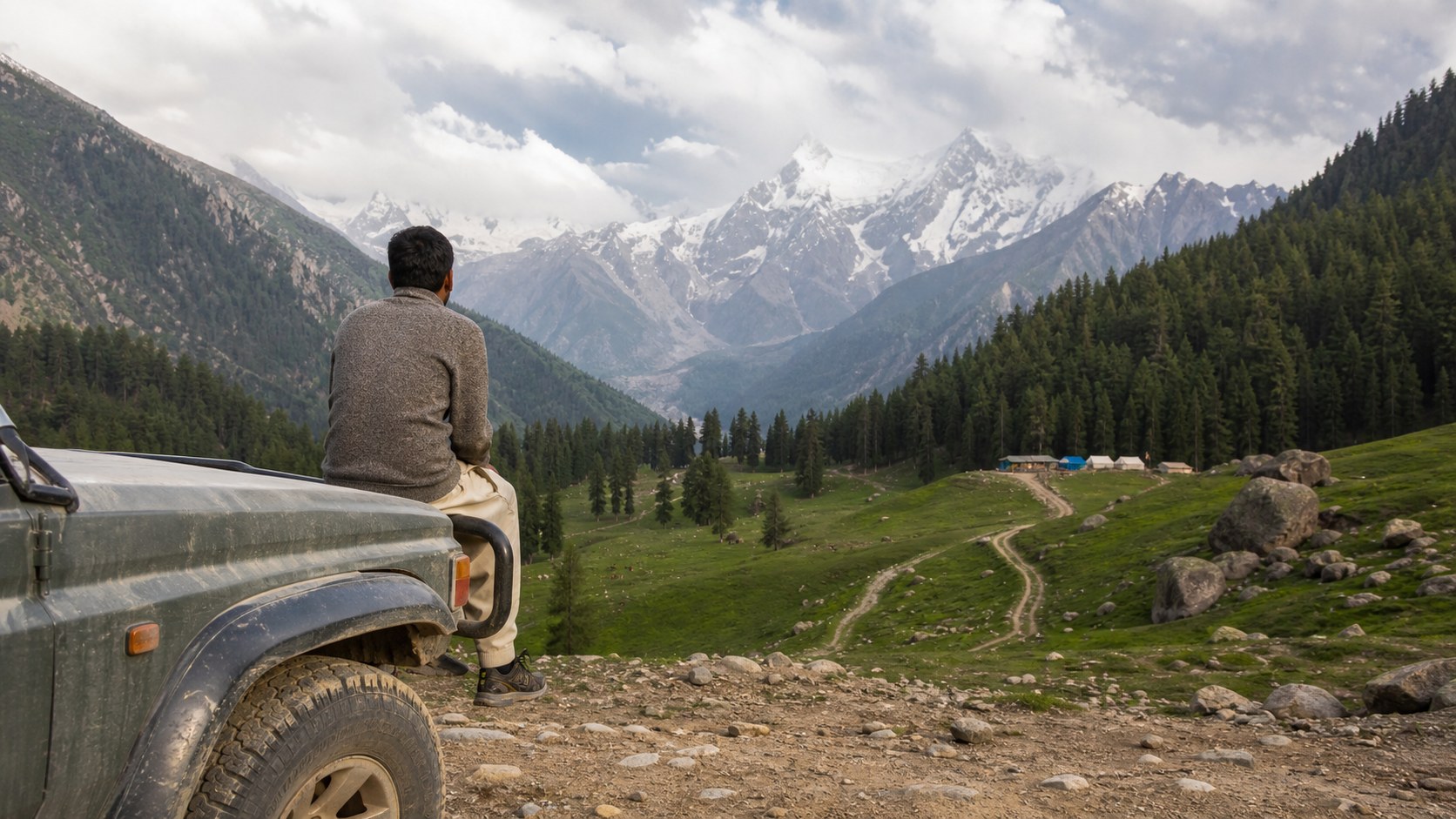
The famous view is real; so is the journey. Fairy Meadows is reached through a road-and-hike combination that should be evaluated as transport and mountain exposure, not edited into a cinematic arrival sequence.
Decide whether the access is acceptable to you
Ask a reputable local operator for current jeep-road condition, vehicle arrangement, walking time, weather and accommodation facts. Read current government travel advice and insurance exclusions. A traveller who dislikes exposed roads is not failing an adventure test by choosing another Nanga Parbat viewpoint.
The hike begins after a long journey and can feel harder with sun, dust, luggage or altitude. Carry your own water, layers, rain protection, sun protection, headlamp and essential medicine. Use porters or horses only after agreeing price, load and welfare expectations; do not assume rescue or evacuation is simple.
| Decision | Evidence to obtain |
|---|---|
| Jeep | Current local report, driver and vehicle condition |
| Hike | Your fitness, daylight and weather |
| Stay | Heating, bedding, toilets, food and communications |
| Insurance | Altitude, trekking and evacuation wording |
Turn back for deteriorating weather, illness or lost daylight. Take every non-biodegradable item out. Fairy Meadows needs neither exaggerated danger nor fantasy; it needs an informed traveller willing to let conditions overrule the photograph.
Protect the return journey
Leave your route and expected return with someone who is not on the hike. Start early enough that ordinary delays do not create a dusk descent. Photographing an exposed section is never worth blocking the path or distracting the driver; keep cameras packed until the vehicle is safely stopped.
Weather gets the final vote.
Ask what the booking does not include
Confirm where the jeep begins and ends, how luggage moves, whether meals and bedding are included, and what happens if weather delays the return. Mobile coverage, electricity and hot water may be limited; verify rather than infer from a listing. Tell accommodation about dietary or mobility needs before paying. Keep enough cash for agreed local services without relying on a signal-dependent payment. If travelling with children, older adults or anyone with a health condition, discuss the route with an appropriate professional and operator. There is no shame in selecting an accessible valley stay instead; the mountain does not award points for discomfort.
Treat access as the main event
Fairy Meadows is reached through a road-and-hike combination that should be evaluated as transport risk and mountain exposure, not as a cinematic arrival sequence. Jeep segments can be rough, weather-dependent and unsuitable for everyone. The hike requires fitness, daylight and appropriate footwear. If either stage feels beyond your honest capacity, choose another landscape. There is no prize for arriving miserable or unsafe.
Read current FCDO Pakistan travel advice for the relevant area before you prepay. Confirm what your insurance covers for trekking and vehicle types. Pack layers, rain protection, torch, water, basic first aid and cash. Accommodation is basic compared with city hotels; adjust expectations toward warmth and location rather than spa amenities.
Turn-back rules and waste
Agree turn-back triggers before you start: weather deterioration, illness, lost daylight, or a child or elder who has had enough. Group pressure is a known hazard in beautiful places. Take all non-biodegradable waste out. Ask about toilet facilities and follow local guidance. Fairy Meadows needs neither exaggerated danger marketing nor fantasy; it needs travellers willing to let conditions overrule the photograph they imagined.
Specificity is the difference between a trip that teaches you the country and a trip that only proves you can endure movement. Use this guide as a decision framework, then let local conditions and current official advice edit your courage into something sustainable.
Preparation checklist that is not romantic
- Current advisory reading for the area via FCDO Pakistan travel advice
- Insurance wording checked for trekking and vehicle types
- Honest fitness assessment for the hike portion
- Footwear with grip, broken in before the trip
- Layers, rain shell, hat, gloves depending on season
- Headlamp, water capacity, snacks, personal medicines
- Cash for services and contingencies
- Daylight plan with turn-back time written down
- Agreement that any adult can call the day without ridicule
Jeep segments can frighten people who did not expect exposure. If you know you panic on rough mountain tracks, choose another destination. There is no moral failure in selecting a valley walk with a safer access profile. Fairy Meadows marketing often edits out the approach; your planning should put the approach in the centre.
On the trail and at the meadow
Stay on established paths. Watch weather. Keep children close. Do not drone people or sensitive sites without clear permission. Carry waste down including tissues. Respect lodging rules and quiet hours. Altitude and exertion combine; rest without apology. If someone develops worrying symptoms, descending and seeking help beats protecting the itinerary.
The photograph you came for is optional. The judgement that gets everyone down is not. Fairy Meadows without fantasy means telling the truth about access, risk and preparation—and being willing to let that truth cancel the trip.
Who should not go—and what to do instead
People with untreated severe fear of exposed tracks, unfit hikers, travellers without weather buffers before flights, and groups that cannot agree on a turn-back leader should choose other northern experiences: valley walks near established towns, shorter viewpoints with easier access, or simply more nights in Hunza or Skardu bases. Substituting a safer landscape is not failure. It is taste meeting reality.
If you do go, travel with operators who explain risks in plain language rather than only in marketing superlatives. Ask what happens if weather closes the road while you are up. Ask where emergency help comes from and how long it takes. Vague answers are answers. Prefer someone who sounds careful over someone who sounds cinematic.
After you return
Write down what the access was actually like while memory is fresh—timing, cost, scare moments, what you would pack differently. Share that honesty with friends who ask for “the Fairy Meadows tip.” The fantasy version of the place spreads online without help; the useful version needs people willing to describe the jeep and the hike without shame. That is how the next traveller makes an informed choice.
Group dynamics on exposed approaches
Assign a turn-back leader before the jeep stage begins. That person should not be the most ego-invested photographer. They should be the person willing to disappoint the group. Agree that mockery for caution is forbidden. Many accidents and near-misses in beautiful places include social pressure as a hidden ingredient.
Brief children in plain language about staying seated, holding on, and not asking the driver to go faster. Brief adults about not filming the driver in ways that distract. Keep phones secured. Motion sickness bags belong in the kit without embarrassment. If someone freezes with fear, stop when safe and reassess rather than shaming them into continuing.
At camp or lodging, dry wet clothes carefully, keep rubbish bagged, and sleep enough for the hike out. The way down is still the trip. Fantasy ends when legs are tired and light is falling; preparation is what remains.
Cost the trip in time as well as money: jeep hours, hike hours, weather contingency days, and the day you may need afterward to recover before another flight. People who only cost the night’s lodging underprice the approach. If the total time budget does not fit your wider northern itinerary, Fairy Meadows should drop before Hunza nights drop. Bases teach more than trophy outings when time is short.
Pack humility in the same pocket as the headlamp. Listen to local staff when they say the road is closed. Listen to your knees on the hike. Listen to the quiet member of your group. Fantasy is loud; preparation is a set of permissions to stop. Use them. The meadow will remain. Your obligation is to remain capable of leaving it.
If you complete the visit safely, your most useful souvenir is an accurate description of access—what shook, what took longer, what you would tell a friend who is less fit than your marketing-fed imagination. Offer that description without swagger. Fairy Meadows without fantasy is a public service as much as it is a travel essay.
Check footwear the night before the hike: dry socks, trimmed nails, and no brand-new boots. Eat breakfast even if excitement steals appetite. Tell someone outside the group your intended return window. These ordinary steps are the opposite of fantasy and the core of preparation. If you do nothing else from this guide, do the turn-back agreement and the footwear check.
Fairy Meadows can be extraordinary when access, weather and judgement align. It can also be a story people tell about fear on a track they did not understand. Read the approach as carefully as you read the view. Then decide—without shame—whether this is your mountain day or someone else’s photograph.
If you cancel, spend the day on a lower valley walk and call it a good decision. The mountain does not require your presence to remain itself. Informed absence is also a form of respect.
Sources and official profiles
Filed under
Was this helpful?
Keep reading
Related stories
More from this desk, this beat, and the tags on this piece.
Readers
The conversation
0 notes
Anyone can leave a note. Guests add a name and email — no account required, and the email is never published.
No notes yet. Yours would be the first.