Pakistani grocery shopping in the UK: pantry, freezer, and fresh food
A UK shopping route that separates dependable pantry staples from freezer limits and genuinely time-sensitive fresh ingredients.
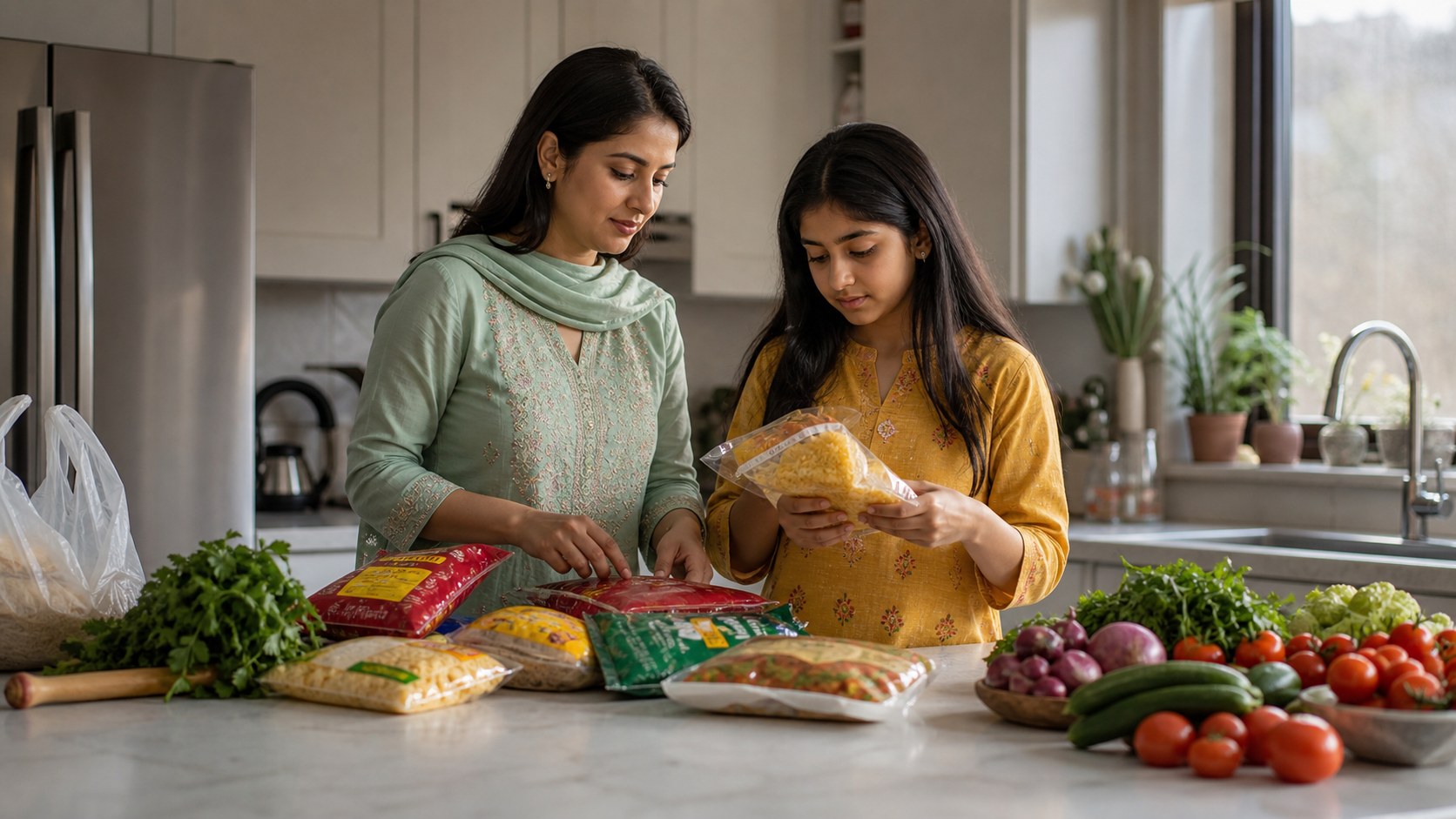
A Pakistani kitchen in Britain fails less often from missing one rare spice than from buying three versions of the same chilli, overloading a small freezer, and trusting a warm delivery bag with mince. Shopping well means separating what can wait on a shelf from what must stay cold, and knowing which UK labels answer which questions.
Use the Food Standards Agency as your hygiene and labelling home base, including guidance on chilling, cooking, the home food fact checker (especially for rice) and allergen information for consumers. For butchers and takeaways, check ratings via food hygiene ratings rather than relying on a busy Saturday queue as proof of safety.
Build the list by meal, not by aisle nostalgia
Write the week’s meals first: daal, chicken karahi, breakfast paratha, freezer kebabs, Eid sweet. Then translate into ingredients. Nostalgia shopping—“I might need ajwain”—fills cupboards with jars you will not open before they stale. Meal-led lists keep whole spices rotating.
Separate the list into three columns: pantry, freezer, fresh. Pantry can be bought fortnightly. Freezer needs remaining capacity. Fresh should match the next two or three days unless you will cook and freeze immediately.
| Lane | Examples | UK practical check |
|---|---|---|
| Pantry | Basmati, atta, lentils, whole spices, tea, oil, achar | Best-before dates, sealed bags, moisture in atta |
| Freezer | Parathas, seekh, peas, leftover stock, boneless chicken | Space, labelling, chill chain on the way home |
| Fresh | Coriander, tomatoes, yoghurt, green chilli, meat | Use-by dates, fridge space, same-day cooking plan |
Pantry staples that actually earn their shelf space
Rice: buy a brand you already cook well before experimenting; compare grain length and age rather than choosing the largest sack first. Atta: check for freshness and storage; damp garages ruin flour. Lentils: keep masoor, moong, chana and maash according to what you actually cook weekly. Whole spices (cumin, coriander, cloves, cardamom, cinnamon, black pepper) usually outlast pre-ground mixes for flavour if you toast and grind as needed.
Garam masala and chaat masala are useful finished blends, but they are not a substitute for learning your household’s base tarka. Tinned tomatoes, passata and coconut milk can bridge winter tomato quality. Pickles and chutneys should be bought in sizes you will finish; giant jars of achar that dry at the edges are waste disguised as abundance. Separate value from pack size: a five-kilogram sack is economical only if it stays dry, pest-free and used while quality remains good.
Halal meat and the journey home
Choose a butcher you can question about cut, grinding and freezing. Bring a cool bag. Do not leave mince in a warm car while you continue shopping for decorative napkins. Divide large packs into meal portions before freezing so you are not thawing two kilos for one karahi.
If you use supermarket halal ranges, read the label for cut and any added water or seasoning. Compare price per kilo of usable meat after trimming, not only the sticker. Hygiene ratings for butchers and takeaways are public for a reason. A favourite counter can still have a bad inspection week. Check, then decide. Combine that check with your own nose and chill-chain discipline on the way home.
Freezer politics in a UK flat
Measure capacity before a bulk shop. A drawer stuffed with unlabelled bags becomes an archaeology project. Use masking tape: dish, date, allergens. Keep a running inventory note on your phone. Rotate older items forward.
Frozen parathas, samosas and kebabs are useful only if you protect their packaging from freezer burn and cook them from appropriately thawed or frozen states according to the product instructions and food-safety guidance. Do not refreeze thawed raw meat casually. For cooked rice and leftovers, cool quickly—ideally within an hour per FSA rice guidance—then freeze in shallow portions.
Fresh herbs, yoghurt and the forty-eight-hour rule
Coriander, mint and green chilli wilt quickly. Buy amounts matched to imminent cooking, or wash, dry and freeze herbs in portions for cooked dishes. Yoghurt belongs in the fridge promptly; check lids and dates. Tomatoes for salad and tomatoes for bhunai may be different purchases. Mangoes and seasonal fruit should be bought at mixed ripeness stages, not as one identical box that spoils together.
| Fresh item | Buy for |
|---|---|
| Coriander and mint | Two immediate meals; turn excess into chutney |
| Green chilli and ginger | Current week, with a frozen prepared backup |
| Meat | A named recipe, halal requirements and safe storage capacity |
| Mangoes or seasonal produce | Ripeness stages, not one identical box |
Reading UK labels for a Pakistani pantry
Best-before dates on dry spices and rice are quality guidance; use-by dates on meat and some dairy are safety limits. Do not treat them as interchangeable. Allergen emphasis—especially for nuts, milk, gluten and sesame in snack mixes—matters when you cook for mixed households. If a specialist product lacks clear English allergen info, ask before serving it to guests with allergies. Photograph batch codes when reporting a problem, and check UK food-recall notices rather than relying on a forwarded message without a source.
Substitutions without pretending they are identical
UK shops may lack a specific chilli powder heat or a particular rice grain. Substitute deliberately: note what you used and how the dish changed. Mexican oregano is not dried methi. Pancake flour is not atta. Honesty in substitution teaches your kitchen faster than forced authenticity shopping. Give delivery drivers permission by category—“any basmati of similar grain length”—not by optimism.
Specialist store versus supermarket
Supermarkets increasingly stock basmati, some spice jars and frozen parathas. They rarely match specialist stores for fresh methi, specific chilli powders, quality whole spices by weight, or the social knowledge of which yoghurt sets well for lassi. Use supermarkets for milk, eggs, oil and emergency tomatoes; use specialists for the ingredients that define the dish.
Online South Asian grocers help outside big cities, but frozen and chilled deliveries need your presence at the door. If you cannot receive a cold parcel safely, do not order high-risk foods for daytime dump-and-run delivery.
A fortnightly route that reduces duplicate buys
- Check cupboard and freezer inventory.
- Plan eight to ten meals.
- Buy pantry gaps at the specialist store.
- Buy meat and dairy last, into a cool bag.
- Unpack fridge and freezer before pantry.
Keep one reusable cool bag in the car or by the door as permanent kit. Cold-chain discipline fails most often because the bag was left at home, not because the butcher was unclear. Teach whoever shares the kitchen where the inventory note lives. A second shopper without the list is how you acquire three jars of turmeric and no ginger.
Ramadan and Eid pressure weeks
In the ten days before Eid, specialist stores sell out of specific sweets, vermicelli and preferred chicken cuts. Advance-buy non-perishables; schedule meat for later with a named collection time. Do not buy three dessert options “just in case” if your freezer and fridge cannot hold them safely.
For iftar prep, batch-cook and chill according to FSA guidance rather than leaving large pots in the danger zone while guests arrive. Shopping is only the first half of food safety; the counter-to-table hour matters as much as the brand of rice. After Eid, inventory leftovers before the next shop. Pakistani grocery life in Britain stays sustainable when celebration weeks do not permanently distort the cupboard.
A starter cart for a new UK kitchen should buy for five dinners and two breakfasts before decorative jars: one rice, one atta, three lentils, cumin, coriander seed, turmeric, red chilli, garlic, ginger, onions, tomatoes, yoghurt, chicken or mixed dal ingredients, oil, tea, and a cool bag. Add whole garam masala spices on the second trip once you know you will cook again that month. Write what you cooked and what remained unused. The unused list is your best teacher.
Spice freshness and the duplicate-jar tax
British Pakistani cupboards often accumulate three garam masalas and no whole cloves. Before each specialist trip, photograph the spice shelf. Buy whole spices you will toast; replace powders that smell of cardboard. Decant into clean jars only after emptying the old contents so allergens and age remain knowable. If a blend contains nut traces or celery, that matters for school lunchboxes and guests—keep the label.
Atta storage fails in damp flats. Use sealed containers off the floor, rotate stock, and do not combine a new bag over an old one. Pests and moisture are practical problems; nostalgia does not seal a packet.
Butchery cuts and the karahi math
Ask for the cut the dish needs: bone-in for stock and slow cooking, boneless for quick weeknight salan, mince fat level for seekh or keema. Price per kilo of usable meat after trimming beats sticker shock. If you freeze, portion by meal before freezing. Label “karahi Thursday” rather than “chicken.” Future-you will cook more and waste less.
When buying from supermarket halal ranges, confirm whether the product is raw or ready-to-eat and whether seasoning includes allergens. Compare hygiene ratings if you also use a takeaway counter for seekh or fried snacks on busy weeks.
Small kitchens, big hospitality weeks
Before a mehndi, cricket final or Eid open house, clear freezer archaeology first. Make space, then shop. Cook bases that chill and reheat—daal, salan, keema—according to FSA chilling and cooking guidance. Fry closer to service. Assign one person to cold-chain on shopping day so meat is not an afterthought in a warm boot. Pakistani grocery shopping in Britain is logistics married to taste; the cold chain should be boringly intact, and the cupboard should reflect the week you will actually cook.
Sources and official profiles
Filed under
Was this helpful?
Keep reading
Related stories
More from this desk, this beat, and the tags on this piece.
Chicken yakhni pulao: build the stock before you think about the rice
Hassan Raza · 4 Oct 2026
Readers
The conversation
0 notes
Anyone can leave a note. Guests add a name and email — no account required, and the email is never published.
No notes yet. Yours would be the first.