Houston vs Dallas for a first Pakistani family food weekend
Choose Houston or Dallas as your base for a first Pakistani family food weekend by drive corridors, group size, hotel logistics, and how you verify menus, not by a ranked restaurant list.
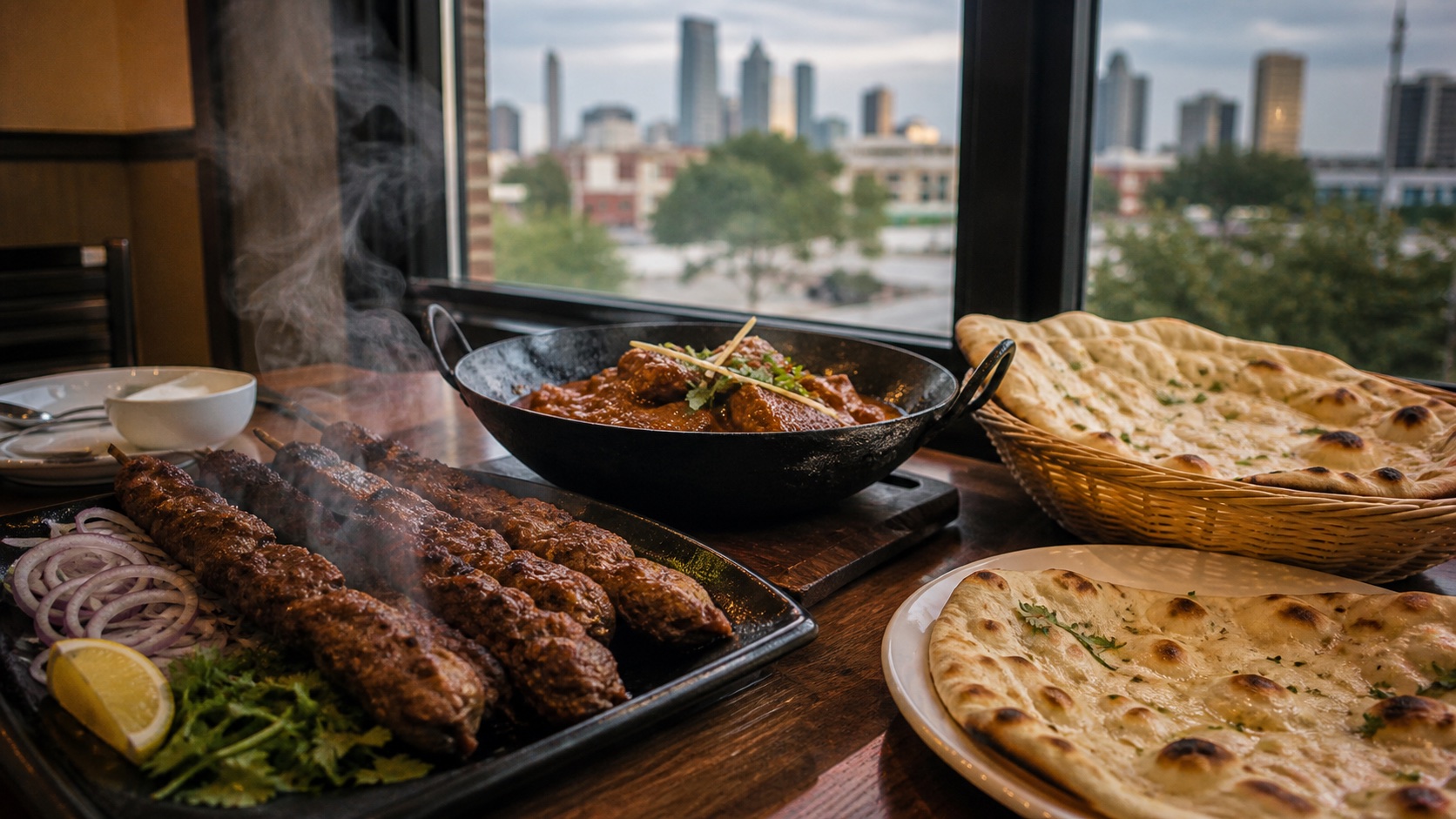
Choosing Houston or Dallas for a first Pakistani family food weekend is a logistics decision dressed up as a food debate. Both metros feed Pakistani and broader South Asian tables every day of the week. They do not share the same highway logic, hotel geography, or patience profile for elders, toddlers, and cousins who want different plates at noon. This page is a method for picking a base city and verifying kitchens. It is not a ranked restaurant list, and it will not invent names, wait times, or “must-order” dishes for places PakStyles has not independently audited.
Decide the weekend’s job before you open maps. Are you hunting one specialty you cannot get at home, feeding a mixed-age group without drama, or sampling several styles across two days? Those aims pull toward different hotel areas and different amounts of driving. A viral reel is not a plan. Official visitor orientation for each metro is a useful orientation layer: Visit Houston and Visit Dallas publish neighbourhood and transport framing you can cross-check against your own meal map. Taste still comes after the map stops lying.
Drive time is the real budget
Treat each metro as a set of corridors, not a single pin. A “thirty-minute” hop in light traffic can become an hour once Friday prayers, school pickups, and highway construction stack. Before you book lodging, open a live map for the hours you will actually move: late morning, post-lunch, early evening. Test two or three hotel neighbourhoods against two or three dining clusters you already trust from people you know, not from a stranger’s listicle.
Houston’s sprawl rewards a hotel near the densest cluster you can confirm if your group wants short hops between bread, dessert, and a second stop. Dallas–Fort Worth’s multi-city shape (Dallas, Plano, Richardson, Irving, Arlington, and more) punishes a downtown loyalty point if your real meals sit in a northern suburb. The city that “wins” is the one where Saturday lunch, Saturday dinner, and Sunday lunch do not each require a separate forty-minute highway leg.
| Group constraint | What to favour in either metro | What usually fails |
|---|---|---|
| Elders who tire after one transfer | Hotel within a short hop of one verified cluster; one specialty hunt per day | Three “famous” stops across opposite corridors |
| Toddlers and car seats | Predictable parking; kitchens that answer about high chairs or trays | Street-only parking plus a no-reservation lunch rush |
| One specialty dish as the whole point | Base near that kitchen; backup in the same corridor | A scenic hotel an hour away “because downtown” |
| Ten adults, mixed spice tolerance | Advance calls about headcount, mild options, and tray timing | Walking in as a surprise party of ten at peak iftar season |
Group size changes the city choice
Four adults who share spice tolerance can absorb a specialty kitchen with limited seating and a made-to-order pace. Ten people with two toddlers and one relative who needs mild food need parking, table space, bread that arrives in waves, and a kitchen that will answer the phone about party trays or advance orders. Ask the restaurant on its own channels whether it seats your headcount, whether trays require notice, and whether spice and allergen questions get a clear answer.
When you are packing leftovers for a hotel fridge or a cooler in the car, treat takeout as a food-safety problem, not only a portion problem. The USDA FSIS page on safe handling of take-out foods is the public baseline for how long perishable cooked food can sit unrefrigerated, and the FDA’s safe food handling guidance covers the clean, separate, cook, chill habits that still apply in a hotel microwave corridor. In Texas heat, the one-hour rule for perishable food above 90°F matters more than your pride about “just one more stop.”
Hotel areas as logistics, not tourism branding
Ignore brochure language. Ask: where will we pray if we need a quiet corner; where is breakfast that does not strand you; how hard is evening parking; can someone return early without stranding the drivers? Business corridors near highways often trade charm for predictable parking and shorter recovery drives. Neighbourhoods closer to dining clusters trade quiet for walkability. Write the trade-off down before loyalty points decide for you.
Visitor bureaux can help you understand districts and transit options. They cannot certify that a particular nihari pot is simmering on the Saturday you arrive. Use Visit Houston and Visit Dallas for orientation, then verify every meal against the restaurant’s own current page or phone line.
How to verify a kitchen without inventing a shortlist
- Name the dish class, not the brand. Nihari, barbecue, regional biryani, karahi by weight, chaat, desserts: each implies different hours, portion logic, and advance notice.
- Collect candidates only from primary sources. Prefer the restaurant’s own site, current online menu, or official ordering profile over screenshots forwarded in a family chat.
- Check public health signals where available. In Houston, the city publishes food-permit and inspection pathways through Houston Health Department resources; use whatever official inspection lookup your municipality offers rather than a stranger’s “I never got sick” anecdote.
- Verify the day you will eat. Confirm address, hours, whether the specialty is listed for that day, and whether the kitchen is the same location people remember from years ago.
- Call or message with the real constraints. Headcount, mild options, child’s plate, wheelchair access, parking, and whether you need trays ready at a clock time.
- Keep one backup in the same corridor. A backup across town is not a backup; it is a second trip.
Do not treat a viral video as proof of today’s menu. Do not assume “Pakistani” on a sign means every regional dish exists daily. When relatives insist on a name you have never heard, ask them for the official page they last used, and open it yourself. If the page is thin, outdated, or only a phone number, plan a confirmation call before you build the weekend around it.
Allergens, mild plates, and mixed tables
A family table that mixes beef-eaters, chicken-only guests, and someone with a sesame or nut risk needs clearer language than “we’ll figure it out when we sit.” The FDA’s consumer materials on food allergies explain why major allergens matter in US food contexts; restaurant practice varies, so ask how the kitchen handles shared fryers, shared spatulas, and tray labelling. If the answer is vague, choose a simpler order or a different kitchen rather than hoping for the best at a crowded Saturday lunch.
Mild food is not a failure of authenticity. Ask for spice level in plain words, request sauces on the side when that helps, and order bread and yoghurt early so children and elders are not waiting while a specialty karahi finishes. The point of the weekend is that everyone eats without a scene in the parking lot.
Prayer stops and meal stacking
A family food weekend still includes prayer. Map Jummah or Maghrib against your meal corridors so you are not crossing the metro twice for the same hour. Some groups eat a verified late lunch, rest at the hotel, then take a short hop to dessert after prayer. Others need a quiet room near the restaurant. Ask hotels about quiet corners without demanding that staff solve your religious logistics. Build the buffer yourself.
Weather and outdoor waits
Texas heat and sudden storms change the weekend as much as traffic does. If your plan includes courtyard seating, a mosque walk, or a long queue outside a bakery, check the National Weather Service forecast for the ZIP code of your hotel and your lunch corridor before you lock a reservation-free Saturday. The National Weather Service and its heat safety guidance are better planning tools than a relative’s memory of “it was fine last March.” Pack water, a light cover for air-conditioned dining rooms that run cold, and a backup indoor meal if outdoor waiting looks unsafe for elders or small children.
A two-day skeleton that survives either city
Friday evening: arrive, settle the hotel, eat one nearby meal you have already verified, sleep. Saturday: one specialty lunch in your corridor, a rest block, one dessert or chaat stop that does not require another highway, dinner either as trays in the hotel or a second nearby kitchen. Sunday: one flexible lunch before departure, with cooler space planned if leftovers travel. Build prayer timing and nap timing into the map the way you would build parking.
Houston versus Dallas, for this purpose, is less a rivalry than a logistics choice. Pick the metro where your hotel, prayer rhythm, drive tolerance, and verifiable kitchens align for the people who will actually sit at the table. After that, the food can do its job.
Sources and official profiles
Filed under
Was this helpful?
Keep reading
Related stories
More from this desk, this beat, and the tags on this piece.
Family-style Pakistani restaurant ordering without over-ordering
Hassan Raza · 13 Sep 2026
Pakistani restaurant tasting checklist: judging the kitchen, not the décor
Hassan Raza · 13 Sep 2026
Readers
The conversation
0 notes
Anyone can leave a note. Guests add a name and email — no account required, and the email is never published.
No notes yet. Yours would be the first.