Desi skincare routines: what helps and what can harm
A barrier-first skincare guide that separates useful routine from fairness marketing, irritation and unsafe lightening products.
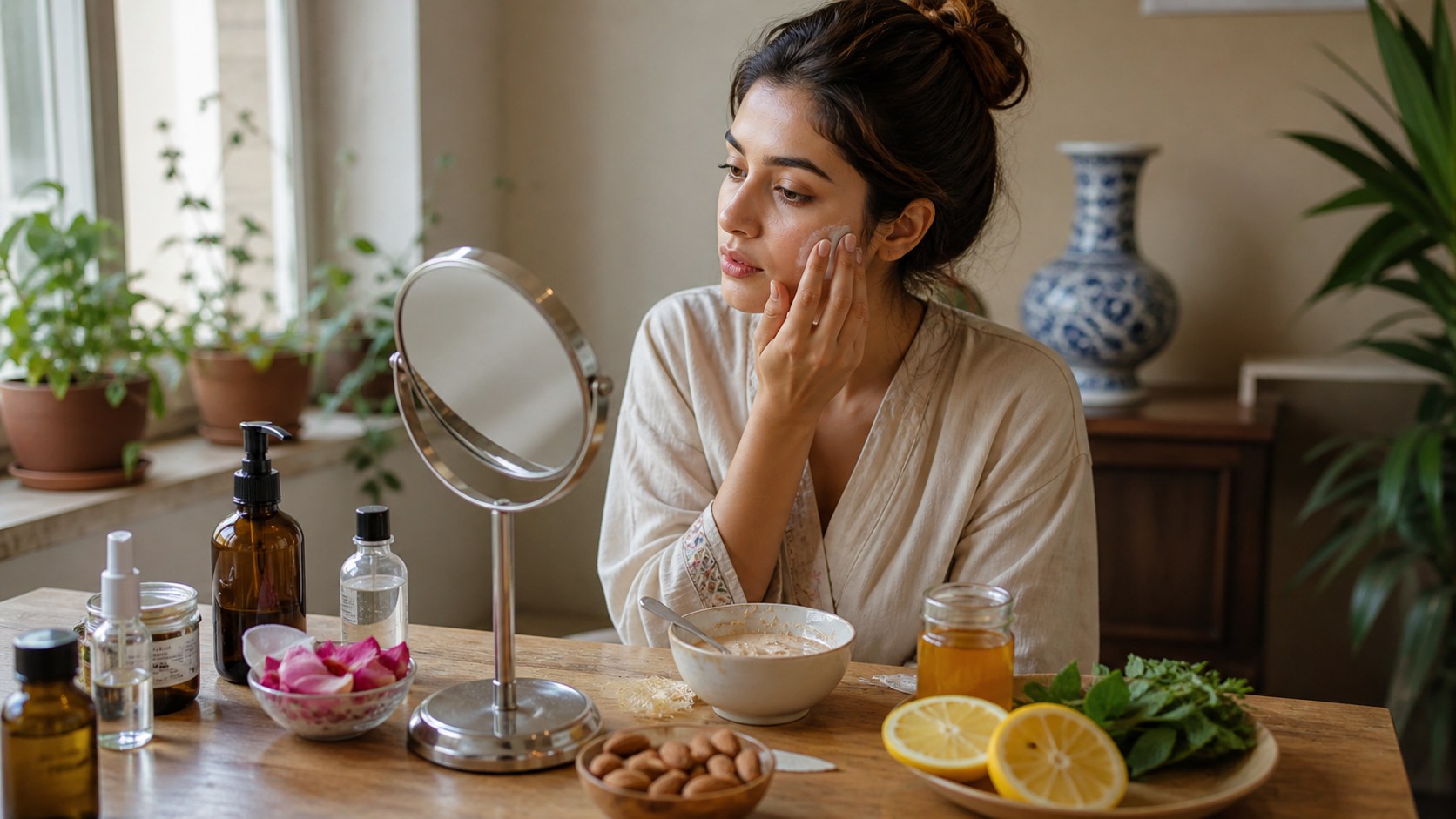
A useful desi skincare routine protects the skin barrier, manages sun and irritation, and treats pigmentation as a medical-cosmetic question—not as a moral project to become fairer. Much marketing aimed at South Asian shoppers still sells brightness as virtue. That pressure pushes people toward harsh scrubs, steroid creams sold informally, and illegal lightening products that can cause lasting harm.
This article explains what commonly helps, what commonly harms, and where to stop and see a clinician. It is not a diagnosis and not a promise that any routine will erase melasma or acne marks.
What “helps” usually means for melanin-rich skin
The American Academy of Dermatology’s public guidance on fading dark spots in darker skin tones puts sunscreen at the centre: tinted sunscreen with iron oxide, SPF 30 or higher, broad-spectrum and water-resistant, reapplied during outdoor time. Visible light can worsen pigmentation for some deeper skin tones; iron oxide in tinted formulas is part of why dermatologists often prefer them over untinted products that leave a white cast and get abandoned.
A barrier-first routine that many people can discuss with a pharmacist or dermatologist looks like this:
- Gentle cleanse once or twice daily without stripping squeaky-tight skin.
- Moisturise with a fragrance-light emollient your skin tolerates—NHS pages on emollients and dry skin explain why leave-on moisture matters.
- Apply sunscreen to exposed skin before going out; reapply when outdoors for long periods.
- Add one active at a time only after the barrier is calm.
See the AAD’s guidance on fading dark spots for the sunscreen-first logic and for cautions about imported lightening products.
What can harm: lightening culture and illegal ingredients
The FDA warns consumers about skin products containing mercury and/or hydroquinone sold illegally over the counter. Mercury may appear under names such as mercurous chloride, calomel, mercuric, mercurio or Hg. Hydroquinone can be appropriate in prescription settings under medical supervision; unsupervised OTC products and grey-market imports are a different risk category. The FDA has reported serious side effects associated with hydroquinone misuse, including rashes, facial swelling and permanent discoloration (ochronosis), and notes that mercury can damage multiple organ systems.
Read the FDA’s warning on mercury and hydroquinone skin products before buying any “fairness,” “brightening,” “whitening” or “blemish” cream from informal markets, social-media sellers or unmarked jars. Handmade labels, missing English ingredient lists, or no label at all are danger signs in FDA consumer advice.
Home remedies and kitchen logic
Lemon juice, undiluted essential oils, rough walnut scrubs, and toothpaste-on-spots routines circulate as heritage hacks. Acid burns and irritant dermatitis can worsen post-inflammatory hyperpigmentation—the opposite of the intended effect. Tradition can include gentle oils and cleansing habits that feel comforting; tradition also includes practices that modern dermatology would call irritant.
If a home mixture stings beyond brief tingling, rinse and stop. For suspected contact reactions, NHS information on contact dermatitis is a clearer starting point than another DIY video.
Multani mitti, besan and yoghurt masks are not automatically dangerous and are not clinically validated treatments for melasma. Patch-test new preparations on a small area. Do not combine a kitchen acid with a retinoid night and call it “natural detox.”
Fairness marketing versus pigmentation care
Wanting evening of marks after acne or wanting help with melasma is a legitimate cosmetic-medical concern. Wanting to erase South Asian skin tone to satisfy colourism is a social injury sold as skincare. Separate those motives when you shop. Products that only speak the language of “fair and lovely” while hiding ingredient risks are not beauty—they are pressure.
AAD materials note that researchers have found steroids or mercury undeclared in some imported skin products. Steroid misuse can thin skin, cause rashes and produce dependency patterns that need medical untangling. Do not buy prescription-strength steroid creams from a beauty counter for unsupervised facial use.
A calm routine table
| Step | Usually helpful | Often harmful |
|---|---|---|
| Cleanse | Mild, non-stripping cleanser | Harsh scrubs twice daily; bar soaps that leave skin tight |
| Treat marks | Clinician-guided options; patience; sunscreen | Grey-market hydroquinone/mercury creams; stacked acids without guidance |
| Moisturise | Tolerated emollient; simple formulas | Heavy fragrance loads that sting; constant product hopping |
| Sun | Tinted SPF 30+ with iron oxide when suitable; hats; shade | Skipping sunscreen because of white cast; relying on foundation alone |
| Procedures | Board-certified assessment | Unregulated peeling parties; aggressive lasers without pigment expertise |
Acne marks, melasma and why “one serum” fails
Post-inflammatory marks after acne are not the same problem as hormonal melasma, and neither is the same as freckling. AAD melasma guidance emphasises sun protection—including formulas with zinc oxide, titanium dioxide and iron oxide in many dermatologists’ recommendations—and notes that hydroquinone for melasma is commonly prescription-based rather than casual OTC in current US practice. Treatments may include other prescription actives; outcomes vary and maintenance matters because sun exposure can bring pigment back.
If marks are sudden, asymmetric, painful, ulcerating or accompanied by systemic symptoms, seek medical care rather than intensifying beauty routines.
Patch testing and product discipline
Introduce one new leave-on product at a time for at least several days. Keep fragrance-heavy layers away from compromised skin. Remember that cosmetics in the US are regulated differently from drugs: the FDA explains that cosmetics are not approved before sale the way drugs are, which makes ingredient literacy and source discipline more important, not less.
Fragrance allergies are common enough that the FDA’s page on fragrances in cosmetics is worth reading if your face burns after “luxury” creams.
When to see a dermatologist
- Pigmentation that spreads quickly or does not match ordinary post-acne marks
- Suspected steroid face or rebound redness after fairness creams
- Possible mercury exposure from lightening products
- Acne scarring decisions, procedural plans, or melasma that needs prescription care
- Any routine that leaves you in pain, cracked or persistently inflamed
In Britain, GP pathways and NHS cosmetic-procedure caution pages such as NHS cosmetic procedures guidance help separate clinical need from sales pressure. In the US, board-certified dermatology is the safer route for pigment procedures than spa upselling.
A thirty-day reset if your shelf is chaotic
Stop all lightening creams of unknown origin. Keep cleanser, moisturiser, sunscreen. Photograph your face in the same light weekly. Add nothing else until irritation settles. Then, if marks remain a goal, book clinical advice rather than rebuilding a twelve-step stack from social media.
Season, climate and diaspora skin logistics
Central heating in Britain and air conditioning in American summers both dry the barrier. A routine that felt fine in Karachi humidity can sting in a Manchester winter flat. Increase emollient weight when indoor air is dry; do not automatically increase exfoliating acids. Sunscreen still matters on cloudy UK days for pigmentation-prone skin, especially if you commute beside windows or walk at lunch.
If you travel between climates, change one variable at a time. A holiday bleach facial sold at a beauty salon abroad can undo months of barrier repair; treat such offers with the same suspicion you would give an unmarked cream.
Makeup, white cast and why people quit sunscreen
The most effective sunscreen is the one you wear. Tinted formulas with iron oxide help many deeper skin tones avoid chalkiness while adding visible-light protection relevant to pigmentation. If a product pills under your usual moisturiser, alter the order or the moisturiser before abandoning sun protection entirely. Foundation is not a substitute for sunscreen, even when it claims SPF—application thickness in real life rarely matches test conditions.
Body skin, elbows and the “fairness lotion” spillover
Lightening culture does not stop at the face. Watch elbows, knees and underarms for the same mercury and steroid risks. Friction darkness is not always a bleach problem; sometimes it is irritation, eczema or simply normal anatomy. Moisturise and reduce abrasive scrubs before importing facial bleaching logic to the whole body.
How to read an ingredient list under colourist pressure
Look for hydroquinone, mercury synonyms, and unsupervised high-potency steroid clues in products sold as cosmetics. Be sceptical of “natural” claims that list twenty botanicals and hide the active that actually changes pigment. Prefer products with transparent manufacturers and lot numbers you can report if something goes wrong. The FDA’s consumer materials on skin-lightening harms exist because people have been injured; use them.
Desi skincare is healthiest when it refuses colourist shortcuts. Protect the barrier, wear sunscreen you will actually reapply, treat pigmentation as a supervised problem when needed, and throw away any jar that asks you to gamble with mercury or unsupervised bleaching for the sake of looking “fair.”
Retinoids, acids and the “more active” trap
Prescription or over-the-counter retinoids and exfoliating acids can help texture and some pigmentation patterns for some people—and they can also inflame melanin-rich skin into new dark marks if introduced aggressively. Start low, go slow, and keep sunscreen non-negotiable on days you use them. If stinging persists beyond adjustment, stop and seek advice rather than adding another acid “to push through.”
Layering a retinoid, a glycolic toner, a vitamin C serum and a scrub in one week is not a routine; it is an experiment with your face as the lab. Barrier repair days are productive days.
Men’s skin and the fairness cream aisle
Colourist pressure is not limited to women. Men’s fairness creams and “glow” gels can carry the same illegal lightening risks. Shaving irritation plus bleaching products is a common path to post-inflammatory darkening around the beard line. Prioritise gentle shave technique and moisturiser before pigment experiments.
Sources and official profiles
Was this helpful?
Keep reading
Related stories
More from this desk, this beat, and the tags on this piece.
Sunscreen on brown skin without the grey cast: shop for protection and finish
Nadia Shah · 25 Oct 2026
Dark marks after spots on brown skin: treat the acne and the pigment separately
Nadia Shah · 15 Oct 2026

Melasma on brown skin: why aggressive brightening can make the cycle worse
Nadia Shah · 5 Oct 2026
Readers
The conversation
0 notes
Anyone can leave a note. Guests add a name and email — no account required, and the email is never published.
No notes yet. Yours would be the first.