Ten places to shop Pakistani clothing in the UK
A UK shopping map for ready-to-wear, unstitched fabric, occasion clothes and designer labels—with stock-location, measurement and returns checks.
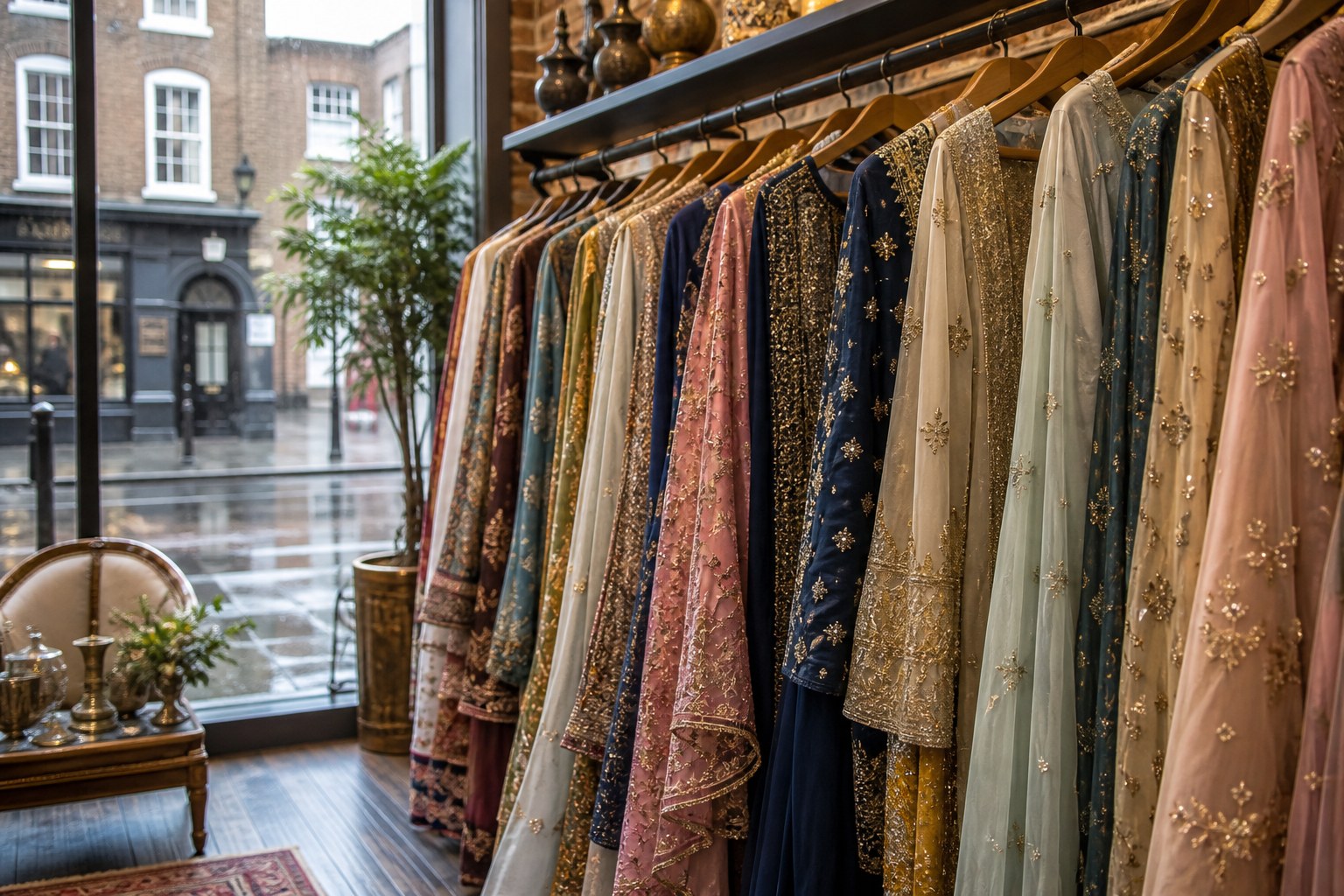
Shopping Pakistani clothes from Britain is no longer one transaction. You can buy a stitched everyday suit from UK stock, order an unstitched designer collection, book bespoke bridal work, or import through a multi-brand retailer. Those routes carry different lead times and return rights. The useful question is not which shop has the largest grid; it is which one clearly labels stock location, garment state, measurements, and delivery responsibility.
Every name below links to its official website through PakStyles’ outbound route. The list is editorial rather than paid. Confirm current availability, prices and policies directly. Inclusion is not an endorsement of every SKU on a catalogue.
Decide the transaction before the colour
Ready-to-wear, unstitched, semi-stitched, made-to-measure and bridal are not interchangeable words. A lawn three-piece that still needs a tailor is a different risk from a finished kurta that can be tried on in Britain. A bridal commission with colour and motif changes is a service contract, not a casual add-to-bag. Write the wearable date first, then work backwards through delivery, stitching and alterations.
British weather and British calendars matter as much as Pakistani silhouettes. An Eid outfit that arrives three days late is not a bargain. A winter walima guest outfit that cannot take a coat without crushing embroidery needs a shawl plan written into the purchase. Shop for the week the garment must survive, not only for the photograph that sells it.
| You need | Prioritise | Ask early |
|---|---|---|
| Everyday UK stock | Brand or multi-brand with clear UK fulfilment | Where is this exact item today? |
| Unstitched designer lawn | Catalogue clarity on components and borders | What is included, and who stitches? |
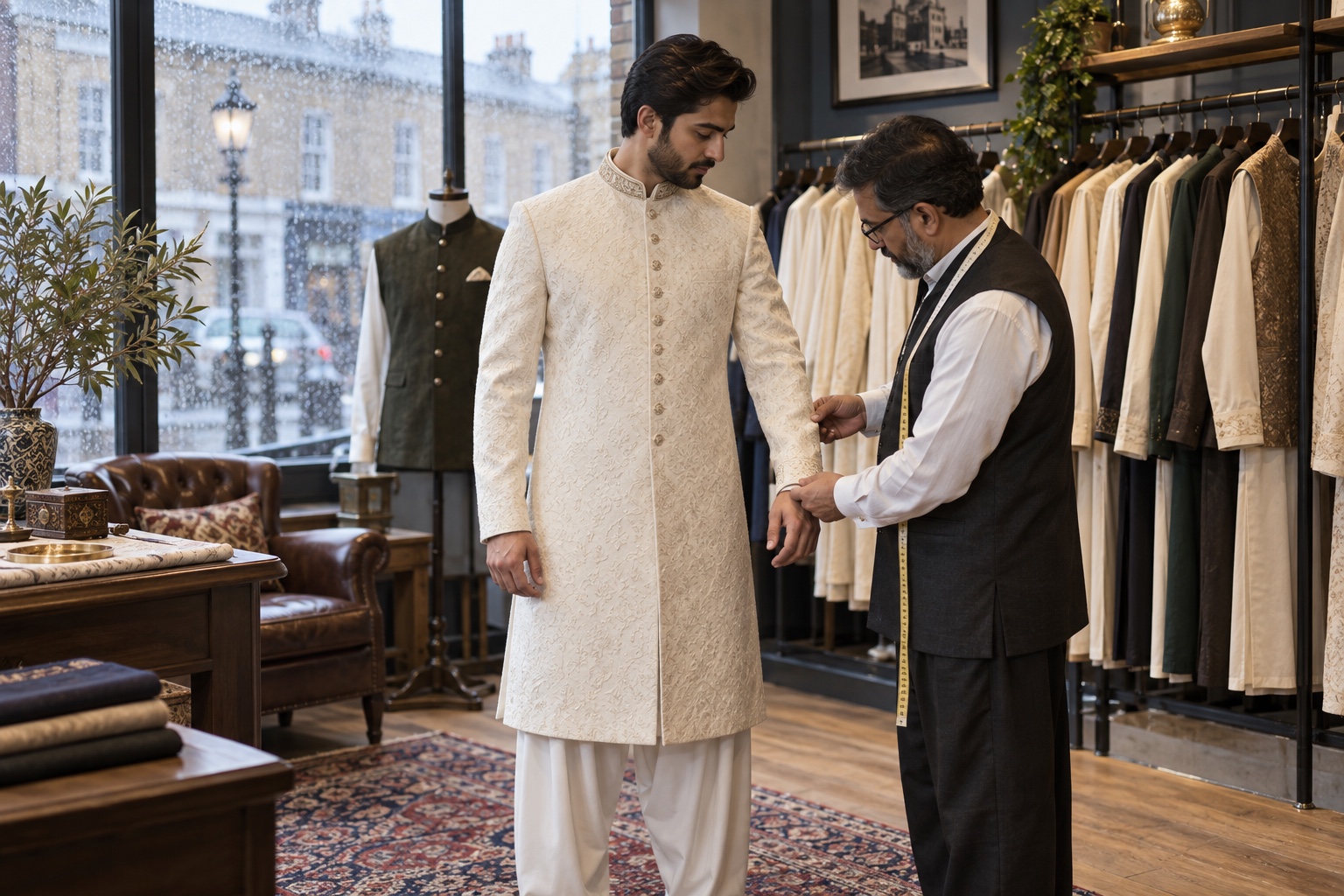
| Occasionwear with alterations | Boutique or tailor with fitting access | Who cuts first, and what is non-returnable? |
| Bridal / bespoke | Appointment studio with written specification | Collection date, changes log, deposit scope |
Ten starting points, by job
- House of Faiza — broad Pakistani multi-brand catalogue with ready-to-wear, unstitched, menswear, kidswear and express-shipping sections; useful for comparing labels in one place.
- Libas e Khas — wide designer-facing catalogue when the priority is range rather than a single house style.
- Libas e Jamila — stitched, semi-stitched, unstitched, everyday and occasion-led South Asian clothing.
- Zoyaz London — physical London designer store with ready-to-wear upstairs and a dedicated bespoke bridal service.
- AÏNN London — focused Pakistani bridal and formal dressing rather than a general wardrobe shop.
- Shadi Dress — London-based bridal and wedding-guest clothing with an occasion-led catalogue.
- Durga Designs — Birmingham cultural clothing and tailoring, including Pakistani outfit alterations and custom fitting.
- Elanki — Birmingham specialist carrying Indian, Bangladeshi and Pakistani family and bridal clothing with made-to-measure services.
- Khaadi UK — direct shopping from a major Pakistani label for seasonal ready-to-wear and separates.
- Sapphire UK — UK storefront for Sapphire collections; useful for direct-brand stock and sizing when the live category matches your brief.
Measure the garment, not only your body
Compare the retailer’s garment measurement chart with a suit you already wear. Ask whether embellishment is hand-applied or reproduced, and whether the photographed dupatta and trousers are included. Opacity in British daylight is a different test from a warm shop light. If an item will be altered, identify who carries the risk after the first cut—many sale, stitched and made-to-order pieces sit outside ordinary returns.
For consumer framing when a purchase goes wrong in the UK, Citizens Advice consumer guidance and the page on returning faulty goods are clearer than a voice note in a family chat. Voice notes are not a refund policy.
Photograph the care label and the receipt. If colour bleeds onto a pale dupatta after the first wash, you will want evidence of what was sold as washable. If a “complete three-piece” arrives without trousers, you will want the product page language you relied on.
London, Birmingham and the courier between them
A London appointment, a Birmingham fitting and a courier dispatch are different services even when brand names overlap. If you live outside the clusters, decide early whether you will travel for fabric inspection or rely on measurements and local stitching. A courier that arrives three days before Eid leaves almost no room for shoulder or hem work.
Direct brand sites such as Khaadi and Sapphire help when you already know the house cut and can verify live UK stock. Multi-brand catalogues help when you are still choosing silhouette and price band. Boutiques help when the embroidery reverse, lining and sitting test matter more than a campaign flat-lay.
Train travel between cities is part of the true cost. Factor tickets, time off work and the risk of a wasted journey when stock was never in store. Call before you travel. Ask the person who answers to confirm the exact style number or fabric code, not only the collection name.
Unstitched lawn without romanticising the packet
Read the component list line by line. Confirm whether sleeves and borders require placement, whether the dupatta is lawn, voile, chiffon or organza, and whether stitching photographs are illustrative only. Budget lining, buttons and tailor time into the real price. Wash a test scrap before committing a pale colour if the seller’s care guidance and your tailor both allow it.
Border placement mistakes are expensive because they appear only after cutting. If you are not confident, pay for a tailor who has stitched that brand’s lawn before, or choose a semi-stitched route that reduces placement risk. The packet is not a finished outfit until someone skilled says it is.
Children, menswear and household orders
Household orders fail when five people negotiate five delivery addresses and nobody owns the returns deadline. Appoint one coordinator. Keep a shared note of sizes, wearable dates and who still needs a fitting. Menswear and kidswear often need different alteration calendars from women’s occasionwear; do not assume one boutique visit solves every body in the family.
School-term Eid and half-term weddings collide with courier delays. Build slack. A garment that must be worn on a fixed religious or family date should not be ordered on hope.
- Confirm whether stock is physically in the UK.
- Measure the garment, not only your body.
- Read exclusions for sale, stitched and made-to-order items.
- Put the wearable date and alteration owner in the same note as the order.
What this list is not
It is not a claim that ten shops cover the whole British Pakistani wardrobe. It is not a ranking by Instagram volume. It is not advice to order bridal abroad without a UK inspection plan—that problem has its own article. Use the official links, shortlist two routes that match the transaction type, and treat a clear “we cannot meet that date” as useful information.
The best purchase is the one whose risk you understood before you paid. Follow the official sites, compare the exact offer, and leave the loudest homepage for later.
A closing comparison sheet
Before you pay, fill one line per finalist: stock location today, garment state, included pieces, alteration owner, wearable date, return exclusions, total price including stitching, and the name of the person who confirmed those facts. If a shop cannot complete the line, it is not ready for your money. That sheet is more useful than another hour of scrolling.
Revisit the sheet after the outfit is worn once. Note what failed: opacity, hem, shedding, courier timing, or sizing. That post-wear note makes the next Eid or wedding purchase faster and calmer. Catalogue shopping becomes skilled when you keep records.
Finally, remember that a UK Pakistani wardrobe is allowed to be mixed: direct-brand kurtas for weekdays, a multi-brand formal for one wedding, and a Birmingham alteration for the piece that almost fitted. The ten places exist to support that mix, not to force loyalty to a single logo.
Sale seasons and the illusion of urgency
Festival sales and “last pieces” language are designed to compress decision time. Keep the wearable date as your real deadline, not the countdown clock on a website. A discounted outfit that cannot be altered in time is not discounted; it is abandoned money. If a sale item is non-returnable, treat the purchase as final before you click.
Pre-loved and sample sales can be excellent for guest dressing when you can inspect construction. They are weaker for bridal commissions unless you accept imperfect matches. Always ask what “sample” means: store try-on wear, runway wear, or simply last season’s unused stock.
Reading product pages like a risk document
Look for the words that change legal and practical outcomes: “made to order”, “stitched”, “unstitched”, “final sale”, “dispatch from Pakistan”, “UK warehouse”, “inclusive of dupatta”, “trousers sold separately”. Those phrases matter more than the campaign video. If the page is ambiguous, ask in writing and keep the reply with the order number.
Size charts that only list UK dress sizes without garment measurements are weak for shalwar kameez. Prefer charts that show shirt length, chest, hem and trouser length. Compare those numbers to a garment in your wardrobe that already works for the same occasion type.
Sources and official profiles
Filed under
Was this helpful?
Keep reading
Related stories
More from this desk, this beat, and the tags on this piece.
Pakistani clothes alterations in the UK: what a tailor can usually fix
Zainab Noor · 8 Oct 2026


Readers
The conversation
0 notes
Anyone can leave a note. Guests add a name and email — no account required, and the email is never published.
No notes yet. Yours would be the first.