Workwear that survives a Pakistani office
Air-conditioning, motorbikes and a late call with Dubai: build an office wardrobe for Islamabad, Lahore and Karachi realities.
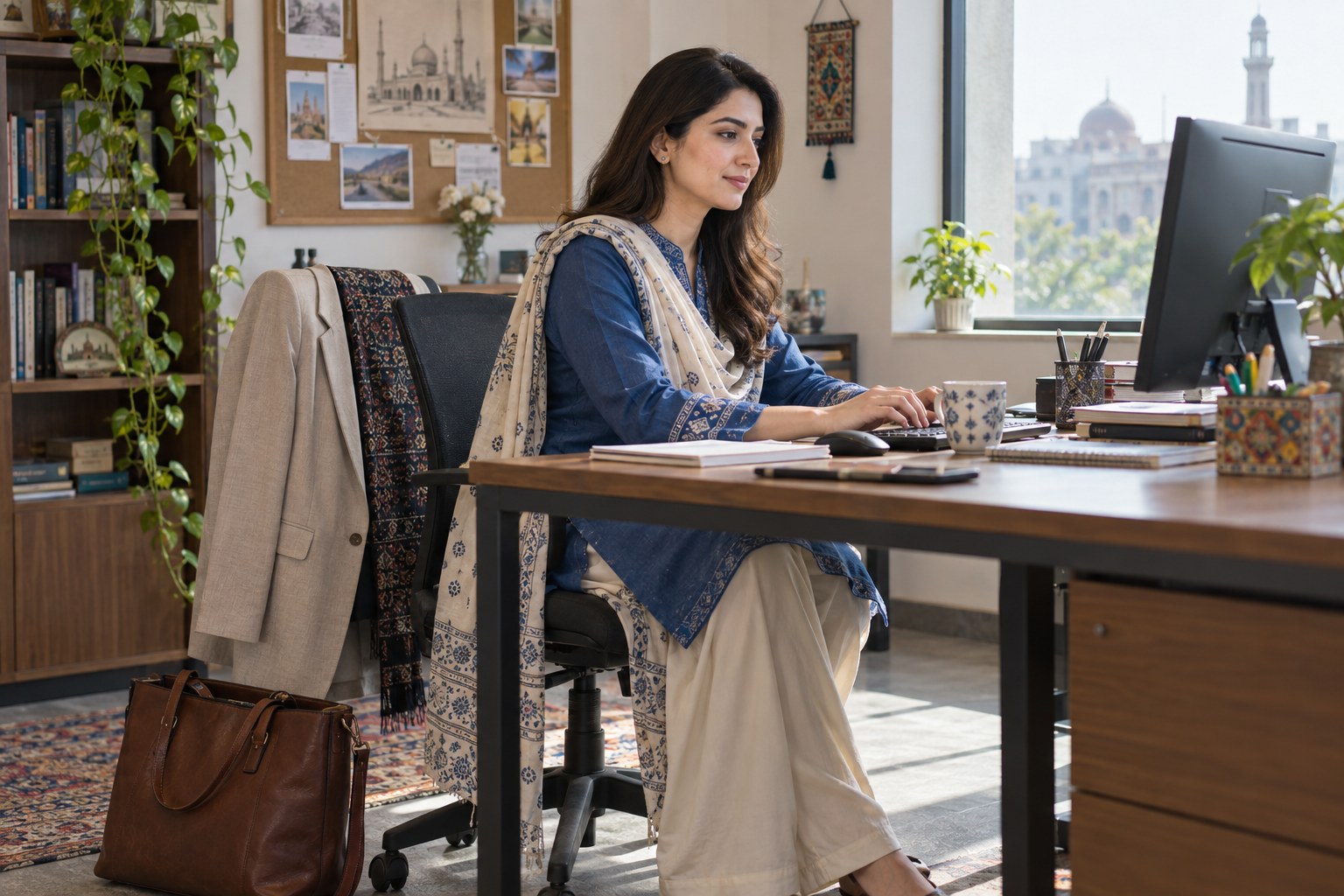
A Pakistani office wardrobe has to survive more than a dress-code PDF. Air-conditioning that freezes you at the desk, heat that hits you in the car park, motorbikes and ride-hails, prayer breaks, and evening calls with clients in other time zones all shape what “smart” means in Islamabad’s Blue Area, Lahore’s Gulberg, and Karachi’s corporate corridors.
This is a systems guide for workwear that remains presentable after the commute—not a campaign about power dressing. It assumes mixed workplaces: some conservative, some startup-casual, some client-facing. Adjust the formality dial; keep the engineering.
Dress for the commute you actually take
If you ride a bike or walk between buildings, wrinkled linen fantasies die early. Prefer fabrics that release creases, colours that forgive dust, and shoes that can take broken pavement before a lobby floor. Keep a desk cardigan or lightweight blazer for indoor cold rather than wearing winter structure outdoors in June.
Women managing dupattas or longer shirts should choose secure drapes for motorbike or bus routes. Men in shalwar kameez offices need a kameez length that still looks composed after sitting on a pillion. Hybrid offices that accept both Eastern and Western dress reward people who own one reliable version of each rather than five mediocre ones.
Eastern workwear that still looks intentional
A well-pressed kameez with clean trousers or a straight pant can read as formal as a Western suit in many Pakistani workplaces. Embroidery should be restrained enough for all-day meetings. Sheer lawn belongs to leisure unless lined. Belt hooks, side slits and button quality become obvious by 4pm.
Colour discipline helps in client industries: navy, charcoal, sand, soft pastels that photograph calmly on video calls. Loud partywear prints rarely become more professional under fluorescent light.
Western workwear under local climate
Unlined or lightly structured jackets beat padded imports. Trousers need rise and fabric that survive floor seating in some offices and long desk hours in others. White shirts must be opaque; test them under office lighting. Sneakers can work in casual offices if clean; they fail in formal ministries and courts—know your building.
For video calls with Dubai, London or US teams after local evening, keep a “top half” emergency kit at the office: pressed shirt, hair tool if needed, quieter jewellery. The camera exaggerates wrinkles and glare.
| Office type | Safer baseline | Risk |
|---|---|---|
| Corporate client-facing | Opaque solids, light structure, formal shoe | Party embroidery, distressed denim |
| Startup / creative | Clean sneakers, sharper casual separates | Looking unfinished rather than relaxed |
| Public sector / formal | Conservative lengths, classic colours | Trend experiments on meeting days |
| Field + office hybrid | Washable fabrics, spare shirt | Delicate dry-clean-only pieces |
Shoes, bags and the all-day body
Shoes decide whether you still have a personality at 7pm. Keep a commute pair and an indoor pair if your job allows. Bags should hold a laptop or documents without destroying your shoulder, and should not force constant readjustment of a dupatta. Prefer closures that survive motorbike wind.
Jewellery: small, secure, non-jingling for meeting rooms. Watches should not scream leisure yacht if you are presenting a budget.
Prayer, dress codes and respect without panic
If you pray at work, test sleeves and trousers for that movement. Keep a clean prayer outfit or scarf available. Dress codes that mention “decent” or “professional” are often under-specified; watch what managers wear to client meetings and calibrate one step quieter rather than one step louder.
- Build a five-outfit rotation before buying novelty pieces.
- Pressing is part of the wardrobe; negotiate access to an iron or steamer.
- Keep stain-removal wipes and a spare top at work during monsoon and mango season.
- Tailor for your body; office lighting is unforgiving to dragging hems.
- On heavy meeting days, dress for the most formal room on the calendar.
Workwear that survives a Pakistani office is technical clothing disguised as simple clothing. Master the commute, the air-conditioning shock, and the 9pm call, and style becomes easy. Fail those, and no campaign blazer will save the day.
Industry textile context via APTMA helps explain why good local cottons remain rational office choices; fashion coverage on Dawn Images can inspire, but your building’s coldest meeting room remains the better stylist.
Islamabad, Lahore and Karachi microclimates
Islamabad’s seasonal swings and formal government-adjacent culture often push people toward classic outer layers. Lahore’s wedding-industry gravitational pull can tempt office wardrobes into excessive embellishment—resist on weekdays. Karachi’s humidity punishes thick structure and rewards frequent laundering. If you travel between cities for work, pack the climate you are landing in, not the climate of your wardrobe’s hometown identity.
What to stop buying
Stop buying dry-clean-only shirts if you do not have a reliable cleaner near the office. Stop buying trousers that only work with one formal shoe you never wear. Stop buying “inspiring” statement jackets that cannot sit through a three-hour meeting. Office style improves fastest through subtraction.
Building a five-day rotation without looking identical
Repeat silhouettes; vary texture and accessories. Two reliable kameez cuts in different colours will serve you longer than seven experimental cuts. Keep one “client day” outfit sealed in a garment bag for surprise presentations. Launder on a schedule that matches your city’s dust and humidity rather than on guilt.
Makeup, hair and grooming as part of workwear
Office lighting and heat change grooming plans. Prefer products that survive humidity without constant repair if you wear them. Grooming should not require a bathroom studio between meetings. Men should treat beard and hair maintenance as part of professional dress in workplaces where presentation is scrutinised—again, calibrate to the building, not to Instagram.
What managers signal
In ambiguous dress cultures, managers’ client-meeting clothes are the real policy. If leadership wears quiet Eastern formals, your experimental jacket may cost you credibility you did not intend to spend. If leadership wears sneakers, a rigid suit may look confused. Observation beats guessing.
Contract and vendor meetings sometimes require a one-step-up rule: dress as if you respect their formality even if your office Fridays are casual. Carry a jacket. Remove it if the room is clearly relaxed. Optionality is professionalism.
Interns and early-career staff often overspend on logos. Spend on fit and fabric instead. A tailored mid-range piece outperforms a branded misfit in every meeting that matters. Keep receipts and alteration notes; your future self will thank you when you rebuild the wardrobe after a role change.
Remote-hybrid workers should still keep one full outfit ready for sudden office days. Living in “call-ready top only” mode creates panic when a director flies in. Workwear is risk management.
Finally, honour labour: if someone presses your clothes or polishes your shoes at home, that labour is part of your professional presentation. Share it fairly. A wardrobe system that depends on invisible unpaid work is incomplete.
Fabrics that earn a desk job
Tropical wool blends, mid-weight cottons, and certain performance weaves earn their keep because they survive AC and outdoor heat better than fashion polyester that pills by week three. Touch cloth with unwashed hands after a commute simulation if you can—oils and sweat reveal cling. Ask about shrinkage; a kameez that shortens after one wash can violate a dress code it previously met.
Denim appears in many startups and fails in many client sites. If you wear it, keep a dark, clean pair without theatre distressing. Chinos and straight trousers often bridge more rooms. For shalwar, evaluate shoe pairing carefully so the hem does not collect parking-lot dust into the lift.
Socks, undershirts and under-scarves are part of workwear hygiene in heat. Replace them on a schedule. Professional presence is partly laundry logistics.
Travel days and offsites
Offsites in Murree, Hunza road shows, or factory visits punish delicate shoes and dry-clean-only jackets. Pack a field layer and a meeting layer. Wrinkle-resistant folds in a cabin bag beat a beautiful garment that arrives looking slept-in. If you represent your company, your clothes are part of the brief—not a personal fashion diary.
International flights before a meeting require compression-friendly trousers and a top that still looks intentional after recycled cabin air. Keep a change near your laptop, not buried under souvenirs.
Document your workplace’s unwritten rules after thirty days: what people wear to meet government officials, what they wear on Fridays, what they wear when cameras arrive. That document will save money. It also helps you mentor juniors later with specifics instead of vague advice to “look sharp.”
Readers comparing options should keep notes on fabric, price, alteration needs and how a piece behaved after a full day—not only how it looked in a shop mirror. That private record improves the next purchase more than another saved photograph for 04.
When sources conflict about what is fashionable this season, privilege climate, dignity and movement over novelty. Seasons pass; a failed commute outfit remains failed.
Monsoon and dust seasons
Monsoon turns light colours into anxiety and ruins unprotected shoes. Keep a spare pair of socks and a compact umbrella strategy that does not destroy your bag’s shape. Dust seasons dull black trousers; lint rollers are not glamorous but they are professional. Build cleaning into Sunday systems so Monday does not begin with panic ironing.
Allergies and polluted air sometimes push people toward masks and easier-to-wash outer layers. Choose outer pieces you can clean without drama. Workwear is public health adjacent in cities where air quality varies by day—monitor local guidance and dress so you can follow it.
If your workplace provides uniforms, treat personal layering as the customisable edge: shoes, socks, winter layers, hijab styles where relevant. Uniforms fail when personal footwear fights them. Align the system.
Sources and official profiles
Filed under
Was this helpful?
Keep reading
Related stories
More from this desk, this beat, and the tags on this piece.
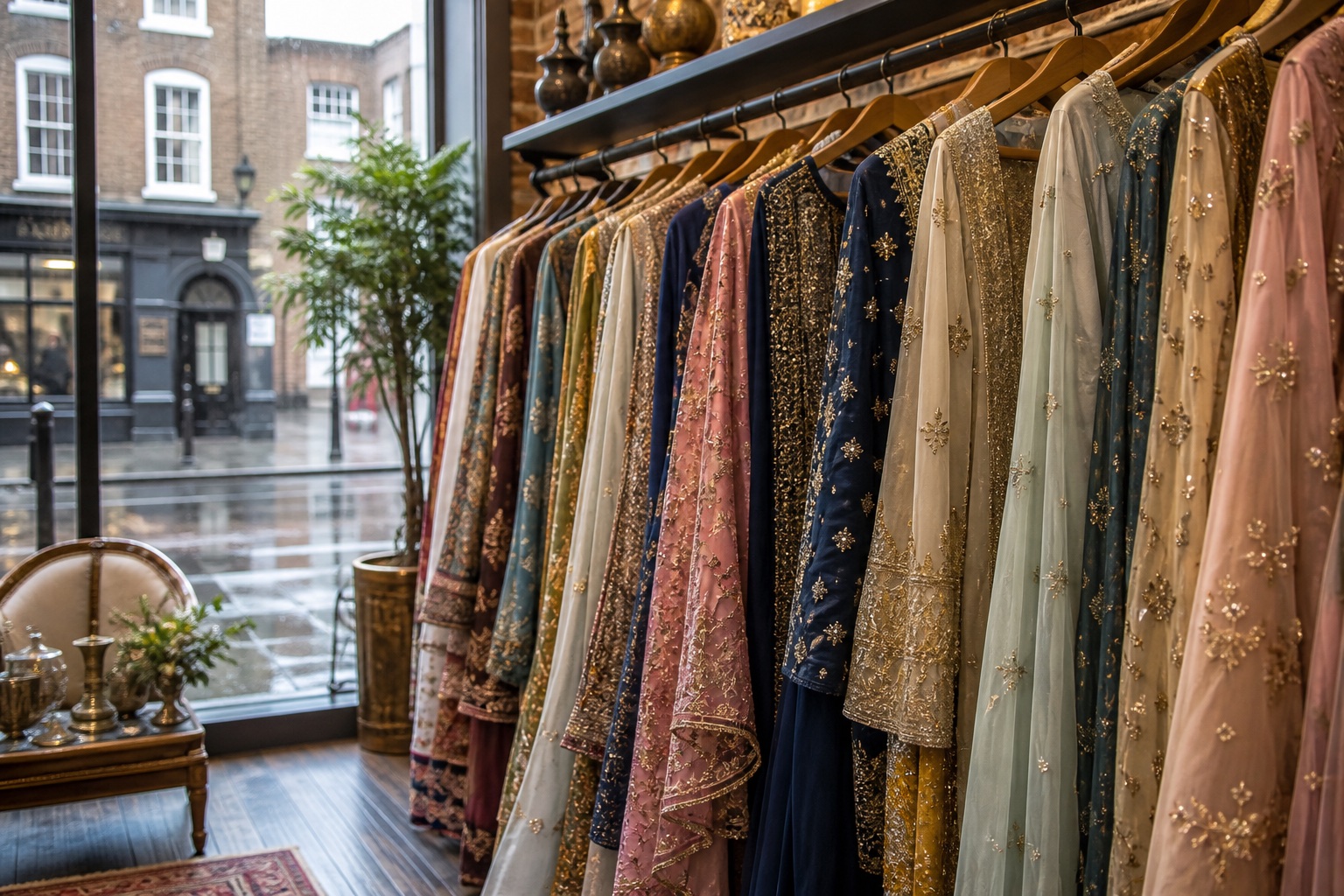
Pakistani clothes alterations in the UK: what a tailor can usually fix
Zainab Noor · 8 Oct 2026
Readers
The conversation
0 notes
Anyone can leave a note. Guests add a name and email — no account required, and the email is never published.
No notes yet. Yours would be the first.