Khussa buying guide: fit, leather, break-in, and care
A foot-first khussa guide covering handmade variation, fit, safe break-in, sole grip and storage.
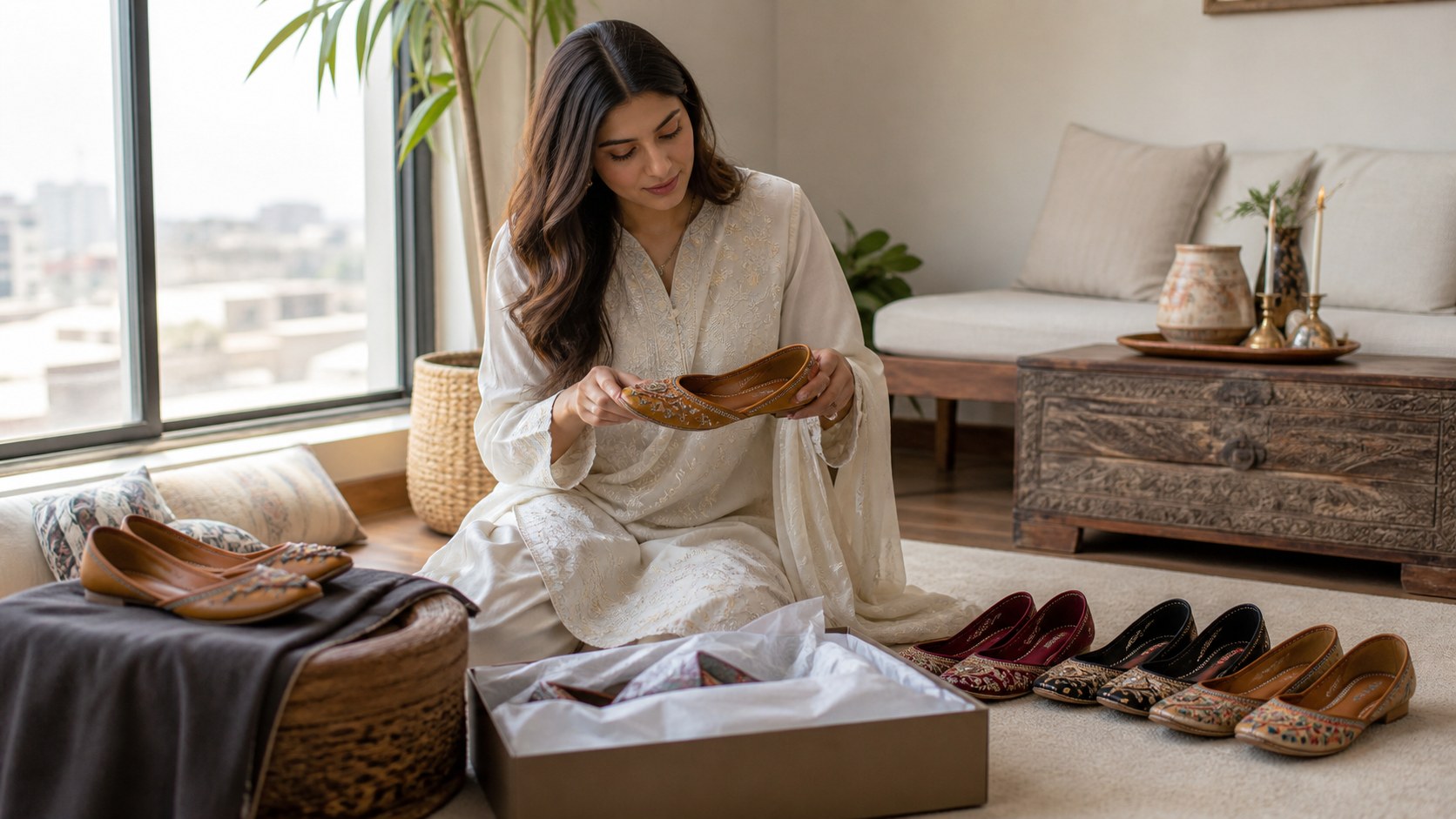
Khussa are often sold as if discomfort were proof of authenticity: endure the first wedding and the shoe will eventually surrender. A handmade shoe may soften and take the shape of a foot, but pain, numb toes and a heel sliding off the sole are fit problems, not a break-in ritual.
This guide treats khussa and closely related jutti or mojari styles as footwear first - fit, leather behaviour, sole grip, break-in and care - so they can survive weddings and everyday wear without injury mythology.
Fit the larger foot at the end of the day
Feet expand with heat and standing. Try both shoes with the hosiery you will wear, then stand on a hard floor. Toes should lie naturally rather than curl beneath a pointed upper. The widest part of the foot should sit over the widest part of the sole. A backless or low-backed khussa can move slightly; it should not force the toes to grip at every step.
Handmade pairs are not perfectly mirrored. Compare sole length, upper height, embroidery placement and stiffness. If one shoe bites and the other does not, do not assume average pain is normal. Traditional pairs were sometimes made without fixed left and right and formed to the wearer over time; many modern pairs are shaped more specifically. Either way, numbness and hotspots are stop signs.
Leather, fabric and embellishment change the fit story
Leather uppers often relax with wear. Heavily embroidered or synthetic uppers may not. Soft fabric bases can feel kind immediately yet stretch unevenly. Ask what the upper and lining are made from. If buying online, prefer sellers who state materials and offer a clear return window for unworn shoes.
| Feature | Why it matters | Question to ask |
|---|---|---|
| Upper material | Determines stretch and breathability | Leather, fabric, synthetic? |
| Sole type | Grip on stone, marble, grass | Leather, rubber, mixed? |
| Back height | Security vs slip risk | Closed, low, backless? |
| Embellishment zone | Pressure points and snag risk | Where is dense work placed? |
| Insole | Cushioning for standing events | Flat leather or padded? |
Break-in without damage myths
Wear new khussas at home for twenty to thirty minutes across several days, increasing time gradually. Gentle hand flexing of the sole at the ball of the foot can soften stiffness. Thin socks or liners can reduce friction during early wears. Heel grips can stop rubbing on low backs.
Avoid hairdryers, ovens, boiling water and aggressive stretching that can distort leather, loosen glue or crack embellishment. If a particular spot pinches, some wearers carefully condition the interior leather at that point - but test any product for colour transfer first and never soak embroidery.
Plan break-in before wedding week. Unused bridal khussas are a common reason people disappear from dance floors or switch to emergency flats mid-baraat.
Sole grip and venue reality
Polished hotel stone and dance floors expose leather soles. Rubberised patches or modern composite soles can help if applied or built in ways that do not destroy the shoe’s structure. Grass and gravel punish smooth soles differently. Match the shoe to the ground you will actually walk.
Carry a foldable flat if the day mixes outdoor ground and long standing. Changing shoes is not a style failure; finishing the event without injury is the assignment.
Care and storage
Wipe surface dirt with a soft dry cloth after wear. For leather, condition periodically with an appropriate product, keeping chemicals away from embroidery threads and mirror work. Air dry naturally if damp; avoid direct heaters that stiffen and crack leather. Stuff with tissue to hold shape. Store in breathable bags so embellishment does not snag neighbouring shoes.
Do not leave khussas in a plastic bag after a sweaty event. Moisture trapped against leather and foam creates odour and mould risk.
Buying checklist
- Measure both feet standing; fit the larger.
- Try at the end of the day with event hosiery.
- Walk on hard flooring, not only carpet.
- Check left-right symmetry and embroidery pressure points.
- Confirm materials, return window and sole type.
- Begin break-in immediately if keeping them.
Khussa style can be festive, bridal or everyday. Comfort does not make them less authentic. A handmade shoe that fits is continuing a craft; a handmade shoe that injures you is simply the wrong pair. Choose fit first, then embroidery, then the photograph.
Children’s and elders’ fit notes
Children outgrow khussas quickly; prioritise soft uppers and returnable sizes over heavy bridal miniature embroidery for everyday Eid wear. Elders may need more secure backs, lower embellishment snag risk and easier entry. Pride in craft should not require anyone to walk in pain through a family event.
If buying as a gift, include the receipt and confirm size exchange policy. Gifted shoes that cannot be exchanged become cupboard ornaments.
When to choose another shoe
If the event combines long standing, unpredictable ground and an inexperienced wearer, a secure low heel or polished flat may be wiser than a rigid new khussa. You can still wear khussas for entrance photographs and change. Hybrid plans are practical, not impure.
Repair flapping soles and loose embroidery before they worsen. Cobblers familiar with South Asian shoes can often add grip or discreet reinforcement; ask before glue experiments at home.
Buy for the feet you have on the day you will stand longest. Embroidery can be beautiful; it cannot negotiate with marble, grass or swelling. Fit, break-in and care are how khussas earn their place in a real wardrobe.
Children, elders and gift pairs
Children outgrow khussas quickly; prioritise soft uppers and returnable sizes. Elders may need securer backs. Include receipts with gifts.
Grip, venues and hybrid plans
Marble exposes leather soles; grass punishes smooth finishes differently. Entrance photographs in khussas and later secure flats are practical, not impure.
Care, makers and retirement
Wipe, condition leather away from embroidery, air dry without heaters and store in breathable bags. Supporting makers means fair pay - not romanticising injury. Fit first, then beauty.
Keep a short written brief before the next purchase: setting, movement, garments already owned, and the single addition that unlocks the most combinations. Test sitting and walking, then stop adjusting at the door.
Share hard-won fit and care lessons with people you dress beside so failures are not rediscovered the night before an event.
Record what worked under real conditions and let that record drive the next choice instead of an unverified trend claim.
Sizing charts across UK, EU, US and Pakistani labels do not guarantee identical lasts. Prefer foot length and width plus the seller’s chart, and read return windows before festival deadlines. Between sizes, leather may allow snugness that embroidered synthetics will not.
Wedding-week logistics matter: label pairs by ceremony, pack blister care with the shoes, assign someone to carry emergency flats outdoors, and dry wet pairs slowly after rain. Stand, walk and climb a step before celebrating embroidery.
Avoid break-in myths that use heat guns, boiling water or forced stretching capable of cracking embellishment and distorting lasts. Gradual home wear, gentle flexing, heel grips and honest sizing are safer. If a pair still burns after careful break-in, it is the wrong pair - not a character test.
Choose modern rubberised or composite soles when venues demand grip, and keep classic leather soles for surfaces that forgive them. The craft survives when people can finish events on their feet.
Keep notes on real wear conditions and let those notes guide the next decision faster than another unverified trend claim.
Return to a practical test - sit, walk, climb, carry - before calling any choice finished.
Measure both feet standing at the end of the day, try event hosiery on hard flooring, and begin break-in immediately if you are keeping the pair. Handmade variation is expected; pain that worsens after five minutes is not a tradition - it is a wrong fit.
Keep the receipt and sole description together so grip upgrades or exchanges stay straightforward after the first real outing.
Filed under
Was this helpful?
Keep reading
Related stories
More from this desk, this beat, and the tags on this piece.
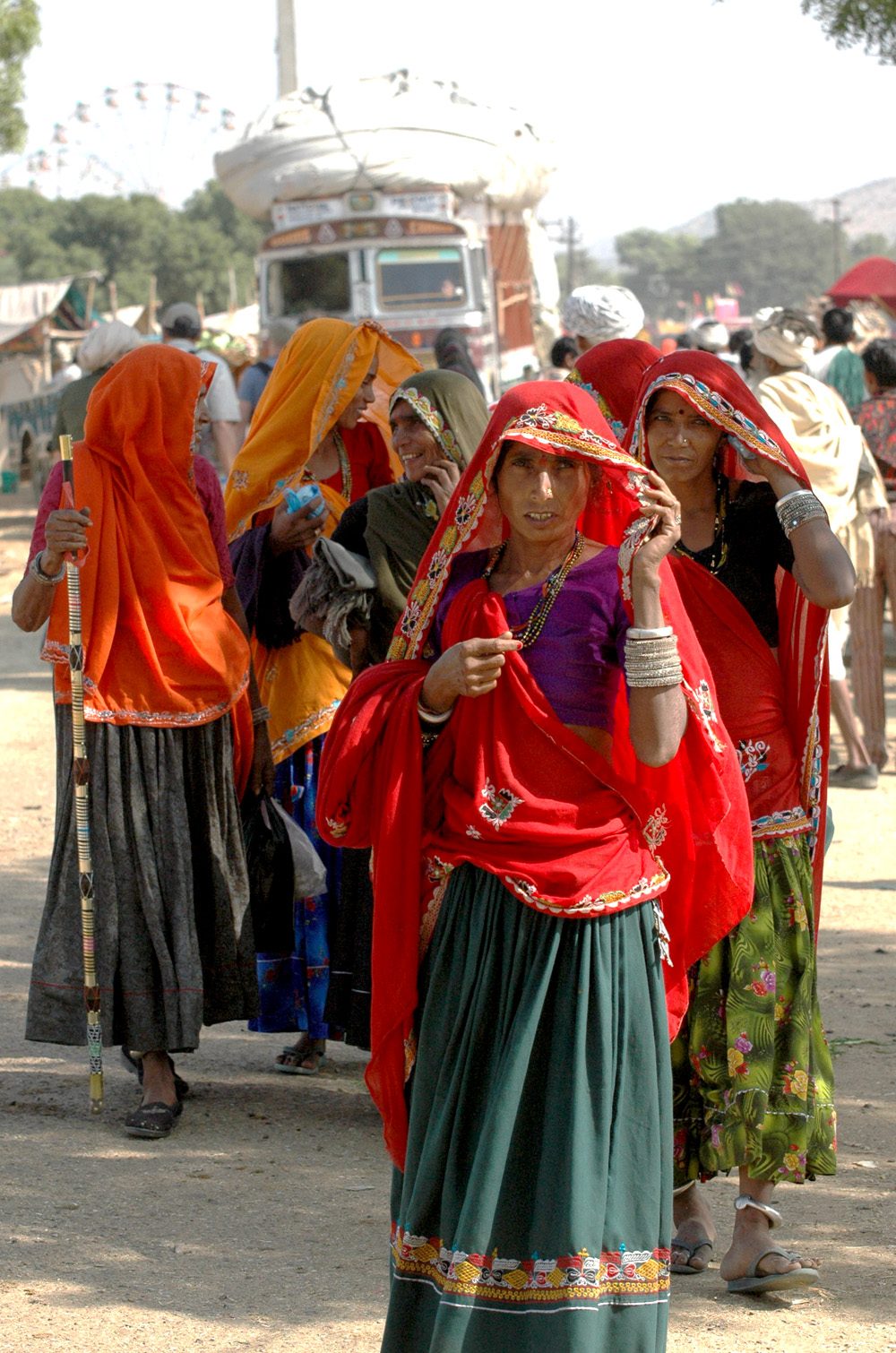
Chiffon, organza, georgette or voile: which dupatta fabric behaves how
Zainab Noor · 17 Oct 2026
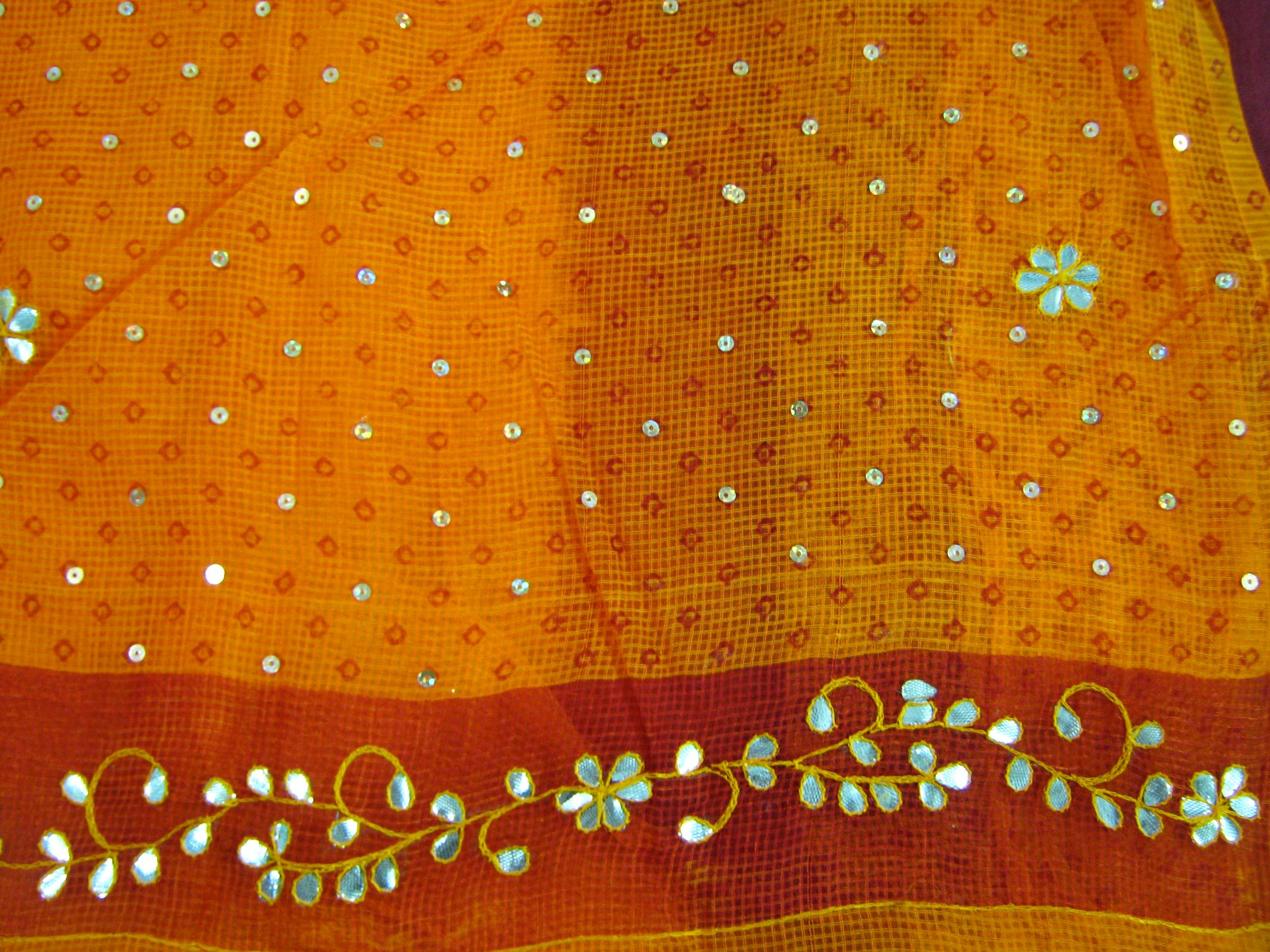
How to care for gota, zari and metallic embroidery without stripping the shine
Zainab Noor · 15 Oct 2026
Pashmina, cashmere and wool: what the label should actually tell you
Zainab Noor · 15 Oct 2026
How to pack Pakistani wedding clothes in a suitcase without crushing the work
Zainab Noor · 8 Oct 2026

How to get haldi and turmeric stains out of wedding clothes without making them worse
Zainab Noor · 2 Oct 2026
Readers
The conversation
0 notes
Anyone can leave a note. Guests add a name and email — no account required, and the email is never published.
No notes yet. Yours would be the first.