The small-bag test: what earns the space
A practical edit for a Pakistani day: the bag, scarf, eyewear, and small objects that survive heat, security checks, and an evening plan.
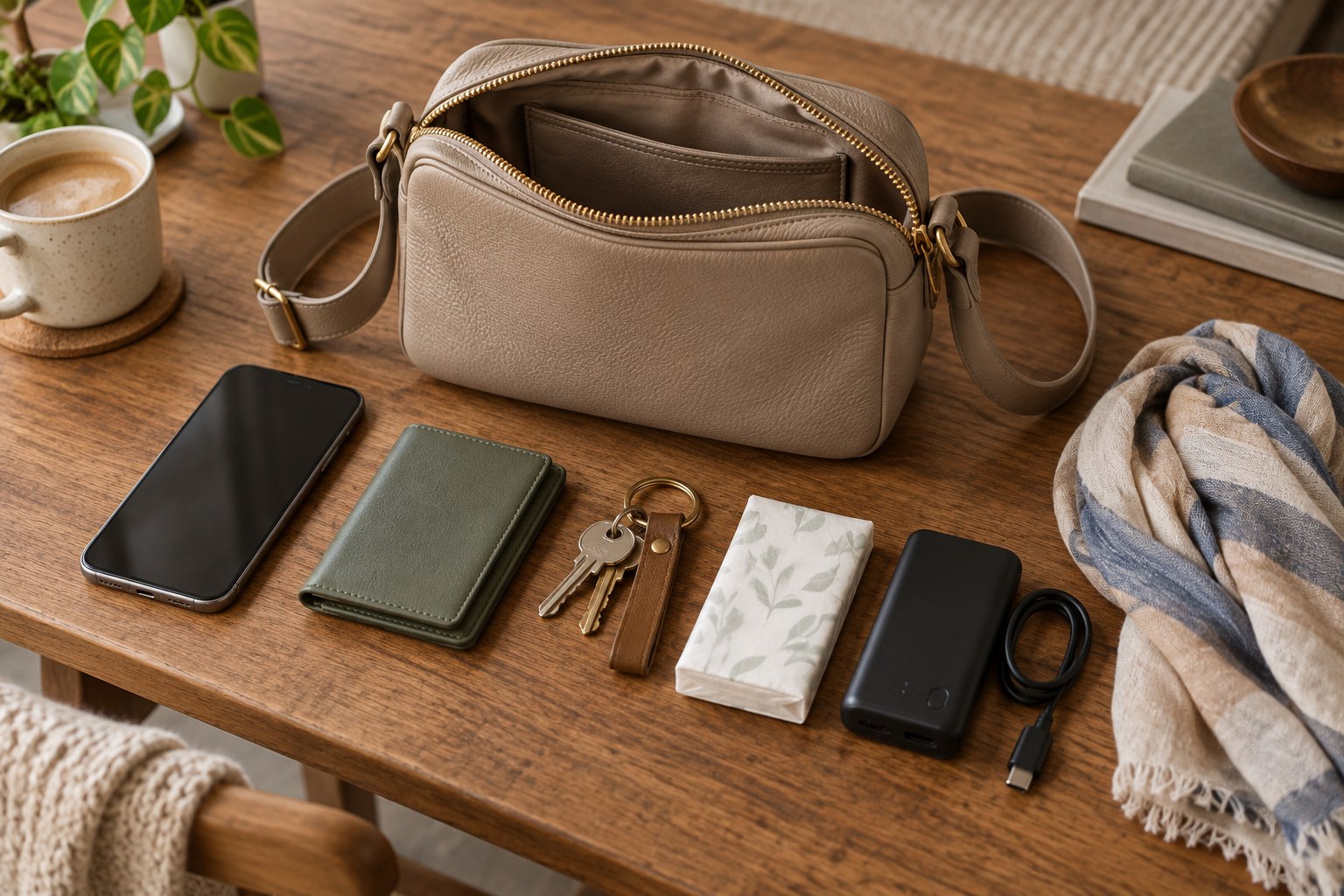
An accessory earns its place when it solves a problem more often than it creates one. That standard is especially useful in a Pakistani city, where a day can include a motorbike, an office scanner, hard sunlight, a power cut, and dinner added to the calendar at six. The useful edit is not a tray of objects arranged for a photograph. It is a small bag that closes, sunglasses you can replace, a scarf with more than one job, and hardware that does not become hot enough to punish your hand.
Start with the route, then choose the object. This is a field guide for that order of operations.
Begin with the bag opening
A zip is less romantic than an open tote and far more useful in traffic. Check that the opening is wide enough to find a phone without emptying the bag, but not so wide that every object is visible at a counter. A cross-body strap should adjust while you are wearing it and sit clear of a dupatta. If the strap twists, cuts, or sheds colour onto lawn, the bag has failed before its first full week.
Test the bag with objects you actually carry: phone, keys, wallet, charger, tissues, medicine, and a folded scarf. Add a small bottle of water only if the base can take it upright. Empty space is a feature. It leaves room for the receipt, snack, or child’s object that joins the journey later.

Hardware has to survive the weather
Metal feet, chains, and oversized clasps add weight before the bag holds anything. In summer they also heat up in a parked car. Choose fewer moving parts and inspect points where a handle enters the body; stitching and reinforcement matter more than a logo plate. Pale linings make small objects easier to find. Very light exteriors show denim transfer and commute dust.
For jewellery and belts, look at closure first. A belt buckle should sit when you are seated, not only when you stand before a mirror. Earrings should clear a helmet strap and a phone. If an accessory requires constant monitoring, it is occasion wear, whatever the product page calls it.
| Object | Pass test | Fail signal |
|---|---|---|
| Daily bag | Zip + one-hand open; strap clear of dupatta | Open tote spills in rikshaw |
| Sunglasses | Stated UV protection; hard case | Dark lenses only, no spec |
| Scarf | Washable; works with three outfits | Dry-clean-only for dusty days |
| Everyday jewellery | Closed findings; sink-safe | Needs constant guarding |
| Belt | Comfortable seated | Only works standing in mirror |
Sun, scarf, and the second use
Sunglasses need comfortable arms, clear vision, and credible ultraviolet protection; darkness alone is not protection. Buy from a seller that states lens specification and keep a hard case if glasses share space with keys. A scarf can shade the neck, cover hair, soften office air-conditioning, or wrap a delicate purchase. Cotton and light blends wash easier than fabrics that demand ceremony after every dusty day.
Colour should work with the wardrobe already hanging at home. One mid-tone scarf that sits with black, cream, indigo, and a printed kurta will do more work than five trend colours. The same rule applies to a belt or everyday watch: repetition is evidence the purchase was correct.
Security checks and the small-bag advantage
Office scanners and event bag checks punish cavernous totes. A small bag that opens flat on a tray speeds the line and reduces the chance of dumping private contents in public. Keep liquids capped. Keep medication labelled if you carry it. A clear pouch inside for keys and coins saves everyone time.
On bikes, prefer cross-body bags that sit closed against the torso. Shoulder shoppers that swing are theft and balance problems. If you carry a laptop, that is a different bag category—do not pretend a decorative mini will do a laptop’s job.
- One secure daily bag.
- One smaller evening option if needed.
- Protected sunglasses with a case.
- One washable multi-use scarf.
- Jewellery you can put on without planning.
Run the one-week test
Before removing tags, wear the item around the house with a full bag or complete outfit. Sit, climb stairs, answer the phone, and open the clasp with one hand. Check return terms before buying, especially online, and keep packaging until the test is complete. Product measurements are more useful than labels such as mini or oversized.
After a week, notice what annoyed you. A chain that caught, a frame that slipped, or a strap that stained clothing will not become charming with time. Prefer repairable construction: screws that can tighten, straps a cobbler can replace, seams with enough allowance to restitch.
Care is part of cost
Empty receipts weekly. Wipe hardware with a dry cloth. Air scarves before storing them. Keep perfume away from plated metal. Condition leather lightly if you own it; humidity and sudden AC are hard on skins. The best accessory is not invisible; it simply stops asking for attention once the day begins.
Pack for the real route. If an object closes securely, wears comfortably, and returns to the week without fuss, it has earned the space. Everything else can stay in the shop.
Use this page as a checklist, not as a personality. The goal is fewer regret purchases, safer heat decisions, and rooms that can host real life—outcomes you can verify without another tab.
When sources conflict or local conditions change—road openings, product formulas, store stock—prefer the official notice or the label in your hand over any evergreen article, including this one. Freshness is part of care.
Evening bags without undoing the day
If dinner appears at six, the evening bag should accept a phone, card, keys, and lipstick or balm without a full transfer archaeology. A clutch that only works when a driver carries everything else is not independent dressing. Prefer a small zip cross-body you can wear with the same shoes you already have on.
Do not buy a third evening bag until two have earned a month of use. Occasions feel endless; handbags accumulate into storage guilt. One reliable evening option plus the daily bag covers most Pakistani social weeks.
Children’s add-ons and the parent bag
If you carry a child’s snack, wipes, or a small toy, the bag’s base and wipeable lining matter more than leather grade. Dark interiors hide mess and also hide keys—choose a middle path or use a bright inner pouch. Weight adds quickly; edit the child’s objects as ruthlessly as your own.
School runs punish open totes. Zip. Then zip again. The small-bag test still applies when the bag is doing family logistics.
Buying online without the tray fantasy
Photographs flatten depth. Read centimetres. Compare to a bag you already own. Check return postage costs before you fall in love. Ask about strap length in numbers, not adjectives. If the seller cannot give measurements, you are buying a mood.
When the parcel arrives, do the one-week test before binning packaging. Outdoor light reveals colour lies. Traffic reveals strap lies. Only then cut tags.
Final edit checklist
- Does it close in traffic?
- Can you open it one-handed at a scanner?
- Does the strap respect a dupatta or seatbelt?
- Will you wash or wipe it without fear?
- Does it earn space on a normal Tuesday?
If the answer is yes, it has earned the space. If not, leave it in the shop and keep the bag that already knows your route.
Workplace dress codes and accessory limits
Some offices limit jewellery, nail length, or bag size for safety or client rules. Read the policy once. A beautiful bracelet that violates a lab or kitchen rule is not defiance worth celebrating; it is a lost day. Choose accessories that pass the written rule and the unspoken one—what senior staff actually wear without comment.
Client sites may require closed shoes and no dangling pieces. Keep a compliant kit in your daily bag: simple studs, a quiet watch, a scarf that can double as cover. The small-bag test includes career constraints, not only aesthetics.
If you lose a favourite piece to a bag with a hole in the lining, repair the lining before replacing the jewellery. Accessories fail as systems. Fix the system.
What to stop buying
Stop buying bags that only match one outfit. Stop buying sunglasses without UV claims. Stop buying scarves that cannot be washed after a dusty day. Stop buying jewellery that needs a bodyguard. Stop buying hardware-heavy pieces that burn your hand after ten minutes in a parked car. The refusals are the edit.
Spend first on the objects that touch every commute. Occasion pieces may be louder, but they should not dictate the daily budget. Pack for the real route—and let the bag that survives that route keep its place by the door.
That is the standard this page is aiming for: fewer abstract ideals, more actions that survive Pakistani heat, traffic, family logistics, and ordinary budgets—without requiring a new vocabulary to begin.
Choose the bag that already knows your Tuesday.
Was this helpful?
Keep reading
Related stories
More from this desk, this beat, and the tags on this piece.
Chiffon, organza, georgette or voile: which dupatta fabric behaves how
Zainab Noor · 17 Oct 2026
How to care for gota, zari and metallic embroidery without stripping the shine
Zainab Noor · 15 Oct 2026

Pashmina, cashmere and wool: what the label should actually tell you
Zainab Noor · 15 Oct 2026
How to pack Pakistani wedding clothes in a suitcase without crushing the work
Zainab Noor · 8 Oct 2026
Readers
The conversation
0 notes
Anyone can leave a note. Guests add a name and email — no account required, and the email is never published.
No notes yet. Yours would be the first.