Aye Dil Aazma Nahin: The Sisters’ Rivalry Started at Home
A source-led assessment of HUM’s completed 36-episode serial, focusing on how unequal treatment inside the family sets up Mirha and Anayza’s rivalry.
Premise analysis based on published programme information; contains setup spoilers, not a finale assessment.
The conflict between two sisters can appear personal while having been cultivated by the household around them. Aye Dil Aazma Nahin is described in published programme coverage through that combination: unequal maternal treatment, resentment and rivalry over the same man.
HotInPakistan’s premise guide presents Hina Tariq’s character as the neglected stepsister and Ayesha Afridi’s as the favoured one. That is the setup considered here. It should not be taken as a complete explanation of either woman’s choices.
The rivalry begins before the romance
The premise locates the sisters’ unequal treatment inside the household before their romantic rivalry. That sequence matters: blaming the conflict entirely on jealousy would leave the adults’ part in it unexamined.
The official credits and completed run
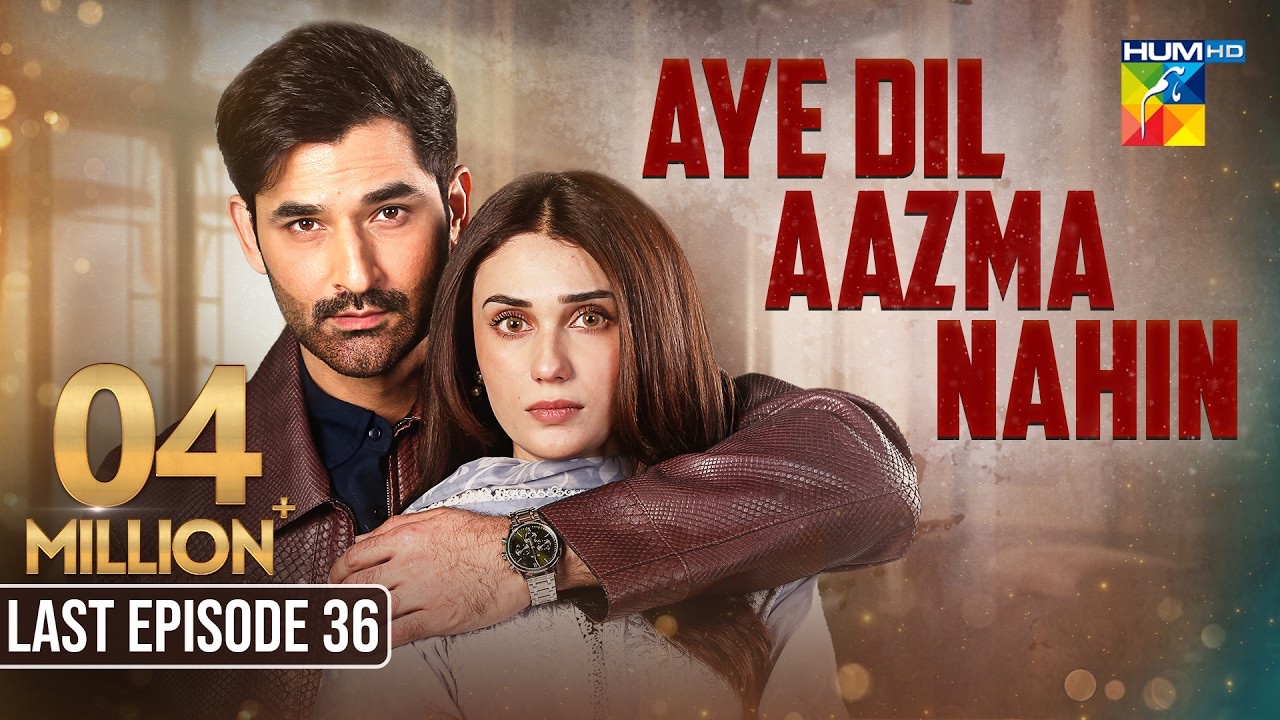
HUM’s programme page credits Maimona Aziz and MP Content as writers, Saqib Zafar as director, and Moomal Productions and MD Productions as producers. Its cast includes Mirza Zain Baig, Hina Tariq, Ayesha Afridi, Malika Riaz, Sahiba, Asad Malik, Shaheen Khan, Beena Chaudhry and Sarah Nadeem.
The broadcaster identifies episode 36 as the last episode. The corresponding official upload is dated July 26, 2026, so viewers starting after this September 23 check can approach it as a completed serial. The availability of the ending is established; its emotional success is not assessed in this article.
Read in those terms, the advertised conflict is about the distribution of affection before it is about competition for a partner. The sisters’ rivalry is the visible consequence; the household has helped establish its terms.
The later plot makes the rivalry more than a childhood label
The useful question is not whether one sister is “good” and the other “spoiled”. It is what the household has taught both of them to expect. The published episode material keeps the sisters inside consequences that grow from secrecy, unequal protection and competition. That matters because a serial can acknowledge damaging behaviour without pretending it appeared from nowhere.
The programme’s later coverage also moves the conflict beyond a static triangle. Published episode recaps describe Anayza confronting Sharik with evidence and arriving injured at Aswan’s door. Those developments do not make every earlier choice understandable, but they do show why a premise-only description of two women competing for a man is too small for the completed run.
Completed-run advantage
Because HUM’s finale is on the record, this title can support end-to-end criticism in a way ongoing serials cannot. The remaining discipline is viewing scope: sisters’ rivalry claims should cite how the conflict opens and how episode 36 settles—or fails to settle—it, rather than relying on the finale label alone.
Completed on HUM — spelling and finale
HUM’s official uploads use the spelling Aye Dil Aazma Nahin. The final episode 36 upload is dated 26 July 2026 and, with the finale teaser, identifies Mirza Zain Baig and Hina Tariq. Third-party pages that still label the show as ongoing are weaker than the explicit official finale.
Because the serial is complete, a review can discuss the sisters’ rivalry as a closed arc—but only with viewing notes that cover how the home conflict opened and how the finale settles, or fails to settle, it.
How to read a completed serial without inventing a finale verdict
HUM labels episode 36 as the final episode, published on 26 July 2026. That establishes the run and makes the whole serial available to a new viewer. It does not give PakStyles licence to claim that the ending is satisfying without a documented viewing basis. This assessment therefore stays with the conflict that can be traced through broadcaster material and published recaps.
What distinguishes the setup is the order of events: favouritism precedes romantic competition. The household creates the conditions in which attention feels scarce, and the later plot gives the sisters more serious consequences than a conventional jealousy label suggests. Viewers deciding whether to start the completed serial should expect a family melodrama in which romance is inseparable from older habits of comparison.
For another drama where a woman’s value is negotiated inside a family structure, read our Beti Ka Ghar Konsa analysis.
Filed under
Was this helpful?
Keep reading
Related stories
More from this desk, this beat, and the tags on this piece.

Ek Chadar Maili Si: Why the Reported 2026 HUM Drama Still Needs Verification
Bilal Ahmed · 24 Sep 2026

Readers
The conversation
0 notes
Anyone can leave a note. Guests add a name and email — no account required, and the email is never published.
No notes yet. Yours would be the first.