How to build a fragrance wardrobe without blind buying
Build a small fragrance wardrobe by testing on skin in local climate, choosing roles not shelves, and buying samples before full bottles—including attar.
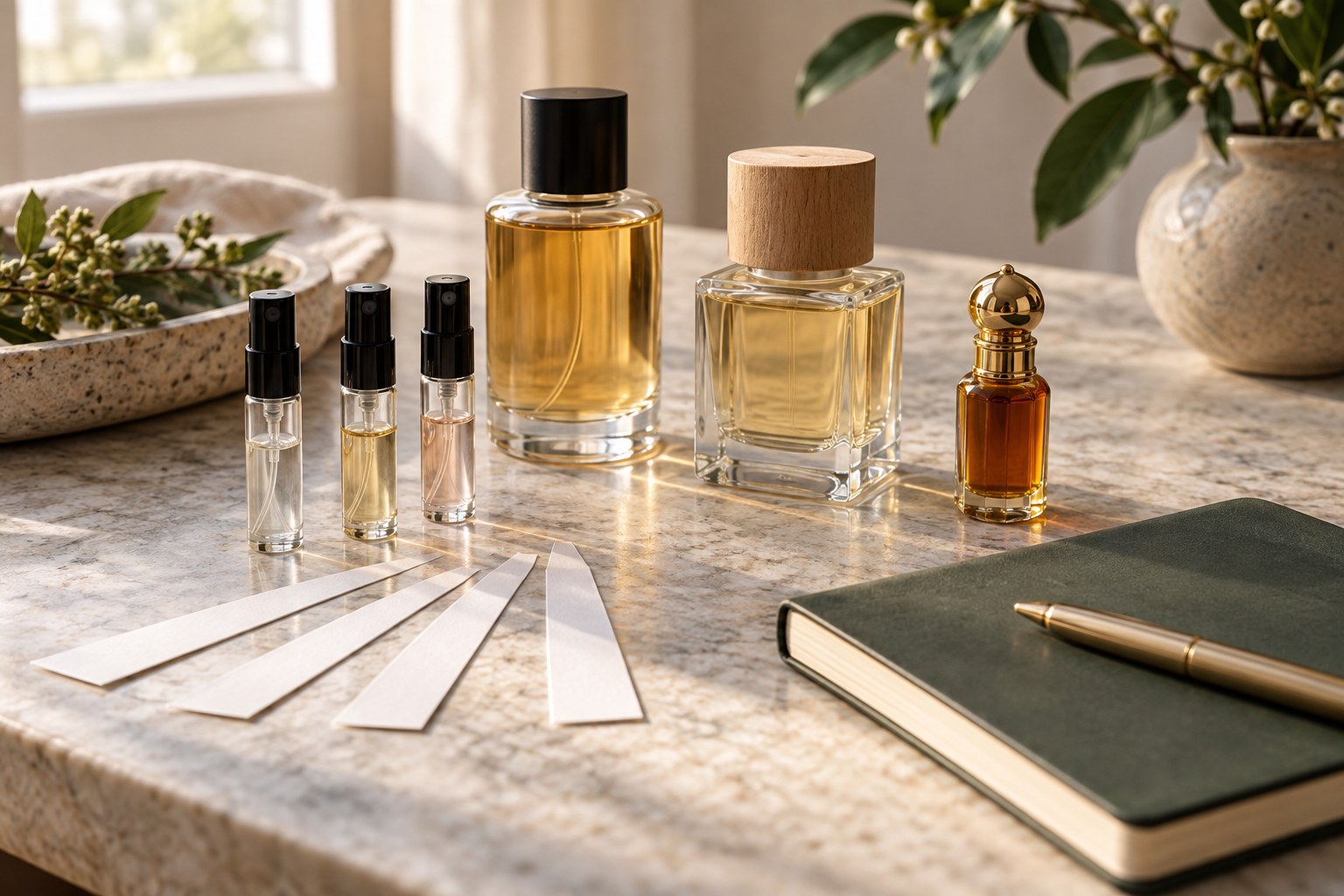
Fragrance shopping becomes expensive when language replaces smelling. Note lists, concentration labels, and online praise can narrow a test, but none can tell you how a perfume develops on your skin in Karachi humidity, Lahore heat, or a cold Islamabad evening. A useful wardrobe may be only two or three bottles: something quiet for shared rooms, something with more shape for evening, and perhaps an attar that stays close. The discipline is testing slowly enough to know which is which.
This guide is for people building a small rotation without blind-buying full bottles from screenshots. It is not a ranking of brands, and it is not medical advice about ingredients.
Paper first, skin second
Use a blotter to reject obvious dislikes, then test finalists on clean skin. One spray per wrist is enough. Do not rub the wrists together; friction and mixing make the comparison harder. Smell after a few minutes, again after an hour, and near the end of the day. The opening is a shop introduction, not the whole relationship.
- Blotter first to eliminate obvious dislikes without committing skin.
- One spray per wrist on clean skin; no rubbing the wrists together.
- Check at a few minutes, at one hour, and near the end of the day—outside the scented counter if you can.
- Cap the visit at two or three scents; write names on the strips.
Coffee beans do not reset the nose by magic; fresh air and time are more useful. A sample or small decant is the best next step before a full bottle—especially when you are buying online from a seller you have not handled before. If a mall counter will not give a sample, buy the smallest sealed size or walk away; pressure sales are not a testing protocol.
Write down the weather and the room after each test. A scent that felt polite in an air-conditioned atrium can become a corridor announcement on a humid evening. Without notes, memory romanticises the opening and forgets the headache at dinner.
Climate changes projection
Heat makes volatile materials lift quickly, so a fragrance can project more strongly and disappear sooner. Humidity can make dense sweet accords feel larger in a crowded Karachi lift or a Lahore wedding mehfil. That does not impose a seasonal law, but it argues for fewer sprays and a full-day skin test before you decide a bottle “belongs” to summer or winter.
Apply to skin rather than soaking clothes, especially delicate or pale fabric that may stain. For an office, clinic, classroom, or car, proximity matters more than longevity claims. One or two restrained sprays may be enough. An evening outdoors can take a different shape. Reapplication from a small atomiser is more considerate than a large morning dose that forces everyone else to share it.
Islamabad’s cooler evenings can make the same juice feel tighter and longer-lasting than it did on a Karachi afternoon. Retest across cities if you split the year; do not trust a single air-conditioned counter as the final climate.
| Setting | What to prioritise | Common mistake |
|---|---|---|
| Shared office / classroom | Quiet projection; one or two sprays | Buying for “all-day longevity” that fills the room |
| Outdoor summer evening | Shape that still reads after heat lift | Testing only indoors under AC |
| Wedding mehfil | A scent you already understand | Debut of a loud new bottle in a packed hall |
| Ramadan / fasting days | Skin-close options; manners around shared air | Heavy projection when people are tired and close |
Attar without the romance pitch
Attar is not automatically natural, ancient, or stronger than every spray perfume. The word covers many compositions and qualities—from concentrated oil blends sold by weight in bazaars to modern bottled oils with marketing stories attached. Ask what the material is, test a tiny amount, and notice whether the seller can explain the product without rarity doing all the work. Oil formats often sit closer to the skin, but performance varies by formula.
Use a clean applicator and avoid returning a skin-touched roller or wand to a shared tester. Apply sparingly to pulse points and check for irritation. If skin reacts, wash the area and stop. Fragrance is optional; discomfort is not an initiation fee. Persistent redness or itching after scented products belongs in the same serious category as other contact reactions—see the NHS page on contact dermatitis for when to seek care rather than “pushing through” a bottle.
- Everyday: quiet projection for shared rooms, desks, and cars.
- Evening: clearer shape, still proven on a full ordinary day—not only at the counter.
- Skin-close option: attar or oil when spray feels too public; tiny test first.
Buy the smallest honest quantity
A large bottle is economical only when it gets used. Start with a sample, decant, travel size, or the smallest sealed bottle from a trustworthy seller—counters in Karachi and Lahore malls, established attar shops that let you smell before you commit, or online sellers with clear batch and return policies. Keep receipts and inspect packaging, batch markings, and seals. An unusually low price is a reason to verify authenticity, not a victory by itself.
In the United States, cosmetics are regulated differently from drugs: the FDA explains that most cosmetics are not pre-approved before sale, which makes seller honesty, labelling, and your own skin test more important than a marketing claim. Store bottles upright, away from direct sun, heat, and bathroom humidity. A cupboard in a stable room beats a dressing table beside a window. Colour can shift a little over time; a sharp change in smell or performance is a reason to retire the bottle rather than blind-repurchase the same mistake.
Gift sets sold near Eid and wedding season sometimes mix authentic juice with questionable packaging. Smell and skin-test before you commit the set to a wardrobe role. A pretty box is not a composition. When buying for someone else, a sample discovery set is often kinder than a full bottle chosen from a note list alone.
Wedding and shared-space etiquette
Pakistani weddings and crowded iftars are poor venues for testing a loud new purchase for the first time. Wear something you already understand. If you are unsure, ask a friend outside the mehfil how far the scent travels after an hour. Hosts and guests share air; a considerate wardrobe treats projection as manners, not as personal branding.
Layering perfume with strongly scented hair oil, body lotion, and fabric softener can create a cloud nobody intended. Test combinations at home. If a workplace or classroom has a fragrance-sensitive colleague, default to the quiet bottle or none—policy and kindness outrank a note pyramid.
Online sellers and counterfeits
Screenshot bottles from marketplace listings fail basic verification: fuzzy batch codes, missing seals, prices far below authorised counters, and sellers who will not name the supply route. Ask for clear photos of the batch code and packaging before you pay. Prefer payment methods with dispute rights. If a “tester” arrives half empty or smelling sharply of solvent, do not finish the bottle to be polite—document and return where possible.
A four-week buying calendar
- Week 1: blotter cull of candidates; shortlist two.
- Week 2: skin test on ordinary days; note projection and unsolicited comments.
- Week 3: decant or sample under heat or AC that matches your real life.
- Week 4: buy the smallest honest bottle of the winner—or buy nothing if neither earned a role.
If budget forces a pause, wear what you own with restraint rather than buying a loud compromise bottle. A gap in the wardrobe is cheaper than a bottle that only worked at the counter. Name the job before you pay: daily shared space, formal evening, outdoor summer, or personal comfort at home. Wear the sample on an ordinary day—commute, desk, dinner—not only at the counter. Smell on skin, wait through the day, and buy for a real room. A small wardrobe chosen slowly will outperform a shelf of persuasive descriptions.
Building roles across a Pakistani year
A wardrobe that only works in December air-conditioning is incomplete. Retest your everyday bottle in monsoon humidity and your evening bottle after a sweaty commute. If a scent becomes oppressive in shared vans or offices, demote it to outdoor evening use or retire it. Roles can change with season without requiring a new expensive bottle each time.
Attar and spray can coexist if their jobs differ. Many people keep an oil for skin-close wear during fasting hours or crowded prayer spaces, and a spray for evenings when distance is easier. That is manners planning, not a hierarchy of authenticity. What matters is whether you can explain why each bottle earns space.
When relatives gift loud bottles at Eid, you are allowed to keep them closed until tested. Politeness does not require wearing an untested composition to a packed dinner. Sample first, then decide whether the gift becomes the evening role or remains a cupboard citizen.
Sources and official profiles
Was this helpful?
Keep reading
Related stories
More from this desk, this beat, and the tags on this piece.
How to layer attar and perfume without making the room smell before you arrive
Nadia Shah · 25 Oct 2026
Attar, parfum, eau de parfum and eau de toilette: concentration is only part of the story
Nadia Shah · 8 Oct 2026

Readers
The conversation
0 notes
Anyone can leave a note. Guests add a name and email — no account required, and the email is never published.
No notes yet. Yours would be the first.