Attar, parfum, eau de parfum and eau de toilette: concentration is only part of the story
Attar is an oil-format fragrance category, while EDP and EDT describe alcohol-based fine-fragrance conventions. Percentage helps, but formula, materials and skin matter too.
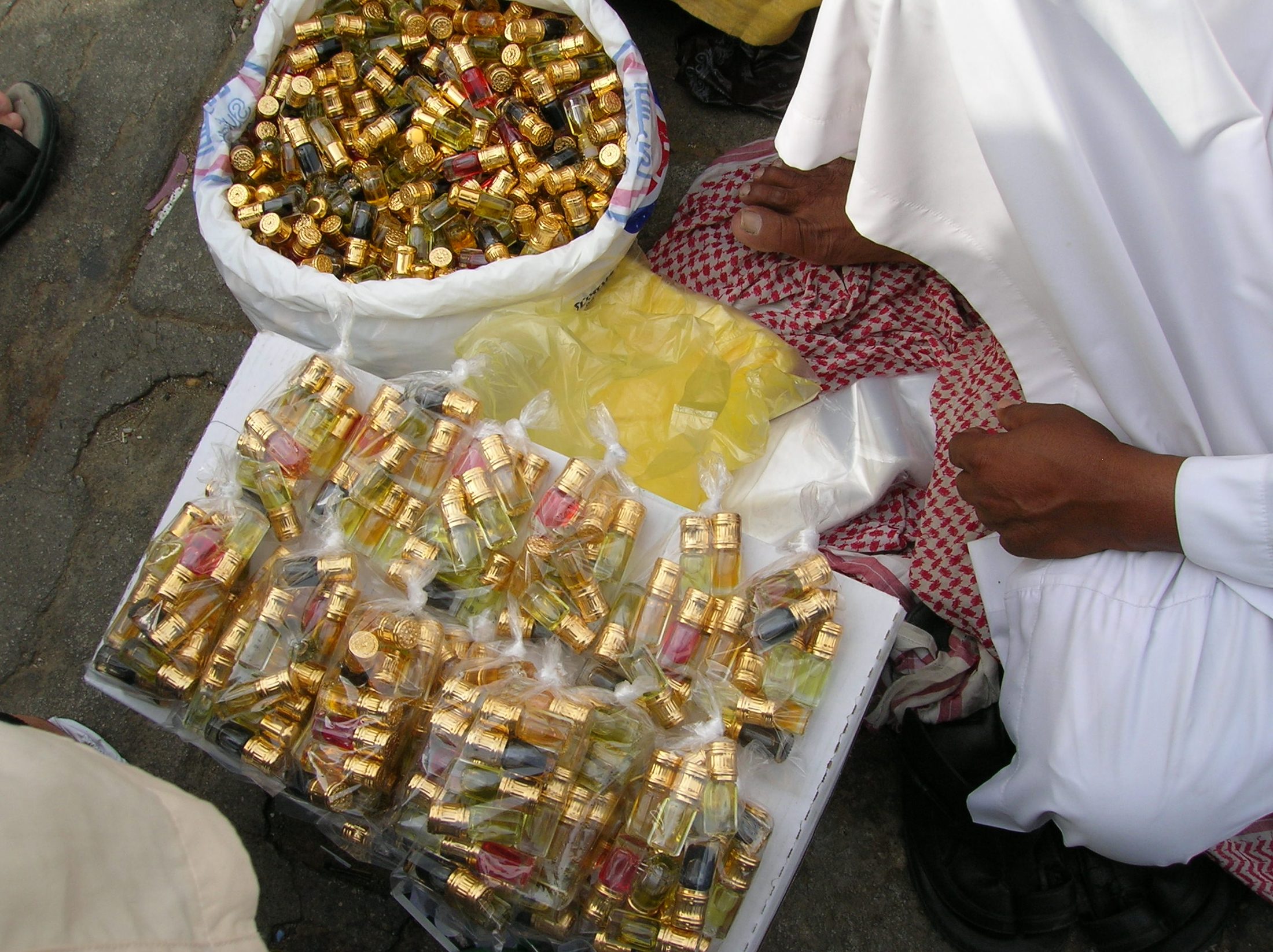
Fragrance counters often turn concentration labels into a ladder: toilette is weak, eau de parfum is stronger, parfum is strongest and attar lasts forever. Real formulation is more complicated. Concentration ranges overlap, materials evaporate at different rates, and attar describes an oil-format tradition rather than one fixed percentage.
The International Fragrance Association notes that attar is broadly used for concentrated fragrance-oil formats, often applied neat in small amounts and often ethanol-free. That functional definition is more useful than claiming every attar follows one historic formula.
What eau de toilette means in practice
EDT usually refers to an alcohol-based fine fragrance at a lower aromatic concentration than the brand's EDP or parfum version. There is no single global legal percentage that every company must follow.
Two EDTs from different brands can therefore differ significantly in strength and longevity.
Eau de parfum
EDP is typically formulated at a higher aromatic load than EDT within the same product family, but concentration alone does not decide projection.
A formula rich in volatile citrus may feel bright but short, while lower-volatility woods and musks can remain for many hours.
Parfum and extrait
Parfum or extrait conventionally signals a concentrated format designed to sit closer and persist longer. It may project less aggressively than an EDT even while lasting longer.
Consumers should not equate intensity in the first ten minutes with total wear time.
What attar describes
IFRA guidance treats attar broadly as a concentrated fragrance-oil format, commonly ethanol-free and often used neat on pulse points.
Some products called attar are diluted or use the name stylistically, so the bottle should still explain ingredients and safe use.
Oil versus alcohol changes delivery
Alcohol evaporates quickly, lifting volatile aroma into the air. Oil carriers evaporate more slowly and can keep fragrance closer to skin.
That difference changes the shape of the scent experience without proving one format is objectively stronger.
Raw materials have different volatility
Citrus, light aromatics and some florals leave faster than heavy woods, resins and musks. Perfumers balance these materials rather than simply choosing a percentage.
Longevity comparisons are meaningful only when the formulas themselves are considered.
Skin, climate and application
Warm skin and hot weather increase evaporation. Dry skin can sometimes make a fragrance seem shorter-lived because there is less surface oil.
Clothing can hold some aroma longer, but oils and sprays can stain delicate fabric, so use the manufacturer's guidance.
Religious and cultural reasons for attar
Oil fragrance has long-standing use in Muslim communities, and ethanol-free formats are preferred by some consumers for religious reasons.
Preferences vary, and product ingredients should be checked rather than inferred from the word attar.
Safety still depends on concentration
Fragrance materials have dermal safety limits, and IFRA standards address maximum use levels for specific materials and product categories.
Undiluted essential oils or homemade concentrates are not automatically safer because they are natural.
How to compare before buying
Wear one fragrance on skin for several hours. Note opening, projection at one hour and what remains at the end of the day.
Compare cost per amount you actually use rather than assuming a higher concentration always offers better value.
What the evidence can and cannot tell you: Attar, parfum, eau de parfum and eau de toilette
EDT, EDP and parfum concentration bands are industry conventions rather than one universal statutory scale, so published percentage ranges should be treated as approximate. Attar is even broader as a market term.
For attar vs eau de parfum eau de toilette, the most useful approach is to separate verified material facts from shop language, inherited terminology and aesthetic preference. Where a label has a legal or technical meaning, read the fibre or product disclosure. Where the term is cultural rather than standardised, ask the seller what construction, material and process they actually mean.
A practical PakStyles checklist: Attar, parfum, eau de parfum and eau de toilette
- Judge on skin over several hours.
- Read whether the carrier is oil or alcohol.
- Do not assume higher concentration means louder projection.
- Follow skin-use guidance for concentrated oils.
- Store fragrance away from heat and direct light.
Fragrance labels are useful when they describe format, not when they become a ranking system. The better question is how the formula releases, projects and lasts on your skin in the conditions where you will actually wear it.
Traditional practice can be sensible without proving every explanation: Attar, parfum, eau de parfum and eau de toilette
Some habits connected with attar vs eau de parfum eau de toilette developed through practical observation long before modern biochemistry. A method may work while the popular explanation for why it works is incomplete or wrong.
Respect for tradition and scientific scrutiny are compatible. The strongest article can say “this technique is useful” while also correcting an exaggerated mechanism.
Substitution matters more than removal: Attar, parfum, eau de parfum and eau de toilette
Nutrition questions around attar vs eau de parfum eau de toilette often depend on what replaces a food rather than whether it disappears. Replacing saturated fat with unsaturated fat is different from replacing it with refined carbohydrate; moving tea away from a meal is different from removing all tea.
This is why useful advice describes the alternative behaviour instead of only naming something to avoid.
Measurement has limits: Attar, parfum, eau de parfum and eau de toilette
Numbers used in attar vs eau de parfum eau de toilette—BMI, Brix, SPF, HbA1c, AQI, grams of protein or degrees of doneness—compress a complex system into a practical indicator. They are valuable when their scope is understood.
A single number should not be promoted into a universal quality score. Use it alongside the other variables that materially affect the decision.
Food and health safety outrank optimisation: Attar, parfum, eau de parfum and eau de toilette
When attar, parfum, eau de parfum and eau de toilette touches raw meat, supplements, medication, sun exposure or suspected disease, the safety threshold matters more than squeezing out a small performance benefit. Refrigeration, appropriate dosing, diagnosis and sunburn prevention are foundational.
A cooking hack or wellness routine is not successful if it increases avoidable risk in order to improve texture, colour or convenience.
Use the highest-quality source available: Attar, parfum, eau de parfum and eau de toilette
For attar, parfum, eau de parfum and eau de toilette, clinical or public-health claims should come from recognised health bodies or peer-reviewed research, while regulatory rules should come from the regulator. Retailers and lifestyle sites can be useful for examples, not for settling safety questions.
When studies disagree or address different populations, explain that rather than choosing the most dramatic number.
Who should get personalised advice: Attar, parfum, eau de parfum and eau de toilette
Pregnancy, childhood, kidney or liver disease, diabetes, cardiovascular disease, allergies, prescribed medicine and previous severe reactions can all change the advice around attar, parfum, eau de parfum and eau de toilette.
The practical conclusion: Attar, parfum, eau de parfum and eau de toilette
The useful endpoint for attar, parfum, eau de parfum and eau de toilette is a small number of behaviours supported by the evidence: change timing, choose a safer substitute, screen earlier, store food correctly, read the label or seek assessment for a warning sign.
Evidence-based writing becomes easier to trust when it leaves readers with proportionate actions rather than a list of alarming facts.
Separate mechanism from outcome: Attar, parfum, eau de parfum and eau de toilette
For attar, parfum, eau de parfum and eau de toilette, it is useful to distinguish what can be measured in a laboratory from what has been shown to improve a real health or cooking outcome. A plausible mechanism—acid changing protein, polyphenols binding iron, melanin absorbing UV—helps explain a result but does not by itself quantify the size of that result in every person or recipe.
Research quality improves when mechanism, controlled experiment, observational association and clinical guidance are not blended into one level of certainty.
Dose and context change the effect: Attar, parfum, eau de parfum and eau de toilette
attar, parfum, eau de parfum and eau de toilette is rarely an all-or-nothing exposure. The amount, timing, frequency, temperature, food matrix, skin type, disease status or baseline risk can change whether an effect is meaningful.
Population advice is not an individual diagnosis: Attar, parfum, eau de parfum and eau de toilette
Guidance linked to attar, parfum, eau de parfum and eau de toilette can identify groups with higher average risk or recommend a safe preventive behaviour. It cannot tell one reader whether they personally have a deficiency, disease or future event without appropriate assessment.
How to use this article as a reference: Attar, parfum, eau de parfum and eau de toilette
Save the specific official or primary source that matters most for attar, parfum, eau de parfum and eau de toilette, along with the date you checked it. If the subject is commercial, keep the product label or receipt; if it is administrative, keep the application reference; if it is health-related, write down the question you need to take to a clinician. This turns reading into a record you can use later.
A final practical check: Attar, parfum, eau de parfum and eau de toilette
For attar, parfum, eau de parfum and eau de toilette, keep the practical claim narrower than the mechanism. A plausible biological explanation does not guarantee a visible result for every person, and population-level risk does not diagnose an individual. Use the evidence to decide what is worth trying, screening or discussing—not to turn ethnicity, skin tone or one symptom into a conclusion about personal health.
For attar, parfum, eau de parfum and eau de toilette, individual assessment matters when the decision involves supplements, symptoms, suspicious skin changes or significant medical risk. Record what changed, how long it has been present and any relevant medicines or family history. That information is more useful to a clinician than a long list of products or online theories tried at random.
Sources and official profiles
Filed under
Was this helpful?
Keep reading
Related stories
More from this desk, this beat, and the tags on this piece.


Melasma on brown skin: why aggressive brightening can make the cycle worse
Nadia Shah · 5 Oct 2026
Hard water and hair in the UK: fix the buildup before blaming your texture
Nadia Shah · 1 Oct 2026
Readers
The conversation
0 notes
Anyone can leave a note. Guests add a name and email — no account required, and the email is never published.
No notes yet. Yours would be the first.