Heritage
Pakistani textiles explained: ajrak, phulkari, ralli, and beyond
A material-led introduction to Pakistani textiles that keeps region, technique and artisan labour attached to the cloth.
By Mehreen Ali
Travel editor
2 min read
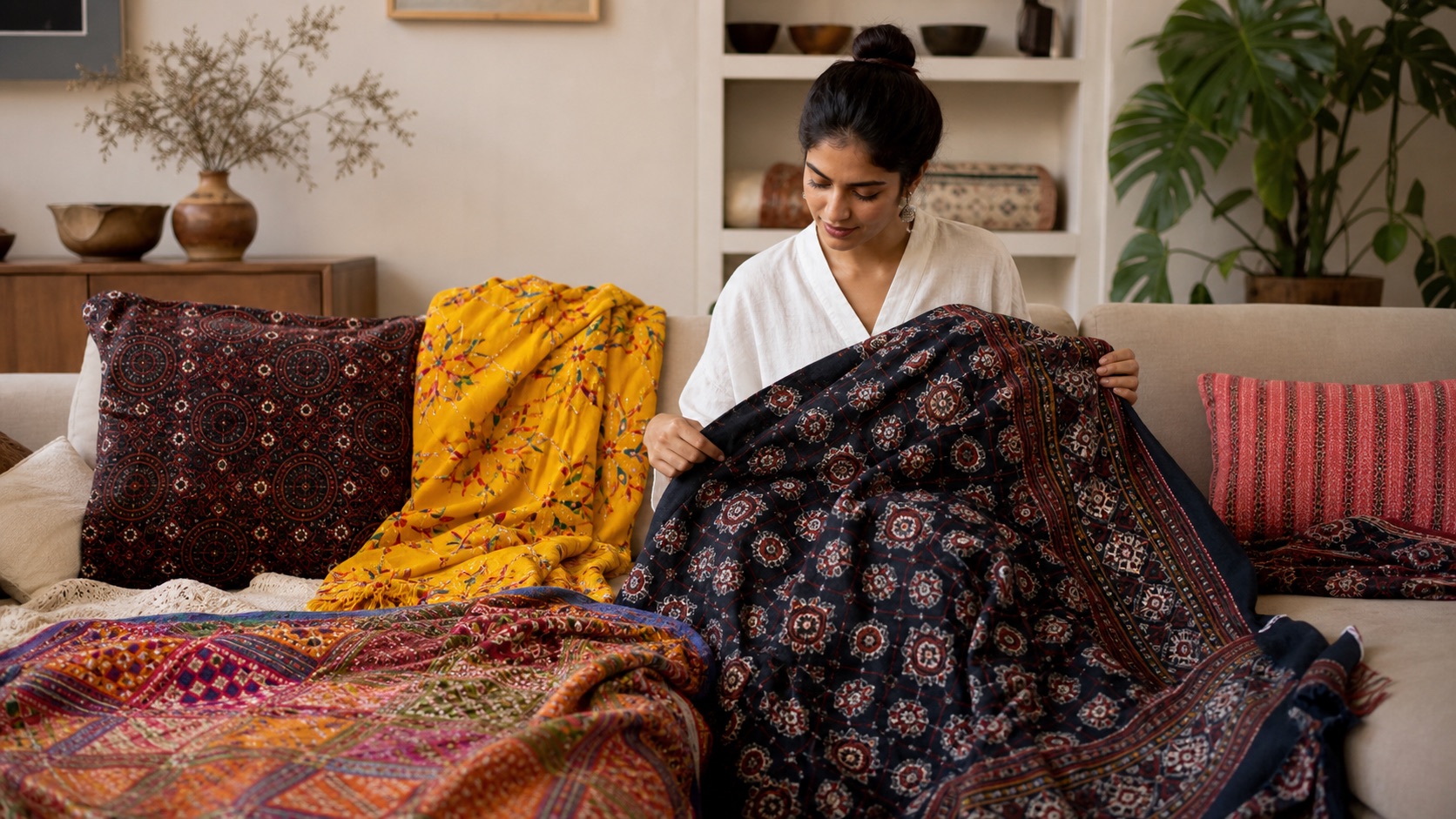
Ajrak, phulkari and ralli are not three prints in a “heritage” palette. They emerge from different processes and social histories: resist-printed cloth built through repeated dye stages; embroidery that makes thread travel across a base fabric; and patchwork or appliqué assembled from pieces. Begin with how the surface was made.
Ajrak: colour built in stages
Associated especially with Sindh and neighbouring Kutch, ajrak uses carved blocks, mordants, resists and repeated dyeing to build complex geometry. Small shifts and overlaps can record the hand and sequence of printing. Ask who printed it, where, which dyes were used and whether “ajrak” describes the process or merely a digital motif resembling it.
Phulkari: count the reverse as evidence
Phulkari traditions span Punjab across today’s Pakistan and India. Silk-like floss stitches work across woven cloth, with density, motif and use varying widely. Turn a piece over—with permission. The reverse reveals movement of thread, repairs and whether the surface is hand embroidered, machine made or printed to imitate stitches.
Ralli: composition through joining
Ralli quilts and textiles are strongly associated with women’s work in Sindh, southern Punjab and adjoining regions. Piecing, appliqué and quilting turn small sections into fields of rhythm. Wear, fading and irregular joins may belong to an object’s working life rather than represent defects.
| When buying | Ask |
|---|---|
| Origin | Maker, workshop, community and place—not “tribal” alone |
| Technique | Printed, blocked, embroidered, appliquéd or digitally reproduced |
| Materials | Fibre, dye, thread and backing |
| Care | Colour-fastness, washing history and repair |
- Distinguish a contemporary artisan piece from an older household textile.
- Do not infer community identity from motif alone.
- Ask before cutting a textile whose borders or joins carry its composition.
- Credit the named maker when sharing photographs or reselling the work.
Digital reproduction is not automatically dishonest when it is clearly labelled. It becomes misleading when a printed surface borrows the authority and price language of hand process while hiding how it was made.
“Authentic” is not a visual mood. It is a traceable account of process and people. Let the textile’s own construction decide how it is displayed, worn, cleaned and credited.
Filed under
Keep reading
Related stories
More from this desk, this beat, and the tags on this piece.
Derawar Fort and Cholistan: permissions, heat and distance
Mehreen Ali · 13 Sep 2026 · 16 min
Makli Necropolis visitor guide: heat, scale and conservation
Mehreen Ali · 13 Sep 2026 · 16 min
Readers
The conversation
0 notes
Anyone can leave a note. Guests add a name and email — no account required, and the email is never published.
No notes yet. Yours would be the first.