Heritage
Stitched, unstitched, and semi-stitched Pakistani suits explained
A buying decision about fit, labour and return risk—not three labels arranged from easy to difficult.
By Mehreen Ali
Travel editor
2 min read
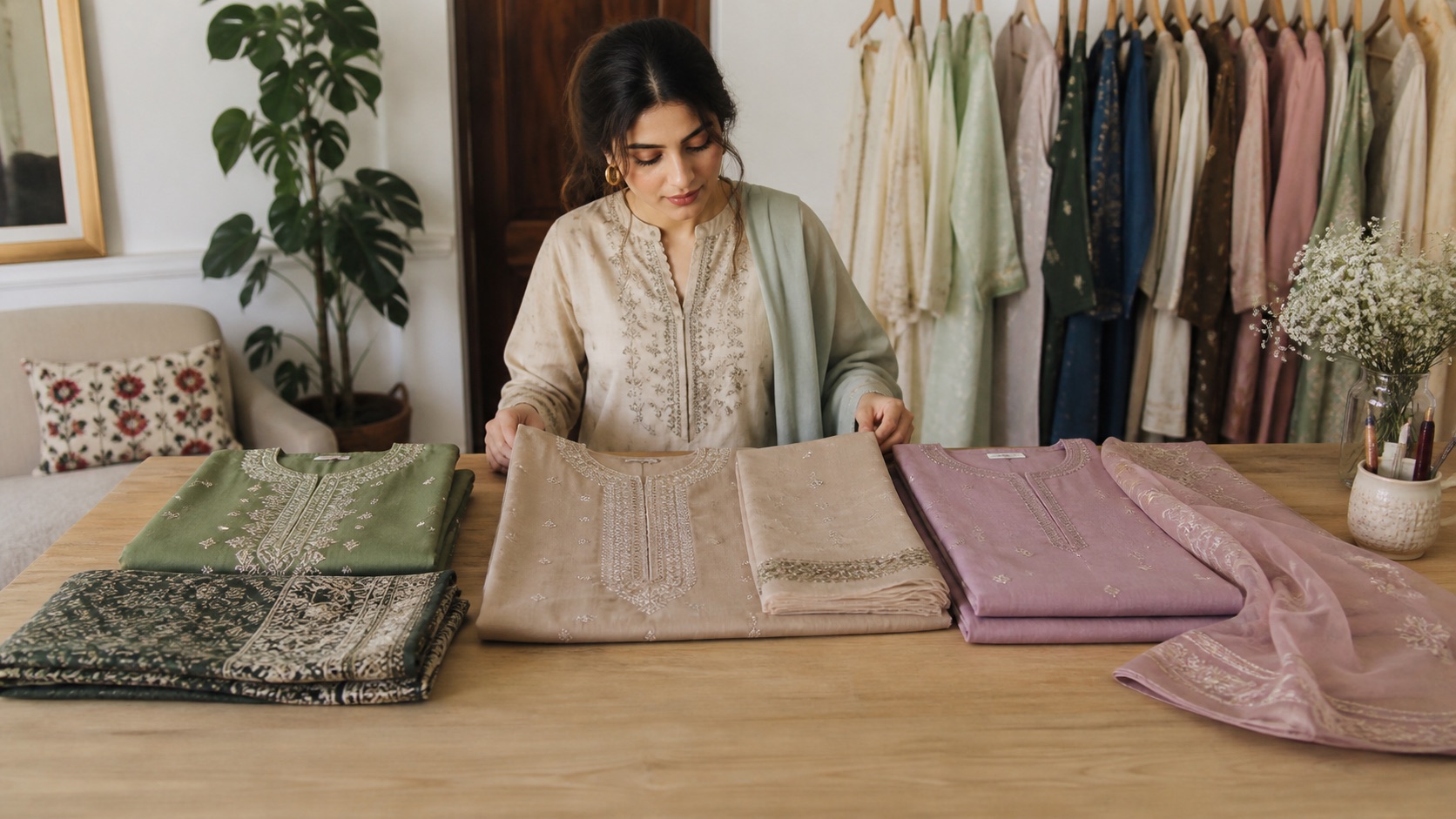
These labels describe where the garment’s decisions stop. A stitched suit asks you to accept the brand’s cut. An unstitched suit hands almost every cut to you and a tailor. Semi-stitched sits between them, but the phrase is used so loosely that photographs are not enough.
Stitched: inspect the garment, not the size name
Compare finished bust, waist, hip, shoulder, sleeve, kameez and trouser measurements with a garment you already wear. Body measurements are not garment measurements; ease has to exist somewhere. Check whether the dupatta, slip and trousers are included, whether embroidery crosses alteration seams and whether returns survive trying on.
Ready-to-wear is fastest only when it fits. Sleeve shortening can cut a border, letting out a side seam may reveal too little allowance, and trouser length can depend on the shoes. Price likely alterations before choosing convenience.
Unstitched: fabric is a project
Read the component list and metres or yards for each piece. Identify front, back, sleeves, borders, lining and trouser fabric before cutting anything. Campaign images may show styling, extra volume or accessories not contained in the packet. Photograph the laid-out pieces and agree placement, silhouette, seam allowance, shrinkage preparation and completion date with the tailor in writing.
Semi-stitched: ask what is already irreversible
A semi-stitched outfit may have a finished neckline and open sides, an assembled bodice needing adjustment, or a skirt that only needs its waistband. Request photographs of the actual construction and maximum finished measurements. Find out whether sleeves exist, where extra fabric is supplied and which seams can move without disturbing motifs.
Add product price, delivery, duties, lining, tailoring and correction risk. Choose stitched when measurements and returns are trustworthy; unstitched when you have fabric knowledge and a reliable tailor; semi-stitched when its completed work genuinely reduces risk. The best category is the one whose remaining decisions you can make well.
Keep the seller’s component photograph and the tailor’s final measurements with the receipt. If a piece is missing or incorrectly cut, this record separates an actual discrepancy from a memory of the campaign image.
Filed under
Keep reading
Related stories
More from this desk, this beat, and the tags on this piece.
Derawar Fort and Cholistan: permissions, heat and distance
Mehreen Ali · 13 Sep 2026 · 16 min
Makli Necropolis visitor guide: heat, scale and conservation
Mehreen Ali · 13 Sep 2026 · 16 min
Readers
The conversation
0 notes
Anyone can leave a note. Guests add a name and email — no account required, and the email is never published.
No notes yet. Yours would be the first.